For nearly two decades, Amazon Web Services (AWS) has stood as the bedrock of the modern internet. From its humble origins offering core primitives like Amazon Simple Storage Service (S3), Elastic Compute Cloud (EC2), and Simple Queue Service (SQS), AWS grew alongside the enterprise. As global conglomerates and sovereign governments migrated their workloads to the cloud, their demands shaped the platform’s trajectory. They required enterprise-grade security controls, complex multi-region compliance frameworks, rigorous governance tools, and granular cost management.
To satisfy these massive infrastructural needs, AWS expanded its global footprint and introduced a sprawling ecosystem of hundreds of specialized services. Yet, this incredible breadth—while essential for multi-national corporations and scaled engineering teams—introduced a formidable barrier to entry for the modern solo developer, indie hacker, and fast-moving artificial intelligence startup. For someone sitting down with a sudden flash of inspiration, navigating configuration menus, setting up identity protocols, and provisioning resource permissions represented frustrating friction standing between an idea and its execution.
Recognizing that the velocity of software development has fundamentally shifted in the age of generative AI, AWS has announced a sweeping, paradigm-shifting transformation: a radically simplified, streamlined onboarding and project management experience tailor-made for the pace of modern builders.
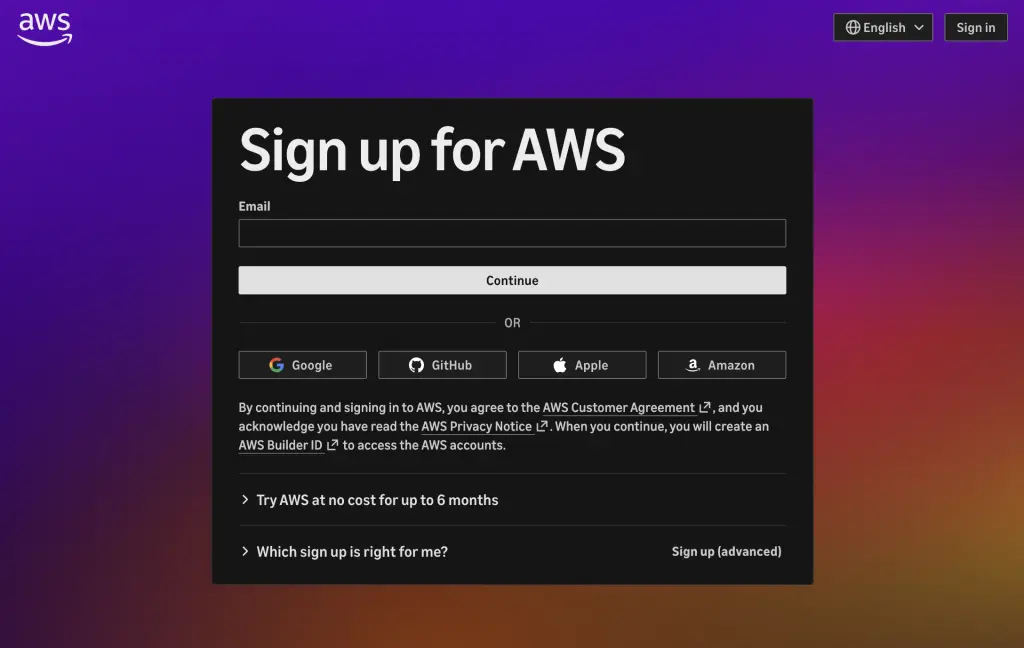
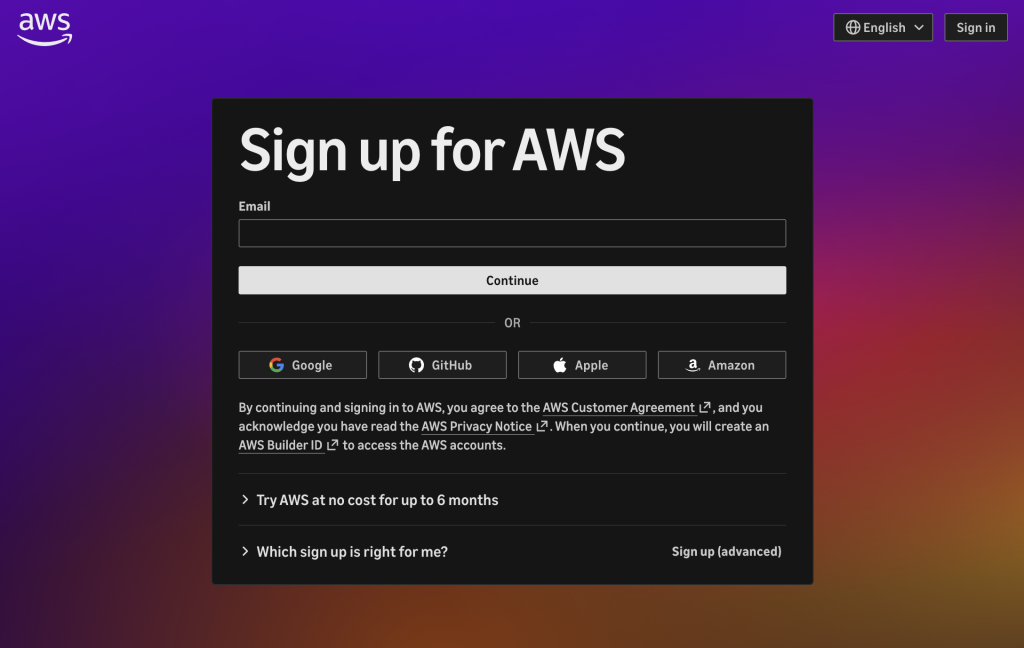
By stripping away the mandatory upfront administrative hurdles, AWS is returning to its foundational ethos—allowing anyone with a laptop and an idea to begin building instantly. New users can sign up using federated identities from providers like Google, GitHub, and Apple without needing a credit card. They are immediately greeted with a generous $100 AWS Free Tier credit, sensible security defaults, and a seamless integration path for AI coding agents. When projects outgrow these simplified parameters, developers can activate advanced AWS features with a single click, unlocking the full depth of the enterprise-grade cloud ecosystem without undergoing painful data migrations or suffering downtime.
Detailed Chronology: From Infrastructure Complexities to Instantaneous Deployment
The Historical Burden of Cloud Setup
Historically, provisioning an AWS account involved a multi-step administrative gauntlet. Users were required to input extensive personal and financial verification data, select root account credentials, configure multi-factor authentication (MFA), and immediately confront the labyrinthine architecture of AWS Identity and Access Management (IAM). Before writing a single line of application logic, developers had to grapple with IAM users, roles, policies, trust relationships, and security groups.
While these safeguards are non-negotiable for scaled production environments handling sensitive enterprise data, they proved burdensome for proof-of-concept projects, rapid prototypes, and AI-assisted workflows. A developer working with an AI coding agent would often find their momentum halted because the agent lacked the pre-configured authority or contextual tooling to provision underlying cloud resources natively.
The New Paradigm: Projects, Defaults, and Agents
The newly rolled-out onboarding experience reimagines how cloud architecture is structured from the ground up. Upon signing up via preferred identity providers (Google, GitHub, Apple, or Amazon), AWS automatically provisions an isolated organizational structure known as a project.
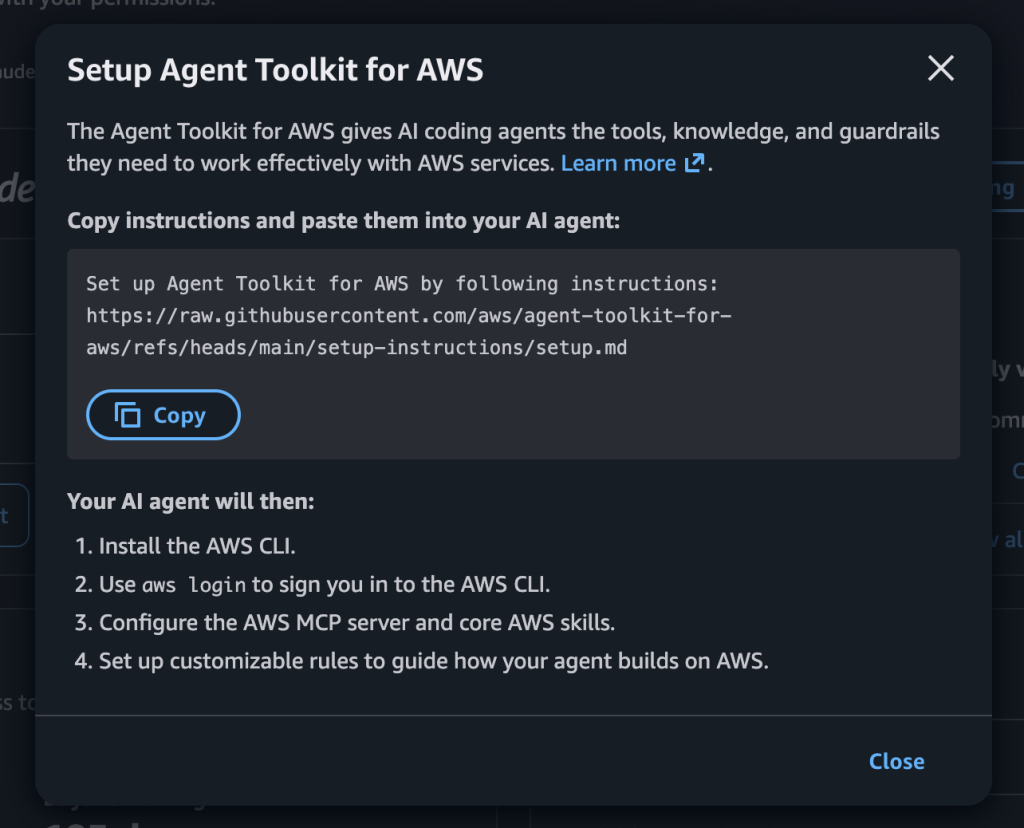
Within this architecture, a project contains a dedicated AWS account bundled with built-in security baselines, default configurations, and simplified team-sharing controls. Crucially, the onboarding flow introduces a deep, native integration with modern AI coding assistants. Immediately after authenticating, the user receives a tailored terminal prompt designed to be copied and pasted directly into their coding agent of choice.
Once executed, this prompt configures the AWS Command Line Interface (CLI) and the newly introduced Agent Toolkit for AWS, logs the user into their secure environment, and generates a structured initialization file (such as a CLAUDE.md document) containing environmental context and best-practice guardrails.
Hands-On Execution: Building an API in Minutes
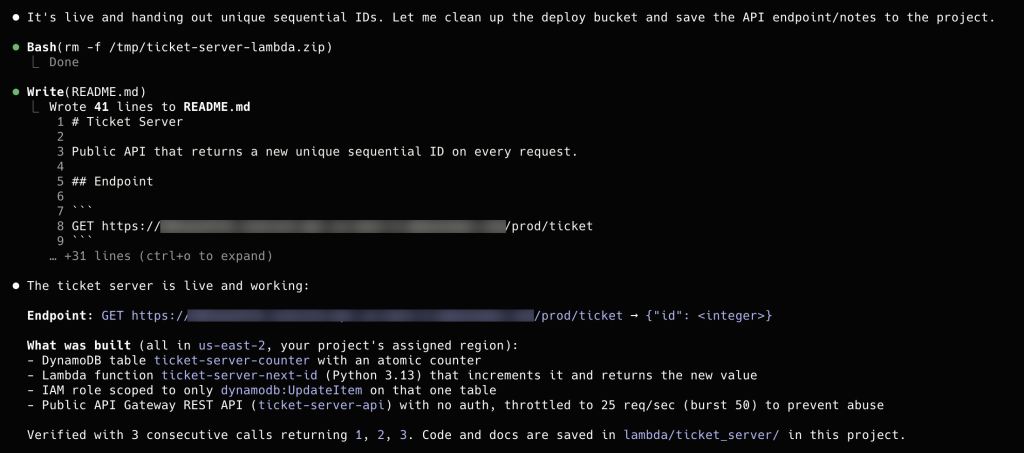
To demonstrate the frictionless nature of this new architecture, early walk-throughs illustrate an astonishingly fast development cycle. A developer pasting the initialization prompt into an AI coding agent can immediately issue plain-language commands, such as: "Build an API that returns a new unique sequential ID on every request."
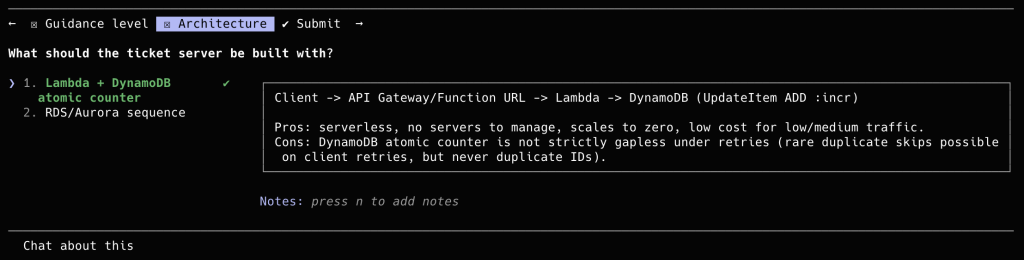
Rather than requiring manual orchestration through the AWS Management Console, the coding agent analyzes the request, selects the optimal architecture—typically pairing an AWS Lambda function for serverless compute with an Amazon DynamoDB table for state persistence, fronted by an Amazon API Gateway endpoint—and deploys the entire stack automatically.
Resource permissions, networking rules, and execution roles are brokered behind the scenes by the system. Within minutes, the developer is presented with a live, publicly accessible HTTPS endpoint, backed by production-grade serverless infrastructure, without ever manually opening an IAM policy document. Furthermore, successful deployment actions trigger additional promotional credits, rewarding active experimentation.
Supporting Context & Metrics: Financial Controls, Collaboration, and Safety
While simplicity is the primary catalyst for this new experience, AWS has re-engineered the administrative lifecycle around three pillars: cost predictability, frictionless collaboration, and frictionless scalability.
Granular Cost Management and Project Budgets
Cost overruns represent a persistent anxiety for individual developers and small startups experimenting in the cloud. To mitigate this risk, the new AWS experience introduces project-level spend limits starting at an accessible $20 per month.
Predictive Recommendations: AWS analyzes initial usage trends and suggests a realistic monthly spend ceiling. Developers can accept these recommendations or define custom budgets tailored to their project’s lifecycle.
Proactive Notifications: As workloads scale and resource consumption increases, automated notification systems warn developers well before budget thresholds are breached.
Graceful Pause Mechanisms: Unlike traditional corporate accounts where runaway scripts can incur thousands of dollars in unexpected charges before intervention, these projects feature a hard stop. If a project reaches its designated spend limit, AWS automatically pauses the active workloads rather than letting charges accumulate. Developers can instantly resume operations simply by raising the project’s budget ceiling.
Granular Isolation: Because spend limits are configured on a per-project basis, experimental prototypes can be tightly budgeted (e.g., $20/month) while traction-gaining workloads can be allocated larger financial envelopes.
Frictionless Team Collaboration
Historically, adding a collaborator to an AWS environment required creating IAM user credentials, assigning customized permission boundaries, distributing access keys, and managing password rotation policies.
The new experience eliminates this operational overhead through email-based invitations. A project owner can invite a teammate simply by entering their email address into the project settings dashboard. AWS automatically provisions the necessary underlying access controls, ensuring that the invited collaborator gains access only to the specified project without exposing broader organizational accounts or requiring manual IAM administration.
Official Statements and Industry Implications
Industry analysts view this move as a direct response to the changing demographics of software development. As artificial intelligence lowers the barrier to writing code, the bottleneck has shifted entirely from code generation to infrastructure deployment and operational overhead.
"AWS began as a place where anyone with an idea could start building," noted senior product leadership during the rollout announcement. "As enterprise customers grew, our platform expanded to meet their massive scale, security, and governance requirements. But if you are at the start of a new idea, every configuration option is effort standing in the way of shipping your dream product fast. We listened to our builders. We wanted to bring that original, instantaneous starting point back—backed by sensible defaults—while preserving the unmatched global reach, breadth, and depth of AWS for when your idea scales."
By meeting developers where they are—integrating directly with popular identity federations and coding agents—AWS is signaling that it no longer expects developers to adapt to the cloud’s structural complexities. Instead, the cloud is adapting to the developer’s workflow.
Future Outlook: The Bridge Between Simplicity and Enterprise Scale
The most remarkable architectural achievement of this new experience is not merely its simplicity, but its continuity. Too often, "lightweight" developer platforms or simplified cloud wrappers force teams to completely rewrite their applications or undergo arduous data migrations when their product gains traction and requires enterprise capabilities.
AWS has engineered this experience to be a seamless on-ramp rather than a walled garden. When an indie project matures into a commercial enterprise requiring multi-region redundancy, advanced compliance certifications, or centralized governance policies via AWS Organizations, developers can activate advanced features at zero additional cost.
Under the hood, the project gracefully transitions into a fully configured, best-practice AWS Organization. Every resource deployed, every line of infrastructure code written, and every permission established during the rapid prototyping phase remains entirely intact. There is no downtime, no data migration, and no architectural refactoring required.
As AWS gradually rolls out this transformative experience to new customers globally, it marks a pivotal evolutionary milestone in cloud computing. By marrying the lightning-fast velocity of AI-driven coding agents with the unyielding reliability and scale of the world’s most comprehensive cloud infrastructure, Amazon Web Services is laying the groundwork for the next generation of digital innovation.