Executive Overview
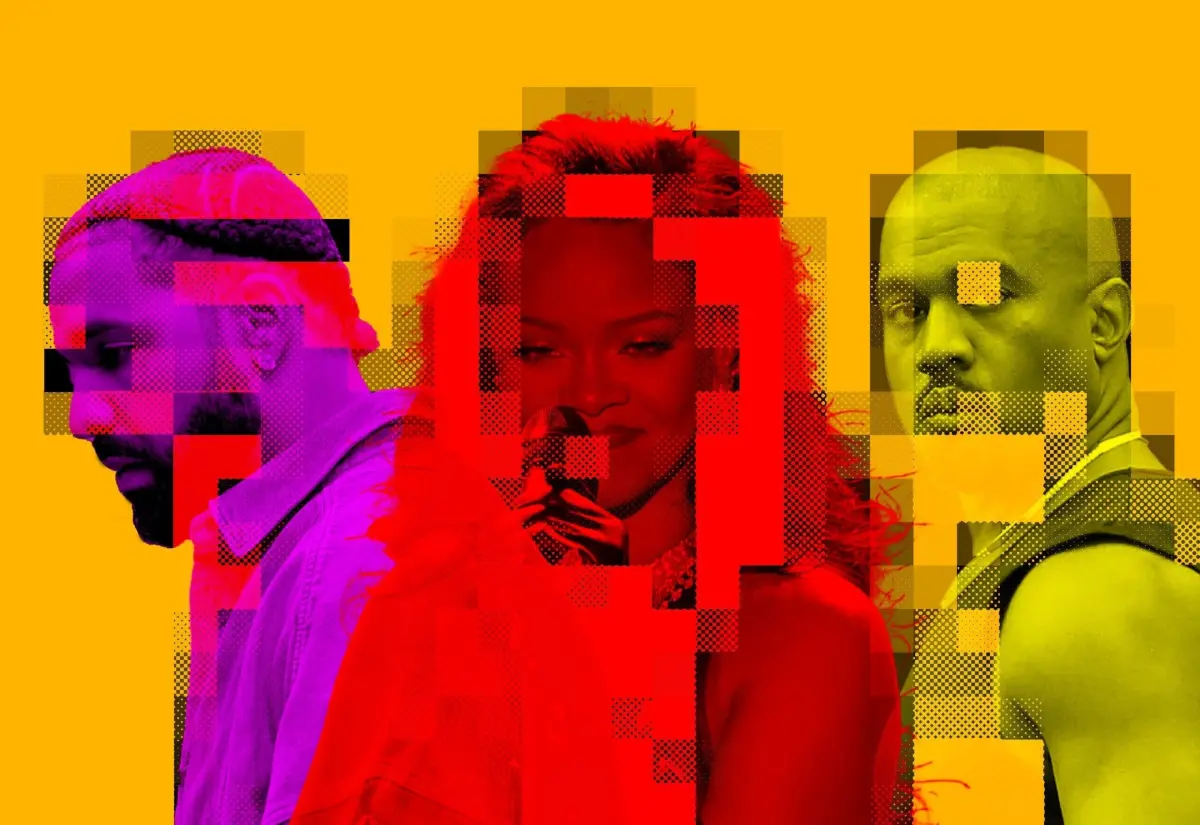
The global music industry stands at a volatile crossroads. Thanks to the explosive democratization of powerful generative artificial intelligence (AI) tools, the traditional boundaries defining an artist’s voice, likeness, and intellectual property have been systematically dismantled. Across YouTube, TikTok, Instagram, and specialized Discord servers, millions of listeners are tuning into tracks where their favorite icons—ranging from Drake and Kanye West to the late Freddie Mercury—rap, sing, and perform songs they never recorded in real life.
While everyday hobbyists revel in the creative novelty of these synthetic covers, the mainstream music establishment views the trend with alarm. Major record labels, publishing titans, and high-profile artists are grappling with an existential crisis. The unauthorized cloning of vocal cords and the AI-driven generation of indistinguishable hit songs have transformed what was once a fringe technological experiment into a disruptive multi-million-dollar phenomenon.
This deep-dive investigation explores the mechanics behind the viral trend, the communities driving the technology forward, the stark ethical and legal dilemmas dividing experts, and the aggressive countermeasures being deployed by music conglomerates determined to protect their bottom lines.
Detailed Chronology: From Novelty Experiments to Global Viral Phenomenon
The infiltration of artificial intelligence into popular music did not happen overnight; it is the culmination of rapid advancements in machine learning, open-source audio modeling, and online fan culture.
Early 2023: The Wave Begins
The public awakening to voice-cloning technology accelerated sharply in early 2023. Superstars and electronic music producers began experimenting with generative AI in live sets. In February, superstar DJ David Guetta shocked a live concert audience by playing an original track featuring AI-generated Eminem vocals. While Guetta framed the stunt as a futuristic showcase of the medium’s potential, it was executed entirely without the Detroit rapper’s consent.
Simultaneously, French hip-hop act AllttA released “Savages,” a track leveraging an AI-generated vocal model of Jay-Z. Reviewers noted that the familiar, gravelly cadence of the hip-hop mogul added an ineffably compelling weight to the composition, blurring the lines between human artistry and machine synthesis.
Spring 2023: The Viral Explosion and "Heart on My Sleeve"
The phenomenon reached a fever pitch in April 2023 with the release of “Heart on My Sleeve,” an immaculate, highly polished collaboration featuring AI-cloned vocals of Drake and The Weeknd. The track went viral overnight across social media platforms, capturing millions of streams before industry analysts began suspecting it might be a sophisticated marketing ploy by an undisclosed tech startup.
As the floodgates opened, anonymous creators began pushing out thousands of faux cover songs. AI-generated versions of Drake tackling Ice Spice’s breakout hit “Munch (Feelin’ U)” began circulating widely, prompting a public backlash from the Canadian superstar. On Instagram, Drake declared that the AI cover was “the final straw.” Meanwhile, pop icon Rihanna became the unwitting lead vocalist on AI-generated renditions of tracks by Beyoncé, Katy Perry, and Maroon 5.
The Industry Counter-Offensive
Faced with a mounting wave of copyright infringements and loss of control over their artists’ likenesses, major labels swung into action. Universal Music Group (UMG)—which represents an empire of foundational talent including Drake and Rihanna—reportedly issued urgent demands to streaming giants such as Spotify and Apple Music. UMG urged platforms to proactively block AI developers from scraping copyrighted catalogs to train generative models, setting the stage for high-stakes corporate warfare.
Supporting Context & Metrics: The Tech, The Tools, and The Underground Communities
To understand how high school and college students are successfully cloning the voices of global superstars, one must examine the open-source software powering the movement.
The Engine: So-Vits-SVC
At the heart of the amateur AI music boom is So-Vits-SVC (Soft-Voice-to-Voice Singing Voice Conversion), an open-source machine learning framework hosted widely on GitHub. Designed to convert one singing voice into another while preserving pitch, rhythm, and emotion, the software has exploded in popularity. On TikTok alone, the hashtag #So-vits-svc has amassed upwards of 2 million views, serving as a digital clubhouse for tutorials and software updates.
Case Study: YeezyBeaver and the "Kanye Unreleased Community"
The human face of this movement is composed of anonymous bedroom producers. Take "YeezyBeaver," a 22-year-old creator from Oklahoma operating a popular YouTube channel dedicated to Kanye West covers. Among his most successful experiments is a surprisingly charming AI-generated cover of the Plain White T’s acoustic classic "Hey There Delilah," performed in the distinct cadence of Kanye West ("Ye").
YeezyBeaver discovered the technology via a dedicated Ye Discord fan server. The server shared pre-trained voice models of the rapper alongside step-by-step instructions on how to integrate them into generative pipelines.
Similarly, an American college student operating under the pseudonym "pieawsome" became deeply embedded in the internet’s "Kanye unreleased community"—a subculture dedicated to trading and analyzing unfinished Ye tracks. Realizing the community possessed hours of isolated a cappella vocals from leaked studio sessions, pieawsome chopped the audio files and fed them into the So-Vits-SVC framework. After a few days of training, the resulting model was remarkably accurate. He published the voice model to a Discord server, where it quickly spread through underground music networks, eventually catching the attention of mainstream rap star Travis Scott, who liked an Instagram post featuring a Ye-AI cover of Ice Spice’s "Munch."
Comedy, Anime, and the Expanding Scope
The cultural footprint of AI music extends far beyond rap covers. Jered Chavez, a 19-year-old student at the University of South Florida, gained viral traction on Instagram by producing surreal audio-visual tracks. One of his most popular creations featured Drake, Kanye West, and Kendrick Lamar harmonizing on "Fukashigi no Karte," the ending theme song to the popular anime series Rascal Does Not Dream of Bunny Girl Senpai.
Chavez leans heavily into comedy to differentiate his content, acknowledging the controversial tightrope he is walking. By injecting absurdist humor, he attempts to navigate the uncomfortable reality that he is utilizing real people’s likenesses without permission to "put words in their mouths."
Official Statements & The Great Legal Gray Area
Despite the dizzying speed of technological adoption, the legal framework governing AI-generated music remains virtually nonexistent. Legal experts, industry executives, and creators are currently locked in a fierce debate regarding rights, ownership, and ethics.
The Creator’s Defense: Fanfiction and Modding
Hobbyist creators frequently draw parallels between their work and established forms of derivative fan culture. Comparing AI vocal cloning to video game "modding" or literary fanfiction, pieawsome argues that this evolution was inevitable.
"It’s our version of that," pieawsome reflects. "That may be a good thing. It may be a bad thing. I don’t know. But it’s kind of an inevitable thing that was going to happen."
The Critic’s Stance: High-Tech Identity Theft
Conversely, industry veterans view the practice as a severe violation of personal rights. Jonathan Bailey, former Chief Technology Officer of music tech firm Soundwide, offers a blunt assessment:
"I think you can make a persuasive argument that using AI to reanimate Jay-Z’s voice to have him rap or sing something he never created is kind of a form of identity theft."
Legal Hesitation
When pressed for definitive legal interpretations, seasoned entertainment lawyers have urged caution. Donald Passman—a legendary attorney at Gang, Tyre, Ramer, Brown & Passman, Inc. who has represented iconic artists such as Adele and Taylor Swift—declined to offer a concrete legal prediction for this story. Explaining that he did not want to take a stance that might compromise future litigation, Passman simply stated:
"It’s way too new."
Major music labels, however, are not waiting for judicial clarity. Discord servers dedicated to AI music have reported a massive wave of copyright takedown notices targeting YouTube channels hosting AI-generated tracks. While legal battles brew in the background, the tools remain publicly accessible, leaving enforcement decentralized and reactive.
Future Outlook: Navigating Uncharted Territory
As generative artificial intelligence continues to mature at an exponential rate, the music industry faces a profound identity crisis. The Pandora’s box of voice cloning has been opened, and neither copyright strikes nor cease-and-desist letters appear capable of stuffing the genie back into the bottle.
[ Traditional Music Ecosystem ]
       │
       ▼ (Disrupted by Open-Source AI & Scraping)
[ Underground Hobbyist Networks ] ──► (Viral Social Media Diffusion) ──► [ Consumer Demand ]
       │
       ▼ (Legal & Economic Backlash)
[ Label Counter-Offensives & Copyright Striking ] ──► [ Impending Regulatory Battles ]
The responsibility, as young creator Jered Chavez suggests, currently falls squarely on the shoulders of the creators wielding these potent algorithms:
"The responsibility lies in the judgment of the people that are making [AI-generated music]. I try to use my best judgment. This is kind of new territory for everyone."
Moving forward, the industry must evolve. Solutions will likely require a multi-pronged approach combining legislative reform (such as robust federal "Right of Publicity" statutes protecting vocal likenesses), technological defenses (such as cryptographic watermarking and anti-scraping protocols on streaming platforms), and progressive licensing frameworks that allow artists to legally monetize or authorize AI-driven collaborations.
Until these regulatory guardrails are firmly established, the music world will continue to dance on the razor’s edge between human creativity and synthetic replication—where every viral hit comes with an invisible, highly contentious asterisk.