Executive Overview
Mobile photography has undergone a massive transformation over the past decade. We have transitioned from basic optical sensors to highly sophisticated systems governed by computational photography, machine learning, and generative artificial intelligence. For years, Silicon Valley’s tech giants focused their engineering resources on backend image enhancement: sharpening low-light photos, balancing high-dynamic-range (HDR) exposures, and digitally erasing background distractions. However, a fundamental bottleneck in consumer photography remains unresolved by software tuning—the human element. No matter how advanced a smartphone’s camera sensor is, it cannot force a subject to pose naturally, nor can it teach an amateur photographer how to frame a human body.
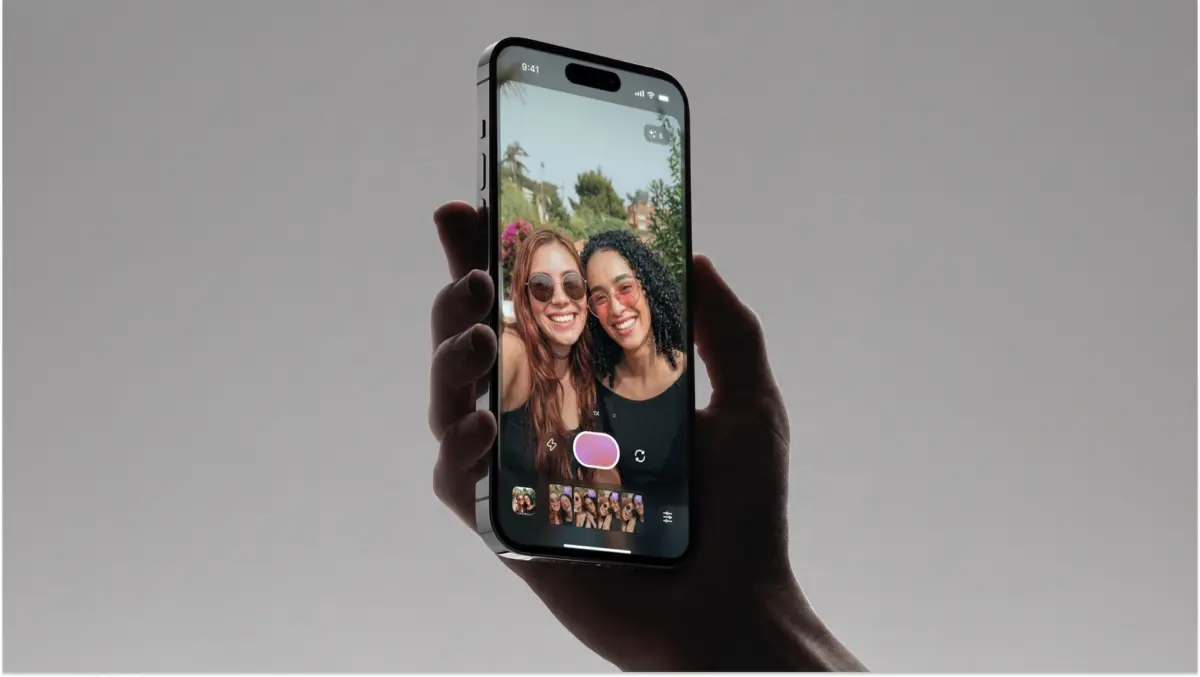
Enter Superpose, a novel iOS application developed by Superpose Labs. Founded by former TikTok product and engineering veterans Melody Chu and Jing Liu, Superpose aims to bridge the gap between advanced generative AI and real-world portraiture. Instead of generating entirely synthetic images or placing users in fantastical, artificial environments, Superpose acts as an interactive, real-time posing coach. By analyzing a scene and generating customized, context-aware pose recommendations directly in the viewfinder, the application seeks to democratize professional portrait photography.
Backed by a $2.2 million seed funding round from premier venture capital firms—including Khosla Ventures and the Asian beauty-tech powerhouse Meitu—Superpose is positioning itself at the vanguard of a new paradigm: behavioral generative AI. This article explores the origins of Superpose, its technical architecture, its position within a rapidly evolving competitive landscape, and its broader implications for the future of digital memory preservation.
Detailed Chronology: From ByteDance to Consumer Launch
The conceptual foundation of Superpose was born out of a ubiquitous, everyday frustration. Co-founder Melody Chu, a seasoned product leader with a pedigree spanning Meta, Nextdoor, Roblox, Slack, and TikTok, found herself repeatedly frustrated by a common relational friction point: her husband’s inability to take flattering photos of her.
"My husband just takes awful photos of me," Chu explained in an interview. "It was a true pain point in our marriage where I don’t understand how he gets me to look just so terrible all the time. And I thought to myself, there has to be a way to solve this problem with advancements in computer vision and generative AI. And I decided to set out on my own."
To translate this personal frustration into a scalable consumer application, Chu partnered with Jing Liu. Liu’s technical background made him the ideal co-founder for a computer-vision startup; he had previously served as a founding engineer at a specialized 3D face-scanning startup before joining TikTok, where he spent years developing and optimizing sophisticated image and video models for hundreds of millions of global users.
[Melody Chu (Product: Meta, Slack, TikTok)]
                   +                          ===>  [Superpose Labs]  ===>  [July Launch]
[Jing Liu (Engineering: 3D Scanning, TikTok)]
Equipped with a deep understanding of how users interact with short-form video and mobile camera interfaces, Chu and Liu established Superpose Labs. Their objective was clear: build a lightweight, highly responsive camera application that could generate personalized, aesthetically pleasing poses in real time.
The development cycle culminated in the official launch of the Superpose iOS application in July. The app quickly found an audience among social media enthusiasts, couples, and casual creators. Within its first few weeks on the App Store, the application garnered over 22,000 downloads and facilitated the generation of more than 190,000 unique poses, demonstrating a clear market demand for automated, interactive photographic guidance.
Supporting Context & Metrics: Analyzing the Competitive Landscape
Superpose does not exist in a vacuum. It is launching at a time when the broader technology sector is aggressively experimenting with AI-guided camera interfaces.
The Industry Context: Google and Adobe
In recent years, major technology platforms have begun leveraging machine learning to actively coach users through the photo-taking process rather than merely correcting images post-capture:
- Google’s Camera Coach: Integrated into its Pixel flagship series, this feature utilizes on-device machine learning to offer real-time haptic and visual feedback regarding framing, rule-of-thirds composition, and camera tilt.
- Adobe’s Experimental AI Critique: Adobe integrated an experimental utility within its camera applications designed to critique photos post-capture and suggest compositional adjustments for subsequent shots.
| Feature / Metric | Superpose | Google Camera Coach | Adobe Experimental |
|---|---|---|---|
| Primary Focus | Human posing & posture coaching | Framing, composition, & tilt | Aesthetic critique & editing |
| Core Technology | Generative AI pose overlays | On-device heuristic computer vision | Cloud-based heuristic analysis |
| Platform | iOS | Android (Pixel exclusive) | Cross-platform (Beta) |
| Target Audience | Everyday consumers & portrait subjects | Amateur landscape/general photographers | Creative professionals & hobbyists |
While Google and Adobe focus heavily on the mechanical and compositional aspects of photography—such as leveling the horizon or avoiding awkward crops—Superpose is targeting the human element. It addresses body language, posture, and facial expression, which are often the most difficult variables for amateur photographers to master.
Monetization Architecture
Superpose has implemented a hybrid freemium monetization model designed to lower the barrier to entry while capturing value from high-frequency users:
- Daily Free Tier: Users are granted five free AI pose generations per day.
- Microtransactions:
- $2.99 for an additional pack of 5 generations.
- $9.99 for a pack of 20 generations.
This transactional pricing structure allows the startup to offset the high cloud computing costs associated with running generative diffusion models, while gathering essential user data to optimize their proprietary algorithms.

Capitalization and Strategic Backing
To fuel its research and development, Superpose Labs secured $2.2 million in seed funding. The investor syndicate is highly strategic:
- Khosla Ventures: Known for its early-stage bets on deep tech and artificial intelligence (including OpenAI), Khosla provides Superpose with institutional credibility and access to cutting-edge AI research networks.
- Meitu: As one of Asia’s most successful smartphone and selfie-app developers, Meitu brings unparalleled domain expertise in facial beautification, portrait segmentation, and consumer monetization strategies within the photo-and-video category.
- OVTR VC: A specialized early-stage fund that assists consumer-facing technology startups in scaling their user acquisition funnels.
Official Statements: The Philosophy of "Lived Experience"
A key differentiator for Superpose is its philosophical approach to generative artificial intelligence. In an era dominated by apps that swap faces, generate hyper-stylized avatars, or place subjects in entirely synthetic environments, Superpose is deliberately grounding its product in physical reality.
Melody Chu emphasizes that Superpose is designed to capture authentic moments rather than fabricate them:
"We want to lean into the core of memory capture versus, say, putting you in a fantastical place that you’ve never been. I think there are so many apps that do that well already, but we really wanna focus on actually capturing the lived moment and experience."
This approach addresses a growing consumer backlash against hyper-artificial, AI-generated media. By focusing on the physical interaction between the photographer, the subject, and the environment, Superpose seeks to preserve the integrity of personal memories while using technology to elevate their aesthetic quality.
[Synthetic AI Apps (Lensa, Remini)] ===> Creates artificial/fantasy environments
[Superpose Camera App]              ===> Enhances and preserves authentic "lived moments"
However, Chu is candid about the technical limitations currently facing the platform. Generative AI models are notoriously prone to spatial distortions, particularly when rendering human limbs and joint articulations—a phenomenon often referred to as the "uncanny valley."
"Some of the pose suggestions might seem uncanny," Chu acknowledged, noting that the startup is actively working to refine its output quality. The engineering team is prioritizing updates that will make the generated poses feel more natural, anatomically correct, and tailored to the specific environment in which the user is standing.
Future Outlook: Overcoming Technical Hurdles and Scaling the Platform
As Superpose looks to scale past its initial 22,000 downloads, the company faces several critical technical and operational challenges.
1. Solving the "Uncanny Valley" of Generative Poses
Generative diffusion models frequently struggle with structural anatomy, often generating hands with incorrect numbers of fingers or limbs bent at unnatural angles. For a posing app, these errors can break user trust. Superpose is addressing this by moving toward specialized ControlNet architectures and pose-estimation frameworks (such as OpenPose). By constraining the AI’s generative outputs to anatomically valid skeletal wireframes, the app can ensure that its suggestions remain physically achievable and visually natural.
[Raw Camera Input]
       │
       ▼
[Skeletal Mapping (OpenPose)] ──► [Anatomical Constraints applied]
       │
       ▼
[AI Pose Generation (ControlNet)] ──► [Natural, Realistic Pose Overlay]
2. Deepening Personalization
The startup plans to transition from generalized pose generation to highly personalized suggestions. Future iterations of the app will analyze a user’s unique body type, facial structure, clothing, and the surrounding context (e.g., a beach vs. an indoor restaurant) to recommend poses that are highly tailored to the individual and the setting.
3. Real-Time Viewfinder Integration
Currently, the app generates static pose suggestions that users can match. The ultimate technical milestone for Superpose is to integrate real-time, interactive coaching directly into the camera’s viewfinder. This would involve live overlay guides, haptic feedback when the subject aligns with the recommended pose, and dynamic voice or text coaching for the photographer (e.g., "Step back two feet," or "Tilt the camera upward").
Conclusion
Superpose represents a pragmatically grounded application of generative AI. By leveraging complex computer vision models to solve a highly relatable, everyday human problem, Melody Chu and Jing Liu have built an elegant bridge between synthetic technology and authentic human connection. Backed by strategic capital and a clear philosophical commitment to preserving "lived moments," Superpose is well-positioned to redefine how we capture, preserve, and share our personal histories in the digital age.