Executive Overview
In an era where generative artificial intelligence has dramatically accelerated the velocity of cyberthreats, software engineering and security teams find themselves locked in an asymmetric race against time. Threat actors can now leverage frontier AI models to reverse-engineer vulnerability disclosures and synthesize working exploit code in a matter of minutes. Concurrently, the very same generative tools and rapid CI/CD pipelines that speed up modern application development have exponentially increased the volume of security alerts that enterprise teams must process daily.
For large organizations managing sprawling application estates, traditional security scanners often generate thousands of raw findings every single day. The vast majority of these alerts turn out to be false alarms—unreachable, unexploitable, or already effectively neutralized by underlying runtime security controls. Compounding this challenge, generic severity scoring frameworks frequently fail to provide the nuanced context required to understand true risk. A vulnerability flagged with a "Critical" score on an isolated, developer-only utility often looks identical on paper to a "Medium" severity finding on a critical service sitting one network hop away from a primary payment database.
Bridging this gap has historically demanded hours of grueling manual investigation by skilled security engineers, followed by days of cross-functional coordination between security, infrastructure, and application teams just to ship a fix with confidence. Without precise business context, assessing the "blast radius" of any code change remains a high-stakes guessing game.
To fundamentally redefine how enterprises discover, validate, and remediate application security risks, Amazon Web Services (AWS) has announced the general availability of AWS Continuum for code vulnerabilities. Designed to transform vulnerability management from a reactive, alert-fatigue-driven chore into an automated, precision-guided workflow, AWS Continuum automatically finds and validates code vulnerabilities, evaluates their real-world exploitability, ranks them by true business impact, and delivers actionable, human-vetted remediation patches directly to code repositories as pull requests.

Available today in the US East (N. Virginia) and US West (Oregon) AWS Regions, AWS Continuum arrives as a transformative solution for organizations struggling to secure modern cloud applications without grinding development velocity to a halt.
Detailed Chronology: How AWS Continuum Works
The launch of AWS Continuum represents the culmination of years of AWS research into automated reasoning, context-aware graph databases, and generative application security. To understand how the service streamlines what was once a days-long remediation cycle into a seamless, minutes-long workflow, it is necessary to examine how Continuum ingests data, evaluates risk, and executes remediation.
1. Environment Setup and Context Integration
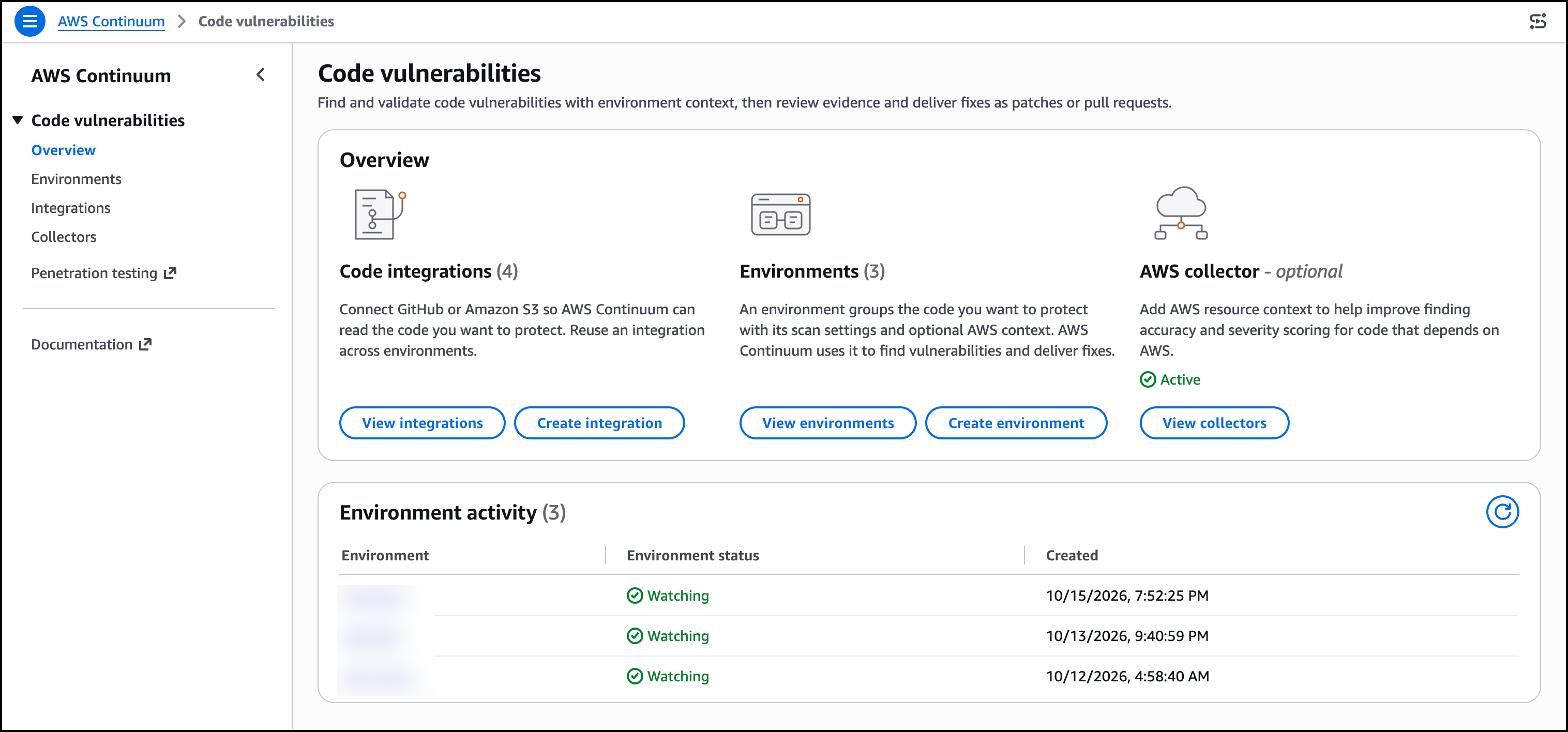
The workflow begins within the AWS Management Console, where administrators navigate to the dedicated AWS Continuum home page. Before the service can evaluate a codebase, it requires two primary pillars of context: software source code and cloud infrastructure topology.
- Code Integration: Users connect their source repositories via a seamless GitHub integration or point the service to an Amazon Simple Storage Service (Amazon S3) bucket. When utilizing an Amazon S3 source, the bucket must reside in the same AWS Region and account where AWS Continuum is enabled, with access securely granted through a dedicated AWS Identity and Access Management (IAM) role assumed by Continuum.
- Infrastructure Collectors: To capture the crucial runtime context of the AWS environment, administrators deploy an AWS Continuum collector in the account and region where the target applications run. This collector aggregates detailed resource configurations—including AWS Config data and complex networking topologies—allowing Continuum to understand how services communicate and what network pathways are exposed.
Once these integrations are established, users configure scheduled scans or trigger on-demand checks via the Scans tab. The Overview centralizes this architecture, displaying active code integrations, downstream environments, and the real-time operational status of underlying AWS collectors.

2. Context Graph Generation and Vulnerability Triangulation
Rather than treating code in isolation, AWS Continuum synthesizes data from code repositories and the live AWS environment to construct a comprehensive context graph.
From this graph, Continuum maps out the organization’s application architecture: it learns which systems are business-critical, identifies asset ownership, traces how microservices depend on one another, and logs the specific data stores each service touches. By identifying high-value crown jewels—such as customer databases, payment pipelines, and authentication gateways—Continuum can accurately rank resultant security issues based on how closely an attacker’s potential path runs to these sensitive systems.
3. Rigorous Exploit Validation and Evidence Generation
When a scanner flags a potential vulnerability, AWS Continuum does not simply parrot back a generic CVSS score. Instead, it subjects the finding to deep, empirical analysis:
- Static Proof: Continuum performs advanced static analysis along the vulnerable code path to establish a verifiable verdict.
- Sandbox Reproduction: For reproducible findings, the service executes the exploit within an isolated, secure sandbox environment, generating concrete proof-of-concept code and step-by-step reproduction instructions.
- Defense Evaluation: The service evaluates whether existing runtime defenses and network controls would detect and halt the validated attack path.
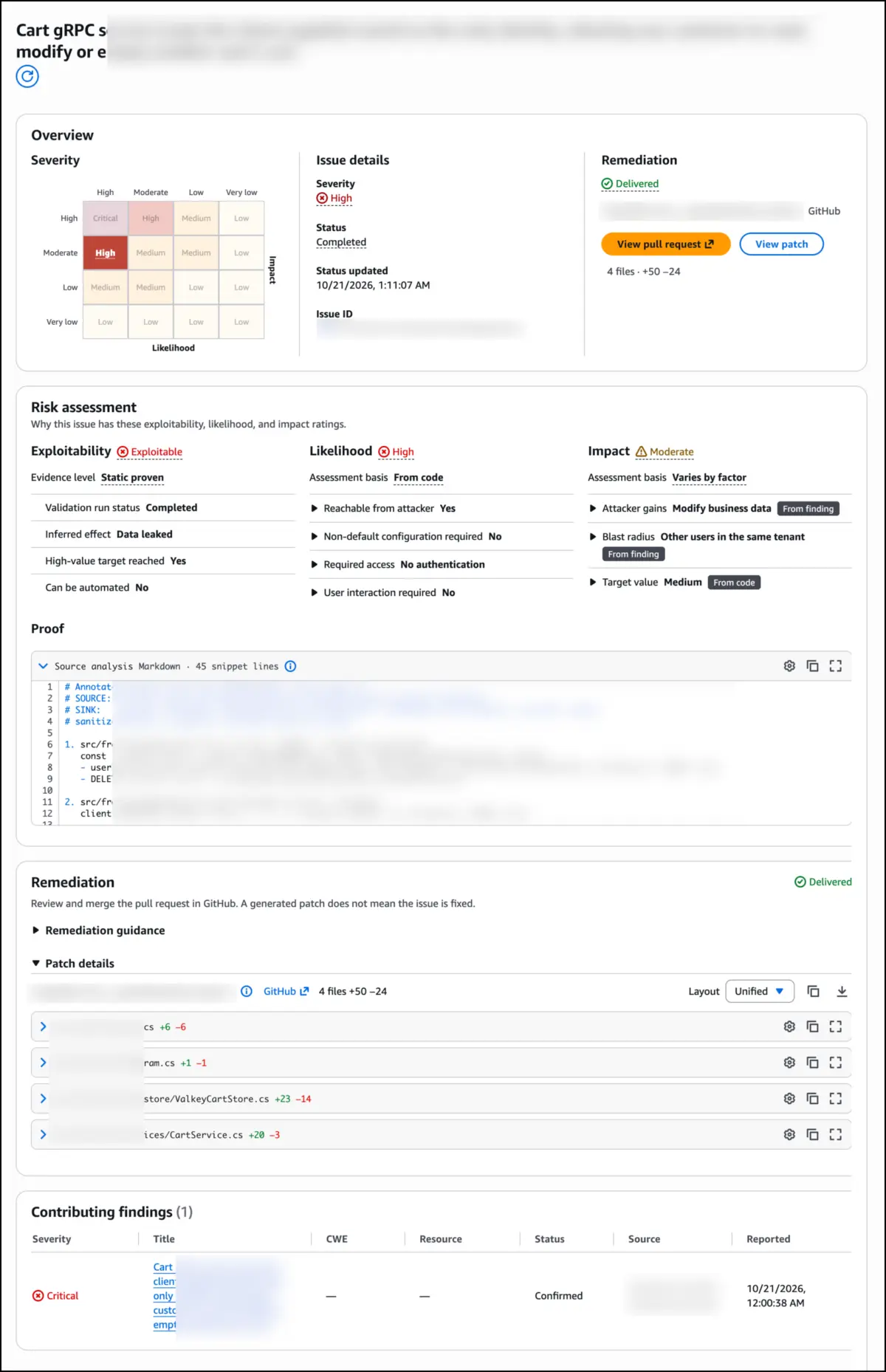
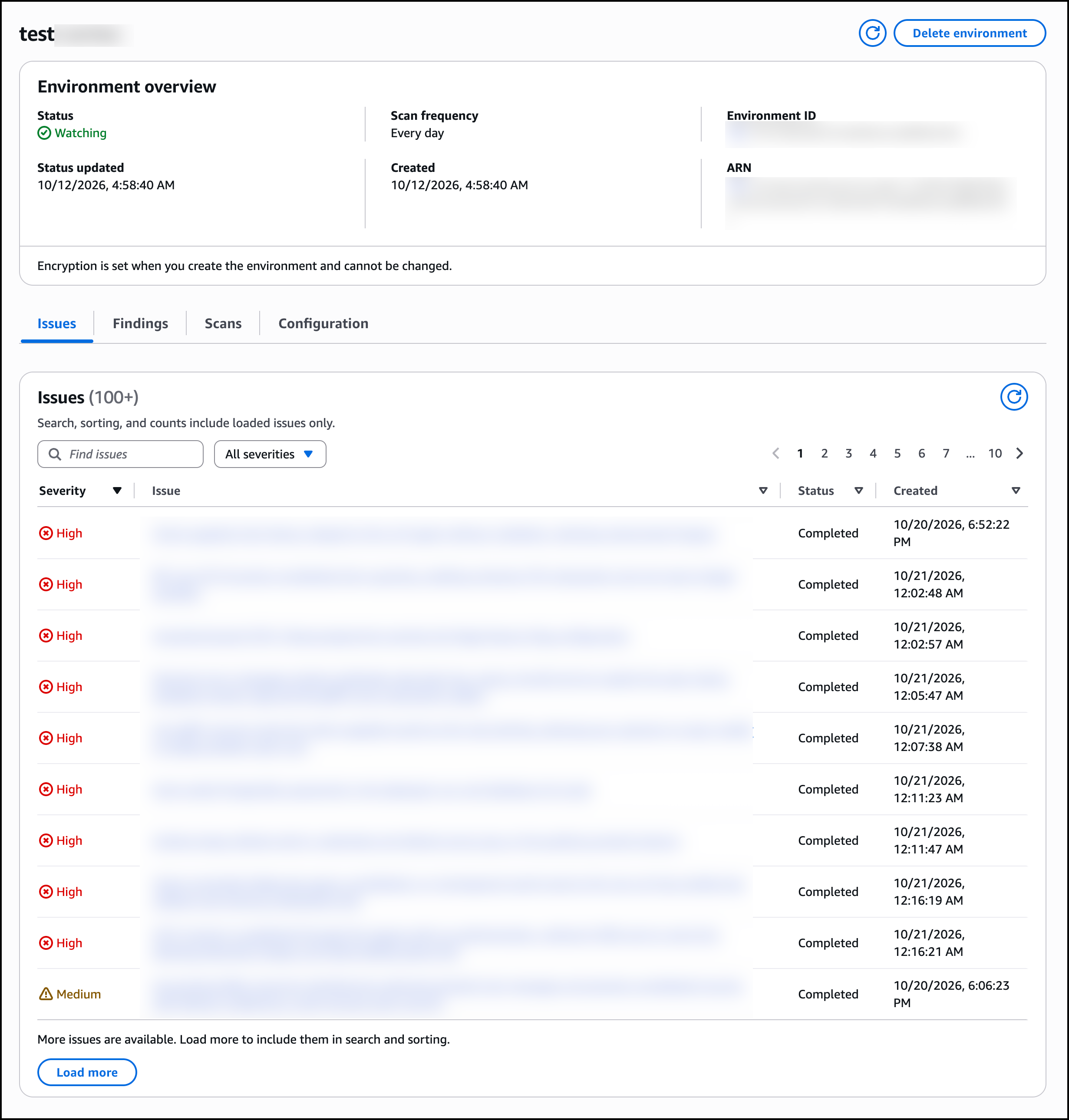
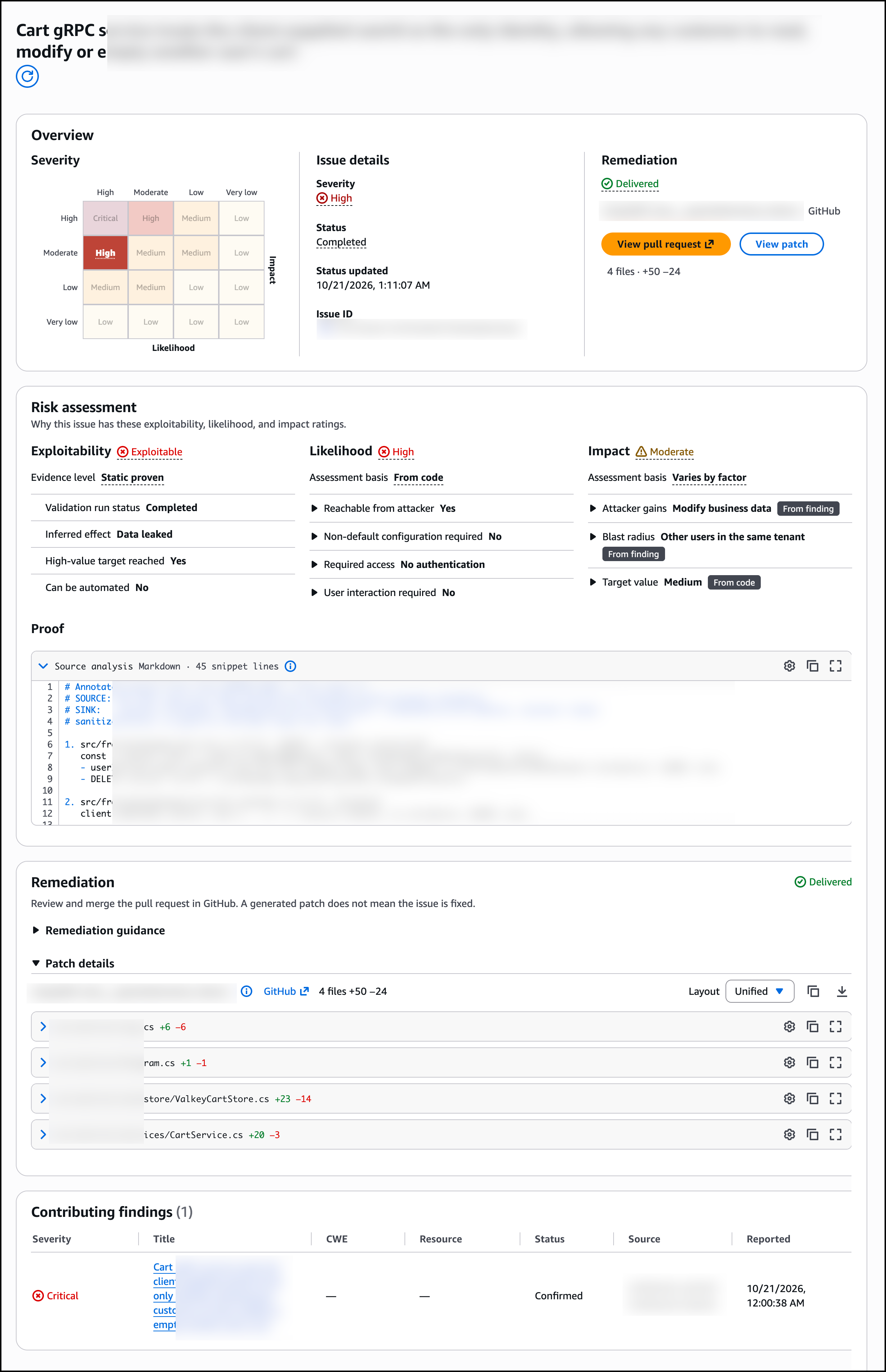
Instead of a naked risk score, engineers are presented with a comprehensive dossier detailing the precise attack path, supporting source analysis, and a definitive blast radius assessment.
4. Automated Remediation via Pull Requests
For every confirmed issue, AWS Continuum automatically generates a surgical fix—ranging from precise code patches and dependency upgrades to infrastructure configuration adjustments. It then opens this fix as a pull request directly in the connected repository (e.g., GitHub).
Crucially, AWS maintains a human-in-the-loop governance model during this initial rollout phase. Every proposed remediation waits for explicit human review. Engineers can inspect the changes directly within their native Git workflow, where the pull request description carries over the complete risk assessment, remediation summary, and proof generated by the AWS Continuum console. Once reviewed, the engineer merges the pull request, ensuring that the development team retains absolute control over what code ships to production.
Supporting Context & Metrics: The Scale of the Modern Threat Landscape
The urgency behind the development of AWS Continuum is underscored by shifting cybersecurity dynamics. According to recent industry threat intelligence, the window of vulnerability—the time elapsed between the public disclosure of a security flaw and the active exploitation of that flaw in the wild—has collapsed dramatically.
- The Velocity Gap: Automated threat actor toolsets powered by frontier AI models can now weaponize public vulnerability disclosures within minutes. Security teams operating on traditional 30-to-90-day patch cycles are effectively operating at human speeds against machine-speed adversaries.
- Alert Fatigue and False Positives: Enterprise security scanners routinely inundate security operations centers (SOCs) and application security teams with thousands of alerts daily. Industry studies indicate that up to 60% to 80% of automated vulnerability alerts are either unreachable over the network, rendered unexploitable by environment configurations, or mitigated by existing defense-in-depth controls.
- The Cost of Manual Investigation: Prior to context-aware validation tools like AWS Continuum, confirming whether a specific finding posed an active threat required hours of manual investigation. Furthermore, deploying a patch safely often required days of cross-departmental coordination to ensure that a fix for one service did not inadvertently break dependent microservices elsewhere in the enterprise estate.
AWS Continuum directly addresses these friction points by filtering out noise, proving exploitability mathematically, and bounding the operational risk of every proposed fix.
Official Statements and Strategic Vision
While AWS has built its security portfolio on foundational tools like Amazon Inspector, AWS IAM Access Analyzer, and AWS Security Hub, AWS Continuum represents a conceptual leap forward into automated reasoning and autonomous remediation governance.
Industry analysts and early enterprise adopters have noted that Continuum addresses the holy grail of application security: bridging the cultural and technical divide between security tooling and developer workflows. By meeting developers where they already work—inside GitHub pull requests and standard code review pipelines—Continuum eliminates the friction that traditionally caused security tickets to languish in backlogs.
Furthermore, AWS has outlined a clear evolutionary roadmap for the service. While every remediation currently starts in a supervised mode where a human must review and approve the generated pull request, future iterations of AWS Continuum will introduce configurable automation guardrails. Organizations will soon be able to establish trust policies based on specific remediation classes, automated test coverage thresholds, scope bounds, and historical success rates, allowing Continuum to apply verified fixes autonomously once confidence gates are cleared.
Future Outlook: The Autonomous Remediation Era
The launch of AWS Continuum for code vulnerabilities signals a broader, industry-wide transition toward autonomous application security. As software estates grow increasingly complex—spanning multi-cloud architectures, serverless functions, containerized microservices, and AI-generated codebases—manual vulnerability management is rapidly becoming obsolete.
In the coming years, we can expect security platforms to evolve from passive reporting engines into active, self-healing participants in the software development lifecycle. By combining deep cloud environment telemetry with advanced automated reasoning and secure code generation, services like AWS Continuum will enable organizations to achieve continuous compliance and resilience.
For security leaders, the message is clear: the future belongs to organizations that can harness AI to defend their infrastructure with the same speed and agility that threat actors use to attack it. With AWS Continuum, Amazon has provided the enterprise software ecosystem with a powerful, context-aware compass to navigate this new frontier securely.
For more information, pricing details, and technical documentation, visit the official AWS Continuum for code vulnerabilities product page or consult the comprehensive AWS Continuum User Guide.