Date: October 22, 2026
Author: Global Infrastructure & Technology Desk
Reading Time: 7 minutes
Executive Overview
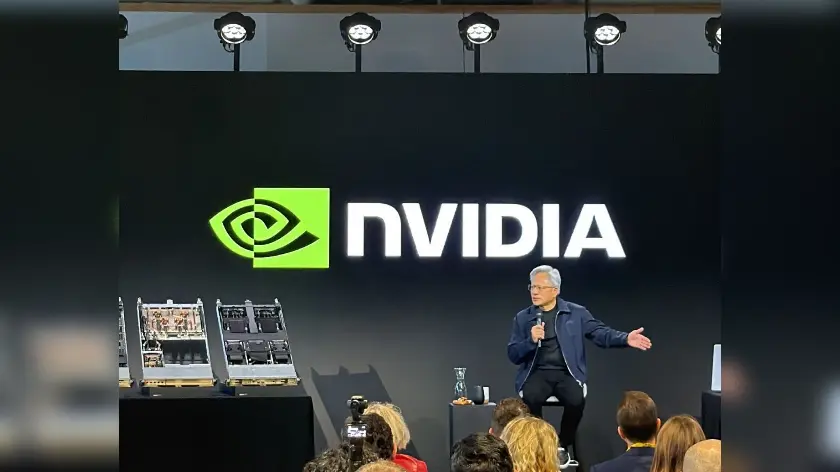
The rapidly expanding artificial intelligence boom is facing an unprecedented physical reality check, exposing a widening chasm between the insatiable demand for high-performance computing and the terrestrial limits of electrical power grids. Speaking at GTC Berlin, Nvidia Chief Executive Jensen Huang aggressively defended the financial model of alternative "neocloud" providers, dismissing mounting Wall Street concerns over their high capital-expenditure requirements. Huang asserted that current funding pressures stem not from structural weaknesses, but from explosive, unprecedented demand that has left operators completely sold out of available capacity.
Huang’s robust defense comes at a critical juncture for the digital infrastructure sector. Just days prior to his remarks, technology titan Microsoft pulled out of its anchor tenancy for Nscale’s high-profile, 50-megawatt data centre project in Loughton, Essex. The withdrawal was triggered by stark warnings from the local utility grid operator, indicating that full power connections for the facility might not materialize until the early-to-mid-2030s.
The Loughton setback lays bare a systemic vulnerability within the neocloud ecosystem: while hardware manufacturers like Nvidia can rapidly pivot compute capacity to alternative buyers when projects stall, independent neocloud operators—heavily leveraged and tied to specific geographic footprints—face existential risks when grid delays collide with hyper-compressed customer timelines. As industry stakeholders grapple with lead times stretching into years for both grid hookups and heavy backup generators, the race to build the infrastructure underpinning the next generation of AI is running hard against the physical limits of the modern power grid.
Detailed Chronology: The Rise and Stumble of the Loughton Project
The unraveling of the Essex data centre project marks a sobering reality check for the United Kingdom’s ambitions to position itself as a global AI superpower. The timeline of the Loughton development illustrates how quickly macroeconomic enthusiasm can collide with bureaucratic and physical infrastructural delays.
January 2025: Grand Ambitions and Rapid Timelines
The project was first unveiled with significant fanfare as a flagship 50MW data centre site slated for Loughton, Essex, backed by a massive £2 billion ($2.6 billion) investment pledge by Nscale to shore up the UK’s domestic AI capabilities. At the time, the facility was scheduled to go live by the fourth quarter of 2026, aligning with a market environment where build-out cycles were aggressively accelerating. Customers accustomed to multi-year infrastructure pipelines were increasingly demanding operational AI clusters within a window of just six months.
April 2025: Early Warning Signs
Cracks in the UK’s hyper-accelerated AI infrastructure rollout began appearing earlier in the year. OpenAI notably paused its proposed UK "Stargate" project—a joint vision involving Nvidia and Nscale—citing prohibitive domestic energy costs. While that pause served as an early indicator of power market friction, operators continued pushing forward with regional builds, betting that grid upgrades would keep pace with software advancements.
October 2026: The Grid Wall and Microsoft’s Exit
The fragility of these timelines culminated in October 2026, weeks before Nscale’s planned initial public offering (IPO) in the United States. Microsoft, which had signed on as the primary anchor tenant for the Loughton site, abruptly withdrew from the agreement. The decision followed definitive assessments from utility coordinators revealing that grid-level power delivery to the Essex site would be severely delayed, with full capacity potentially deferred until the early-to-mid-2030s.
Despite Microsoft’s exit, Nscale moved swiftly to reassure markets, issuing statements to Reuters confirming that its broader operational relationships remain robust and that the Loughton delay has no contagion effect on its other international contracts. Nscale leadership reiterated their enduring commitment to the Essex project, announcing active explorations into alternative, off-grid power generation solutions.
Supporting Context & Metrics: The Mechanics of Neocloud Pressure
To fully understand why Microsoft’s departure and Jensen Huang’s counter-arguments are dominating industry discourse, one must examine the unique economic architecture of neocloud providers.
The Neocloud Business Model vs. Hyperscalers
Unlike traditional hyperscalers (such as Microsoft Azure, AWS, and Google Cloud) which boast diversified revenue streams spanning enterprise software, consumer tech, and sprawling global cloud real estate, neoclouds are specialized, nimble entities. They are purpose-built to aggregate massive densities of specialized AI accelerators—predominantly Nvidia GPUs—and rent them out to AI labs and enterprises.
However, this specialization comes with distinct structural trade-offs:
- High Capital Intensity: Neoclouds rely heavily on debt financing and venture capital to procure expensive silicon arrays well in advance of revenue generation.
- Geographic Concentration: Unlike hyperscalers that can instantly shift workloads across dozens of global availability zones, neoclouds often anchor their operations to specific, highly localized real estate footprints secured by favorable power purchase agreements.
- Customer Exposure: With concentrated customer rosters, the loss of an anchor tenant like Microsoft can critically disrupt projected cash flows required to service high-yield debt obligations.
The Power Crisis: Metrics That Matter
The infrastructural bottleneck facing Nscale is emblematic of a broader European and global crisis. Key data points illuminating the current state of digital infrastructure include:

- Grid Connection Delays: According to findings from a Capacity executive roundtable held in London, an overwhelming 70% of infrastructure leaders now expect grid connections to take more than 18 months, with complex projects facing timelines stretched across decades.
- Generator Procurement Backlogs: As developers look to bypass sluggish utility grid queues by procuring on-site backup or primary generation, industry discussions at Capacity Europe revealed that generator lead times have ballooned to two years.
- Compressed Build Windows: Jensen Huang noted a seismic shift in customer expectations: whereas a three-year build time was once standard for massive enterprise data centres, modern AI clients expect bespoke clusters to be fully commissioned and running within six months.
To mitigate the inherent risks of this high-wire balancing act, Nvidia has increasingly stepped in to backstop its ecosystem. Beyond standard equity investments, Nvidia has pioneered utilization-floor guarantees—such as agreements struck with partners like Sharon AI—whereby the chip designer commits to renting back idle GPU capacity if end-user demand temporarily dips.
Official Statements and Industry Perspectives
The friction between software-speed AI advancement and hardware-speed civil engineering has sparked intense debate among industry titans.
Jensen Huang on Demand and Adaptability
Addressing reporters at GTC Berlin, Jensen Huang pushed back firmly against narratives framing neocloud financing challenges as a bubble or structural market failure.
"You can’t solve the absence of demand," Huang stated, emphasizing that the intense need for working capital among neoclouds is a direct byproduct of a market where operators are "completely sold out" and demand is "incredible."
Addressing the Loughton setbacks specifically, Huang offered a pragmatic view of the arduous engineering realities involved in deploying the world’s most advanced AI clusters. He noted that integrating systems of unprecedented scale inevitably triggers friction points across supply chains, construction, and municipal permitting.
To counteract localized delays, Huang pointed to Nvidia’s universal platform architecture. Because Nvidia operates as a standardized common layer across cloud providers globally, the company retains the flexibility to dynamically reroute compute allocations. If an individual site like Loughton slips its schedule, Nvidia can pivot supply to alternative customers, ensuring that aggregate global deployment metrics remain stable. Furthermore, Huang highlighted Nvidia’s newly developed DSX pod—a containerized AI factory unit manufactured directly within the supply chain—as a critical tool designed to streamline planning and deployment cycles ahead of its late-year rollout.
The Sustainable Energy Opportunity
Rather than viewing power constraints as a permanent ceiling for AI growth, Huang framed the energy crisis as a historic catalyst. He described AI’s insatiable appetite for electricity as "the best opportunity in a century for market-driven investment in sustainable energy," projecting that the sector will single-handedly accelerate capital deployment into next-generation nuclear fission, fusion physics, and advanced grid management technologies.
Future Outlook: Navigating the Infrastructure Gap
As the dust settles on the Loughton project realignment, the neocloud sector faces a defining crucible. The immediate future of AI infrastructure will not be dictated solely by advances in silicon architecture or software algorithmic efficiency, but by the agility with which developers can solve the physical equation of power delivery.
The Pivot to Off-Grid Solutions
With municipal grid queues in the UK and across major European data hubs stretching deep into the 2030s, operators are increasingly forced to explore decentralized, on-site energy generation. Whether through direct microgrid integration, small modular reactors (SMRs), or localized renewable arrays paired with advanced battery storage, the mandate for data centre developers is clear: secure your own power, or risk losing marquee enterprise tenants.
However, as evidenced by the two-year lead times plaguing heavy generator procurement, transitioning to off-grid independence is fraught with its own supply chain bottlenecks.
Market Consolidation and Resilience
For neoclouds preparing for public markets—such as Nscale ahead of its anticipated US IPO—demonstrating operational resilience in the face of utility delays will be paramount. Investors will closely scrutinize how effectively these firms can diversify their real estate pipelines and secure resilient power purchase agreements.
Ultimately, Jensen Huang’s perspective rings true: the demand for AI compute shows no signs of abating. The core challenge facing the digital infrastructure industry over the remainder of the decade is no longer about generating demand, but about engineering the physical bridges required to power the intelligence revolution.