Executive Overview
Magic: The Gathering (MTG) is currently navigating one of the most commercially expansive and culturally dominant eras in its three-decade history. Propelled by aggressive cross-media collaborations under the Universes Beyond banner—alongside robust, world-building main sets under the traditional Universes Within framework—Wizards of the Coast’s flagship trading card game continues to draw unprecedented numbers of fresh players, lapsed veterans, and high-volume collectors into its fold.
However, this commercial boom has brought secondary market friction, shifting retail models, and volatile price points. To meet surging demand, players and collectors increasingly rely on digital retail giants like Amazon to secure product at a discount. Recently, Amazon has rolled out a sweeping wave of price cuts across numerous Play Booster Boxes. Notably, these discounts include upcoming releases—such as the highly anticipated Star Trek collaboration, which has seen a steep 26% discount weeks before its official retail launch—alongside markdowns on popular Marvel sets, The Hobbit, Avatar: The Last Airbender, and core Universes Within expansions like Reality Fracture and Secrets of Strixhaven.
This report provides an exhaustive breakdown of the current MTG economic landscape. It evaluates the distinction between Play Boosters and Collector Boosters, examines the chronological trajectory of recent and upcoming sets, details specific price metrics and retail savings, analyzes the industry-wide implications of third-party vs. direct-to-consumer discounting, and outlines what the 2027 release calendar portends for the secondary market.

Detailed Chronology: The Evolution of 2026’s Flagship MTG Releases and Their Market Footprint
To fully understand why Amazon and other major retailers are discounting current inventory, one must examine the chronological rollout of Magic: The Gathering product lines over the past twelve months. The strategic cadence of Wizards of the Coast’s release schedule has directly influenced how secondary markets value sealed product.
Q1–Q2 2026: The Marvel Incursions and Middle-earth Returns
The year began with heavy cross-branding efforts that solidified the commercial power of Universes Beyond.
- Marvel Spider-Man (Early 2026): While initial community consensus was mixed regarding the mechanical complexity and narrative integration of the early 2026 Spider-Man line, the set introduced several staple cards that retained collector interest. Originally commanding a steep manufacturer’s suggested retail price (MSRP) baseline hovering around $209.70 for a standard 30-pack Play Booster Box at this time last year, the set has experienced a dramatic market correction. Current Amazon price points sit at $134.95, making it an accessible entry point for casual drafters.
- Marvel Super Heroes (June 2026): Releasing in the early summer of 2026, the broader Marvel Super Heroes Play Booster Box refined many of the mechanical missteps of its predecessor. Lauded for offering a more cohesive draft environment and higher-tier artwork variants, it initially held its high-end price bracket before succumbing to broader retail discounting. It has now slid from its $209.70 MSRP down to $149.99.
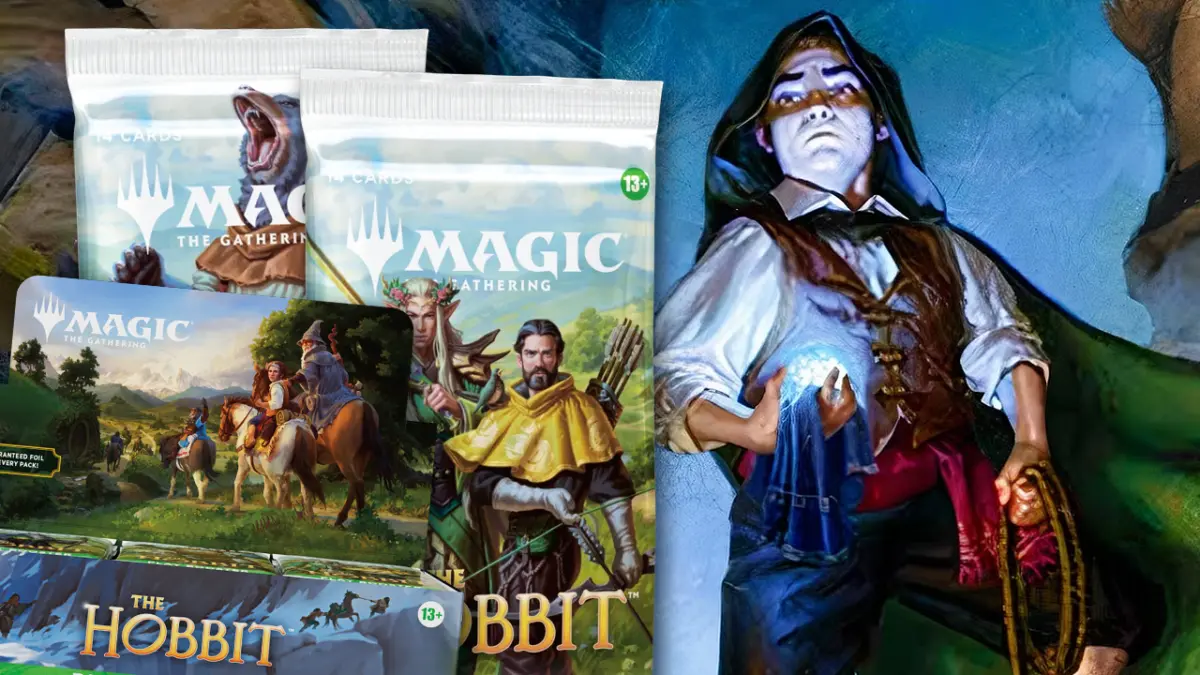
- The Hobbit (Mid 2026): Capitalizing on persistent fantasy nostalgia, The Hobbit Play Booster Box introduced iconic representations of Smaug, Gollum, Bilbo, and the Company of Thorin Oakenshield. Offering a standard 30-pack configuration alongside a guaranteed box topper, the set has dropped by 23%, bringing the box price down to $161.93.
Q3 2026: Animation Crossovers and Core World-Building
- Avatar: The Last Airbender (Summer 2026): Surpassing early fan expectations, the Avatar: The Last Airbender crossover emerged as one of the most pleasant surprises of the 2026 calendar. Its synergistic blend of elemental mechanics and beloved characters captured both casual players and competitive deckbuilders. Current retail adjustments have positioned a 30-pack box at $139.99.
- Secrets of Strixhaven: For many purists, the return to the halls of academia via Secrets of Strixhaven stood out as the premier Universes Within experience of 2026. Bringing fresh spells and campus-themed mechanics, the set has received a robust 21% discount, allowing buyers to snap up 30-pack Play Booster Boxes for $129.99.
- Lorwyn Eclipsed: A nostalgic return to the beloved, shadow-haunted plane of Lorwyn, Lorwyn Eclipsed has drifted down to $118 per box. However, market analysts advise caution: historical pricing data indicates that this product hovered roughly $11 lower just weeks prior, making it a prime candidate for deeper Black Friday and holiday promotional markdowns.
Q4 2026 and Horizon: Reality Fracture and the Forthcoming Star Trek Crossover
- Reality Fracture (Current Set): As the newest Universes Within tentpole, Reality Fracture is currently navigating the early stages of its lifecycle. Because initial stock allocation is tightly managed, active discounts are primarily driven by independent third-party vendors rather than direct Amazon fulfillment. Even so, savvy buyers can secure boxes for $153.98—representing a modest $10 shaving off standard MSRP.
- Star Trek Play Booster Box (Upcoming): In one of the most aggressive pre-launch discounting campaigns seen in recent trading card game history, Amazon has slashed the price of the upcoming Star Trek Play Booster Box by 26% several weeks ahead of its official release date. This unprecedented early markdown signals an aggressive push by retailers to lock in pre-orders and capture consumer liquidity before holiday spending shifts elsewhere.
Supporting Context & Metrics: Play Boosters vs. Collector Boosters
Navigating the modern Magic: The Gathering marketplace requires a firm grasp of product segmentation. The introduction of standardized Play Boosters—which replaced the older paradigms of Draft Boosters and Set Boosters—was designed to streamline manufacturing while preserving the pack-opening thrill. However, consumers must remain cognizant of the fundamental differences between product tiers.

The Play Booster Paradigm
Play Boosters are engineered primarily for limited formats (Draft and Sealed Deck) while retaining a curated pool of alternate-art cards, foils, and rares suitable for constructed formats like Commander, Modern, and Standard.
- Pack Count: Standard Play Booster Boxes contain 30 packs.
- Target Audience: Draft enthusiasts, budget-conscious collectors, and players looking to build functional deck pools efficiently.
- Price Stability: Because they are printed in significantly higher volumes than their ultra-premium counterparts, Play Booster Boxes are prime targets for retail price erosion and seasonal discounts.
The Collector Booster Caveat
Conversely, Collector Boosters occupy the luxury tier of the hobby.
- Focus: Foil-etched treatments, extended-art frames, serialized cards, and texturised foils.
- Price Differential: Collector Booster Boxes often command two to four times the price of Play Booster Boxes while containing fewer total packs (typically 12 packs per box).
- Secondary Market Impact: While Play Booster Boxes dictate the baseline availability of playable commons, uncommons, and standard rares, Collector Boosters dictate the high-water mark for speculative luxury asset valuation. Buyers seeking to maximize their play-to-dollar ratio are universally advised to focus on Play Booster discounts, leaving Collector Boosters to high-risk speculators.
Market Dynamics & Retail Economics: Why Are Boxes Being Discounted?
The widespread discounting of sealed MTG product across major e-commerce platforms like Amazon is not an isolated phenomenon. It reflects a complex confluence of inventory management, supply chain adaptations, and consumer spending habits.

- Product Fatigue and Release Cadence: Wizards of the Coast maintains an accelerated release schedule. With multiple major sets—both in-universe and cross-branded—dropping within tight quarterly windows, local game stores (LGSs) and online warehouse operations frequently face liquidity crunches. To free up warehouse square footage for incoming inventory (such as the impending Star Trek and upcoming 2027 sets), distributors offload surplus Play Booster stock to high-volume online liquidators.
- The Rise of Third-Party Fulfillment: While direct-from-Amazon sales guarantee stable fulfillment and return policies, platforms like Amazon also host third-party marketplace sellers competing aggressively on price. This creates downward pricing pressure, forcing even primary sellers to match margins, as seen with the Reality Fracture listings.
- Shifting Collector Sentiment toward Universes Beyond: The reception of crossover properties has polarized legacy segments of the player base. While casual fans and pop-culture enthusiasts gravitate heavily toward sets like Marvel Super Heroes and Avatar: The Last Airbender, some traditionalists reserve their purchasing power exclusively for in-universe lore. This bifurcation creates localized demand imbalances, leaving certain crossover boxes open to aggressive promotional markdowns.
Future Outlook: Looking Ahead to 2027 and Beyond
As the dust settles on the 2026 product slate, market participants are already casting their gaze toward the horizon. Wizards of the Coast has already begun teasing its extensive 2027 release schedule, which promises a careful equilibrium between nostalgic returns to fan-favorite original planes and high-profile narrative crossovers.
Most notably, the confirmation of subsequent Marvel expansions—highlighted by the announced Darkhold Destiny set scheduled for next year—proves that the Universes Beyond partnership is yielding long-term dividends for Hasbro and Wizards of the Coast. For collectors, this means the current wave of discounting on 2026 Marvel inventory may serve as a historical benchmark: acquiring older super hero prints at a discount ($134.95 to $149.99) allows players to build comprehensive deck pools ahead of synergistic mechanical interactions expected in Darkhold Destiny.
Furthermore, industry watchers predict that upcoming releases like the Star Trek set—already subjected to aggressive pre-order markdowns—will establish a new precedent for pre-launch retail strategies. If consumers demonstrate a willingness to scoop up discounted boxes prior to street date, online retailers may increasingly lean into pre-order price guarantees to capture market share before brick-and-mortar storefronts can lock down local drafts.

Strategic Recommendations for Buyers
- For Draft Players: Capitalize immediately on deeply discounted boxes such as Marvel Spider-Man ($134.95) and Secrets of Strixhaven ($129.99) to secure maximum card volume per dollar.
- For Collectors: Exercise tactical patience. While pre-order discounts on upcoming sets like Star Trek (26% off) represent exceptional immediate value, monitor historical price curves for sets like Lorwyn Eclipsed as major retail holidays approach, keeping an eye out for potential Black Friday auxiliary markdowns.
- For Speculators: Differentiate clearly between Play and Collector dynamics. Treat Play Booster Boxes strictly as tools for functional utility, draft longevity, and accessible deck-building rather than liquid financial instruments.
As Magic: The Gathering continues its ambitious march across cultural multiverses, savvy navigation of retail discounts remains the single most effective tool for players seeking to expand their collections without breaking the bank.