Executive Overview
For years, the overarching narrative of NASA’s flagship return-to-the-moon initiative was straightforward: Artemis III would be the historic mission that finally placed human footprints back on the lunar regolith for the first time since the closing days of the Apollo era. That narrative, however, has undergone a significant operational recalibration.
Following the successful execution of the Artemis II lunar flyby, NASA and its international partners have revised the program’s flight manifest. The long-anticipated human lunar touchdown has been pushed forward to the Artemis IV mission, which is currently slated for liftoff in early 2028. Consequently, the upcoming Artemis III mission—scheduled for 2027—will no longer feature a descent to the moon’s surface.
While this adjustments strips away some of the immediate, cinematic spectacle of a crewed lunar landing, aerospace engineers and project scientists emphasize that the revised sequence is far from dispensable. Instead, Artemis III will serve as a vital, high-stakes orbital dress rehearsal.
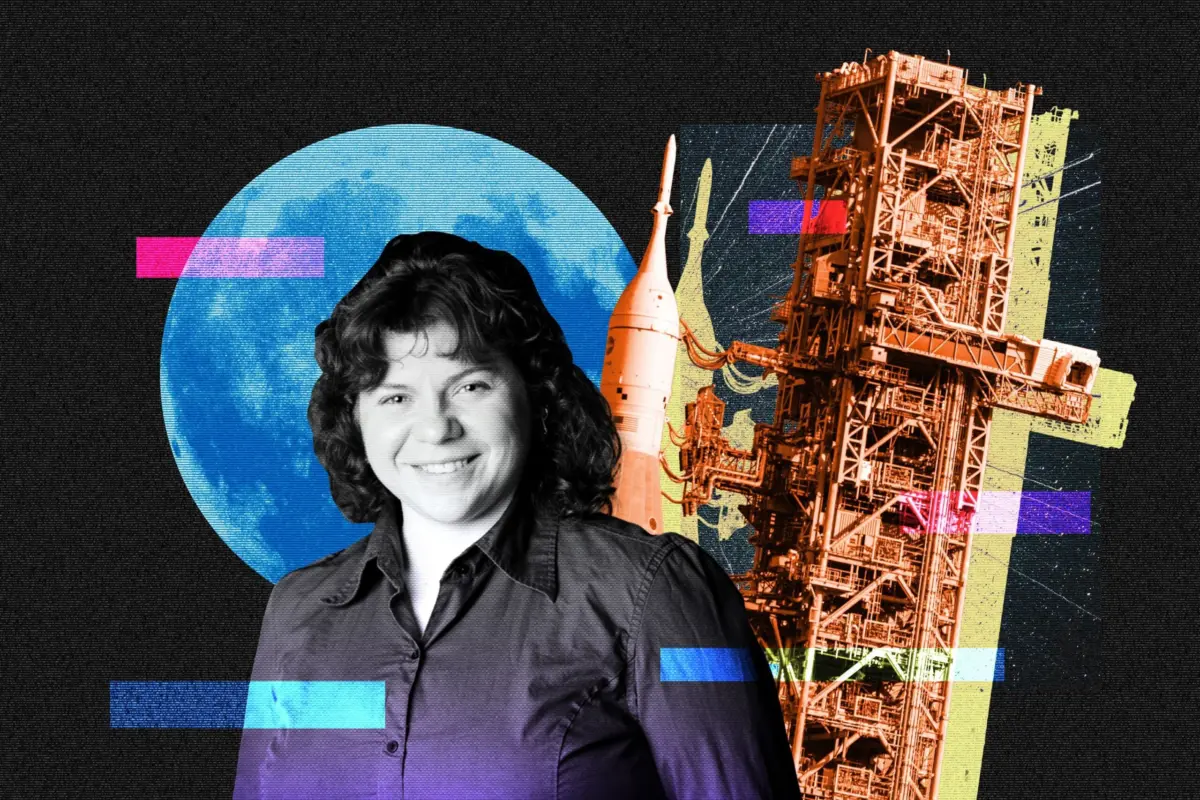
During this flight, NASA will test whether the Orion crew capsule can safely rendezvous, dock, and operate with commercial lunar landing systems developed by aerospace giants SpaceX and Blue Origin. By validating these critical proximity-operations and life-support protocols in Earth orbit before attempting them hundreds of thousands of miles away, the space agency is prioritizing safety and system reliability. To unpack the nuances of this shift, WIRED spoke with Barbara Cohen, a planetary scientist on the Artemis III project. The conversation sheds light on the evolving role of human spaceflight, the integration of commercial enterprise, and how the ancient scars preserved on the lunar surface continue to hold the key to understanding Earth’s own violent, formative past.
Detailed Chronology: The Evolution of the Artemis Program Manifest
To understand the current trajectory of the Artemis program, one must examine the cascading timeline that brought NASA to this operational pivot. The architecture of modern lunar exploration has evolved from a linear, government-exclusive blueprint into a complex, public-private partnership heavily reliant on commercial innovation.

1. The Foundation: Artemis I and II
The roadmap began with Artemis I, an uncrewed flight test of the Space Launch System (SLS) and the Orion spacecraft that successfully validated the heat shield and deep-space navigation systems in late 2022. Building on that success, the program achieved a major milestone last April with the completion of Artemis II. This historic crewed flyby carried astronauts around the moon, testing life-support systems, communication arrays, and human endurance in deep-space environments.
The successful completion of Artemis II provided mission planners with a wealth of telemetry and human factors data. It also provided the operational confidence needed to evaluate the readiness of downstream hardware, most notably the Human Landing Systems (HLS) being constructed by private industry.
2. The 2027 Pivot: Artemis III in Earth Orbit
Originally earmarked for a lunar landing, Artemis III has been redesigned as an Earth-orbiting proving ground. In 2027, NASA plans to launch the Orion capsule with a full crew into low-Earth orbit. Simultaneously, SpaceX and Blue Origin will launch their respective commercial lunar lander test articles into the same orbital plane.
Orion will execute complex rendezvous, proximity operations, and simulated docking maneuvers with these commercial vehicles. This step is non-negotiable: the engineering hurdles of transferring astronauts between a deep-space transport capsule and a specialized lunar lander require rigorous, real-world validation closer to home. By keeping this test in Earth orbit, mission controllers retain the ability to abort or intervene if anomalies arise—a safety margin that vanishes once a spacecraft enters lunar orbit.
3. The 2028 Horizon: Artemis IV and the Lunar Touchdown
With orbital docking protocols validated and commercial landing architectures refined, the program will transition to Artemis IV in early 2028. This mission will mark the true return of humans to the lunar surface. It will also initiate the deployment phases for sustained lunar infrastructure, opening the gateway for long-term scientific habitation near the moon’s south pole.

Supporting Context & Metrics: Bridging the Gap Between Exploration and Science
While the public often views space missions through the singular lens of scientific discovery, program architects are careful to define the primary parameters of the early Artemis flights.
"The Artemis missions, just to be clear, are not science missions," explains Barbara Cohen. "They’re exploration for a lot of different reasons. We do that for technology development. We do that for inspiration. And we try to get the science that we can from the opportunity."
This distinction is crucial for managing expectations while maximizing return on investment. The early Artemis flights are heavily weighted toward engineering validation, supply-chain maturation, and human-system integration. However, the science team works tirelessly to embed investigative protocols into every available operational window.
Dry-Running Sample Curation
One of the key scientific dress rehearsals slated for Artemis III involves sample acquisition and contamination control. When astronauts eventually bring lunar samples back to Earth, those geological specimens begin to alter the moment they are removed from their native, ultra-dry, vacuum environment.
To prepare for this, the Artemis III crew will deploy "witness materials"—small, pristine disks of aluminum, Teflon, and ceramic roughly the size of a coin. Throughout the flight, the crew will expose these surfaces to the cabin environment. This exercise allows terrestrial curation teams to measure precisely how human habitation, outgassing, and spacecraft atmospheres interact with and alter delicate materials, ensuring that future lunar samples can be studied with absolute geochemical integrity.

Official Statements and Insights: The Human Element in an Era of Automation
As artificial intelligence, advanced sensors, and autonomous robotic rovers reach unprecedented levels of sophistication, a persistent question faces modern space programs: Why send humans at all?
The Limitations of Robotic Systems
According to Cohen, the answer lies in the unique cognitive architecture of human explorers. While robotic probes and orbital cameras are exceptional at gathering baseline data, they lack contextual adaptability.
"If you just want to take pictures, you do that with robotic assets," Cohen notes. "Robots can take pictures. They do that all the time. We have lots of pictures in the area… But with the Artemis missions, we’re trying to use the humans to their best capability, and what the humans are really good at is seeing a wide scene, zooming in on details very naturally, and then trying to interpret what they’re seeing and take the next step."
Real-Time Cognitive Iteration
During Artemis II, NASA introduced a new operational paradigm by having a dedicated science officer maintain direct, real-time voice communication with the flight crew. This allowed scientists on the ground to prompt astronauts with dynamic inquiries regarding transient phenomena—such as algal blooms, atmospheric storms, or geological formations—and receive immediate, nuanced visual feedback.
This interactive feedback loop transforms astronauts from passive passengers into active geological and environmental observers. It trains flight directors, science teams, and engineers to collaborate in real time, bridging the gap between automated telemetry and human intuition.

Future Outlook: Unlocking Earth’s Lost History on the Moon
When humans finally step onto the lunar surface during Artemis IV and subsequent missions, the scientific objectives will extend far beyond the moon itself. For planetary geologists like Cohen, the moon serves as a deep-time archive for the entire inner solar system—including Earth.
The Cratering Record
To the casual observer using a small telescope, the moon appears heavily saturated with impact craters. Every available patch of older terrain is overlapped by subsequent strikes. Earth, experiencing the same cosmic bombardment throughout its history, undoubtedly suffered an identical fate. Yet, Earth’s dynamic geology—featuring continental drift, plate subduction, water-driven erosion, and volcanic resurfacing—has systematically erased its ancient cratering record.
"If we want to know what was hitting the Earth in the past… we can’t find that evidence on the Earth anymore. We’ve erased it. So we have to go to the moon to figure that out," Cohen explains.
Deciphering the Solar System’s Violent Infancy
Between 4.5 and 4 billion years ago, during the formative epochs of the inner solar system, hyper-energetic impacts sculpted planetary bodies. Basin-sized impacts—some spanning the scale of entire continents—reshaped planetary crusts, vaporized early oceans, and delivered volatile compounds that may have catalyzed the emergence of biological life.
Because Earth retains no intact geological rocks from this chaotic era, the answers to fundamental questions about planetary evolution and the origins of terrestrial life remain locked away in lunar regolith.

The Target: South Pole-Aitken Basin
A primary scientific goal for future crewed landings is the exploration of ancient impact structures, most notably the South Pole-Aitken Basin. Located on the lunar far side but intersecting the south polar region where Artemis landings are planned, this massive impact structure holds pristine samples of the moon’s deep crust and mantle.
By recovering and dating samples from this basin, researchers hope to establish a definitive timeline of the solar system’s heavy bombardment period. This research will illuminate not only the geological history of our lunar satellite, but the catastrophic yet life-enabling forces that forged our own planet.
Conclusion
NASA’s decision to adjust the Artemis III mission profile may have delayed the literal footprint on the moon, but it represents a maturation of the program. By utilizing Earth orbit to rigorously test commercial rendezvous and life-support architectures, NASA is building a safer, more resilient foundation for sustained exploration. As astronauts and scientists refine their collaborative observational techniques, the Artemis program is steadily positioning itself to unlock the deepest secrets of our cosmic neighborhood—proving that taking a step back in the schedule can ultimately propel humanity much further ahead.