Executive Overview
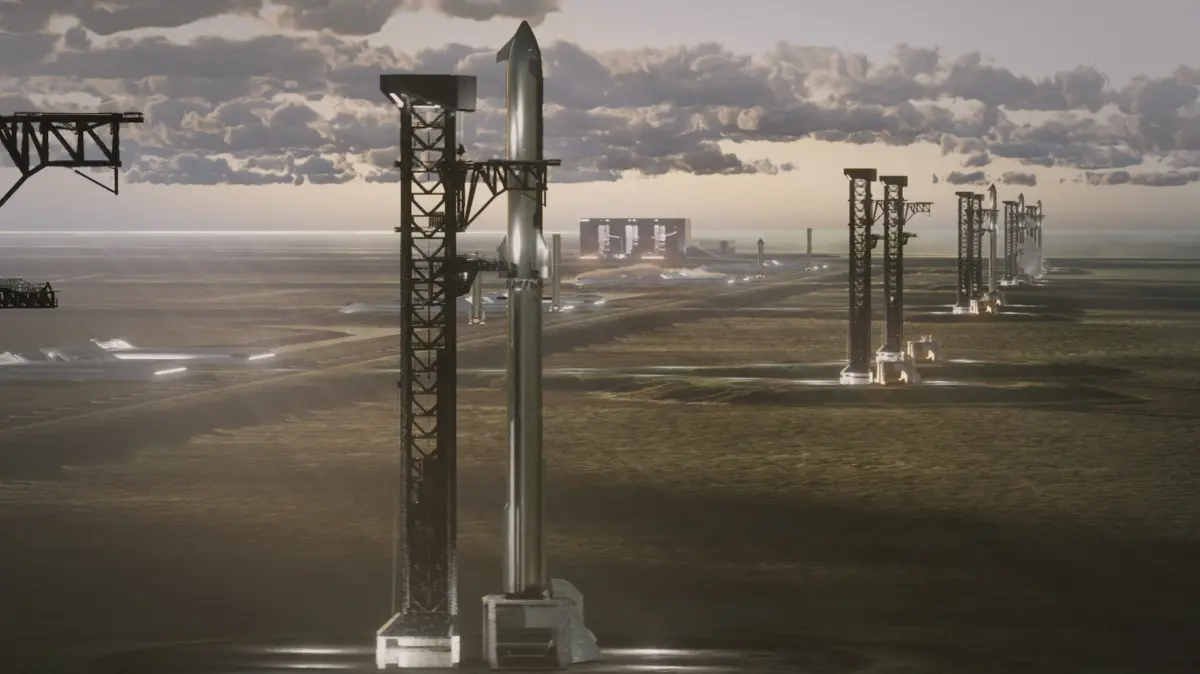
In what is arguably one of the most ambitious and transformative infrastructure announcements in the history of commercial aviation and aerospace, SpaceX has officially unveiled plans to construct a massive, $100 billion "Starbase" launch and manufacturing complex in southern Louisiana. Spanning a staggering 125,000 acres—approximately 195 square miles—across the state’s Pecan Island region, the upcoming facility will serve as SpaceX’s third major launch site, joining existing operations in Boca Chica, Texas, and Cape Canaveral, Florida.
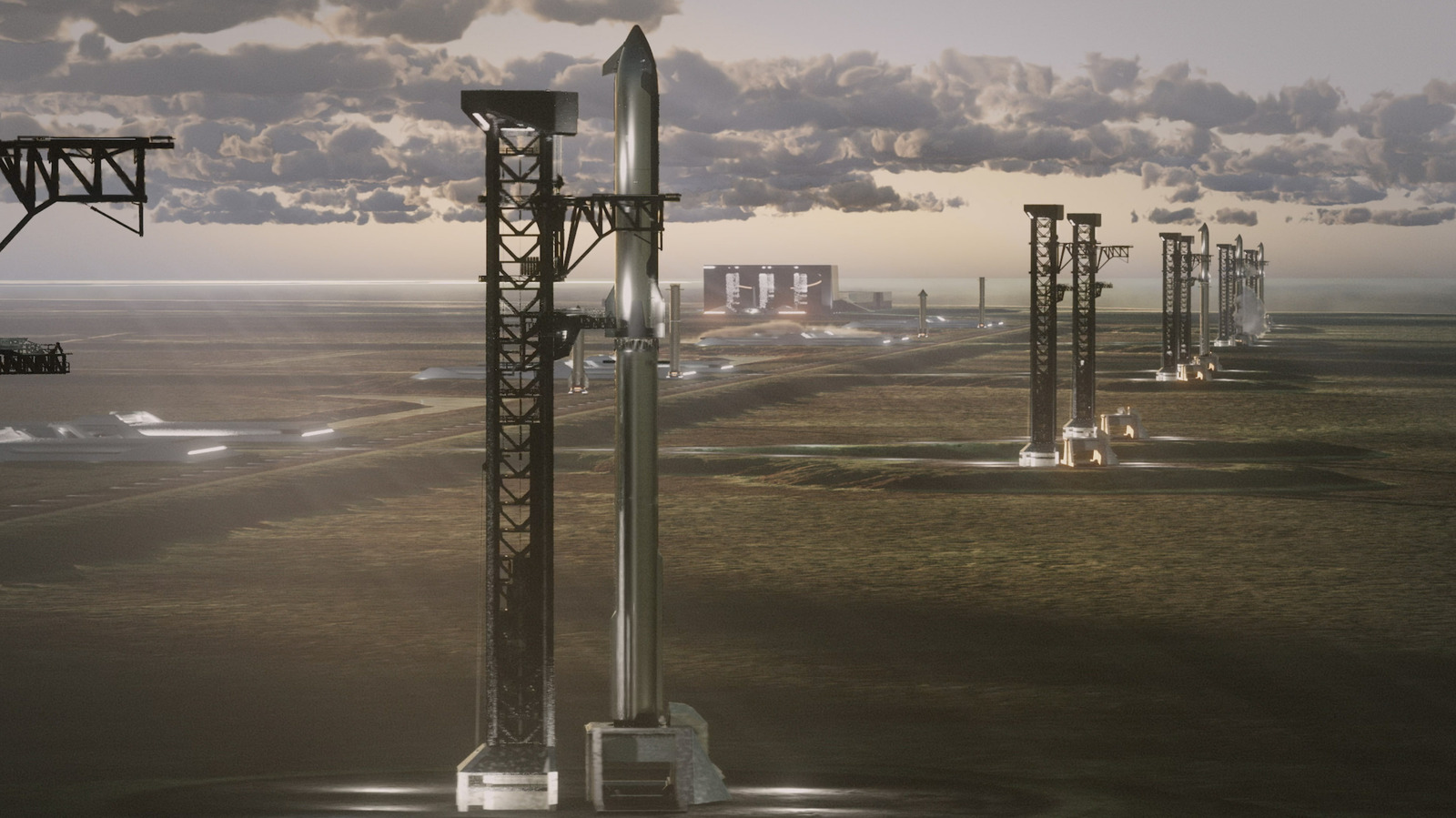
Announced jointly by SpaceX executives and Louisiana Governor Jeff Landry, the project is designed to fundamentally redefine the economics, frequency, and scale of human spaceflight. When completed, the site will feature five distinct launch complexes, housing a total of ten individual launch pads. These facilities are intended to support thousands of Starship flights annually, routing commercial and exploratory payloads toward Earth orbit, the Moon, Mars, and deep-space destinations.
Beyond raw launch capabilities, the campus is envisioned as a self-sustaining industrial city. The multi-billion-dollar development will incorporate on-site propellant production facilities, dedicated power generation plants, heavy vehicle processing hangars, and comprehensive residential housing for the thousands of engineers, technicians, and operational staff required to run the installation.
The project arrives during a period of relentless strategic expansion for Elon Musk’s aerospace giant, hot on the heels of the company’s high-profile public offering and the announcement of its Texas-based "Terafab" semiconductor foundry. By securing a coastal foothold in Louisiana, SpaceX is positioning itself to capitalize on regional natural gas reserves for methane-based rocket propellants while establishing an optimal trajectory for launching polar-orbiting data center satellites. Construction on the monumental spaceport is slated to begin in 2027, with the inaugural launch targeted for 2029.
Detailed Chronology: From Legal Settlement to Spaceport Groundbreaking
The genesis of the Louisiana Starbase project is rooted in a complex convergence of environmental law, state economic development strategy, and SpaceX’s aggressive capacity constraints at its existing facilities.
The Land and the Legacy
The expansive 195-square-mile tract designated for the Starbase project sits in the fragile, marsh-heavy Pecan Island region of Vermilion Parish. Historically, portions of this land were controlled and heavily utilized by energy sector titan ExxonMobil. However, the site was ultimately returned to the State of Louisiana as part of a sweeping legal settlement resolving decades-old litigation over coastal land loss, environmental degradation, and marshland erosion.
Recognizing the state’s urgent need for ecological restoration coupled with high-impact economic stimulus, Louisiana officials began evaluating how to repurpose the vast acreage. Negotiations with private aerospace interests intensified behind the scenes, culminating in an agreement that marries cutting-edge commercial space infrastructure with a mandate for aggressive ecological stewardship. As a foundational condition of the deal, SpaceX has committed to partnering directly with the state to implement extensive marshland preservation, wildlife protection, and storm-mitigation safeguards across the surrounding coastal ecosystem.
Scaling Up for the Starship Era
SpaceX’s current primary development and launch hub, Starbase in Boca Chica, Texas, has faced increasing regulatory, geographic, and airspace bottlenecks. While Boca Chica remains vital for rapid prototyping and initial orbital flight tests, its restricted footprint limits the ultimate cadence of launches required for a fully realized interplanetary logistics network.
To achieve Elon Musk’s stated goal of making spaceflight as routine as commercial aviation—requiring thousands of flights per year—additional massive real estate was an absolute necessity. The Louisiana site provides the sheer physical separation between pads, staging areas, and industrial production zones necessary to sustain a high-frequency launch tempo without triggering catastrophic cascading delays.
Project Roadmap: 2027 to 2029
The timeline for realizing Starbase, Louisiana is exceptionally aggressive by traditional civil engineering standards:
- Late 2026: Finalization of environmental impact assessments, zoning frameworks, and infrastructure blueprints in coordination with federal and state agencies.
- 2027: Official groundbreaking and commencement of heavy industrial construction, including land grading, foundation pouring for the initial launch complexes, and the establishment of temporary modular housing for incoming construction workforces.
- 2028: Erection of orbital launch integration towers, integration of propellant production facilities, and the buildout of dedicated power generation infrastructure.
- 2029: Scheduled rollout of the first flight-ready Starship vehicle to the Louisiana complex, culminating in the historic maiden launch from the new Gulf Coast spaceport.
Supporting Context & Metrics: The Architecture of an Industrial Titan
The sheer scale of the Louisiana Starbase project defies conventional industrial comparisons. To understand the magnitude of the $100 billion investment, one must examine the specific infrastructural, geographical, and technological components that will comprise the complex.
Geographic and Infrastructural Footprint
- Total Acreage: 125,000 acres (195 square miles), making it orders of magnitude larger than traditional space launch facilities.
- Launch Complexes: 5 distinct complexes.
- Launch Pads: 10 total pads (2 per complex), allowing for simultaneous vehicle integration, fueling, and countdown sequences.
- Flight Cadence: Engineered to support thousands of Starship flights annually.
The Industrial Ecosystem
A spaceport of this magnitude cannot rely on external supply chains for its vital consumables. Consequently, the Louisiana site will function as a vertically integrated industrial city:
- Propellant Production Facilities: Rocket-grade liquid methane and liquid oxygen require massive volumes of raw feedstock. The facility’s location in southern Louisiana places it in immediate proximity to the region’s abundant natural gas infrastructure, allowing SpaceX to synthesize methane-based propellant on-site efficiently.
- Power Generation: Launching heavy-lift vehicles and operating cryogenic propellant farms demands gigawatt-scale power inputs. Dedicated, highly resilient power generation infrastructure will be constructed on-site to ensure uninterrupted mission profiles.
- Vehicle Processing Hangars: Akin to massive structural assembly bays, these buildings will house Starship and Super Heavy boosters during final outfitting, heat-shield tile maintenance, and avionics checks.
- Employee Residential Housing: Given the remote nature of Pecan Island and the intensive shift work required to maintain a high-cadence launch schedule, SpaceX will construct dedicated residential, recreational, and educational communities to support workers and their families directly on or adjacent to the campus.
Strategic Synergy: Polar Orbits and "Starmind" Satellites
Beyond traditional interplanetary missions to the Moon and Mars, Starbase, Louisiana serves a highly specific, highly strategic operational purpose: polar launches.
By launching southward from the Gulf Coast across the Gulf of Mexico and over open ocean, SpaceX can efficiently insert payloads into polar and high-inclination orbits. This trajectory is essential for deploying the company’s upcoming "Starmind" data center satellite constellation. As recently detailed in tandem with SpaceX’s massive public offering and the announcement of its Texas-based "Terafab" chip foundry, Musk envisions an orbital network of artificial intelligence data centers powered by specialized AI processors. The Louisiana spaceport will act as the primary terrestrial gateway for blanketing the skies with these advanced compute-nodes.
Official Statements and Industry Perspectives
The announcement of the Louisiana Starbase has sent shockwaves through the global aerospace, defense, and economic development sectors, drawing strong reactions from key public and private figures.
SpaceX Leadership
Speaking on the vision driving the monumental capital expenditure, SpaceX CEO Elon Musk emphasized the philosophical and practical necessity of the project:
"We’re preparing to build a spaceport that, until now, has only existed in science fiction. SpaceX was founded to bring about a future where humans are out exploring amongst the stars, which will only be possible when we make going to space as routine as flying on an airplane. Starbase, Louisiana will unlock that future."
In an official statement released via social media channels, the company reinforced the ultimate destination profile of the new facility:
"Starbase, Louisiana will be built to support thousands of Starship flights a year with missions launching to Earth orbit, the Moon, Mars, and beyond."
State and Regional Leadership
Louisiana Governor Jeff Landry championed the project as a historic victory for the state’s economic diversification and technological positioning. In a joint release issued by Louisiana Economic Development, state officials highlighted the transformative nature of the partnership:
"The development will also include a propellant production facility, power generation, vehicle processing and residential housing for employees and their families… SpaceX is launching a new era of commercial spaceflight with this $100 billion Louisiana campus."
Economists note that the project is expected to inject tens of thousands of high-paying engineering, manufacturing, and support jobs into the local economy, fundamentally shifting Louisiana’s industrial identity from traditional oil, gas, and shipping toward advanced aerospace and orbital computing.
Future Outlook: The Horizon of Interplanetary Logistics
The construction of Starbase, Louisiana marks a decisive turning point in human history: the transition from experimental space exploration to heavy industrialization of the orbital domain.
As SpaceX navigates the complex intersection of public equity markets, semiconductor manufacturing via its Terafab initiative, and global satellite deployment, the Louisiana spaceport acts as the central linchpin holding the entire ecosystem together. By 2029, the quiet marshlands of Pecan Island will transform into a thunderous hub of heavy-lift rocket integration and launch operations, dispatching fleets of Starships to low-Earth orbit, lunar outposts, and ultimately, the red dust of Mars.
While environmental safeguards and rigorous regulatory oversight will accompany every phase of construction, the sheer momentum behind Musk’s vision suggests that the path to a multi-planetary future is accelerating faster than ever before. Starbase, Louisiana is no longer just a blueprint—it is the physical manifestation of humanity’s next great leap outward.