Executive Overview
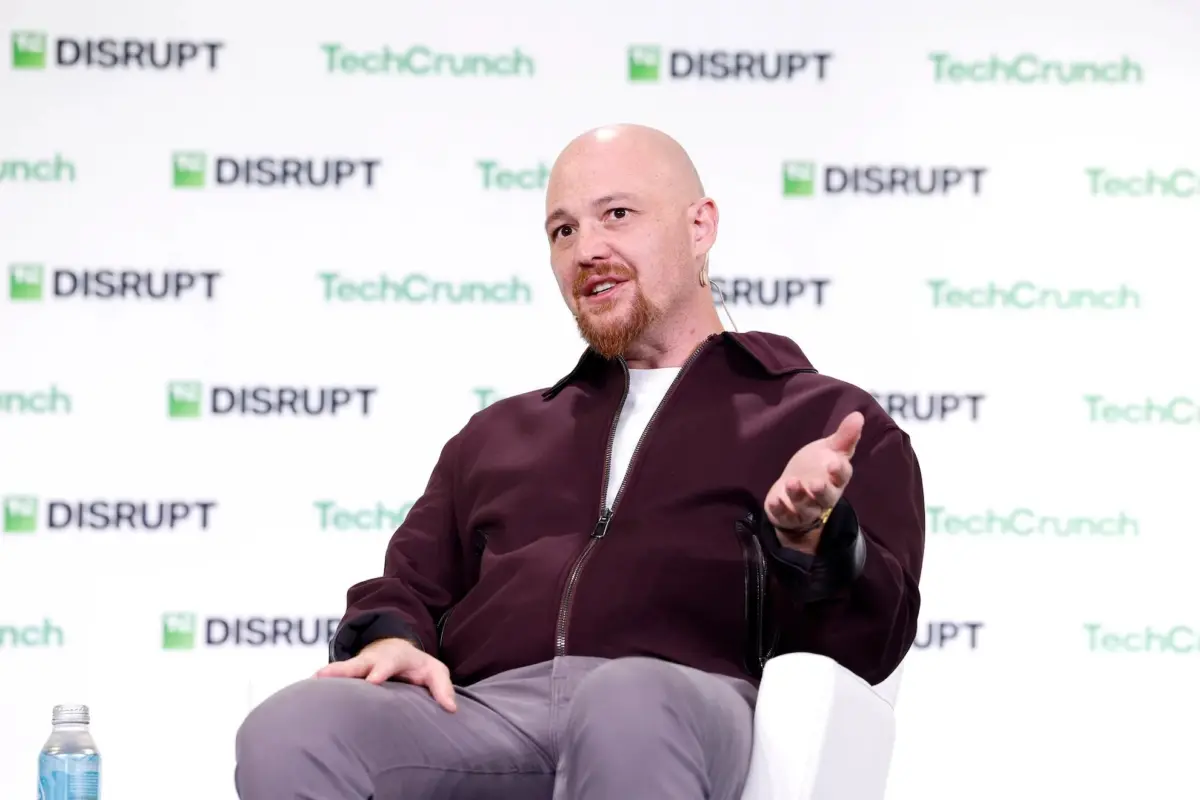
In a dramatic shift within the artificial intelligence developer landscape, Amjad Masad, Chief Executive Officer and co-founder of cloud-based integrated development environment (IDE) platform Replit, publicly announced that his company has ceased its working relationship with AI research lab Anthropic. Speaking live onstage at the TechCrunch Disrupt conference, Masad cited cost inefficiencies, shifting strategic alignment, and superior performance from OpenAI’s competing model ecosystem as the primary catalysts driving the decision.
The announcement marks a potentially seismic realignment in the AI coding tool ecosystem. Replit, which provides a cloud-native software development environment allowing millions of developers to write, execute, and deploy applications directly from a browser, previously leveraged Anthropic’s flagship Claude foundation models to power its generative coding features and autonomous agents. That partnership was widely credited with helping catalyse a tenfold expansion in Replit’s revenue over the preceding fiscal cycles.
However, the narrative of a clean rupture is heavily disputed. Multiple industry insiders familiar with the commercial dynamics between Anthropic and Replit have explicitly rejected Masad’s assertions, maintaining off-the-record that the underlying contractual and operational relationship remains active. Furthermore, digital footprints across Replit’s developer documentation, engineering blog posts, and public developer disclosures confirm that Anthropic’s frontier models—including Claude Fable and Claude Opus iterations—were actively embedded in Replit’s production pipelines as recently as late September.
This conflicting rhetoric underscores the volatile, highly competitive dynamics underlying the generative AI supply chain. As developer platforms transition from consumer hobbyists to high-margin enterprise accounts, the underlying unit economics of API token consumption, benchmark accuracy, and strategic vendor alignment have become paramount, transforming partnership announcements into critical levers of corporate positioning.
Detailed Chronology
+-----------------------------------------------------------------------------------+
|                            TIMELINE OF REPLIT & ANTHROPIC                         |
+-----------------------------------------------------------------------------------+
| • 2023–Early 2024 : Anthropic Integration fuels 10x growth for Replit             |
| • August 2024     : Replit announces major strategic partnership with OpenAI       |
| • Late Sept 2024  : Technical docs & X posts highlight active Claude model usage  |
| • October 2024    : CEO Amjad Masad claims severance with Anthropic at Disrupt    |
| • Post-Disrupt    : Insiders dispute severance; operational status remains murky  |
+-----------------------------------------------------------------------------------+
1. The Claude Era and Early Hypergrowth
Replit’s meteoric rise from a popular browser sandbox into an AI-powered agent platform was significantly accelerated by its early integration of Anthropic’s Claude model series. By utilizing Claude’s advanced reasoning and code generation capabilities, Replit introduced automated debugging, code completion, and direct project execution within its web-based IDE. Reports indicated that this strategic integration yielded a 10x surge in company revenue, solidifying Replit’s reputation as a frontrunner in the emerging AI-assisted software development stack.
2. The August Pivot and OpenAI Alliance
In August, Replit formally announced a strategic partnership with OpenAI. While the announcement highlighted deeper integration of ChatGPT models into Replit’s developer agent infrastructure—including optimized latency and customized model behaviors—it did not explicitly state that Anthropic was being decommissioned. At the time, industry analysts interpreted the move as a multi-model hedging strategy, common among modern platform providers seeking to avoid single-vendor lock-in.
3. Recent Production Footprints and Contradictions
Despite Masad’s onstage statements suggesting a complete break from Anthropic, technical operational evidence reveals a more nuanced reality:
- Late September Technical Disclosures: Replit’s official engineering documentation and developer blog posts referenced Anthropic’s Claude Fable 5 and Claude Fable 5.1 models as active components within the Replit Agent production execution environment.
- Developer Advocacy: Simultaneously, Replit product managers and engineers publicly promoted the capabilities of Anthropic’s premier model, Claude Opus 5.5, on social media platforms such as X (formerly Twitter), highlighting its efficacy in complex software orchestration.
4. The Disrupt Announcement and Institutional Pushback
During his interview at TechCrunch Disrupt, Masad explicitly stated that Replit was "no longer working with Anthropic," asserting that ChatGPT had surpassed Claude across internal benchmarks. Almost immediately following the panel, sources with direct knowledge of the commercial arrangements between both entities contacted media representatives to reject Masad’s claims, asserting that the commercial contract and API access pipelines between Replit and Anthropic remained operational.
Supporting Context & Metrics
The Financial Pivot: Enterprise Expansion and B2B Monetization
Underpinning Replit’s platform evolution is a fundamental restructuring of its revenue streams. Long viewed as a consumer-facing tool popular among students, hobbyists, and early-stage startup founders, Replit has aggressively reoriented its go-to-market strategy toward B2B and enterprise-grade software development.
       REPLIT REVENUE DIVERSIFICATION SHIFT

  Historical (Prior Year)       Current Fiscal Period
  +---------------------+       +---------------------+
  | Enterprise: 2%      |  ==>  | Enterprise: 15%     |
  | Consumer/B2C: 98%   |       | B2B Total: >50%     |
  +---------------------+       +---------------------+
While Masad declined to disclose absolute Annual Recurring Revenue (ARR) metrics, he revealed significant compositional growth within enterprise sales:
- Enterprise Revenue Share: Enterprise contracts accounted for approximately 2% of overall revenue in the previous fiscal year; that figure has escalated to 15% in the current period.
- B2B Dominance: Total Business-to-Business (B2B) revenue—encompassing mid-market team subscriptions, enterprise licenses, and dedicated cloud deployments—now accounts for more than 50% of Replit’s total top-line growth.
This shift toward enterprise buyers necessitates higher profit margins and stringent service level agreements (SLAs), making the underlying cost of inference a primary metric for corporate sustainability.
The Economics of API Tokens and Model Performance
The cost structure of running autonomous software development agents is exceptionally high. Unlike simple text-generation chatbots, an AI coding agent operates within a tight feedback loop: it reads massive codebases, drafts code, executes scripts, parses stack traces, and iteratively fixes bugs. This process consumes tens of thousands of tokens per session.
Masad’s reliance on internal benchmarks—specifically testing platforms dubbed Sol and Astra—highlights how Replit evaluates foundation model capabilities:
+------------------------------------------------------------------------------------+
|                         EVALUATION METRICS FOR CODING AGENTS                       |
+------------------------------------------------------------------------------------+
| Metric                | Core Focus                                                 |
+-----------------------+------------------------------------------------------------+
| Zero-Shot Generation  | Synthesizing entire functional repositories from prompt.   |
| "Vibe-Coding" Efficacy| Translating high-level natural language into UI/UX apps.   |
| Unit API Cost         | Expense per thousand tokens consumed during iteration.     |
| Context Retention     | Maintaining architectural consistency across large files.  |
+------------------------------------------------------------------------------------+
According to Masad, OpenAI’s latest models demonstrated superior capability and lower unit economics during zero-shot "vibe-coding" application generation—a term describing the process where users construct functional, visually rich applications using natural language prompts without writing manual underlying code.
Official Statements
Amjad Masad, CEO and Co-Founder of Replit
Addressing the audience at TechCrunch Disrupt, Masad outlined the multi-faceted reasoning behind Replit’s public shift away from Anthropic, highlighting model parity, financial efficiency, and partner alignment:
"I think ChatGPT is better now. We publish a public benchmark as well, and consistently, Sol and Astra perform better on building vibe-coded applications from scratch. It was a decision based on both cost, partnership, and performance. And for all these reasons, we just felt like [OpenAI] were a better partner for now."
Masad also elaborated on the operational infrastructure required to run autonomous coding agents effectively within real-world environments, stressing that execution safety must precede enterprise deployment:
"In the same way that us humans need a certain environment to work—you need a nice office, maybe good food in the office, air-conditioning, computer—agents need a habitat for them to exist and do good work. So that habitat has good orchestration, good error recovery, good safety and security and sandboxing, good networking, good identity and authorization. And once you figure all of that out, then you can deploy AI safely."
Strategic Rebuttals and Operational Reality
In stark contrast to Masad’s public remarks, industry insiders with intimate knowledge of the ongoing commercial framework between Anthropic and Replit strongly disputed the narrative of a severed relationship.
Speaking on the condition of anonymity, an insider clarified that despite the platform’s public endorsement of OpenAI, Anthropic’s model access protocols and commercial agreements with Replit remain operational. Replit’s leadership team has not formally issued a public revocation of Masad’s comments, leaving industry observers to weigh whether his statements reflect an impending complete migration or an aggressive public negotiation tactic aimed at driving down API pricing from vendor partners.
Future Outlook
The Battles for Developer Ecosystem Dominance
The friction between Replit, OpenAI, and Anthropic reflects a broader strategic battle among AI research labs to lock in developer platforms. As generative software engineering matures, model developers are realizing that developer platforms serve as the primary distribution layer for their underlying APIs.
- Vendor Lock-In vs. Multi-Model Aggregation: While AI platform providers like Replit often attempt to maintain leverage by utilizing multiple model providers, foundation model creators are offering deep discounts, dedicated engineering support, and co-marketing agreements to secure exclusive platform placement.
- The Economics of Margin Compression: Platform operators that rely entirely on third-party APIs face persistent margin compression. To sustain profitability, platforms must either negotiate steep bulk-volume pricing from vendors like OpenAI and Anthropic or develop proprietary, fine-tuned open-weight models optimized specifically for code generation and orchestration.
Enterprise Sandboxing and Autonomous Agents
As Replit continues its expansion into enterprise markets, the focus will shift heavily toward secure execution environments. Enterprise security teams require zero-data-retention guarantees, isolated virtual sandboxes, and strict identity management before allowing AI agents to touch internal repositories.
Replit’s emphasis on constructing a robust "habitat"—featuring isolated sandboxing, fine-grained authorization, and automated error-recovery networks—indicates that the future of AI-assisted development relies as much on infrastructure security as it does on raw model intelligence. Whether that infrastructure is ultimately powered by OpenAI, Anthropic, or a combination of open-source models, the platform that balances model accuracy with strict unit economics will ultimately control the future of AI software engineering.