Executive Overview
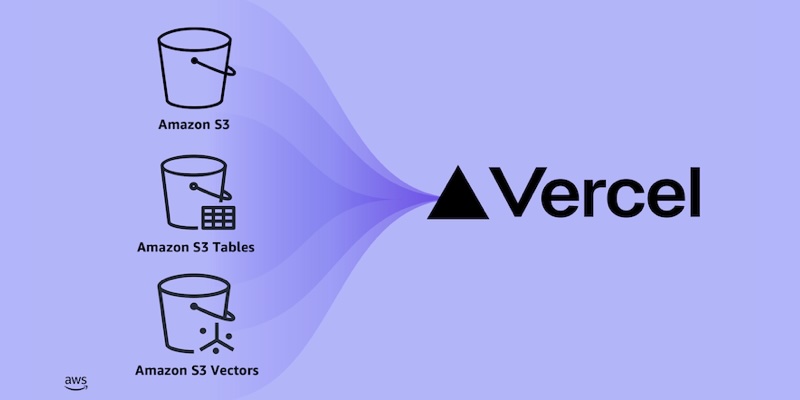
In a significant development for the modern web and artificial intelligence engineering ecosystems, Vercel and Amazon Web Services (AWS) have announced a native integration bringing Amazon Simple Storage Service (Amazon S3)—including specialized features such as Amazon S3 Tables and Amazon S3 Vectors—directly into the Vercel Marketplace and the AI-powered generation tool, v0.
Historically, while developers favored Vercel for its rapid deployment cycles, serverless workflows, and seamless frontend delivery, building robust applications required navigating the administrative complexities of the AWS Management Console. Setting up cloud object storage meant manually generating long-lived IAM keys, configuring JSON access policies, setting up Cross-Origin Resource Sharing (CORS), and meticulously mapping environment variables.
This latest collaboration effectively bridges the gap between serverless frontend operations and enterprise-grade cloud storage. By automating the provisioning workflow directly within the Vercel dashboard and the v0 chat interface, developers can now deploy everyday object storage, high-performance analytics tables, and semantic vector databases with just a few clicks or natural language prompts.
Crucially, this integration introduces state-of-the-art security practices out of the box. Rather than relying on risky, static access keys that linger indefinitely in configuration files, Vercel leverages OpenID Connect (OIDC) federation. At runtime, short-lived tokens are exchanged securely via AWS Security Token Service (AWS STS), ensuring that applications adhere to the principle of least privilege. Combined with existing integrations for Amazon Aurora, Amazon DynamoDB, and Amazon OpenSearch Serverless, engineering teams now have access to an end-to-end, unified cloud stack billed to a single AWS account.
Detailed Chronology and Technical Implementation
The path toward unified serverless development has been iterative. Over recent years, Vercel established itself as the default runtime environment for Next.js and other cutting-edge web frameworks. However, as applications evolved to process complex media, run analytical queries over massive datasets, and power generative AI retrieval-augmented generation (RAG) pipelines, the friction of managing disparate backend services became increasingly apparent.
Phase One: The Architectural Bottleneck
Before this integration, deploying an application that required file uploads, vector embeddings, and analytical processing demanded an asynchronous workflow. A developer would write frontend code on Vercel, jump to the AWS Console to provision an S3 bucket, generate programmatic access keys, encrypt those secrets, paste them into Vercel’s environment variable manager, and manually write custom SDK configurations to handle authentication. This context switching introduced security liabilities, particularly around credential rotation and accidental key exposure in client-side bundles or public repositories.
Phase Two: Native Provisioning and OIDC Security
The newly deployed integration removes these administrative hurdles entirely. The lifecycle of setting up storage now mirrors the speed of serverless deployment:
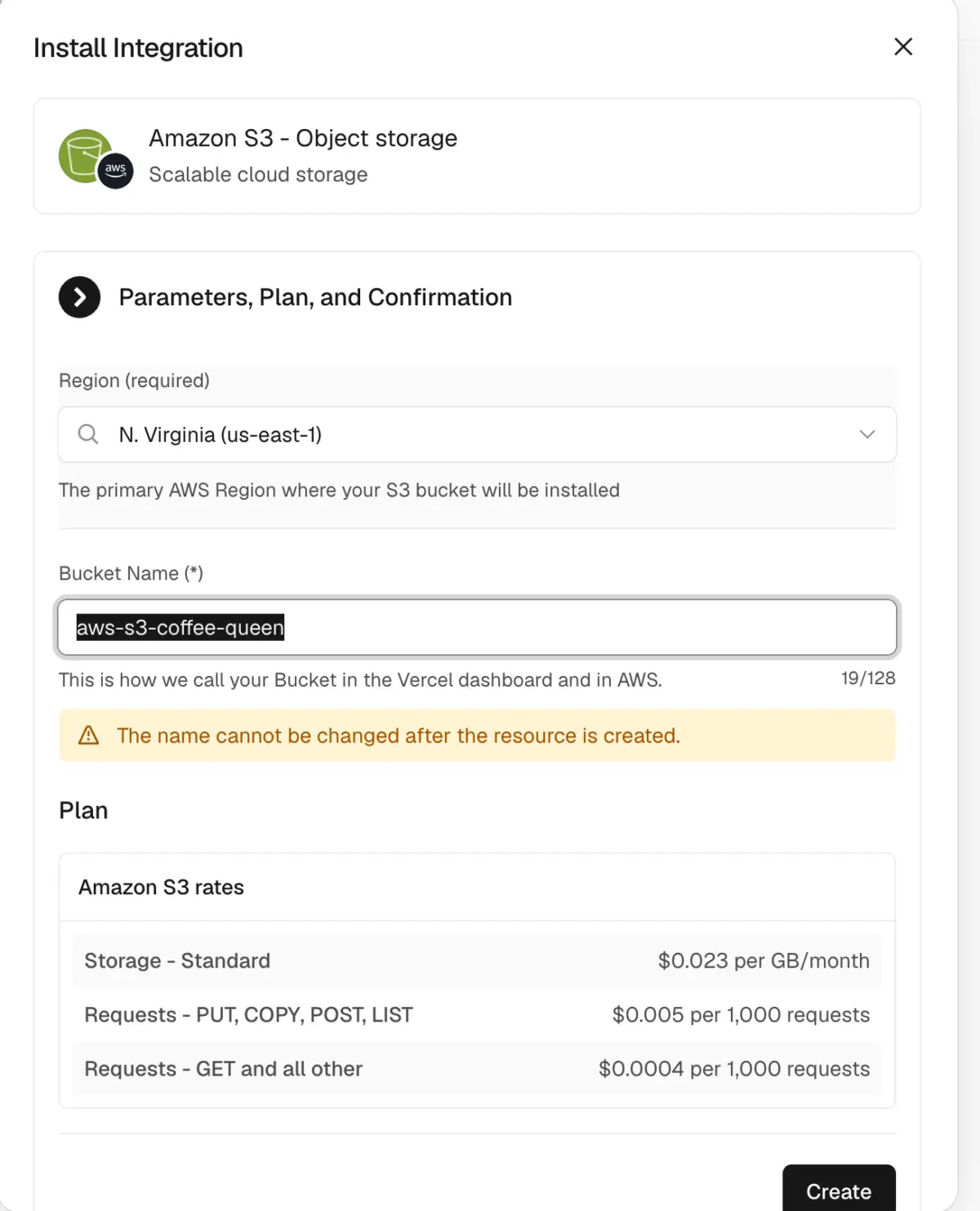
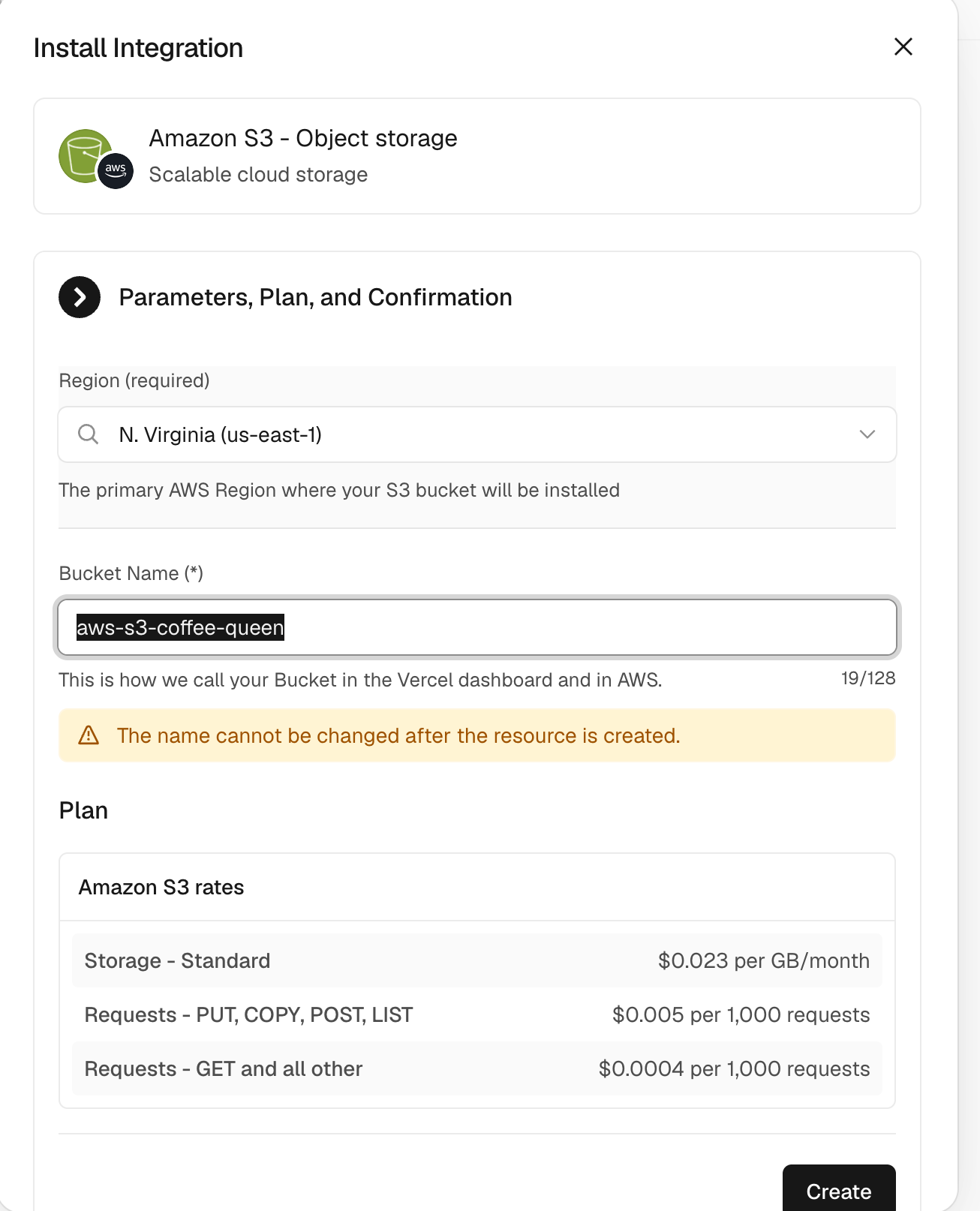
- Resource Creation: Within the Vercel dashboard, developers navigate to the Storage tab, select AWS, designate their target S3 variant (general purpose, S3 Tables, or S3 Vectors), and choose an AWS Region. The provisioning sequence completes in seconds.
- Infrastructure Linkage: Linking the newly generated resource to a Vercel project automatically exposes critical runtime pointers through the Vercel CLI (
vercel linkandvercel env pull .env.local). - Secure Token Exchange: Instead of static credentials, the integration injects variables such as
AWS_REGION,AWS_ROLE_ARN, and resource-specific identifiers. At execution time, the@vercel/functions/oidcmodule utilizesawsCredentialsProviderto securely exchange OIDC tokens for temporary, scoped IAM credentials via AWS STS.
Phase Three: Workload-Specific Capabilities
The integration addresses three distinct computational workloads natively within the Vercel ecosystem:

- Everyday Object Storage (Amazon S3): Developers can handle binary file uploads, document management, and media hosting directly inside serverless functions. Using the standard AWS SDK for JavaScript, managing objects requires minimal boilerplate:
import  S3Client, PutObjectCommand  from "@aws-sdk/client-s3";
import  awsCredentialsProvider  from "@vercel/functions/oidc";

const s3 = new S3Client(
  region: process.env.AWS_REGION,
  credentials: awsCredentialsProvider(
    roleArn: process.env.AWS_ROLE_ARN,
  ),
);

export async function POST(request)
  const formData = await request.formData();
  const file = formData.get("file");

  await s3.send(new PutObjectCommand(
    Bucket: process.env.S3_BUCKET_NAME,
    Key: file.name,
    Body: Buffer.from(await file.arrayBuffer()),
    ContentType: file.type,
  ));

  return Response.json( success: true );
- Analytics and Open Tables (Amazon S3 Tables): Designed for high-volume data lakes, S3 Tables provide fully managed Apache Iceberg tables with automated compaction and maintenance. By leveraging tools like DuckDB directly inside Vercel Serverless Functions, developers can perform lightning-fast analytical queries over massive data sets without managing a dedicated data warehouse cluster:
import  DuckDBInstance  from "@duckdb/node-api";
import  awsCredentialsProvider  from "@vercel/functions/oidc";

const creds = await awsCredentialsProvider(
  roleArn: process.env.AWS_ROLE_ARN,
)();

const db = await DuckDBInstance.create();
const conn = await db.connect();

await conn.run("INSTALL aws; LOAD aws; INSTALL httpfs; LOAD httpfs; INSTALL iceberg; LOAD iceberg;");

await conn.run(`
  CREATE SECRET s3cred (
    TYPE s3,
    KEY_ID '$creds.accessKeyId',
    SECRET '$creds.secretAccessKey',
    SESSION_TOKEN '$creds.sessionToken',
    REGION '$process.env.AWS_REGION'
  );
`);

await conn.run(`
  ATTACH '$process.env.AWS_RESOURCE_ARN' AS s3tables (
    TYPE iceberg,
    ENDPOINT_TYPE s3_tables
  );
`);

const rows = await (await conn.run(`
  SELECT town_city, AVG(median_price) AS avg_price
  FROM s3tables."$process.env.S3_TABLES_NAMESPACE".town_monthly
  GROUP BY town_city
  ORDER BY avg_price DESC
  LIMIT 10
`)).getRowObjects();- AI and Semantic Search (Amazon S3 Vectors): As artificial intelligence agents and semantic search engines become standard application features, vector storage is paramount. S3 Vectors offer purpose-built vector storage natively within S3. Developers can store and query embeddings without spinning up an extraneous external vector database:
import  S3VectorsClient, QueryVectorsCommand  from "@aws-sdk/client-s3vectors";
import  awsCredentialsProvider  from "@vercel/functions/oidc";

const vectors = new S3VectorsClient(
  region: process.env.AWS_REGION,
  credentials: awsCredentialsProvider(
    roleArn: process.env.AWS_ROLE_ARN,
  ),
);

export async function POST(request)
  const  embedding  = await request.json();

  const result = await vectors.send(new QueryVectorsCommand(
    vectorBucketName: process.env.S3_VECTOR_BUCKET_NAME,
    indexName: "documents",
    queryVector:  float32: embedding ,
    topK: 5,
    returnMetadata: true,
  ));

  return Response.json( matches: result.vectors );
Supporting Context and Metrics
The convergence of frontend hosting and deep backend storage reflects broader macroeconomic and architectural trends within software engineering. Enterprises are under intense pressure to accelerate time-to-market while reducing operational overhead.
According to recent cloud industry surveys, over 70% of engineering teams cite configuration complexity and multi-vendor management as primary bottlenecks in software delivery velocity. By consolidating cloud resources—allowing developers to provision S3 buckets, Aurora databases, DynamoDB tables, and OpenSearch clusters inside a single pane of glass—Vercel and AWS are stripping away layers of administrative friction.
Furthermore, the introduction of natural language provisioning through v0 by Vercel marks a paradigm shift in how applications are conceptualized and built. When a developer enters a prompt such as "Build a photo gallery where users upload images using AWS," v0 automatically provisions a general purpose S3 bucket. Similarly, requesting "a support bot that answers questions from my PDFs" instantiates an Amazon S3 Vectors integration, wires the environment variables, and generates clean, production-ready code in the preview panel.
Financial and Account Flexibility
Flexibility remains a cornerstone of the integration:
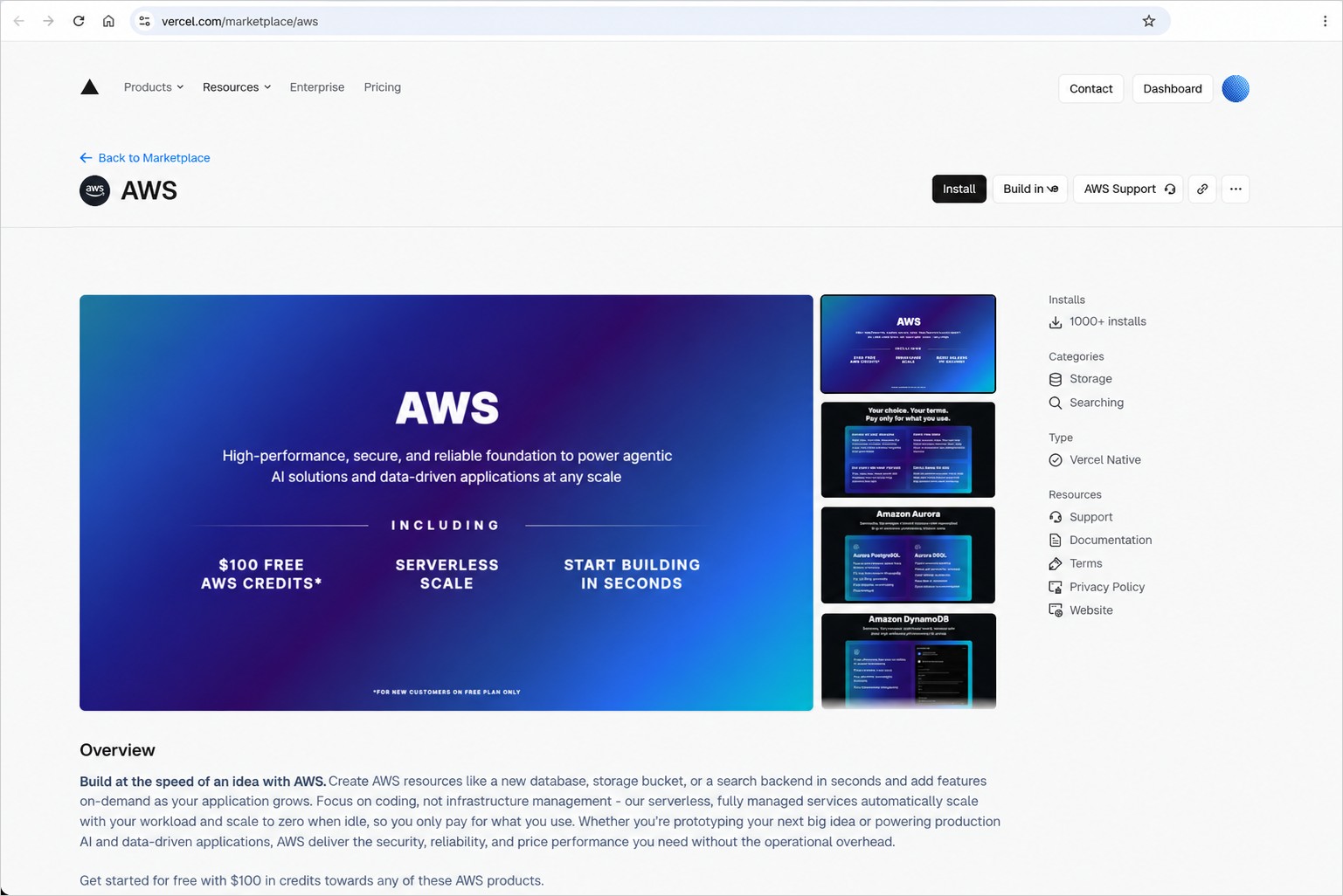
- New AWS Accounts: Developers spinning up a fresh AWS account directly through the Vercel onboarding workflow receive $100 in AWS credits valid for six months, offering a risk-free environment to prototype web applications and AI agents.
- Existing AWS Accounts: Organizations with established cloud footprints can link their existing AWS accounts to the Vercel Marketplace. This ensures that all S3 resources created via Vercel are housed securely within the organization’s native AWS billing structure and governance framework, maintaining unified enterprise oversight.
Official Statements and Industry Impact
While specific executive quotes from the joint announcement emphasize the democratization of cloud infrastructure, industry analysts view the partnership as a masterclass in ecosystem alignment.
AWS retains its position as the undisputed foundational layer for enterprise data storage, compute, and artificial intelligence infrastructure. By ensuring that S3—complete with advanced variants like S3 Tables for Apache Iceberg and S3 Vectors—is natively accessible within modern development workflows like Vercel and v0, AWS ensures that its services remain the default choice for the next generation of cloud-native builders.
Conversely, Vercel solidifies its value proposition as an end-to-end application cloud. By abstracting away the initial plumbing required to connect frontend interfaces to high-scale backend infrastructure, Vercel enables developers to focus purely on product logic, user experience, and business value.
Future Outlook
The launch of native Amazon S3 integration on Vercel signals a broader industry trajectory toward hyper-integrated, developer-centric cloud architectures. As artificial intelligence transforms software development from manual coding to orchestration and prompt engineering, the underlying infrastructure must adapt to be equally frictionless.
Looking forward, industry observers anticipate deeper synergy between serverless frontend frameworks and cloud-native data services. We can expect further automation around schema migrations, automated indexing for vector workloads, and enhanced observability tools that span the entire request lifecycle—from the client browser on Vercel down to the underlying object storage layer in AWS.
For engineering teams looking to modernize their stacks, the barrier to entry for building scalable, AI-driven, and data-intensive web applications has never been lower. Developers can begin leveraging these features immediately by visiting the Vercel Marketplace or experimenting with natural language generation inside v0.