Executive Overview
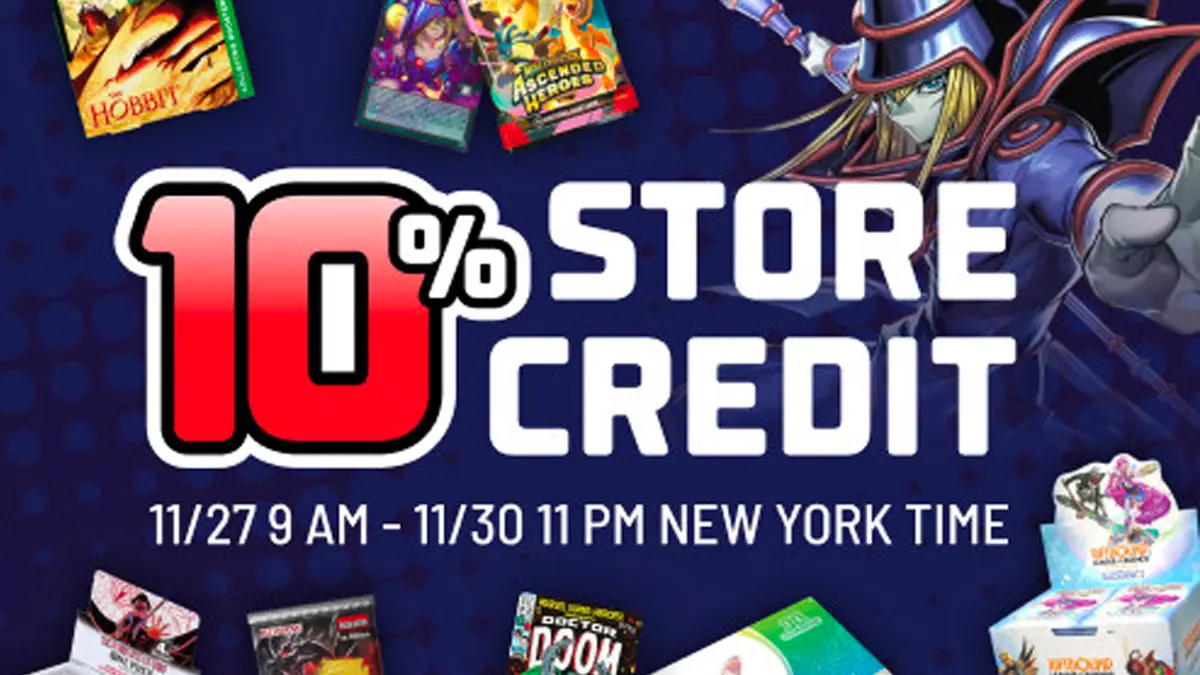
For trading card game (TCG) enthusiasts, hobbyists, and competitive tournament grinders alike, the arrival of late November signals more than just the changing of the seasons—it marks the official kickoff of the holiday shopping gauntlet. Leading the charge for tabletop gaming marketplaces is TCGplayer, which has officially launched its highly anticipated Cyber Weekend Black Friday promotion. Running from November 27 at 9:00 AM EST through November 30 at 11:00 PM EST, the event delivers a compelling proposition for collectors looking to pad their binders or secure sealed product before the year concludes.
Rather than relying on traditional direct-percentage discounts—which can often complicate market pricing dynamics across thousands of independent vendors—TCGplayer has opted once again for its tried-and-true store credit model. During the promotional window, buyers receive a baseline 10% back in store credit on all purchases of trading card singles, booster packs, preconstructed decks, and entire booster boxes. For platform subscribers, the incentive sweetens further, scaling up to an impressive 13% back.
This structural deep-dive explores the operational mechanics of the sale, the broader economic context of the secondary TCG market, why TCGplayer remains a dominant force backed by eBay, and how collectors can maximize their returns during this critical four-day shopping window.
Detailed Chronology: The Evolution and Window of the Cyber Weekend Sale
Understanding how to leverage TCGplayer’s Black Friday event requires a firm grasp of its timeline and operational boundaries. The promotion is strictly time-gated, demanding that collectors execute their cart strategies efficiently to reap the full financial rewards.
The Operational Timeline
- Event Start Date: November 27 at 9:00 AM EST (New York time).
- Event End Date: November 30 at 11:00 PM EST (New York time).
- Duration: Exactly 86 hours of continuous promotional coverage spanning Thanksgiving weekend through the heart of Cyber Monday.
Unlike flash sales that require frantic clicking within minutes, TCGplayer’s multi-day window allows collectors to meticulously curate their shopping carts. Whether hunting down rare Magic: The Gathering foil singles, securing Pokémon TCG elite trainer boxes, or jumping into emerging properties like Disney Lorcana and One Piece, buyers have ample time to cross-reference decklists and compare seller conditions.
How the Credit Accumulates
The transaction mechanics are straightforward yet powerful. For every dollar spent on eligible inventory, 10 cents (or 13 cents for subscribers) is funneled directly back into the user’s TCGplayer account as digital store credit.

- The Math in Action: A $30 single card yields $3.00 in store credit. A $150 booster box yields $15.00 (or $19.50 for subscribers).
- Cross-Game Flexibility: Because the platform aggregates inventory from thousands of independent hobby shops and individual sellers worldwide, a single checkout can mix and match different games. A cart containing a Magic: The Gathering Play Booster Box alongside preconstructed Riftbound decks will pool its total value to calculate the final credit reward. This accumulated credit can then be immediately repurposed toward future acquisitions—such as chasing high-value staples for upcoming competitive seasons or treating oneself to casual product.
Supporting Context & Metrics: Navigating the Secondary Market
To fully appreciate the value proposition of TCGplayer’s Cyber Weekend sale, one must examine the broader economic landscape of the collectible card game industry. The secondary market has matured drastically over the past half-decade, transitioning from a niche hobby into a multi-billion-dollar global ecosystem.
The Problem with Traditional Discounts in TCGs
In standard consumer electronics or apparel retail, Black Friday means slashing prices by 30% to 50% to clear warehouse inventory. In the TCG space, however, direct price slashing is fraught with structural challenges. Card prices are dictated by fluid supply-and-demand metrics, meta-game shifts, and print run distributions.
If a major marketplace forced direct discounts on independent sellers, it could destabilize pricing integrity, disincentivize smaller storefronts from participating, or cause artificial valuation crashes. By utilizing a store credit rebate system, TCGplayer achieves a delicate balance:
- Sellers Maintain Margin: Independent brick-and-mortar stores and individual vendors still receive their full asking price, ensuring they remain motivated to list competitive inventory.
- Buyers Gain Purchasing Power: Consumers receive tangible, quantifiable value back that can be reinvested into the ecosystem, effectively lowering the barrier to entry for expensive hobby investments.
Market Responsiveness and Ecosystem Trust
One of the primary friction points in online TCG shopping is market lag. When a card’s utility plummets or a ban announcement alters a competitive format, sluggish marketplaces often leave inflated prices lingering for weeks. TCGplayer’s vast network of decentralized sellers tends to be remarkably reactive, adjusting prices dynamically to reflect current meta-trends.
Furthermore, the platform’s corporate backing by eBay lends it an institutional layer of consumer protection and trustworthiness that unverified peer-to-peer marketplaces often lack. Features like TCGplayer Direct—where multiple orders from different sellers are consolidated into a single package managed and shipped by TCGplayer—drastically streamline the collection-building process, reducing shipping overhead and logistical headaches.
Game-by-Game Landscape: Where to Spend Your Credit
With virtually every major trading card game represented on the platform, buyers have an unprecedented breadth of inventory at their fingertips. Here is a look at the major pillars driving traffic to the marketplace during the Cyber Weekend event:

1. Magic: The Gathering (MTG)
As one of the oldest and most complex TCGs on the market, MTG commands a massive share of TCGplayer’s daily volume. Whether players are optimizing Commander decks with format staples like Yawgmoth, Thran Physician and Vorinclex, Monstrous Raider, or stocking up on modern format legalities, the 10% return softens the blow of high-ticket single purchases. Sealed product enthusiasts also benefit heavily when buying Play Booster Boxes and Collector Boosters.
2. Pokémon Trading Card Game
The Pokémon TCG continues to experience historic demand driven by both competitive players and high-end collectors. With frequent set releases and coveted chase cards—such as special illustration rares—securing booster bundles and elite trainer boxes through a credit-backed promotion provides a sensible hedge against the inherent variance of pack cracking.
3. Disney Lorcana & One Piece TCG
Newer market entrants like Ravensburger’s Disney Lorcana and Bandai’s One Piece Card Game have captured significant market share. Because these games are continually expanding their card pools and establishing competitive scenes, players frequently need to acquire core playsets quickly. Earning 10% back on these high-demand early purchases helps offset the cost of keeping competitive decks updated.
Future Outlook: The Trajectory of TCG Retail and Consumer Trends
As we look beyond the 2026 holiday season and into the future of digital and physical card game retail, promotional events like TCGplayer’s Cyber Weekend highlight where the industry is heading.
The Shift Toward Ecosystem Loyalty
Direct cash discounts are increasingly giving way to closed-loop ecosystem incentives (such as store credit, loyalty tiers, and subscription bonuses like the 13% subscriber tier). By locking value back into the platform, companies like TCGplayer ensure sustained platform engagement well beyond the holiday shopping rush. For consumers, this creates a cyclical collector’s loop: buy cards, earn credit, redeploy credit into new decks, and repeat.
What to Watch in the Coming Years
- Subscription Model Expansion: Expect marketplaces to lean harder into tiered memberships (similar to TCGplayer’s subscriber perks) to cultivate hyper-loyal user bases.
- Logistical Innovations: As consolidation services like TCGplayer Direct continue to scale, the logistical friction of buying from dozens of disparate micro-sellers will shrink further, making large-scale promotional events even more attractive.
Final Verdict
Whether you are a seasoned veteran looking to finalize a legacy deck or a casual collector hunting down your favorite Pokémon and Disney characters, TCGplayer’s Cyber Weekend event remains one of the most reliable and lucrative promotions on the tabletop calendar. Running from November 27 through November 30, it turns everyday hobby spending into a strategic investment for the future of your collection.