Executive Overview
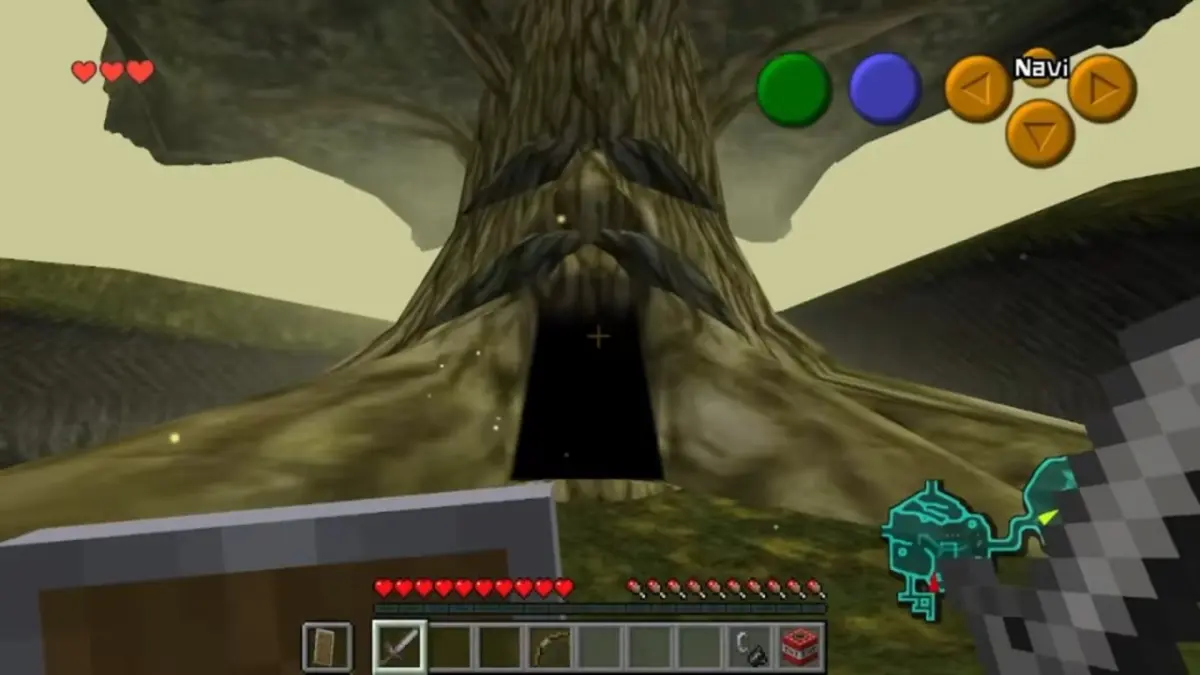
The video game modding community has entered an entirely uncharted era. In late September and early October 2026, social media feeds across X (formerly Twitter), Reddit, and TikTok were inundated with an astonishing wave of viral content known as AI Video Game Merging or AI Video Game Mashup Mods.
At its core, this emergent trend leverages advanced artificial intelligence models—most notably code-centric engines like Opus 5.5 and Codex—to reverse-engineer, rewrite, and cross-pollinate the codebases of entirely disparate video games. The result? Unprecedented, highly functional crossovers that bypass traditional, painstakingly manual modding workflows.
What began as a technical experiment by a lone developer has swiftly transformed into a global viral phenomenon, sparking intense debate over intellectual property, the future of game preservation, and the disruptive potential of generative AI within the interactive entertainment industry. Rather than merely applying cosmetic skins or superficial asset swaps, this new generation of AI-assisted developers is dynamically translating core game loops, action graphs, physics engines, and assets across incompatible titles in real time.
As millions of views accumulate across YouTube and TikTok, industry insiders, hardware publications, and everyday gamers are waking up to a paradigm-shifting reality: the barriers separating closed-source digital ecosystems are rapidly dissolving.
Detailed Chronology of the Trend
The sudden explosion of AI video game merging did not happen in a vacuum; it followed a rapid, highly calculated escalation of proofs-of-concept shared by pioneering developers online throughout late September 2026.
The Spark: Rebuilding Skate 3 in Rust
The phenomenon traces its origins to September 19, 2026, when X user and developer @chasmmmmmmmmmmm (known simply within the community as Chasm) published a short video demonstrating a radical technical undertaking. Chasm announced that they had rewritten the skateboarding classic Skate 3 in the Rust programming language, explicitly aiming for 1:1 behavioral accuracy through an iterative human-and-AI development loop.
[Human-AI Iterative Development Loop]
         │
         ├──> Codex / Opus 5.5 (Code Reverse Engineering)
         │         │
         │         ▼
         ├──> Asset Integration (Action & Motion Graphs)
         │         │
         │         ▼
         └──> Behavioral Parity in Target Engine (Rust)
According to Chasm, the AI tool Codex was instrumental in reverse-engineering the inner workings of the original title, successfully connecting isolated assets, action graphs, and complex motion graphs within an entirely separate engine. Accompanying the video was a bold declaration that would soon become a rallying cry for the movement: "Every game is open source now." The post rapidly gained traction, pulling in over 6,000 likes within its first month and laying the groundwork for what was to come.
Escalation: Skateboarding Meets Call of Duty
Just over a week later, on September 27, 2026, Chasm accelerated the trend by pushing the boundaries of absurdity and technical execution. The developer posted footage showcasing fluid skateboarding mechanics directly injected into Call of Duty: Modern Warfare 2 (MW2).
Accompanied by the tongue-in-cheek all-caps warning, "AI HACKERS HAVE PUT SKATEBOARDING IN CALL OF DUTY MODERN WARFARE 2! THIS HAS GONE TOO FAR," the post struck a chord with the internet’s appetite for chaotic sandbox experimentation. The video amassed over 29,000 likes in slightly more than a week, drawing alarmed and amused reactions from tech commentators and casual observers alike.
Building on this momentum, Chasm uploaded a dedicated deep-dive video to YouTube on September 28, 2026, showcasing an even more intricate merger between Call of Duty and Minecraft. The visual spectacle of block-based survival mechanics functioning within a gritty military shooter environment struck a viral chord, rocketing past 619,000 views in approximately a week.
The Floodgates Open: Elden Ring, Skyrim, and Beyond
Following Chasm’s initial viral triumphs, the broader online development community quickly reverse-engineered the methodology, applying AI code-merging techniques to an array of high-profile franchises:
- September 29, 2026: X user @TobynJacobs uploaded footage of the entirety of Minecraft operating natively as a mod inside Elden Ring—remarkably running on macOS. The demonstration pulled in over 308,000 likes on X within a week and dominated discussions on Reddit’s prominent
/r/singularitycommunity, where it cleared 3,000 upvotes. - September 30, 2026: Content creator LudocowTV published a comprehensive breakdown examining the broader industry implications of the trend, securing over 150,000 views.
- September 30, 2026: X user @cydonix introduced "Escape from Skyrim," a brilliant and jarring mashup integrating the tactical extraction mechanics, gunplay, and survival pressures of Escape from Tarkov into Bethesda’s legendary fantasy RPG, The Elder Scrolls V: Skyrim. The post garnered more than 14,000 likes.
- September 30, 2026: Capitalizing on the movement he helped spark, Chasm released a definitive YouTube mini-documentary titled "Modding has Changed FOREVER…" The video struck a nerve globally, pulling in an astonishing 2.4 million views within its first week online.
- October 1, 2026: Specialized hardware and PC gaming outlet Video Cardz published an in-depth journalistic feature covering the trend, curating numerous cross-platform examples and cementing the phenomenon’s transition from fringe social media curiosity to recognized tech news.
As October progressed, secondary creators on TikTok and X joined the fray. Projects like GTA: Vice City infused with Skate 3 physics, additional MW2 "trickline" skating variations, and even a surreal cross-pollination of the NHL sports franchise with the World War II shooter Call of Duty: World at War (WaW) demonstrated that the community’s imagination was virtually limitless.
Supporting Context & Metrics
To fully appreciate why AI Video Game Merging has sent shockwaves through the tech and gaming spheres, one must examine the quantitative footprint of the trend alongside the underlying technical mechanics that make it possible.
Quantitative Reach and Engagement Metrics
While individual clips routinely circulated across TikTok and Instagram Reels, the central hubs of engagement were X and YouTube. Below is a breakdown of key viral milestones recorded during the peak of the trend in late September and early October 2026:
| Content Creator / Source | Merged Title Combination | Primary Platform | Key Metric (Views / Likes / Upvotes) |
|---|---|---|---|
| Chasm (@chasmmmmmmmmmmm) | Skate 3 in Rust (Engine Rewrite) | X | 6,000+ Likes (1 Month) |
| Chasm (@chasmmmmmmmmmmm) | Skate 3 mechanics in MW2 | X | 29,000+ Likes (1 Week) |
| Chasm (@chasmmmmmmmmmmm) | Call of Duty meets Minecraft | YouTube | 619,000+ Views (1 Week) |
| TobynJacobs | Minecraft running inside Elden Ring | X / Reddit | 308,000+ Likes / 3,000+ Upvotes |
| LudocowTV | Industry Impact Commentary | YouTube | 150,000+ Views (1 Week) |
| Cydonix (@cydonix) | Escape from Tarkov in Skyrim | X | 14,000+ Likes (1 Week) |
| Chasm | "Modding has Changed FOREVER…" | YouTube | 2.4 Million+ Views (1 Week) |
The Mechanics of Generative Code Translation
Traditional game modding is an intensely manual, highly specialized discipline. Modders typically rely on official or community-reverse-engineered Software Development Kits (SDKs), spending hundreds of hours writing bridging scripts, recompiling assets, and debugging memory allocation conflicts.
AI video game merging fundamentally shortcuts this friction. By utilizing state-of-the-art Large Language Models (LLMs) and code assistants optimized for deep semantic understanding (such as Opus 5.5 and Codex), developers can feed disparate API documentation, decompiled bytecode structures, or engine logic into an iterative prompt loop.
The AI acts as an aggressive translator and intermediary. It parses the object-oriented logic of Game A (e.g., the momentum-based character controllers and trick-detection arrays of Skate 3) and refactors it into a compatible syntax that can hook directly into the execution pipeline or memory space of Game B (e.g., the tactical physics and asset architecture of Call of Duty: Modern Warfare 2).
Rather than rewriting every line of code by hand, human developers act as directors and quality-assurance gatekeepers, guiding the AI through successive generations of bug-fixing prompts until a stable, playable hybrid emerges.
Official Statements and Industry Reactions
The emergence of AI-driven game merging has elicited a polarizing spectrum of responses from independent developers, industry veterans, legal analysts, and consumers.
The Visionary Perspective: Preservation and Creative Liberation
Proponents of the trend—championed largely by figures like Chasm and tech-forward commentators on platforms like Reddit’s /r/singularity—view this technology as the ultimate fulfillment of the open-source ethos. For decades, classic video games have remained locked behind proprietary engines, corporate copyright walls, and obsolete hardware architectures.
When Chasm asserted that "every game is open source now," they were pointing to a future where artificial intelligence can serve as a universal compatibility layer. If an LLM can successfully reverse-engineer binaries and port complex motion graphs into modern languages like Rust, the historical preservation of abandonware becomes infinitely more scalable. Gamers and archivists could theoretically breathe new life into dead codebases, porting classic mechanics into contemporary environments without relying on official publisher remasters.
Furthermore, independent creators have celebrated the democratization of complex game engineering. As X user P.E. Cooper noted when sharing an absurd NHL and Call of Duty: World at War crossover:
"When I was younger I had a meeting with some game studios and they laughed me out of the room… they said my idea was ‘the dumbest fucking thing they’ve ever heard!’ Thanks to AI I can finally prove them wrong."
The Skeptical View: Copyright, Quality, and Industry Disruption
Conversely, traditional developers, intellectual property lawyers, and mainstream gaming communities have raised urgent concerns regarding the sustainability and legality of AI game merging.
From a legal standpoint, taking compiled commercial software (such as Elden Ring or Call of Duty), reverse-engineering its binaries via third-party LLMs, and injecting unauthorized foreign code mechanics constitutes a severe gray area—if not outright copyright infringement. While traditional mods often operate under fair-use or user-generated content (UGC) agreements provided by specific developer SDKs, AI-driven code reengineering frequently bypasses intended engine parameters entirely, operating on raw binaries without publisher consent.
Moreover, veteran game developers have cautioned that while AI-generated mashups make for incredible viral social media spectacles, they are structurally unstable. Software engineering is rarely just about making two systems compile together; it requires rigorous architecture, memory management, and optimization that chaotic AI prompt loops often mask beneath a veneer of temporary functionality.
Future Outlook: Where Do We Go From Here?
As the initial shockwave of the late September and early October 2026 viral wave settles, the long-term ramifications for the interactive entertainment landscape are becoming a focal point of intense industry speculation.
- Publisher Pushback and Legal Frameworks: Major AAA game publishers—traditionally protective of their proprietary engines, source code, and intellectual properties—will inevitably face difficult decisions regarding anti-tamper technologies. As AI models become more adept at parsing proprietary binaries, publishers may deploy advanced encryption and runtime code obfuscation specifically designed to frustrate automated LLM reverse-engineering pipelines.
- Evolution of Official Modding Tools: In response to the rising capabilities of generative AI, game studios may choose to proactively integrate AI-assisted development tools directly into official modding suites. By providing sanitized, legally compliant AI copilots, studios can harness the creative energy of the community while maintaining control over their underlying intellectual property.
- A New Frontier for Indie Game Design: Beyond superficial meme mashups (such as skating in military shooters), the underlying technology points toward a future of radical indie game development. The ability to rapidly prototype complex mechanics by cross-referencing existing game logic via AI could empower small, solo development teams to build deeply ambitious, mechanically rich games in fractions of the traditional development timeframe.
Ultimately, AI Video Game Merging has permanently altered the conversation surrounding what is technically possible in homebrewing and modding. Whether viewed as a dystopian threat to intellectual property or a glorious, chaotic leap forward for digital creativity, one thing is certain: the rigid boundaries that once defined video game engines have been broken, and the rules of software development are being rewritten in real time.