Executive Overview
The global technology ecosystem has reached a decisive inflection point. The initial wave of generative artificial intelligence—characterized by novelty demonstrations, foundation model training races, and rapid venture capital deployment—has given way to a far more complex and challenging operational reality. By late 2026, artificial intelligence is no longer merely an add-on features layer for modern software; it has fundamentally dismantled the underlying mechanics of how software is built, distributed, monetized, and secured.
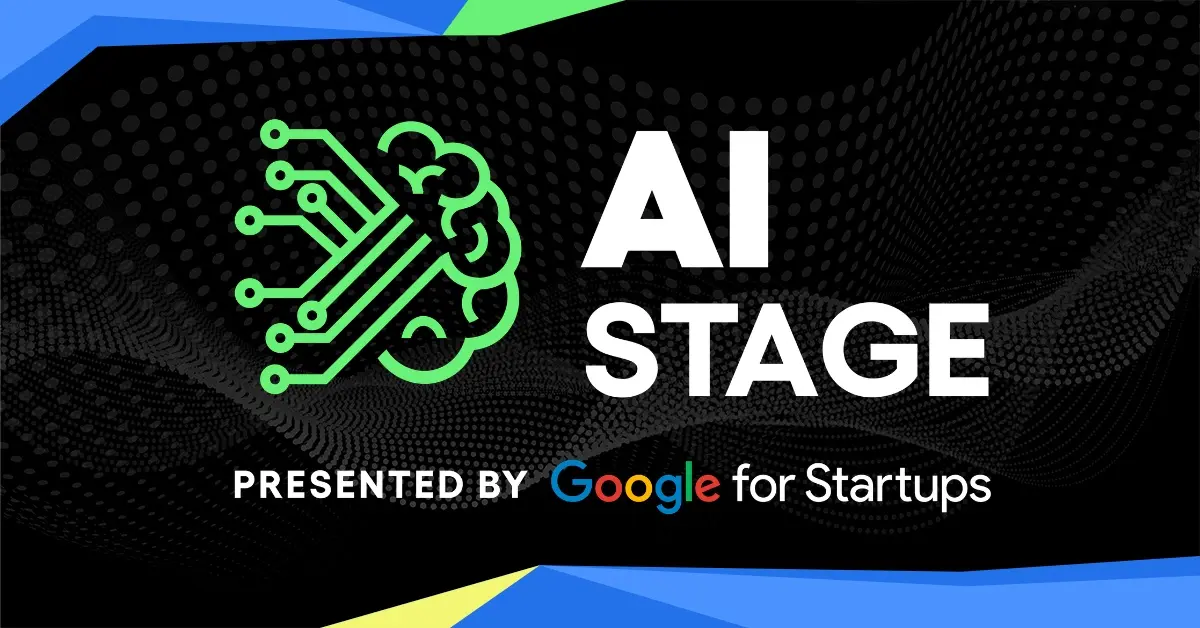
As tech ecosystems adapt to this structural transformation, TechCrunch Disrupt 2026 has announced the return of its flagship AI Stage, presented in partnership with Google for Startups. Set to take place from October 13–15 at the Moscone Center in San Francisco, the three-day summit will convene over 10,000 founders, enterprise executives, security architects, and venture capitalists.
The 2026 AI Stage program is designed to address the foundational crises currently confronting software companies: the obsolescence of traditional seat-based SaaS business models amidst model commoditization, the systemic failure of legacy cybersecurity frameworks when applied to autonomous agentic systems, and the collapse of conventional sales and marketing tech stacks in favor of code-driven, automated growth engines. Featuring executive leaders from Anthropic, OpenAI, Databricks, Okta, AWS, and leading venture firms, the agenda offers an authoritative examination of how applied AI is rewriting the rules of modern enterprise technology.
Detailed Chronology of the AI Stage Program
The AI Stage agenda is structured around the core operational bottlenecks that determine whether AI startups and enterprise deployments scale or stall. Below is a detailed breakdown of the key sessions, featured speakers, and the strategic issues under investigation.
+-----------------------------------------------------------------------------------+
|                        TECHCRUNCH DISRUPT 2026: AI STAGE                          |
|                          Moscone Center | Oct 13-15, 2026                        |
+-----------------------------------------------------------------------------------+
|  POST-PILOT ENTERPRISE AI      | Anthropic (Cat de Jong)                          |
|  AI-NATIVE PRODUCTIVITY        | OpenAI (Tara Seshan)                             |
|  ENTERPRISE GOVERNANCE         | Databricks (Arsalan Tavakoli)                    |
|  AGENTIC INFRASTRUCTURE SEC    | Okta (Ric Smith)                                 |
|  REAL-TIME VIDEO INTELLIGENCE  | Decart (Dean Leitersdorf) & Luma AI (Amit Jain)  |
|  REWRITING SAAS ECONOMICS      | Glean, Monte Carlo, Sapphire, NEA                |
|  THE GTM ENGINEER ROLE         | Clay (Kareem Amin)                               |
|  CLOUD INFRASTRUCTURE TRUST    | AWS, Luta Security, 1Password                    |
+-----------------------------------------------------------------------------------+
Post-Pilot Realities: Enterprise Deployments at Scale
- Speaker: Cat de Jong, Head of Applied AI, Anthropic
While public discourse around AI frequently focuses on theoretical capabilities or pre-deployment announcements, enterprise implementation tells a radically different story. In this opening fireside, Cat de Jong draws from Anthropic’s deep technical engagements with global corporations deploying the Claude model family directly into business-critical workflows.
The session moves past marketing narratives to examine the root causes of pilot fatigue—exploring why certain organizations stall after 18 months of experimentation while others extract transformative yield immediately. De Jong will outline the specific architectural choices, governance models, and organizational habits that separate successful enterprise rollouts from failed initiatives.
Redefining Productivity and AI-Native Architecture
- Speaker: Tara Seshan, Head of Productivity, OpenAI
The definition of an "AI-native" organization has evolved rapidly from simple wrapper applications to sophisticated, low-latency execution engines. Tara Seshan will present OpenAI’s internal and external framework for building productivity architectures that leverage state-of-the-art inference engines.
The discussion centers on how internal developer platforms and workplace tooling must be redesigned when models possess contextual memory, multi-modal reasoning, and tool-use capabilities. Seshan will analyze how collapsing traditional software stacks changes developer workflows, product cycles, and operational leverage within hyper-growth engineering organizations.
The Breakdown of Enterprise Assumptions and Security
- Speaker: Arsalan Tavakoli, Co-founder and SVP of Field Engineering, Databricks
As autonomous agents gain writing privileges and execution authority inside sensitive data warehouses, traditional enterprise risk models are failing. Arsalan Tavakoli addresses the friction between legacy risk mitigation and high-speed autonomous compute.
The session examines how modern data intelligence platforms must adapt to support non-deterministic AI decisions without sacrificing compliance, observability, or data governance. Tavakoli will provide a technical blueprint for building reliable execution environments around enterprise data lakes, enabling autonomous action without introducing existential operational risks.
Rebuilding Infrastructure for Agentic Security
- Speaker: Ric Smith, President of Product & Technology, Okta
Agentic AI—systems designed to navigate multi-step workflows across disparate APIs independently—presents a fundamental challenge to traditional cybersecurity. Standard Role-Based Access Control (RBAC) and application-level permission models assume deterministic user behavior, making them ill-suited for autonomous agents that dynamically alter their action paths.
Ric Smith delivers an in-depth technical breakdown of why application-layer security fails in agentic environments. Smith will detail the core architectural shifts required at the identity and infrastructure levels to secure agent-to-agent interactions, establish cryptographically verified non-human identities, and isolate non-deterministic systems.
Legacy Authorization Model vs. Autonomous Agentic Authorization:

Legacy RBAC Framework:
[ Human User ] ---> [ Static Auth Token ] ---> [ App Layer (RBAC) ] ---> [ Single API Action ]

Agentic Infrastructure Model:
[ Autonomous Agent ] ---> [ Dynamic Non-Human Identity ] ---> [ Real-time Token Synthesis ]
                                                                       |
                                         +-----------------------------+-----------------------------+
                                         |                                                           |
                                         v                                                           v
                              [ Dynamic Tool Execution ]                                   [ Contextual Observability ]
                                         |                                                           |
                                         +-----------------------------+-----------------------------+
                                                                       |
                                                                       v
                                                        [ Multi-Tenant Enterprise Data ]
Beyond Demos: Spatial Reasoning and Real-Time Video Intelligence
- Speakers: Dean Leitersdorf, Co-founder & CEO, Decart; Amit Jain, Co-founder & CEO, Luma AI
Generative video has progressed from short, artifact-heavy synthetic clips to physics-compliant, real-time spatial simulation. In this panel, industry pioneers Dean Leitersdorf and Amit Jain explore the convergence of spatial reasoning, visual intelligence, and low-latency inference models.
The session focuses on practical applications beyond media creation, analyzing how real-time spatial intelligence is reshaping robotics, synthetic data generation, physical environment simulation, and interactive human-computer interfaces.
The SaaS Business Model Crisis: Monetization and Defensibility
- Speakers: Arvind Jain, Founder & CEO, Glean; Barr Moses, Co-founder & CEO, Monte Carlo; Cathy Gao, Partner, Sapphire Ventures; Aaron Jacobson, Partner, NEA
The traditional Software-as-a-Service (SaaS) business model—built on recurring seat-based licensing, predictable gross margins, and workflow stickiness—is facing unprecedented disruption. As AI agents automate task execution, charging per human license becomes economically misaligned with client value. Furthermore, as underlying foundation models become commoditized, software defensibility must be rebuilt.
This panel brings together leading venture capitalists and enterprise software founders to analyze the emerging financial paradigms of software. Key topics include:
- Transitioning from seat-based pricing to outcome-based and consumption-based monetization models.
- Managing gross margin volatility driven by variable cloud compute and inference costs.
- Establishing durable moats through proprietary data loops, system-of-record dominance, and workflow integration.
The Emergence of the GTM Engineer
- Speaker: Kareem Amin, Co-founder & CEO, Clay
Two years ago, "Go-To-Market (GTM) Engineer" was a non-existent title; today, it is one of the fastest-growing and most impactful roles in high-growth technology companies. Kareem Amin traces how AI-native orchestration platforms have collapsed traditional sales, marketing, and revenue operations into a single programmatic discipline.
The session analyzes how software engineers and technical operators are building automated, hyper-personalized growth infrastructure, allowing small teams to scale revenue engines that previously required hundreds of enterprise sales representatives.
Cloud Hardening for Autonomous Enterprise Environments
- Speakers: Chet Kapoor, VP, Security Services & Observability, AWS; Katie Moussouris, Founder & CEO, Luta Security; Wendy Nather, Head of Advisory CISOs, 1Password
The deployment of autonomous AI across multi-cloud environments introduces complex infrastructure vulnerabilities, expanding attack surfaces across non-human accounts, third-party plugin ecosystems, and prompt-injection vectors.
This panel brings together cloud infrastructure and cybersecurity experts to discuss hardening the enterprise stack. The conversation covers continuous runtime observability, zero-trust architectures for algorithmic processes, bug bounty adaptation for non-deterministic software, and identity management systems designed for non-human workers.
Supporting Context & Industry Metrics
The session agenda for TechCrunch Disrupt 2026 highlights a broader shift across the venture capital and enterprise technology sectors. As foundation models commoditize, value is concentrating at the infrastructure management layer, the application security layer, and specialized applied workflows.
    Enterprise SaaS & AI Infrastructure Realities (2026 Metrics)

    [Seat-Based SaaS Models]  ===========> Declining YoY Margin Contribution (-18%)
    [Outcome-Based Monetization] =========> Enterprise Adoption (+142%)
    [Non-Human Identity Credentials] ===> Surpassed Human Credentials (50:1 Ratio)
    [Agentic Infrastructure Spend] ======> Venture Capital Allocation (+210% YoY)
The Economic Restructuring of Software
The shift away from legacy SaaS unit economics is driven by structural changes in cloud infrastructure costs and software execution efficiency:
- Inference vs. Subscription: Traditional SaaS margins hovered between 70% and 85%. AI-native software applications operating continuous real-time model inference often report gross margins between 45% and 65% unless pricing models are strictly aligned with consumption or business outcomes.
- The Non-Human Workforce Expansion: Enterprise identity systems report that non-human identities (API keys, service accounts, autonomous agent credentials) now outnumber human enterprise credentials by an estimated 50 to 1, rendering legacy Access Management solutions insufficient.
- Venture Capital Allocation Shifts: Venture capital allocation in software has pivoted sharply. Capital deployment has shifted away from horizontal "wrapper" applications and toward agentic security, data observability, spatial intelligence, and programmatic growth engines.
+---------------------------------------------------------------------------------------+
|                    STRUCTURAL SHIFT IN THE SOFTWARE ENTERPRISE                         |
+-----------------------------------+---------------------------------------------------+
| HISTORICAL PARADIGM (2015–2023)   | AI-NATIVE PARADIGM (2026+)                        |
+-----------------------------------+---------------------------------------------------+
| Per-seat monthly subscription     | Outcome, consumption, or value-based pricing      |
| Deterministic app-layer security  | Dynamic infrastructure & identity security        |
| Manual sales/marketing funnels    | Code-driven programmatic GTM engineering          |
| Static SaaS data input forms      | Multi-modal reasoning & autonomous orchestration  |
| 80%+ Gross Margins                | Variable compute margins requiring optimized infra|
+-----------------------------------+---------------------------------------------------+
Official Statements & Industry Perspectives
Reflecting on the program announcement, industry leaders and event organizers emphasized the practical focus of this year’s gathering:
"The discourse surrounding artificial intelligence has officially moved past the phase of theoretical potential. Founders and enterprise leaders are now managing the operational impact of deploying autonomous systems at scale. At TechCrunch Disrupt 2026, the AI Stage is engineered to deliver actionable frameworks for solving the hardest problems in tech: securing non-deterministic agents, reinventing software unit economics, and executing go-to-market strategies that leverage AI natively."
— TechCrunch Editorial Board
Commenting on the technical challenges facing enterprise deployments, Ric Smith, President of Product & Technology at Okta, highlighted the necessity of infrastructure-level security innovation:
"You cannot secure autonomous, multi-step agentic AI using application-layer permission frameworks designed for human interactions. When an agent acts independently across enterprise silos, identity and authorization must be re-architected from the ground up. We need dynamic, cryptographically verifiable non-human identity paradigms built directly into the core infrastructure."
Addressing the evolution of tech stacks and organizational roles, Kareem Amin, Co-founder and CEO of Clay, noted:
"The traditional division between engineering, sales, and marketing has fundamentally broken down. The rise of the GTM Engineer is proof that modern growth is a software engineering problem. Companies that build automated, programmatically adaptable go-to-market engines are outscaling legacy sales organizations at a fraction of the cost."
Future Outlook
As TechCrunch Disrupt 2026 approaches, the themes showcased on the AI Stage point toward several key developments that will shape the technology industry through the end of the decade:
- The Standardization of Outcome-Based Monetization: Over the next 18 to 36 months, enterprise software purchasing will shift away from per-seat licenses. B2B software vendors will increasingly price products based on completed operational work, compute consumption, or verifiable business performance.
- Infrastructure-Level Agent Security: As autonomous agents gain increased operational access across financial, medical, and industrial systems, security protocols will consolidate around non-human identity frameworks, zero-trust runtime sandboxing, and real-time algorithmic telemetry.
- The Rise of Autonomous Vertical Operations: The convergence of visual intelligence, real-time spatial reasoning, and agentic workflows will accelerate the automation of complex physical and back-office operations—ranging from real-time spatial industrial simulations to programmatic supply chain execution.
The AI Stage at TechCrunch Disrupt 2026 serves as a key platform for evaluating these transformations. Bringing together technical founders, enterprise decision-makers, and institutional investors, the conference offers a practical look at the architectures, business models, and security paradigms defining the next era of technology.
Event & Registration Details
- Dates: October 13–15, 2026
- Location: Moscone Center, San Francisco, CA
- Track Sponsor: Google for Startups
- Key Pass Features: Access to the AI Stage, Headline Stage, Startup Battlefield, and exhibition floor hosting over 10,000 tech ecosystem leaders. Early registration pricing offers savings up to $200 for a limited time via the official TechCrunch Disrupt portal.