Executive Overview
In the hyper-accelerated ecosystem of contemporary internet culture, viral phenomena often emerge from the unlikeliest of places, transmuting mundane, wholesome moments into complex layers of digital abstraction. The summer of 2026 bore witness to one of the most eccentric crossovers of cross-cultural content, localized internet subcultures, and algorithmic propagation: the "Chinese Dog Singing" (alternatively known as "Chinese Man Singing With Dog") meme.
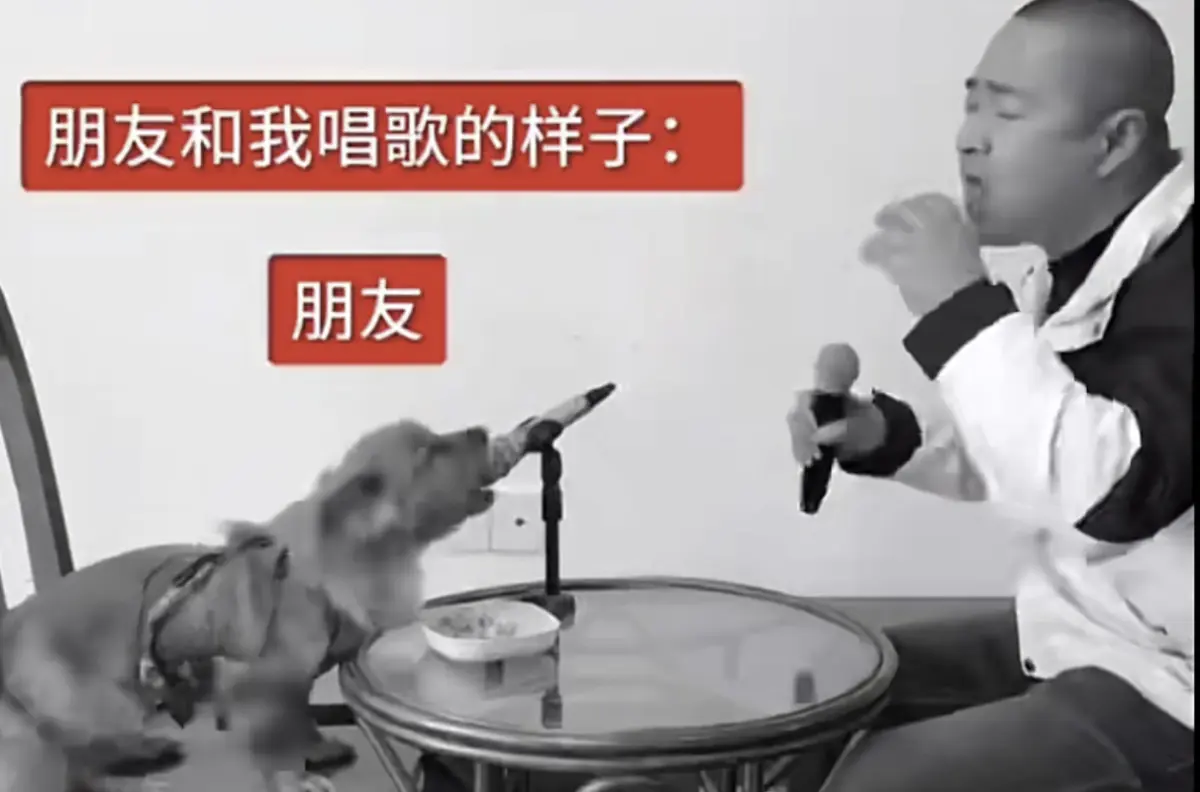
Originating from the domestic short-form video ecosystem of mainland China—specifically platforms like Douyin—the foundational footage features a middle-aged Chinese man passionately performing traditional folk songs or pop melodies alongside his pet Corgi (reportedly named Tangyuan). Through a combination of training, canine intuition, and sheer statistical coincidence, the dog bellows out remarkably well-timed, high-pitched howls and barks that eerily mirror the rhythm and cadence of its owner’s vocalizations. What began as a charming, authentic display of human-animal bonding quickly crossed language barriers, entering Western social media networks via aggregate channels.
However, the trajectory of the clip did not stop at wholesome appreciation. By mid-summer 2026, the video fell into the hands of the "brainrot" editing subculture—a digital milieu characterized by heavily altered playback speeds, surreal visual filters, and deep-fried audio distortion. Stripped of its original cultural context, the sped-up, chaotic audio track became a ubiquitous sonic template across TikTok, YouTube Shorts, and Instagram Reels.
This article provides an exhaustive, journalistic inquiry into the origins, evolution, and cultural resonance of the "Chinese Dog Singing" phenomenon. We trace its pathway from Douyin to global virality, analyze the mechanics of its mutation into a brainrot staple, examine the quantitative metrics driving its engagement, and evaluate its lasting imprint on contemporary fan art and digital remix culture.
Detailed Chronology: From Douyin to Global Virality
To understand the trajectory of the meme, one must trace its lineage backward from Western algorithmic feeds to its genesis in the Chinese digital sphere. The timeline below charts the critical inflection points of the phenomenon through the summer of 2026.
[Early 2026] ──> Origin on Douyin (Traditional songs with Corgi "Tangyuan")
       │
[July 8, 2026] ──> First major Western breakout via sped-up TikTok "brainrot" edit (@morayayalex)
       │
[July 15, 2026] ──> Expansion to alternative footage; rapid audience scaling (@unknwn_xin)
       │
[July 30, 2026] ──> Crossover into fan animation and rotoscoping templates (@bethany_420)
       │
[Aug 10–13, 2026] ──> Mainstream re-uploads and comparative deep-dives on YouTube (@bugori)
       │
[Late Aug 2026] ──> Peak saturation: Millions of views, complex redraw integrations
Phase 1: The Chinese Domestic Genesis
Long before Western creators began incorporating the audio into ironic edits, the core footage was a staple of wholesome pet content within mainland China. Creators uploaded clips to Douyin showcasing pet owners—frequently featuring Corgis due to their expressive vocalizations and physical disposition—engaging in musical performances.
The canine subject, frequently identified by followers as Tangyuan, would sit patiently or stand beside its owner. As the man belted out high notes or dramatic crescendos in traditional folk styles, the Corgi would tilt its head and unleash sharp, staccato barks that synchronized remarkably well with the rhythm. To domestic audiences, these videos were celebrated for their ingenuity, patience in animal training, and lighthearted humor.
Phase 2: Transpacific Transit and Aggregation
As is common with prominent Douyin content, these clips naturally bled over into Western-facing platforms via archival channels and dedicated aggregators. A prominent vector for this international distribution was the YouTube channel Corgi Croon (@CorgiCroon), which systematically publishes authorized clips sourced directly from mainland Chinese creators.
These early Western uploads were consumed largely at face value. Comment sections marvelled at the dog’s apparent musical ear and the deadpan seriousness of the owner. However, this earnest phase was short-lived. The intrinsic absurdity of a high-pitched Corgi barking in counterpoint to a traditional folk singer presented fertile ground for algorithmic remixing.
Phase 3: The Brainrot Mutation (July 2026)
The turning point for the meme occurred when individual creators isolated the audio, significantly increased its playback speed, and applied the hyper-ironic aesthetic conventions associated with modern "brainrot" culture.
- July 8th, 2026: TikTok user
@morayayalexpublished a sped-up edit combining the visual elements of the Chinese man and his Corgi with distorted, rapid-fire audio. The juxtaposition of the earnest performance with the chaotic, chipmunk-esque barking struck a chord with Gen Z and Gen Alpha audiences. Within seven weeks, the clip accumulated over 2.1 million views and 178,000 likes. - July 15th, 2026: Capitalizing on the emerging audio trend, user
@unknwn_xindeployed a secondary clip of the same duo under the hyperbolic framing: "Top 5 most funniest moments Chinese dog singing will knock you out your socks." This post expanded the linguistic vocabulary surrounding the meme, cementing search queries that would dominate algorithmic recommendations for the rest of the summer.
Phase 4: Artistic Appropriation and Redraw Culture (Late July – August 2026)
As the audio template achieved saturation, creators within the digital art, animation, and fandom communities began utilizing the soundscape as a backing track for custom character animations (redraws and rotoscoping).
- July 30th, 2026: Animator
@bethany_420released an animated adaptation set to the sped-up audio, drawing parallels to fictional companion animals (such as Guppy from The Binding of Isaac). The video cleared 1.2 million views in four weeks. - August 13th, 2026: Content aggregator and YouTuber
@bugoripublished a contextual breakdown video contrasting the wholesome original footage with its frantic brainrot derivative, garnering over 1.3 million views in two weeks and bridging the gap between casual scrollers and meme historians. - Late August: High-profile uploads by accounts like
@martin.arg8(surpassing 3.2 million views on TikTok by late August) confirmed that the meme had transitioned from a niche sonic trend into a mainstream internet staple.
Supporting Context & Metrics: Quantitative Engagement Analysis
The viral lifecycle of the "Chinese Dog Singing" phenomenon is quantifiable through user engagement metrics across major short-form video platforms. The table below outlines the performance milestones of key foundational uploads that fueled the trend’s exponential growth.
| Date (2026) | Platform | Creator / Account | Content Description | Views | Likes |
|---|---|---|---|---|---|
| August 10 | TikTok | @rainline_kura |
Direct re-upload of the original singing duet | 800,000+ | 54,200 |
| July 8 | TikTok | @morayayalex |
First major sped-up "brainrot" edit | 2,100,000+ | 178,000 |
| July 15 | TikTok | @unknwn_xin |
Alternative clip compilation & remix | 1,100,000+ | 204,400 |
| July 30 | TikTok | @bethany_420 |
Fictional character animation set to audio | 1,200,000+ | 205,000 |
| August 13 | YouTube | @bugori |
Comparative documentary-style overview | 1,300,000+ | N/A (Sub) |
| August 22 | TikTok | @martin.arg8 |
High-engagement meme propagation video | 3,200,000+ | 650,600 |
Algorithmic Drivers and Audience Reception
The explosive growth of these clips highlights several structural characteristics of modern recommendation algorithms:
- Audio Portability: By divorcing the video from its original visual narrative, the fast-paced barking audio became an easily repeatable soundbite. Creators could attach the sound to unrelated visual gags, drastically lowering the barrier to entry for participation.
- Cross-Cultural Curiosity: The unfamiliarity of the linguistic and musical styles (traditional Chinese folk tunes) acted as a novel stimulus for Western audiences, who juxtaposed the earnest cultural performance with Western shitposting aesthetics.
- Fandom Integration: The adoption of the sound by illustrators drawing characters from media franchises like Jujutsu Kaisen (Megumi’s divine dogs), The Legend of Zelda: Twilight Princess (Wolf Link and Midna), and Haikyuu!! allowed specialized fandoms to inject their own characters into a generalized global meme format.
Cultural Mechanics: From Wholesome Tradition to "Brainrot"
The evolution of the Chinese Dog Singing phenomenon offers a compelling case study in how digital media crosses borders and mutates in meaning.
The Aesthetics of Decontextualization
In its native environment on Douyin, the videos function within a tradition of everyday influencer content—combining mild talent displays with household pets to drive engagement. The relationship between the owner and the Corgi is presented as harmonious and affectionate.
When exported to Western TikTok, however, this sincerity is routinely flattened by the imperatives of internet irony. The application of "brainrot" editing techniques—characterized by aggressive compression artifacts, accelerated frame rates, and ear-piercing audio normalization—deliberately strips away cultural context. To a Western viewer unversed in traditional Chinese folk music, the performance is hyper-stylized into pure abstraction: noise, rhythm, and canine vocalization divorced from semantic meaning.
The Rise of Rotoscoped Fan Art
Perhaps the most creative iteration of the meme is its adoption by digital artists who use the audio for rotoscoping and redraw projects. Artists spent dozens of hours hand-animating complex fictional characters to match the precise cadence of the Corgi’s rapid-fire barks. This labor-intensive subversion—where highly polished artistic skills are deployed in service of a deeply absurd shitpost—exemplifies the paradoxical nature of modern internet subcultures, where immense technical effort is routinely expended on throwaway humor.
Future Outlook
As the hyper-velocity of digital culture continues to compress the lifespan of online trends, the "Chinese Dog Singing" meme demonstrates how localized media can be rapidly synthesized into global pop-culture currency.
- Short-Term Trajectory: The meme is expected to experience continued saturation across secondary platforms (such as Facebook Reels and Instagram Explore feeds) before reaching algorithmic exhaustion by the fourth quarter of 2026.
- Long-Term Legacy: The phenomenon will likely be cataloged by digital folklorists as a quintessential example of "transpacific meme traffic"—instances where mainland Chinese short-form video tropes are re-engineered through Western ironist lenses. Furthermore, the extensive library of fan animations spawned by the trend ensures that the audio template will persist in niche fandom archives long after the primary trend fades from algorithmic prominence.
Ultimately, the phenomenon stands as a testament to the strange, unifying power of the internet: a middle-aged folk singer and his howling Corgi in rural China can become, through the alchemy of algorithms and digital remixing, the shared punchline of a global digital generation.