

Executive Overview
In the fast-paced ecosystem of modern social media, viral trends typically rely on immediate visual impact, catchy audio loops, or easily replicable dance challenges. However, the viral phenomenon known as the "I’m So Sorry" TikTok trend defies this conventional template by weaponizing patience, visual storytelling, and self-deprecating humor. Erupting across digital platforms in late 2026, the trend utilizes TikTok’s photo-slideshow feature to orchestrate a slow-burn deception.
Users begin by presenting what appears to be an aesthetically pleasing, impressive, or entirely normal photograph—often depicting themselves looking conventionally attractive, physically fit, or posing alongside a romantic partner. With each subsequent swipe, however, the digital narrative unravels. The image is progressively uncropped, exposing digital manipulation, awkward angles, or deeply embarrassing childhood contexts. The final slide delivers the punchline: a mock-sincere written confession apologizing for the fabricated reality of the initial post.
What started as a clever exercise in online catfishing parody has since evolved into a massive cultural touchstone, capturing millions of views and resonating particularly hard during the Halloween season of October 2026. By juxtaposing curated online identity against cringe-inducing childhood memories and poorly constructed costumes, the trend has struck a profound chord with Gen Z and millennial users alike. It offers a rare, collective sigh of relief against the relentless pressure of online perfectionism. This investigative report explores the genesis, rapid viral spread, cultural implications, and psychological underpinnings of the "I’m So Sorry" phenomenon.
Detailed Chronology: From Niche Satire to Global Phenomenon
Genesis: The Blueprint of Deception (August 2026)
The groundwork for the "I’m So Sorry" trend was laid in the waning days of summer. On August 22nd, 2026, TikTok creator @theywanthunter uploaded a slideshow that would unknowingly serve as the architectural blueprint for thousands of subsequent iterations.
The post opened with an outwardly appealing portrait of a man standing beside a woman, stamped with the seemingly sweet caption, "Happy 2 years bae." For casual scrollers, it looked like a standard couple appreciation post. However, the second slide revealed the first layer of trickery: the woman in the photograph had been digitally inserted into the frame. As users swiped further, the illusions compounded. The third slide exposed the fact that the man was not racially ambiguous as implied, and by the final frame, the polished persona had completely dissolved, revealing a pale, unmuscled, and unstyled individual. Accompanied by a hyperbolic expression of remorse, the post struck a nerve, accumulating an astonishing 25.6 million views within two months of its publication.
The Mid-Term Evolution (September 2026)
Following the blueprint established by @theywanthunter, creators across the platform began experimenting with the format, applying the concept of cascading self-debasement to various aspects of personal insecurity and lifestyle flexing.
On September 13th, 2026, creator @mels.vd deployed a variation centered on physical appearance and relationship status. Opening with a confident, hyper-stylized portrait accompanied by the text, "Happy 1st anniversary Gng," the slideshow systematically dismantled the creator’s digital clout. Slide by slide, the jawline lost its contoured edge, the hair lost its volume, and the illusion of effortless coolness evaporated. The post pulled in over 6 million views in under a month, proving that the format’s comedic engine—the deliberate deflation of online ego—had broad, repeatable appeal.
The October Surge: Halloween Nostalgia and Cringe Culture
While the trend originated as a satire of modern relationship and "glow-up" flexes, its cultural peak arrived in October 2026, perfectly timed with the lead-up to Halloween. Creators began pivoting the format toward their archives, unearthing childhood photographs that blended innocent youthful optimism with deeply embarrassing retrospective realizations.
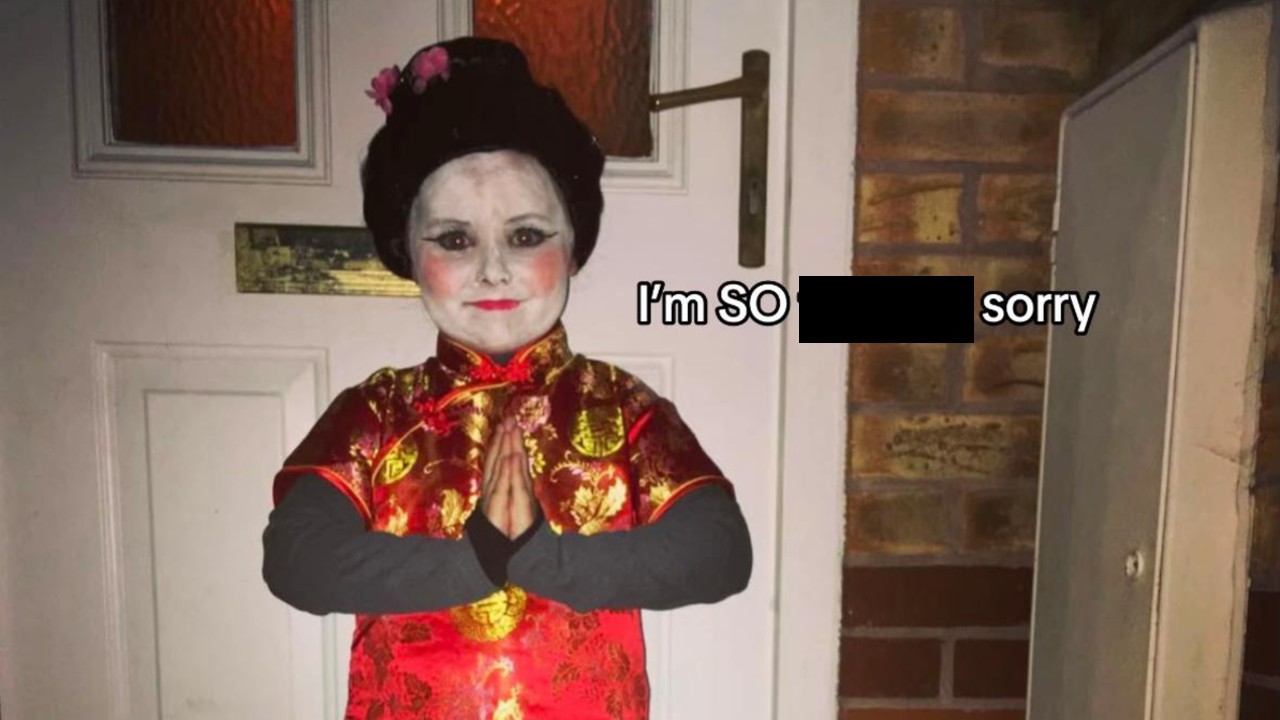
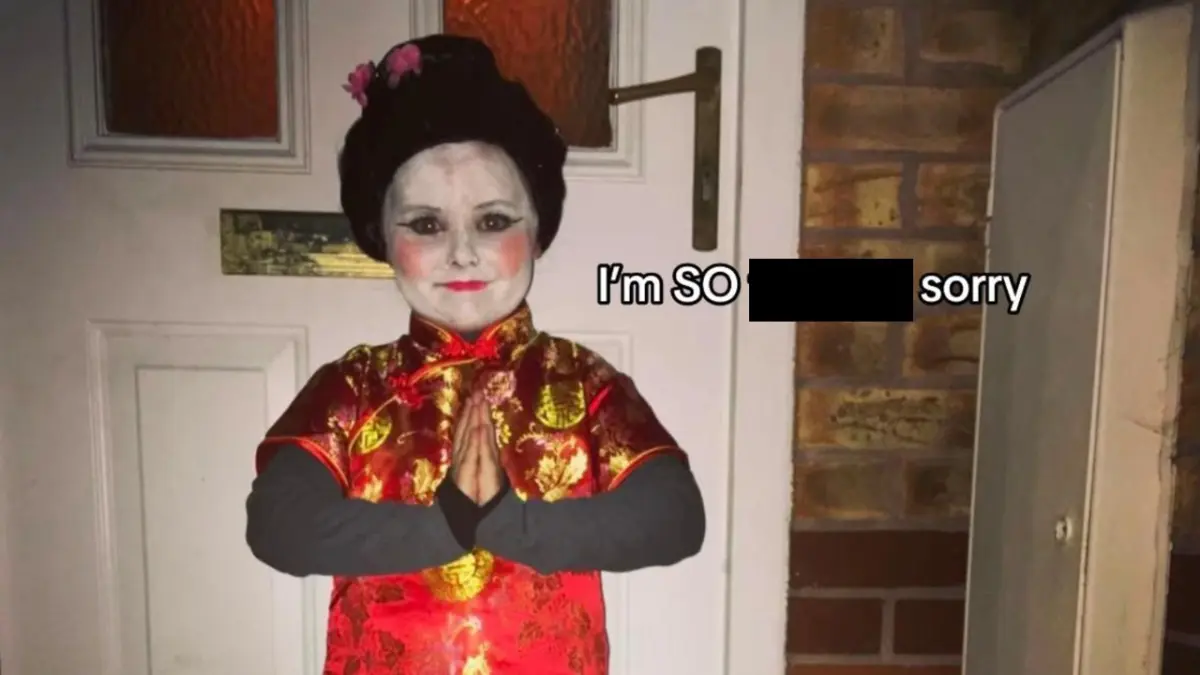
On October 20th, TikToker @girllover4u1 published a post that leveraged this nostalgic shift. The slideshow commenced with a charming image of a young child dressed in a standard princess gown, invoking the imagery of Disney’s Frozen. Yet, as the photo uncropped across subsequent slides, the cultural context shifted drastically. The viewer learned that the child was not dressed as Elsa, but had instead attempted an ill-advised, deeply cringe-inducing geisha costume—a classic example of culturally insensitive childhood dress-up born out of innocent ignorance. The post crossed 2.1 million views in just 48 hours, sparking intense discussions in the comment sections about the universal embarrassment of childhood memories.
The following day, October 21st, 2026, saw an explosion of user-generated content along these lines. TikToker @ciaraamandaa shared a slide deck detailing her brother’s middle school theater prop: a handmade Roman soldier helmet. What started as an impressive-looking historical artifact in the tightly cropped opening frame quickly degraded into a haphazard assembly of cardboard, aluminum foil, and hot glue upon further inspection. The post generated 2.9 million views in a single day, cementing the trend’s transition from satirical catfishing to communal vulnerability.
Supporting Context & Metrics: Why the Trend Resonated
The rapid velocity of the "I’m So Sorry" trend is not merely a byproduct of algorithmic favorability; it highlights deeper shifts in how digital natives consume content and manage online anxiety.
The Metrics of Virality
- Engagement Velocity: Major posts within the trend routinely crossed the one-million-view threshold within 24 to 48 hours of publication.
- Cross-Platform Migration: The humor quickly leaked out of TikTok’s walled garden. On October 21st, 2026, prominent X (formerly Twitter) user @NotJustLerato posted, "The ‘I’m so sorry trend’ on TikTok is so funny 😭✌️ It is actually making me feel better about my childhood photos😩🙏🏽✨," capturing a sentiment that quickly garnered thousands of likes and reshaped external commentary on the meme.
- Audio and Visual Reuse: Unlike trends dependent on proprietary choreography, "I’m So Sorry" relies purely on static imagery paired with suspenseful, dramatic audio cues (often utilizing ambient or suspenseful sound design to heighten the comedic betrayal of each swipe).
Psychological Underpinnings: Anti-Perfectionism as Entertainment
For years, social media platforms have been criticized for fostering environments of toxic positivity, hyper-curated aesthetics, and unattainable lifestyle benchmarks. Filter culture, face-tuning apps, and staged photography have trained users to view digital spaces as museums of manufactured perfection.
The "I’m So Sorry" trend acts as an organic psychological antidote to this phenomenon. By subverting the "flex," creators engage in a form of comedic exposure therapy. They invite audiences to witness the construction of a lie, only to systematically dismantle it down to its awkward, unedited reality. This self-inflicted defrocking disarms critics and builds immediate parasocial rapport. When a creator admits, with tongue-in-cheek devastation, that they were never muscular, never had a sharp jawline, or wore culturally problematic Halloween costumes at age five, they strip away the ammunition trolls might otherwise use against them.
Future Outlook: The Legacy of Slow-Burn Comedic Slideshows
As digital media trends accelerate, analysts are left questioning the long-term viability and evolution of the slideshow format on TikTok and rival platforms.
The "I’m So Sorry" trend has permanently altered how creators utilize photo carousels. Historically treated as an afterthought compared to short-form video, TikTok slideshows have proven capable of housing complex, narrative-driven comedic timing. The deliberate pacing—forcing the viewer to swipe multiple times to understand the full scope of a joke—creates an active form of media consumption that passive video viewing often lacks.
Looking ahead, we can expect the structural mechanics of the "I’m So Sorry" trend—the slow uncropping, the escalating confession, and the final hyperbolic apology—to be adapted across various verticals. Whether applied to workplace confessions, DIY home renovation disasters, or culinary failures, the template of "gradual self-sabotage" has established itself as a permanent fixture in the modern digital humor lexicon. Ultimately, the trend proves that in an era dominated by artificial curation, audiences still reward raw, self-aware authenticity, even—and especially—when it is delivered wrapped in layers of elaborate deception.




