Executive Overview
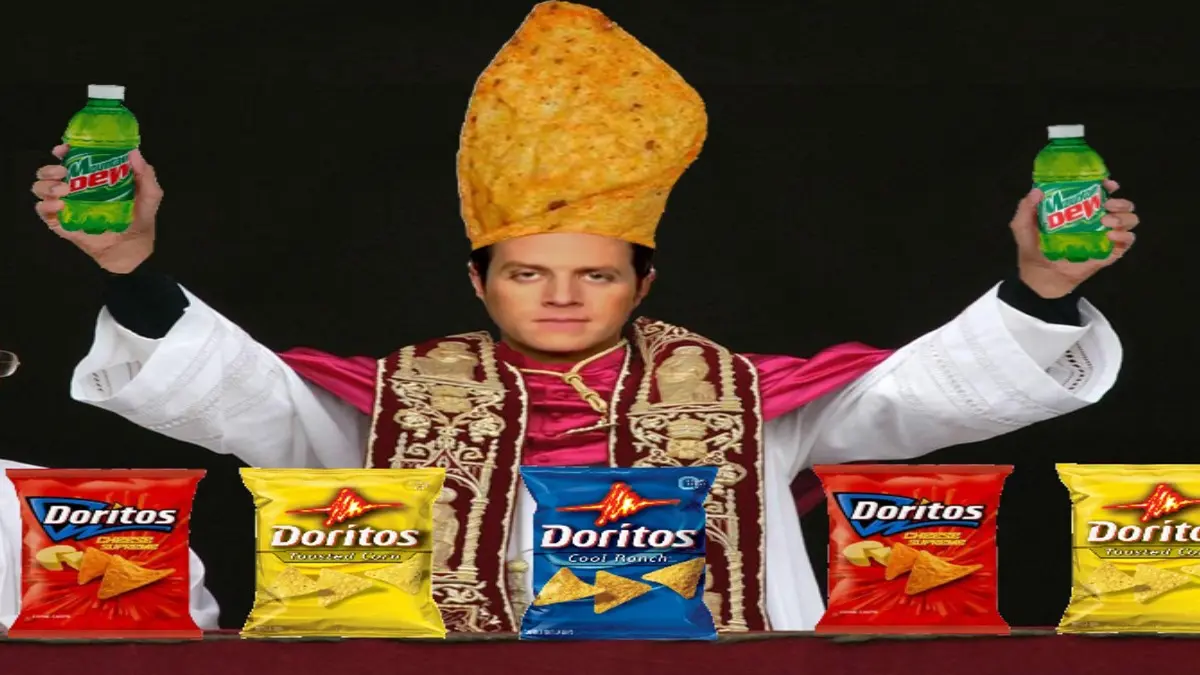
In the fast-paced, high-stakes ecosystem of digital media, few cultural touchstones linger quite as persistently as internet memes born from institutional critique. Among them, the moniker "Dorito Pope" stands out as a watershed moment for internet subculture and media accountability. Coined in October 2012, the nickname became inextricably linked to prominent Canadian video game journalist Geoff Keighley. It was forged in the crucible of public backlash following an infamous, heavily product-placed promotional interview that laid bare the uncomfortable and often invisible financial entanglements between major corporate advertisers and the journalists tasked with critically covering their products.
What began as a visually jarring backdrop featuring PepsiCo’s flagship snack foods quickly escalated into a full-scale industry reckoning known colloquially as "Doritosgate." This controversy sparked intense debates regarding journalistic integrity, corporate influence, and the ethical boundaries of enthusiast press coverage.
This retrospective examines the origins, trajectory, and long-term fallout of the "Dorito Pope" phenomenon. By tracing the event from its initial broadcast on LevelSave.com through its amplification by influential critics like Rab Florence, and analyzing its broader cultural footprint, this report explores how a single piece of media catalyzed a lasting conversation about transparency within modern entertainment journalism.
Detailed Chronology
October 18, 2012: The Fateful Broadcast
The narrative began on October 18, 2012, when video game website LevelSave.com published an interview featuring high-profile Canadian games journalist Geoff Keighley. The ostensible purpose of the interview was to discuss Keighley’s industry experiences at San Diego Comic-Con, his impressions of Microsoft’s upcoming blockbuster Halo 4, and broader shifts in the interactive entertainment landscape.
However, viewers tuning in were immediately struck by the aggressive, ubiquitous set design. Keighley was framed against a backdrop saturated with promotional branding for Mtn Dew and Doritos XP—a massive cross-promotional campaign between PepsiCo and Microsoft. The campaign incentivized gamers by offering "double XP" (experience points) for Halo 4 through unique promotional codes printed on specially marked bags of Doritos and bottles of Mountain Dew.
Rather than conducting the interview in a neutral editorial space or making the promotional nature transparent through standard journalistic disclaimers, the physical staging positioned a respected member of the gaming press directly inside a commercial advertisement. The optics proved disastrous. Within days, the video drew intense scrutiny across gaming forums, Reddit, and social media platforms. Dislike ratios skyrocketed; the video ultimately accumulated nearly 50,000 views, accompanied by a crushing disparity of over 1,200 downvotes against a paltry 125 upvotes. The community felt blindsided, viewing the visual subservience to corporate sponsors as a betrayal of editorial independence.
October 24, 2012: The Spark of "Doritosgate"
The backlash extended far beyond standard internet trolling when industry insiders began taking notice. On October 24, 2012, Scottish writer and Eurogamer.net contributor Rab Florence published a searing column titled "Lost Humanity 18: A Table of Doritos."
Florence’s article took direct aim at the systemic coziness between game developers, corporate conglomerates, and gaming journalists. Using Keighley’s interview as a primary exhibit, Florence articulated the growing resentment felt by consumers who suspected that major outlets traded positive coverage for exclusive access, advertising dollars, and promotional partnerships.
The article served as the ignition point for Doritosgate, a widespread discourse that forced gaming publications to re-examine their public relations strategies, gift policies, and coverage guidelines. Florence’s critique resonated deeply, giving a sophisticated voice to consumer frustrations and cementing the idea that mainstream gaming journalism had lost its critical distance.
October 26, 2012: Satire and Viral Amplification
As the controversy dominated industry forums, the internet did what it does best: it weaponized humor. On October 26, 2012, YouTuber PewpewVIDEOGAMES uploaded a satirical supercut titled "Double your Gaming Journalism with Geoff Keighley™."
The video expertly lampooned the interview by splicing audio of Keighley discussing Halo 4 and the Mountain Dew/Doritos promotion directly over multiplayer footage from Halo 3. The gameplay footage featured a player repeatedly "teabagging" a fallen teammate—a crude yet effective visual metaphor for how internet commentators felt the integrity of games journalism was being treated by corporate monoliths. The video went viral, cementing the satirical framing of the event in public memory.

January 1, 2013: Retrospective Validation
The cultural impact of the scandal was further cemented at the dawn of the new year. On January 1, 2013, popular YouTuber and commentator AngryJoeShow released a comprehensive retrospective counting down the top ten gaming controversies of 2012.
In his breakdown, the Doritosgate scandal and the "Dorito Pope" phenomenon claimed a high-ranking spot, trailing only monumental industry uproar like the controversial ending of Bioware’s Mass Effect 3 and the real-world espionage arrests surrounding Bohemia Interactive’s Arma III. This inclusion signaled that the incident was not merely a fleeting Twitter storm, but a defining cultural milestone of the 2012 gaming landscape.
Supporting Context & Metrics
To fully understand why the "Dorito Pope" moniker struck such a profound chord, one must examine the socio-economic pressures facing gaming journalism in the early 2010s. During this era, traditional print media was collapsing, and digital outlets were fighting fiercely for survival in an attention economy heavily dependent on programmatic advertising and exclusive access to publisher-funded events.
+-----------------------------------------------------------------+
#       THE ECONOMIC PIPELINE OF 2012 GAMING MEDIA                #
+-----------------------------------------------------------------+
  [ Corporate Publishers ] ---> (Exclusive Access & Ad Spend) ---> [ Gaming Outlets ]
            |                                                           |
            +------------> (Cross-Promotions: Mtn Dew / Doritos) <------+
                                            |
                                            v
                                   [ Consumer Backlash ]
                                  ("Dorito Pope" / Meme Era)
+-----------------------------------------------------------------+
Quantitative Breakdown of the Fallout
- The LevelSave.com Interview Engagement: Despite pulling in roughly 50,000 views in its active lifecycle, the video suffered an overwhelmingly negative sentiment ratio, capturing a massive wave of community dissatisfaction with an approximate 10:1 downvote-to-upvote ratio.
- Meme Virality Metrics: Over the subsequent two years, image macros, animated GIFs, and photo-shopped parodies featuring Keighley adorned with Doritos logos and religious papal vestments spread across 4chan, Reddit’s r/gaming, and specialized sub-communities like Know Your Meme.
- Industry Media Mentions: Within a three-month window following Florence’s Eurogamer column, dozens of independent blogs, podcasts, and video essays dissected the ethics of "preview events," all-expenses-paid junkets, and promotional tie-ins.
The quantitative data underscores a fundamental truth of the digital age: audiences possess an acute radar for perceived hypocrisy. When a journalist—who is theoretically bound to an audience of consumers—presents themselves as a human billboard for a fast-food cross-promotion, the cognitive dissonance is jarring enough to spark prolonged meme creation and institutional critique.
Official Statements and Industry Reactions
While Geoff Keighley never officially embraced the "Dorito Pope" title, the veteran journalist and future creator of The Game Awards weathered the storm by continuing his trajectory within the industry, eventually pivoting toward independent production models that gave him greater creative control over his broadcasts.
In the wake of Doritosgate, various media outlets and public figures offered commentary on the state of the industry:
- Rab Florence on Journalistic Boundaries: In his foundational Eurogamer piece, Florence argued that the blending of marketing and editorial content eroded public trust to a dangerous degree. He wrote, "We are living in a culture where the line between advertising and journalism has not just been blurred, but aggressively erased with a blowtorch."
- The Broader Journalistic Shift: Following the fallout, numerous gaming websites updated their ethics policies, explicitly forbidding writers from accepting promotional items with high monetary value or participating in cross-promotional campaigns that could compromise their editorial independence.
- The Evolution of Geoff Keighley: Observers note that the backlash fundamentally reshaped how Keighley approached his career. By cutting ties with traditional media conglomerates and eventually establishing The Game Awards in 2014 as an independently produced celebration of the medium, Keighley took control of his platform, directly funding and curating the event with a diverse array of sponsors while maintaining a separation from traditional review embargo pipelines.
Future Outlook
More than a decade after the initial interview aired, the legacy of the "Dorito Pope" continues to cast a long shadow over digital media ethics, influencer marketing, and the evolving creator economy.
As traditional journalism has yielded ground to influencer-led marketing, the dilemmas highlighted by Doritosgate have only multiplied. Today, streamers, YouTubers, and TikTok creators routinely navigate sponsored segments, integrated product placements, and brand partnerships. The line that Geoff Keighley inadvertently blurred in 2012 has become the standard operating procedure for the modern creator economy.
However, consumer awareness has evolved in tandem. Audiences today are far more vocal about disclosures, demanding clear labels such as "#Ad," "#Sponsored," or verbal acknowledgments of brand partnerships. The term "Dorito Pope" remains a humorous yet potent cautionary tale—a linguistic shorthand for the dangers of compromising editorial integrity for corporate synergy.
Ultimately, the phenomenon serves as a permanent reminder to media professionals across all industries: maintaining public trust requires absolute transparency. Whenever the boundaries between independent reporting and corporate promotion dissolve, the internet’s collective memory is quick to resurrect the imagery of the "Dorito Pope," holding the guardians of culture accountable with a mix of biting satire and enduring critique.