Executive Overview
On a Monday afternoon in April 2023, the media landscape shifted dramatically when Fox News abruptly announced the departure of its premier primetime host, right-wing superstar Tucker Carlson. While corporate boardrooms scrambled to assess the fallout and viewers processed the shockwaves, Katherine Abughazaleh—better known to hundreds of thousands of followers across TikTok, Twitter, and YouTube as "Kat Abu"—was glowing.
"I’ve been very joyful today," Abughazaleh remarked during a video interview just hours after the news broke. "I feel like everyone’s just having a fun day."
For Abughazaleh, a 24-year-old senior video producer for the progressive media watchdog group Media Matters for America, Carlson and his programs were not merely distant cultural phenomena; they were her daily professional obligation. Based in Washington, D.C., Abughazaleh’s job description required her to meticulously monitor Fox News’ primetime lineup every single weekday. But what began as professional oversight rapidly morphed into a burgeoning digital phenomenon.
Operating independently on her personal social media accounts, Abughazaleh parlayed her intimate familiarity with right-wing media mechanics into viral stardom. By breaking down the absurdities, contradictions, and dog-whistles of conservative cable news with biting wit, deep-dive investigative framing, and unapologetic femininity, she captured the attention of a younger generation completely alienated by traditional television news.
Yet, this ascent has come at a steep cost. As her digital footprint expanded, Abughazaleh became the target of relentless, highly gendered online harassment, explicit threats, and coordinated troll campaigns. Despite these hazards, her work has resonated deeply—not only as a form of internet entertainment, but as a bridge helping everyday people untangle their loved ones from the grip of cable news radicalization.
Detailed Chronology: Inside the Media Matters Bullpen
Two weeks before Tucker Carlson’s abrupt exit, a visit to the expansive, sparsely populated Media Matters office in the Navy Yard district of Washington, D.C., offered a glimpse into the mechanics of contemporary media monitoring. Overlooking the Anacostia River, the sprawling, open-plan workspace stands as a testament to the post-pandemic remote-work era; most analysts and producers log in from home, leaving the physical conference rooms largely quiet.
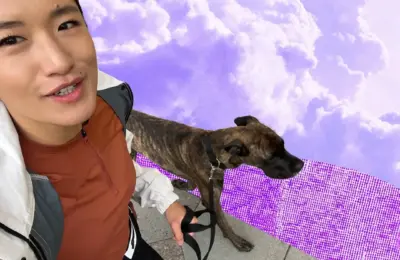
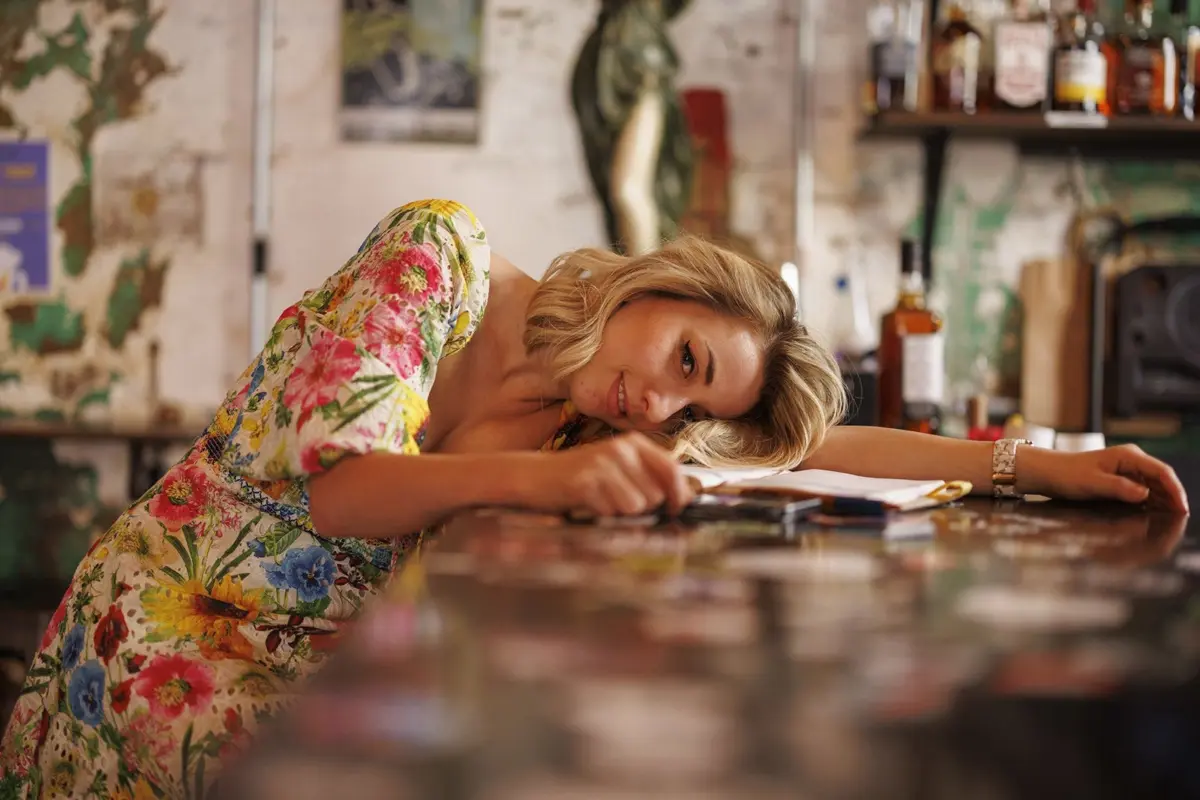
Abughazaleh, blonde, blue-eyed, and petite, sits at a single laptop rather than the multi-monitor command centers favored by some of her colleagues. With lightning speed, she flips through browser tabs, drafts emails, posts clips to Twitter, and fires off sharp comebacks to her digital detractors.
On the evening observed in the office, Abughazaleh was tracking Carlson’s opening monologue, which featured a scathing, racially charged attack on Tennessee state politician Justin Pearson.
"You’re here for a fun night," she deadpanned while exporting the clip, her fingers flying across the keyboard. "Strong stuff—he’s having a normal one today."
Critics of media watchdogs often argue that organizations like Media Matters inadvertently amplify harmful content by clipping and broadcasting it to wider audiences. Abughazaleh firmly rejects this critique.
"Fox is the most-watched cable news channel in the country," she argues. "They already had the platform. And just letting them get by scot-free does more damage than it helps."
Her path to this office was as unconventional as her digital rise. Born into a well-off family in Dallas, Texas, Abughazaleh grew up in a conservative household where Fox News was a fixture. Her father is a Palestinian immigrant, and her mother’s side boasts a lineage of seventh-generation Texans. Her maternal grandmother was a lifelong member of the Texas Federation of Republican Women, an activist who worked on numerous GOP campaigns and whose legacy included leaving Abughazaleh the mink coat she wore to President Richard Nixon’s inauguration.
Up until her teens, Abughazaleh identified as a Republican. Her political awakening occurred following a family move to Tucson, Arizona.
"At least half my high school was low-income or undocumented," she reflects. "The bootstrap myth just shattered before my eyes."
She subsequently attended George Washington University, majoring in international security and studying journalism during the turbulent years of Donald Trump’s presidency. Graduating in May 2020 at the height of the pandemic, she sought employment aligned with her personal convictions. Media Matters proved to be the ideal fit.
Supporting Context & Metrics: The Rise of "Kat Abu"
While Abughazaleh’s professional life is dedicated to tracking conservative media, her viral social media footprint is entirely a labor of love—conceptualized, filmed, edited, and published entirely on her own time. A lifelong anime fan who taught herself video editing as a child by creating Anime Music Videos (AMVs), she applies these foundational editing skills to her political commentary.
"It’s just for funsies," she explains with a laugh. "It’s my personal account, my personal views." She frequently signs off her videos with a signature disclaimer: "I watch conservatives for work, but make fun of them for pleasure."
The response has been staggering. Since launching her TikTok account in January, she has accumulated nearly 130,000 followers, with multiple videos surpassing one million views. Her content ranges from targeted breakdowns of Carlson’s televised tantrums to deep dives into right-wing commercial ventures.
Notably, Abughazaleh skewered Carlson’s April 2022 exclusive interview with Donald Trump—their first televised interaction since text messages leaked during the Dominion Voting Systems defamation lawsuit revealed Carlson privately calling the former president a "demonic force" and a "destroyer."
"Trump saw an opportunity to put Tucker back in his place, and boy did he take it," Abughazaleh noted in her viral TikTok breakdown. "It went on like this for an hour—Trump rambling about something for five minutes and then pausing so Tucker can respond like a trained animal."
Beyond short-form video, Abughazaleh has expanded into long-form YouTube investigations. After encountering relentless advertisements on Fox News for former Arkansas Governor Mike Huckabee’s Christian nationalist homeschooling curriculum, she subscribed to the program to produce critical breakdowns of its instructional materials. She has similarly targeted right-wing e-commerce platforms like Mammoth Nation—billed as the "right-wing Amazon"—characterizing them as elaborate political grifts.
Her Twitter presence, boasting over 182,000 followers, has frequently vaulted her into the national conversation. In August 2022, she publicly shared her harrowing experience of being roofied at a bar, a story that sparked widespread media coverage. In November 2022, she secured an invitation to The Right Stuff, a dating app tailored for conservatives, subsequently publishing a viral thread detailing what she termed "a cesspool of cringe conservative dudes who are desperate to get laid."
This digital visibility has drawn unwanted attention. In January 2023, conservative commentator Phil Labonte posted a screenshot of Abughazaleh’s Tinder profile to mock her, prompting a wave of online harassment. Rather than retreat, Abughazaleh published a random sample of fifty abusive and explicit messages she received, utilizing transparency as a visual aid to expose the routine digital vitriol directed at women online.
Official Statements and Industry Reactions
The professional and political spheres have taken rigorous note of Abughazaleh’s ascent, yielding polarized reactions ranging from grassroots appreciation to institutional hostility.
Within conservative circles, her work is frequently met with outrage, leading to coordinated efforts by internet trolls to "snitch-tag" her employer on Twitter whenever she posts personal content, such as a photo of herself smoking or expressing casual opinions.
"I love it," Abughazaleh says of these attempts to get her disciplined. "Thanks for showing them what a great job I’m doing!"
However, the harassment extends far beyond administrative complaints. Abughazaleh has been subjected to graphic, sexually explicit misogyny and targeted race-based harassment.
"Trolls say I should be in the kitchen, but in a very weird race-war type of way, like I should be chained in the kitchen and pregnant with two children on my hips," she reveals. She has routinely been photoshopped into pornographic images alongside conservative personalities, and her social media replies are frequently flooded with comments regarding her appearance, body, and reproductive choices.
"If I were a man, I would not get 10% of the comments that I get," Abughazaleh observes. "I can film a normal video wearing a sweater and there will be a litany of comments talking about my face, my body, my womb… People will talk about how I should be breeding white babies, and then I have to refer them to my Palestinian grandfather’s obituary again. Like, how many times do we have to go over this?"
Recognizing the tangible security risks posed by these sustained campaigns, Media Matters maintains an active posture regarding staff safety. During interviews, institutional representatives have intervened to ensure that specific locational details—such as the neighborhood of Abughazaleh’s apartment—remain unmentioned in print.
Despite the psychological toll of turning off her phone to block out torrents of hostility, Abughazaleh refuses to alter her presentation. In a deliberate act of defiance against her harassers, she doubles down on her femininity, applying bold makeup and styling her hair meticulously before recording.
"It makes them even more mad," she notes. "They don’t like a woman telling them that everything they believe is bullshit."
The human impact of her work provides the ultimate counterweight to the online abuse. Abughazaleh frequently receives messages from individuals whose parents or grandparents have been de-radicalized from Fox News’s primetime lineup after watching her explainers.
"I see comments from people on TikTok saying, ‘I sent these to my mom, and now she’s decided to only watch Special Report With Bret Baier instead of Tucker Carlson Tonight,’" she shares, noting the relative comparative moderation of Fox’s news-hour programming over its opinion blocks. "And that’s really great."
Future Outlook: Life After Tucker Carlson
The sudden ouster of Tucker Carlson in April 2023 marked a watershed moment for cable news, yet Abughazaleh views the structural mechanics of right-wing media as enduringly resilient.
In her assessment, Carlson’s immense cultural footprint was a product of the coveted 8:00 p.m. ET timeslot rather than any singular individual’s irreplaceable genius. She draws a direct parallel to Bill O’Reilly, the dominant Fox News titan forced out in 2017 amid sexual harassment scandals, whose post-network career faded into relative obscurity.
"Look at Bill O’Reilly," she points out. "No one knows what he’s up to now, and he was even more powerful than Tucker."
As Fox News experiments with a rotation of guest hosts to fill Carlson’s former seat, Abughazaleh anticipates that the network will continue mining its existing talent pool while attempting to navigate the widening generational divide. In her view, the overarching network strategy remains inherently self-defeating for long-term demographic survival.
"They’re demonizing young people every single day," she observes. "Talking about how we Gen Zs are out of touch. That’s not going to help you keep [young] viewers."
For Abughazaleh, the mission remains clear. While she acknowledges the utopian appeal of a world free from systemic misinformation where her job would no longer exist, she remains pragmatic about the horizon. Until that distant day arrives, she will continue synthesizing outrage into education, armed with a ring light, sharp wit, and a refusal to be intimidated.
"It feels like I’m doing something—it’s so easy to feel powerless," she reflects. "Being angry and passionate and wanting to push forward because you want to make things better for other people makes it worth it."