Executive Overview
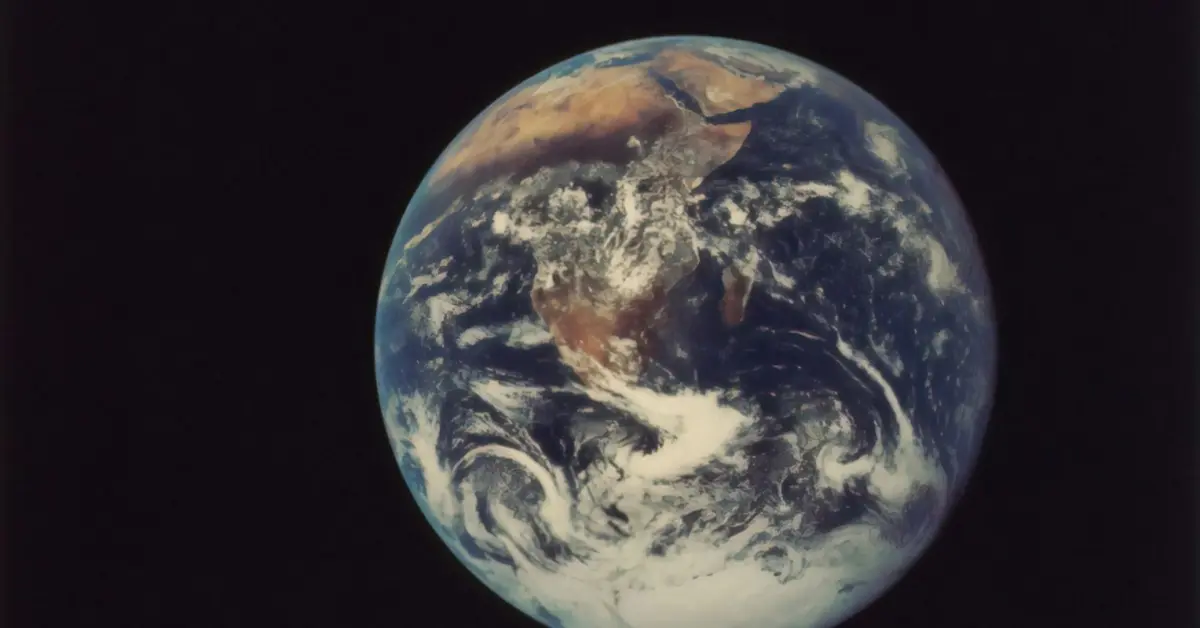
To an observer looking down from the freezing vacuum of space, Earth appears as a singular, fragile blue sanctuary spinning in a cold, indifferent universe. Viewed from this macroscopic scale, humanity resembles a complex, cooperative organism—a sprawling ant colony building infrastructure, cultivating land, and collectively laying foundations for survival on our shared planetary home. From this vantage point, mutual protection and shared stewardship would seem to be our defining characteristics.
Yet, zoom in to the surface, and that panoramic illusion shatters. The observer is confronted with the jarring reality of human-on-human violence, geopolitical warfare, and the systematic destruction of homes, schools, and communities driven entirely by arbitrary borders and identity politics.
This profound disconnect forms the core thesis of contemporary sociological and psychological research into human connection. In her forthcoming book chapter, "Global Belonging: From Conflict and Exclusion to Untapped Potential" (scheduled for publication in 2026 within The self in context: Pathways to flourishing, learning, and well-being), leading belonging researcher Dr. Kelly-Ann Allen challenges conventional wisdom. Allen posits that modern society’s most devastating conflicts do not necessarily stem from a lack of belonging, but rather from an excess of hyper-targeted, exclusionary belonging. When an individual’s loyalty to a specific tribe, nation, or ideology becomes absolute, it frequently requires the dehumanization—and often the destruction—of the out-group.
As humanity faces cascading global crises—ranging from climate destabilization to nuclear proliferation—the need to cultivate a broader, more inclusive framework of global belonging has never been more urgent. This article explores the historical evolution of human attachment, the paradox of group loyalty, the cognitive phenomenon known as the "Overview Effect," and what it will take to transition humanity from a trajectory of self-destruction to one of planetary flourishing.
Detailed Chronology: From Tribal Roots to the Modern Crisis of Displacement
To understand the contemporary crisis of global belonging, we must trace how human connectivity has evolved from pre-industrial survival mechanisms to today’s hyper-fragmented geopolitical landscape.
Pre-Industrial Era: The Localized Web of Survival
For the vast majority of human history, Homo sapiens lived in small, localized clusters—families, clans, and tribes. For these pre-industrial populations, a formal concept of "global belonging" was largely unnecessary and unimaginable. Daily life was anchored tightly to the immediate birthplace and the surrounding ecosystem.
However, early humans possessed a profound, visceral relationship with their planetary environment. Earth was simultaneously a provider of providence and a force of cruel indifference. Because living disconnected from the natural world was not a biological option, ecological integration was an everyday reality. People belonged to their local landscapes because their survival depended entirely upon reading, respecting, and adapting to those environments.
The Age of Borders and the History of Dispossession
As human societies scaled—transitioning from hunter-gatherer bands to agricultural chiefdoms, nation-states, and modern industrial empires—the nature of belonging shifted. Belonging became institutionalized, legalistic, and territorial.
Looking back across centuries, human history is marred by continuous cycles of belonging disruption, forced displacement, and dispossession. Empires expanded by erasing indigenous systems of connection; nation-states consolidated power by drawing hard borders that divided families and ecosystems. Modern society’s deep-seated issues with exclusion, xenophobia, and displacement are not anomalies of the twenty-first century; they are the legacy of a governance model built on territorial exclusion.
The Modern Paradox: The Dangers of Hyper-Belonging
In contemporary psychological and sociological literature, researchers traditionally study belonging through micro-lenses: dyads, triads, small organizations, and national identities. The prevailing assumption has always been that strengthening a person’s sense of belonging makes them happier, safer, and more pro-social.
Dr. Allen’s research disrupts this comforting narrative. As she writes in her 2026 chapter:
"Conflicts and violence of this nature could arise from individuals who feel a strong sense of belonging rather than those who lack it, as one might assume" (Allen, 2026, pp. 235–236).
When nationalism, religious fundamentalism, or ideological tribalism provides an individual with an intense, intoxicating sense of in-group belonging, it frequently breeds an aggressive intolerance toward anyone outside that circle. In this light, modern warfare and civil unrest are not fueled by alienation, but by hyper-solidarity directed against the "other."
Supporting Context & Metrics: Defining Global Belonging
What does it actually mean to belong to a planet? To address the shortcomings of hyper-nationalism and localized tribalism, researchers are working to formalize the concept of global belonging.
Experiencing Ourselves as an Integral Part of the Earth
Global belonging is defined not merely as an intellectual awareness of geography, but as a deeply felt psychological experience: the realization that we are an integral part of the Earth system. It is the visceral sensation that Earth is our ultimate home—not just a resource to be exploited or a stage upon which we wage geopolitical conflicts.
A genuine sense of global belonging carries several distinct behavioral and emotional markers:
- Planetary Stewardship: An innate motivation to protect the biosphere, recognizing that ecological collapse threatens the life-support system of every human being regardless of nationality.
- Universal Empathy: The capacity to extend moral concern and empathy to human beings living outside one’s immediate cultural, national, or political sphere.
- Decoupled Solidarity: The understanding that caring for distant or unfamiliar humans does not require abandoning local cultural identities, family ties, or national heritage.
As the atmospheric sciences continually remind us, nature does not recognize human borders. Carbon dioxide emissions do not pause at passport controls, and rising sea levels do not check political affiliations before swallowing a coastline. At an existential level, humanity shares a single atmospheric and ecological envelope.
Official Statements and Psychological Insights: The "Overview Effect"
Is it possible for ordinary people on the ground to experience the kind of profound cognitive shift usually reserved for astronauts orbiting in the thermosphere?
The Overview Effect
In 1987, space philosopher and author Frank White coined the term "Overview Effect" after conducting extensive interviews with astronauts who had viewed Earth from space. White described it as a cognitive shift characterized by a sudden, overwhelming awareness of the fragility of the planet, the interconnectedness of all life, and the arbitrariness of national boundaries.
Dr. Allen highlights this phenomenon in her 2026 work:
"This cognitive shift, termed the Overview Effect by Frank White in 1987 based on his interviews with astronauts, describes the awareness that emerges from viewing Earth as a shared home" (Allen, 2026, p. 242).
Astronauts frequently report that witnessing the thin, luminous blue ribbon of the atmosphere against the absolute blackness of space dissolves their prior national identifications, replacing them with an overriding protective affection for humanity as a single species. This psychological transformation is consistently linked to enduring changes in personal values, heightened environmental consciousness, and a permanent expansion of empathy.
Can the Overview Effect Be Democratized?
A central question facing behavioral scientists today is whether this cosmic perspective can be cultivated down on Earth among populations who will never cross the Kármán line.
While virtual reality simulations, immersive space-education programs, and ecological immersion offer promising avenues, researchers emphasize that intentional educational and cultural interventions are necessary. We must train societies to zoom out conceptually—to view human history and current events through a planetary lens rather than a hyper-nationalistic one.
Exclusionary nationalism frequently demands the erasure of others, insisting that certain groups have no right to occupy shared geographical or economic spaces. Countering this requires proving that our individual attachments to family, culture, and country can comfortably coexist with the overarching recognition that those outside our immediate circles also belong to our shared humanity.
Future Outlook: Reimagining the Human Project
As we look toward the mid-twenty-first century, humanity stands at a critical historical crossroads. The challenges we face—runaway climate change, global economic inequality, mass migration driven by environmental degradation, and the persistent threat of interstate conflict—cannot be solved by the same tribal mentalities that created them.
The Path Forward: Integration Over Exclusion
To foster sustainable global belonging without eroding local cultural richness, several systemic shifts must occur:
- Re-educating for Planetary Literacy: Educational curricula worldwide must move beyond traditional civic nationalism to incorporate planetary literacy. Students must learn history not merely as a ledger of national victories and defeats, but as the shared story of a species navigating a delicate biosphere.
- Reframing Security: Global security frameworks must transition from zero-sum military competition to cooperative planetary defense against shared existential threats.
- De-escalating Hyper-Tribalism: Civil society organizations, community leaders, and media institutions must actively challenge rhetoric that demonizes out-groups, recognizing that aggressive in-group solidarity is often a precursor to violence.
A Vision of Shared Humanity
We do not need every human being on Earth to agree on every political ideology, religious dogma, or economic model. Diversity of thought and culture is a vital component of human resilience.
However, we do need a shared baseline of empathy—an agreement that human life and planetary survival supersede tribal grievances. If an outside observer were to zoom in on Earth, they should not see a species systematically dismantling its own home and slaughtering its own members over lines drawn on maps. Instead, they should see a mature civilization waking up to its collective identity.
What could the world look like if we cared enough for humanity not to destroy our world or the people in it? The answer is clear: it would be a world where sustainable peace is finally possible. And without question, that is the type of world we all deserve to inhabit.
References & Further Reading
- Allen, K.-A. (2026). Global belonging: From conflict and exclusion to untapped potential. In R. B. King, H. W. Marsh, R. G. Craven, T. Dicke, & F. Guay (Eds.), The self in context: Pathways to flourishing, learning, and well-being (pp. 225–257). Emerald Publishing Limited. https://doi.org/10.1108/978-1-80686-869-820261007
- White, F. (1987). The Overview Effect: Space Exploration and Human Evolution. Houghton Mifflin.
Acknowledgements: Special thanks to Andrew Cox for editorial feedback and developmental insights.