In an era dominated by curated digital projections and the hyper-individualized pursuit of success, authentic human connection often feels like a relic of the past. Social media feeds are flooded with fleeting vignettes of sun-drenched European streets, skateparks, and coastal adventures—vignettes designed to provoke a transient pang of envy before the user scrolls on to the next piece of content. Yet, for a tight-knit collective of young men in Marseille, France—comprising Ismael (known as Bako), Fares, Mohamed, and Sheri—these cinematic moments are not manufactured aesthetics for online validation. They are the texture of their daily reality.
Coming from a diverse array of socioeconomic, cultural, and personal backgrounds, this group of friends stumbled into one another through the ordinary rhythms of urban life: a glance across a skate park, a shared afternoon at the beach, an accidental crossing of paths in a neighborhood alleyway. What began as a series of chance encounters has steadily crystallized into something far more durable than a typical peer group. It has become a surrogate family.
This feature explores the sociological and human dimensions of Bako and his friends, examining how their unique bond has weathered profound adversity—including severe health crises—and how it serves as a powerful counter-narrative to modern alienation. Developed in partnership with Under Armour’s Rest Less initiative, which highlights real-world collectives channeling restless, unvarnished energy into mutual support, this deep dive unpacks the operational code of a modern brotherhood. Through Bako’s guiding principles, we examine how an abundance mindset, radical transparency, and an unwavering commitment to collective survival can transform a diverse group of strangers into an unbreakable kinfolk.
Detailed Chronology: From Stranger to Kinfolk
To understand the resilience of the Marseille collective, one must trace the trajectory of how they crossed paths within a sprawling, multifaceted port city. Marseille has long functioned as a major cultural crossroads, a geographic and demographic melting pot where Mediterranean history intersects with contemporary urban migration. For Bako, Fares, Mohamed, and Sheri, the city served as an indiscriminate meeting ground—a human centrifuge that flung individuals from entirely different walks of life into the exact same coordinates.
Phase I: The Convergence
The genesis of the collective was entirely organic, devoid of the forced networking or algorithmic matching that characterizes contemporary socialization. Bako recalls how individual trajectories intersected in public spaces designed for movement and leisure.
The Skate Park: A neutral territory where social status, economic background, and formal education are rendered irrelevant by the shared pursuit of gravity and balance. It was here that initial nods and shared frustrations over failed tricks laid the groundwork for mutual recognition.
The Coastline: Marseille’s sunbaked Mediterranean shorelines acted as a seasonal anchor. Long afternoons spent swimming, hanging out, and watching the horizon provided the expansive, unstructured time necessary for casual acquaintanceships to deepen into meaningful conversations.
The Neighborhood: The urban fabric of Marseille—its narrow alleyways, bustling markets, and residential courtyards—created repeated, accidental collisions between the young men. Over weeks and months, these recurring sightings transformed strangers into familiar faces, and familiar faces into trusted companions.
Phase II: Forging the Family
As individual stories were shared, the vast differences in their backgrounds ceased to be points of divergence and instead became sources of collective resilience. In a society that frequently boxes young men into narrow socioeconomic definitions, Bako and his friends discovered that their collective strength lay in their unity.
"What makes our friendship feel like a family is our ability to stay united despite everyone’s personal and collective problems," Bako reflects. Every member brought distinct baggage into the fold—familial pressures, financial hurdles, and existential uncertainties. Yet, rather than letting these individual burdens isolate them, the group weaponized empathy. "Despite that, we all look out for each other so that we can succeed together."
Phase III: The Crucible of Crisis
The true measure of any collective is not how it performs during halcyon days of summer skate sessions and coastal sunsets, but how it responds when structural pressures mount. For this Marseille crew, the ultimate test arrived when Bako faced a severe, debilitating health crisis.
In moments of medical and psychological vulnerability, the modern impulse is frequently isolation. For Bako, however, the collective acted as an immediate, protective buffer. The friends did not simply offer polite, distant well-wishes; they integrated themselves into his care structure, showing up with the unwavering consistency of lifelong family members.
"They never stopped being there for me throughout that difficult time," Bako states, looking back on the ordeal. "Today I’m happy to be surrounded by them." This episode permanently altered the group’s internal dynamic, elevating their bond from an informal friendship to an ironclad pact of mutual preservation.
Supporting Context & Metrics: The Sociological Landscape of Modern Friendship
The story of Bako, Fares, Mohamed, and Sheri does not unfold in a vacuum. It directly counters broader socioeconomic trends documenting a global crisis of connection, particularly among young adults.
The Modern Loneliness Epidemic
According to public health data and sociological research across Western Europe, younger generations are reporting unprecedented levels of chronic loneliness and social isolation. The rise of digital-first communication, coupled with precarious economic conditions—such as high youth unemployment rates in urban peripheries and escalating housing costs—has fractured traditional community structures.
The Shift from Collective to Individual: Modern capitalist structures inherently prioritize individual achievement, personal branding, and competition. Young people are routinely encouraged to view peers as rivals in academic, professional, and social arenas.
The Algorithmic Echo Chamber: Platforms like Instagram and TikTok cultivate a culture of comparison, where individuals consume highlight reels of peers’ lives while experiencing a deepening internal deficit of genuine intimacy.
Marseille as a Geographic Catalyst
Marseille presents a unique case study within this broader European context. As France’s second-largest city and its primary gateway to the Mediterranean, Marseille possesses a distinct socioeconomic landscape characterized by high cultural diversity, vibrant grassroots counter-cultures, and historically lower average incomes compared to Paris.
Urban planners and sociologists have long noted that cities with high spatial friction—where diverse populations are forced to share dense public infrastructure like beaches, squares, and transit networks—often foster spontaneous social bonds that transcend rigid class stratifications. For Bako’s crew, Marseille was not merely a backdrop; it was an active participant in their integration. As Bako notes, the city acts as "a checkpoint that brings people together, no matter where they come from."
Bako’s Rules for Sticking Together as a Community
To maintain a collective that operates with the cohesion of a biological family, Bako formalized a set of unwritten social contracts. These principles serve as an operational blueprint for navigating conflict, scarcity, and personal growth.
+-----------------------------------------------------------------+
|                  BAKO'S 5 PILLARS OF COLLECTIVE SURVIVAL        |
+-----------------------------------------------------------------+
|  1. NEVER LIE         --> Trust is the currency of survival.    |
|  2. STICK TOGETHER    --> Nobody jumps out of the moving car.   |
|  3. LAUGHTER          --> Organic joy neutralizes heavy baggage.|
|  4. MOVE FORWARD      --> Lift others up to grow collectively.  |
|  5. THE 5-5 MENTALITY --> When one person eats, everyone eats.  |
+-----------------------------------------------------------------+
1. Never Lie
"We’re a family, and we trust each other. As we say: ‘A lie takes the elevator, and the truth takes the stairs.’"
Radical honesty forms the foundation of the group’s interpersonal dynamics. In environments where external pressures demand posturing, the collective demands absolute authenticity. Deception introduces friction, and friction threatens the structural integrity of the group. By opting for the slow, sometimes painful climb of truth over the rapid descent of deceit, the friends maintain an unshakeable psychological safety net.
2. Always Stick Together
"Despite the ups and downs, we stay in the same car, and nobody jumps out while we’re on the road."
This maritime or vehicular metaphor underscores the absolute rejection of conditional loyalty. Modern friendships frequently dissolve at the first sign of inconvenience, geographic relocation, or personal failure. Bako’s collective enforces a zero-abandonment policy. Whether an individual is experiencing professional triumph or severe personal distress, the collective pact dictates structural presence.
3. Laughter
"Honestly, when we’re together, we do not even have to try."
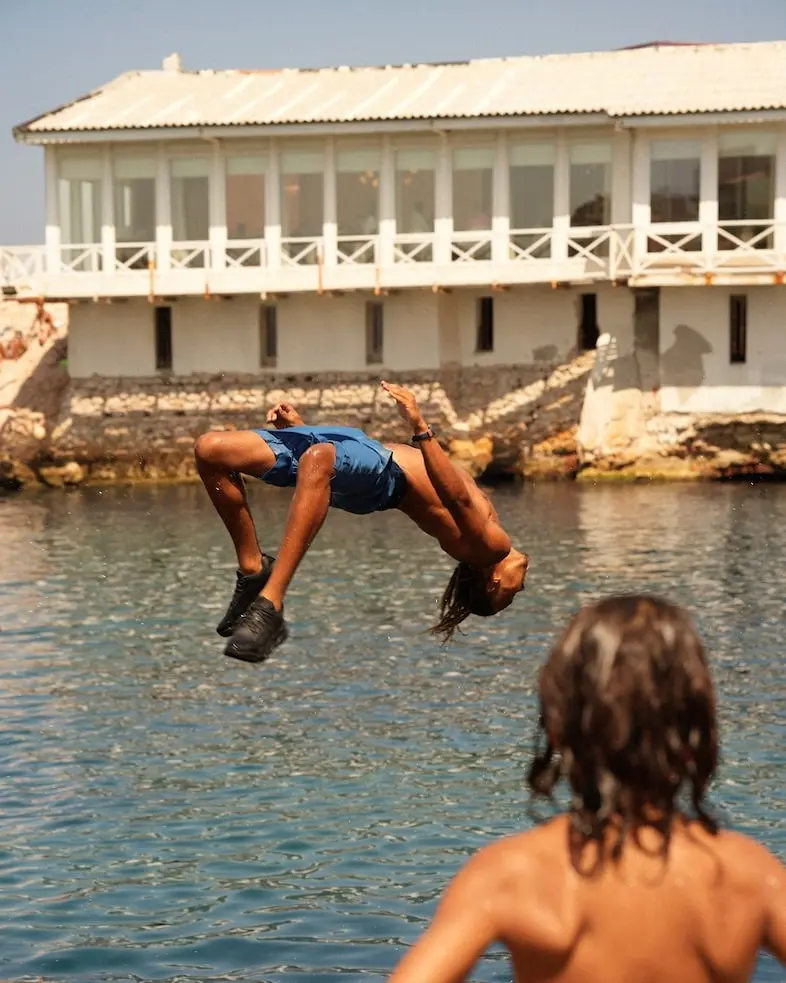
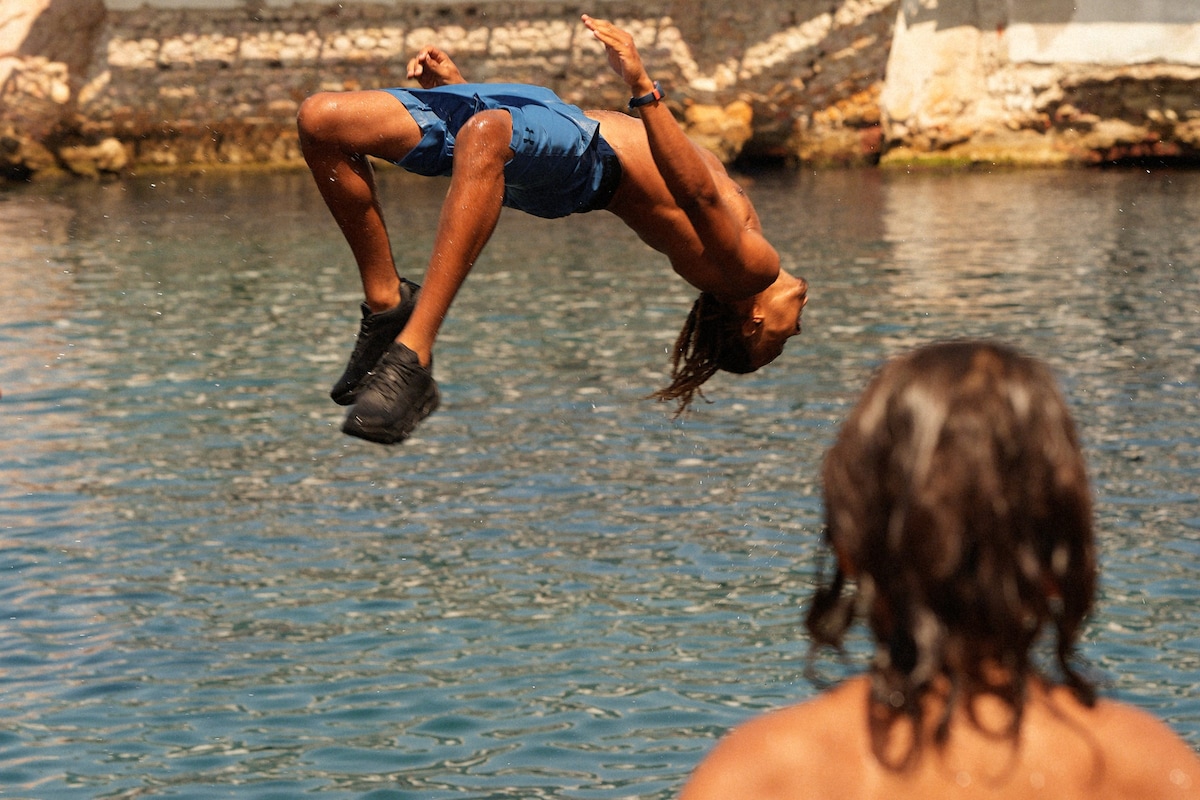
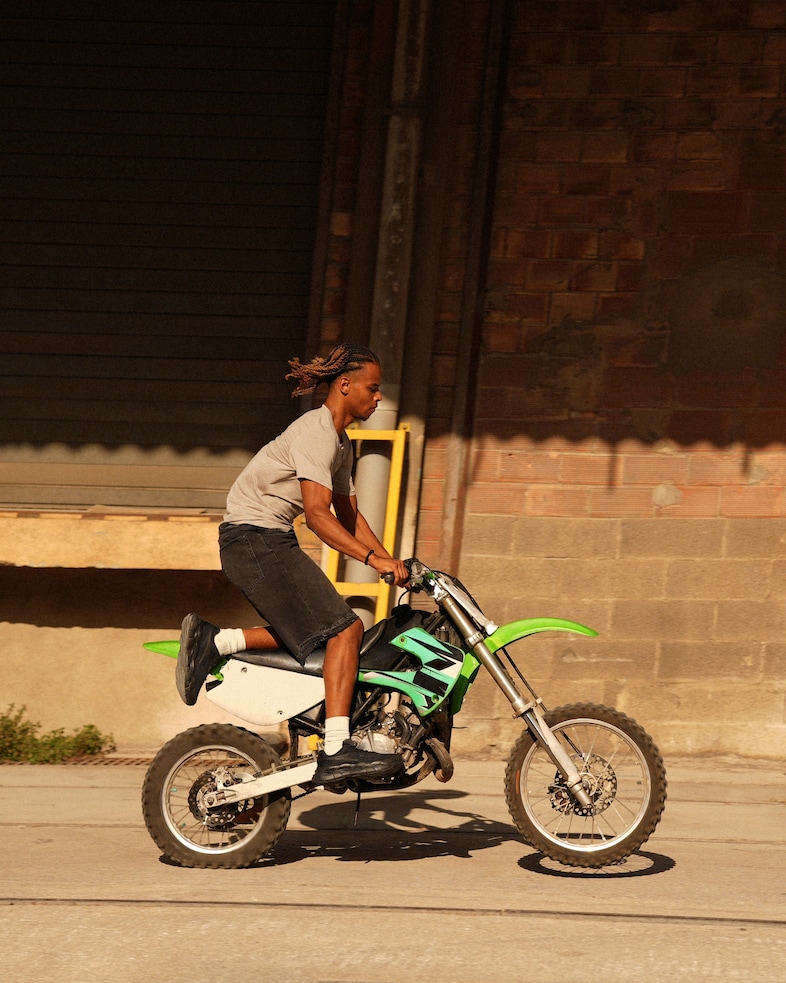
While the group carries profound individual and collective baggage, laughter functions as an essential pressure valve. It is not manufactured or forced; it emerges naturally from shared absurdity, creative pursuits, and the sheer joy of physical movement—whether revving a green dirt bike down a sunbaked street or executing a backflip into glittering Mediterranean waves.
4. Move Forward Together
"For us, we like to lift each other up so that we can move forward together and see each other grow."
Rejecting zero-sum competition, the collective operates on the premise that individual victory is meaningless if achieved at the expense of peers. Upward mobility, personal healing, and creative ambitions are treated as collaborative projects. If one member ascends professionally or creatively, the gravitational pull of the group ensures the others rise alongside them.
5. Sharing (The 5-5 Mentality)
"This is the most important one. The 5-5 mentality. It means that if I have something and you don’t, we have it. If you have something and I don’t, we have it. And if neither of us has it, we figure it out. In our family, when one person eats, everyone eats. And it applies to everything. We make sure that nobody is missing anything."
Perhaps the most radical tenet of the collective, the 5-5 mentality is a localized, modern iteration of mutual aid. Eschewing hyper-individualistic notions of property and personal accumulation, the group pools their resources—emotional, physical, and material. Scarcity is neutralized through shared distribution. If resources are entirely absent, the collective problem-solves as a singular unit.
Official Statements and Cultural Alignment
The philosophy championed by Bako, Fares, Mohamed, and Sheri has found a natural philosophical alignment with contemporary cultural movements that seek to reject polished digital consumerism in favor of raw, tangible community building. Through their collaboration with Under Armour’s Rest Less narrative campaign, the collective has been positioned as a living embodiment of restless, authentic energy manifested IRL (In Real Life).
In promotional and editorial statements accompanying the campaign, representatives for the initiative noted that the collective’s ethos directly challenges modern lifestyle paradigms:
"For them, it’s not about taking shortcuts or competing with each other. It’s about embracing an abundance mindset, making room for each other’s self-expression, and feeding each other’s momentum, no matter what."
Rather than measuring success by isolated career metrics or social media impressions, the collective measures fulfillment through shared vitality. Their typical week—comprising impromptu motorcycle rides, urban skateboarding sessions, and ocean swimming—is underpinned by a rigorous community-first mindset. It prioritizes care, radical openness, and mutual elevation. As the group emphasizes, this is a distinct cultural frequency: "If you know you know, and if not you’d better hope you can find it, because this is what life’s all about."
Future Outlook: Reclaiming the Social Fabric
As urban centers across Europe and the globe continue to grapple with housing crises, economic polarization, and the atomizing effects of digital technology, the model established by Bako and his friends offers a blueprint for grassroots resilience.
Implications for Urban Youth Culture
The trajectory of the Marseille collective suggests that future youth movements will increasingly prioritize hyper-local, decentralized support systems over expansive, shallow digital networks. Key markers of this shift include:
The Return to Physical Commons: Reclaiming public spaces—skate parks, beaches, city streets—as primary sites of community formation rather than digital platforms.
Economic Collectivism: Adopting informal mutual-aid frameworks (akin to the 5-5 mentality) to buffer against economic precarity.
Intersectional Kinship: Forging families of choice that consciously cross ethnic, socioeconomic, and cultural fault lines, turning diversity from a source of social friction into a structural advantage.
Conclusion
In a world that increasingly monetizes isolation and rewards superficial connection, Bako, Fares, Mohamed, and Sheri offer a radical alternative. They remind us that the most valuable currency is not algorithmic engagement, but the quiet, unyielding commitment to look to your left and your right, ensuring that no one is left behind on the road. As they continue to navigate the sunlit streets and coastal cliffs of Marseille, their story stands as an enduring testament to the architecture of belonging: a declaration that true wealth is measured by the depth of our bonds, and that when one person eats, everyone eats.