Executive Overview
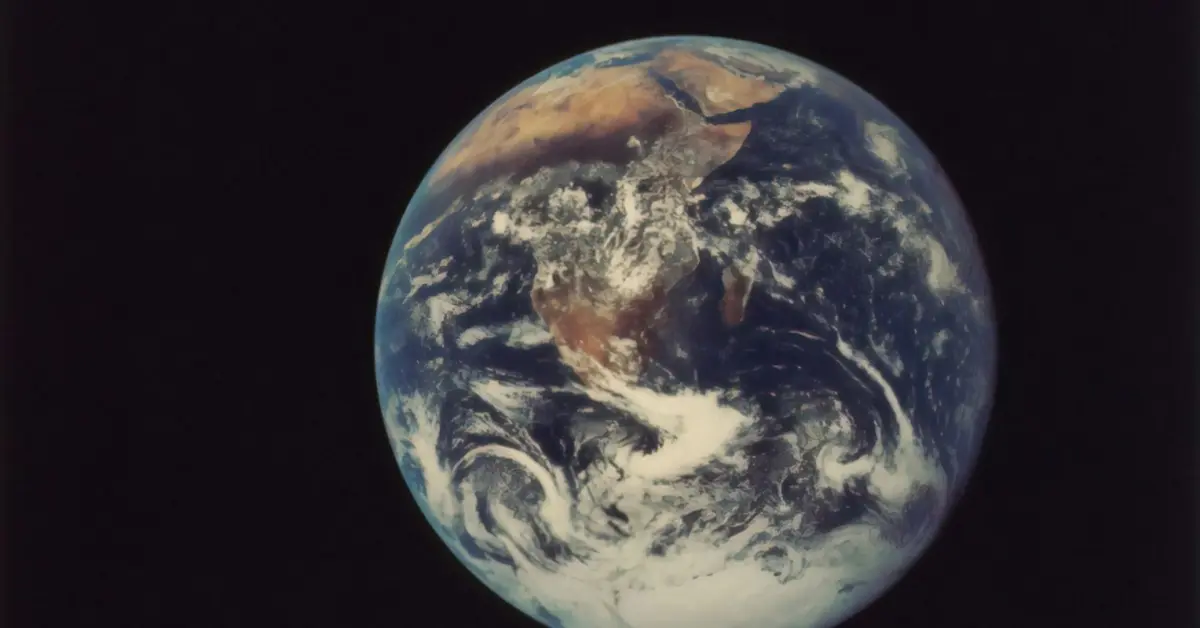
To an observer looking down from the silent expanse of the cosmos, Earth resembles a sprawling, intricate ant colony. Across continents and archipelagos, human beings build complex infrastructures, cultivate shared histories, and lay foundations for homes where they hope to live in safety. Spinning on its axis within a cold, indifferent universe, our planet appears as a singular, fragile haven—an oasis of life suspended in nothingness. From this cosmic vantage point, humanity’s imperative seems self-evident: an absolute, unshakeable unity dedicated to the mutual protection and preservation of one another upon a shared home.
Yet, zoom in.
Magnify that celestial view to the terrestrial scale, and the picture fractures violently. Observers are immediately confronted with a jarring paradox: human beings engaged in the systematic destruction of homes, schools, and communities, inflicting violence upon one another solely based on artificial borders, ethnic divides, and geographical origins. We are a species at war with itself, deeply divided by the very structures designed to foster community.
This dichotomy forms the crux of modern sociological and psychological inquiry into what scholars term "global belonging." In her upcoming scholarly work, Global Belonging: From Conflict and Exclusion to Untapped Potential (scheduled for publication in 2026 by Emerald Publishing Limited), researcher Dr. K.-A. Allen challenges conventional wisdom surrounding human cohesion. Allen posits a counterintuitive and sobering reality: the most destructive conflicts in human history often do not stem from a deficiency of belonging, but rather from an overabundance of it—specifically, an exclusionary, hyper-tribal sense of belonging that demands the subjugation or destruction of the out-group.
As humanity navigates compounding global crises—ranging from runaway climate change and geopolitical warfare to mass displacement—redefining our concept of belonging is no longer an academic luxury. It is an existential necessity. This article explores the historical evolution of human attachment, the paradox of tribalism, the psychological phenomenon known as the "Overview Effect," and the urgent imperative to cultivate a planetary consciousness before our internal fractures permanently destabilize our shared home.
Detailed Chronology: The Evolution and Disruption of Human Belonging
To understand how modern society arrived at its current state of hyper-polarization, we must trace the evolutionary trajectory of human connection across epochs.
The Pre-Industrial Epoch: Intimacy with the Earth
For the vast majority of human history, Homo sapiens lived in small, localized collectives—families, clans, and tribes. Life was tethered to the immediate geography of one’s birth. While the need for a sweeping "global belonging" was neither apparent nor functionally possible for hunter-gatherers and early agriculturalists, these pre-industrial populations maintained an intimate, high-stakes relationship with their environment.
Humanity’s ecological footprint was modest, but reliance on the natural world was absolute. Earth served simultaneously as a benevolent provider and a cruel, unpredictable threat. Living disconnected from the immediate realities of nature was simply not an option. Consequently, survival necessitated a deep, daily harmonization with local ecosystems, even if human empathy rarely extended beyond immediate kinship networks.
The Rise of Territorial Dispossession
As human societies scaled—transitioning through feudalism, industrialization, and the formation of modern nation-states—the nature of belonging underwent a profound transformation. Rather than fostering broader connection, societal expansion frequently institutionalized exclusion.
Looking back across centuries of recorded history, one discovers a continuous, unbroken chain of belonging disruption, mass displacement, and violent dispossession. Modern society’s chronic struggles with social cohesion are not unprecedented anomalies; they are structural features of civilizations built on territorial sovereignty. To belong to Nation A historically meant defining oneself in opposition to, or at the expense of, Nation B.
As Allen articulates in The Self in Context: Pathways to Flourishing, Learning, and Well-Being:
"Conflicts and violence of this nature could arise from individuals who feel a strong sense of belonging rather than those who lack it, as one might assume" (Allen, 2026, pp. 235–236).
This realization forces a radical reassessment of peace-building efforts. Traditional sociological models often assume that bolstering group identity automatically yields prosocial outcomes. However, when group identity hardens into chauvinism, strengthening internal bonds can paradoxically fuel external aggression.
Supporting Context & Metrics: The Mechanics of Planetary Consciousness
In contemporary psychological research, belonging is predominantly studied through micro-lenses: dyads, triads, immediate peer groups, and corporate organizations. Scholars measure the health outcomes, academic achievements, and psychological resilience associated with feeling included in these localized spheres. Yet, a nascent field of researchers is asking a macro-question: What happens when we scale our unit of analysis to the entire planet?
Defining Global Belonging
Global belonging is not merely an abstract philosophical concept; it is a measurable psychological state. It is defined as the active experience of oneself as an integral, inseparable part of the Earth. It is the deep-seated psychological recognition that our home extends beyond national borders to encompass the entirety of the biosphere.
When an individual cultivates a robust sense of global belonging, several psychological and behavioral shifts occur:
- Universal Empathy: Concern expands beyond immediate kinsfolk and compatriots to encompass distant, unseen populations experiencing suffering, poverty, or conflict.
- Ecological Stewardship: Recognizing the self as part of the Earth inherently bridges the artificial divide between humanity and nature, fostering intrinsic motivation for environmental preservation.
- Resilience Against Polarization: Individuals anchored in planetary identity are less susceptible to the zero-sum rhetoric of exclusionary nationalism and xenophobia.
The Atmospheric Indifference
Crucially, advocates of global belonging note that this planetary identity does not require the erasure of local, cultural, or national attachments. One can be fiercely devoted to one’s local community while simultaneously recognizing a shared human fraternity.
The urgency of this dual consciousness is underscored by biophysical reality. As environmental scientists frequently remind us, the atmosphere does not check passports before trapping heat. Carbon dioxide emissions generated in one hemisphere alter weather patterns, melt ice caps, and threaten coastal cities globally, regardless of political ideology or national allegiance. Nature operates on planetary laws, while human politics remains mired in tribal friction. At an existential level, bridging this gap is paramount.
Official Statements & Expert Perspectives: The Overview Effect
Is it possible for everyday human beings to experience the profound shift in perspective usually reserved for those who leave the atmosphere?
The Cognitive Shift from Space
In 1987, author and researcher Frank White coined a term that has since become central to discussions of planetary consciousness: the Overview Effect. Based on extensive interviews with astronauts who had gazed back at Earth from the void of space, White documented a consistent, transformative cognitive shift.
Astronauts frequently report that viewing the Earth from orbit—a fragile, glowing blue marble suspended against a vast, hostile cosmos, entirely devoid of political boundaries—instantly dissolves their previous nationalistic and tribal attachments. They no longer see warring factions; they see a single, interdependent ecosystem sustaining life against impossible odds.
As Allen notes in her chapter:
"This cognitive shift, termed the Overview Effect by Frank White in 1987 based on his interviews with astronauts, describes the awareness that emerges from viewing Earth as a shared home" (Allen, 2026, p. 242).
This transformative experience is consistently linked to enduring changes in personal values, heightened environmental consciousness, and a permanent expansion of identity to embrace humanity as a unified whole.
Replicating the Overview Effect Terrestrially
The central dilemma facing sociologists today is whether this profound cognitive shift can be artificially induced or cultivated in individuals who remain firmly anchored to the ground. Can everyday citizens develop an enduring sense of global belonging without strapping themselves into a rocket ship?
Researchers argue that while physical spaceflight is inaccessible to the masses, virtual reality, immersive environmental education, and globalized narrative-building can simulate aspects of the Overview Effect. By confronting individuals with the global scale of human suffering and ecological fragility—whether through journalism, art, or science—society can begin to break down the psychological walls of hyper-tribalism.
Future Outlook: Navigating Conflict, Suffering, and Coexistence
As we look toward the mid-21st century, humanity stands at a perilous crossroad. The proliferation of digital media and hyper-connected global networks should have ushered in an era of unprecedented global solidarity. Instead, algorithms designed to maximize engagement have weaponized our ancient tribal instincts, supercharging polarization, nationalist fervor, and ideological echo chambers.
The Perils of Exclusionary Nationalism
Exclusionary nationalism continues to exact a devastating toll, operating on the false premise that safety and prosperity can be achieved by pulling up the drawbridge. This political posture invariably requires the dehumanization of the "other"—ignoring the fundamental reality that those outside our immediate borders share the exact same biological vulnerabilities, emotional depths, and rights to flourish in shared spaces.
Sociological researchers must urgently expand their empirical frameworks. Moving forward, academic inquiry must examine whether cultivating global belonging can actively moderate decision-making during times of acute war, geopolitical crisis, and humanitarian suffering. Can a mass awakening of planetary identity alter the calculus of leaders bent on conflict? Can it inspire citizens to demand diplomatic de-escalation over militarized destruction?
A Vision for a Cohesive Humanity
We do not need a world of enforced uniformity. Complete political agreement, cultural homogeneity, and philosophical consensus are neither attainable nor desirable. Diversity of thought and tradition is a hallmark of a vibrant human civilization.
From the vantage point of the cosmos, however, our ideological squabbles look remarkably trivial. Zooming out reveals a collective, resilient ant colony; zooming in exposes the tragic, needless slaughter of our own kin.
The ultimate question facing contemporary society is deceptively simple, yet agonizingly difficult to execute: What could the world look like if we cared enough for humanity not to destroy our world, or the people living in it?
The answer forms the bedrock of our collective future. A world characterized by global belonging—where local loyalties are balanced by planetary responsibility—is not a utopian daydream. It is the only viable blueprint for human survival. And surely, it is the type of world that the vast majority of humanity secretly, desperately wishes to inhabit.
References & Acknowledgements
- Allen, K.-A. (2026). Global belonging: From conflict and exclusion to untapped potential. In R. B. King, H. W. Marsh, R. G. Craven, T. Dicke, & F. Guay (Eds.), The self in context: Pathways to flourishing, learning, and well-being (pp. 225–257). Emerald Publishing Limited. https://doi.org/10.1108/978-1-80686-869-820261007
- White, F. (1987). The Overview Effect: Space Exploration and Human Evolution. Houghton Mifflin.
Acknowledgements: Special thanks to Andrew Cox for editorial feedback and invaluable assistance in shaping the structural narrative of this report.