Executive Overview
The landscape of enterprise productivity is undergoing a fundamental paradigm shift. For years, software-as-a-service (SaaS) platforms operated on a reactive model: a user logs in, inputs a command, and the software executes the task. However, the dawn of generative artificial intelligence has initiated a race toward proactive automation—systems that do not wait for instructions but instead anticipate needs, initiate workflows, and complete complex administrative tasks in the background.
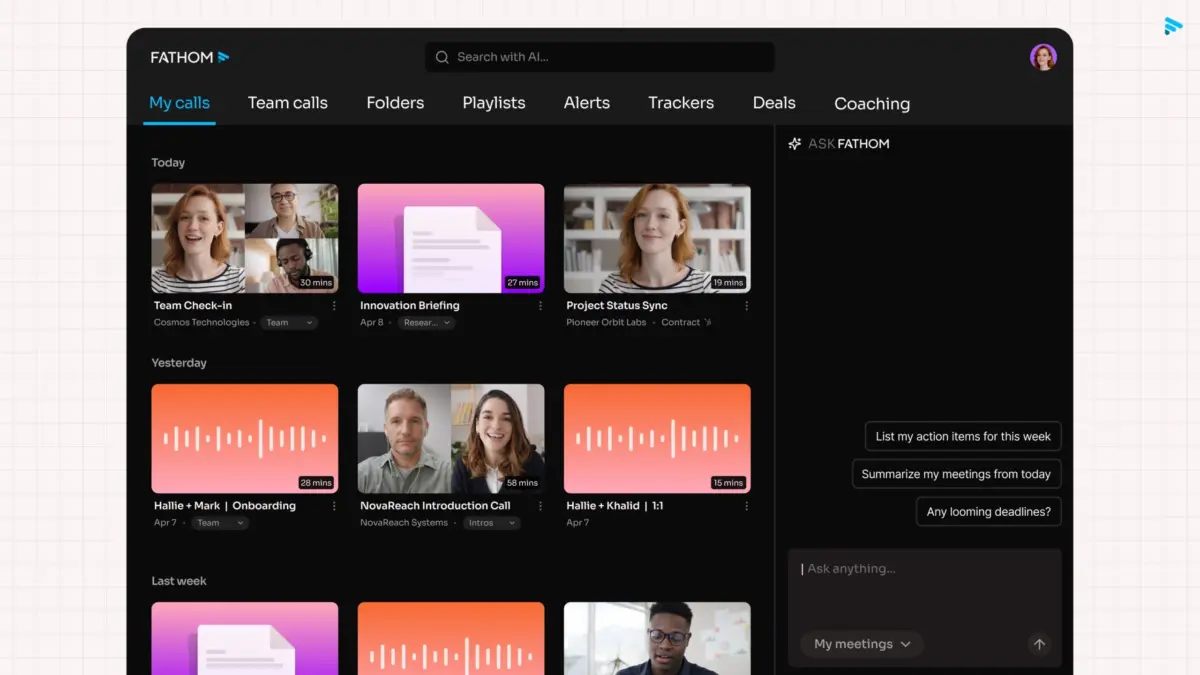
In a major consolidation move within this space, productivity powerhouse Superhuman has announced its acquisition of Fathom, the prominent Y Combinator-backed AI meeting assistant.
+-------------------------------------------------------------------+
|                     SUPERHUMAN'S EXPANDING SUITE                  |
+-------------------------------------------------------------------+
|  [Email Client] -> [Docs App] -> [Calendar] -> [Database Engine]  |
|                                                                   |
|                         +-----------------+                       |
|                         |  FATHOM ACQUISITION  |                  |
|                         +--------+--------+                       |
|                                  | (Bridges real-time voice data) |
|                                  v                                |
|             [Proactive AI Agents & Workflow Automation]           |
+-------------------------------------------------------------------+
The acquisition underscores a critical realization among enterprise software developers: the most valuable organizational data does not live in static emails or document repositories; it is generated live during meetings. By absorbing Fathom’s sophisticated audio-recording, transcription, and summarization infrastructure, Superhuman aims to position itself as the central nervous system of the modern enterprise.
Rather than forcing users to manually draft follow-ups, update databases, or schedule meetings, the newly integrated platform will leverage real-time meeting context to power autonomous AI agents capable of executing these workflows end-to-end.
Detailed Chronology: From Internal Experimentation to Strategic Acquisition
Superhuman’s journey into the meeting transcription space did not begin with M&A negotiations. Instead, it followed a classic "build-versus-buy" trajectory that highlights the hidden technical complexities of real-time audio engineering.
  2020: Fathom founded; launches high-utility free tier
    │
    ▼
  2024: Fathom valued at $94M; achieves over 400K MAUs
    │
    ▼
  Early 2026: Superhuman internally tests proprietary notetaker
    │
    ├─► Realizes extreme difficulty of multi-speaker diarization
    └─► Notes high engineering friction in real-time latency
    │
    ▼
  Mid-2026: Superhuman pivots strategy; initiates Fathom acquisition
The Internal Prototype
Earlier this year, Superhuman quietly began developing and testing an internal meeting notetaker with a select cohort of power users. The goal was straightforward: expand Superhuman’s existing ecosystem—which already features an elite email client, a collaborative documents app, a calendar, a database solution, and a recently launched AI agent builder—into the voice domain.
However, the internal pilot quickly exposed the immense friction of building enterprise-grade audio capture tools from scratch. Meeting transcription is deceptively difficult. It requires seamless integration with multiple video conferencing APIs (including Zoom, Microsoft Teams, and Google Meet), low-latency audio pipeline processing, highly accurate multi-speaker diarization, background noise mitigation, and contextual summarization engines that can distinguish trivial banter from mission-critical action items.
The Pivot to M&A
Superhuman’s leadership quickly recognized that building these capabilities to match the standards of their demanding user base would require years of dedicated engineering. Shishir Mehrotra, Superhuman’s CEO, candidly acknowledged this strategic pivot, noting that the internal testing phase served as a validation of user demand while simultaneously highlighting the sheer depth of Fathom’s technical stack.
Faced with a choice between a prolonged, high-risk internal development cycle and acquiring an industry-validated market leader, Superhuman chose to acquire Fathom. This transaction allows Superhuman to immediately bypass the engineering bottlenecks of meeting recording and focus on high-value downstream integrations, such as feeding real-time meeting context directly into its new AI agent builder platform.
Supporting Context & Metrics: Fathom’s Market Traction and the Capital Landscape
Founded in 2020 during the remote-work boom, Fathom quickly established itself as a darling of the productivity ecosystem. The startup successfully navigated the highly competitive Y Combinator accelerator program and embarked on an aggressive growth trajectory fueled by a mix of venture capital and viral product adoption.
Financial and Valuation History
According to data from PitchBook, Fathom had raised over $30 million in venture funding prior to the acquisition, reaching an estimated valuation of $94 million during its 2024 funding rounds. This capital injection allowed Fathom to build a robust, low-latency recording infrastructure capable of handling millions of hours of video and audio data.
+-----------------------------------------------------------------+
|                       FATHOM AT A GLANCE                        |
+-----------------------------------------------------------------+
|  Founded:            | 2020                                     |
|  Total Funding:      | $30M+                                    |
|  Peak Valuation:     | $94M (2024, PitchBook)                   |
|  Monthly Actives:    | 400,000+                                 |
|  Total Users:        | 1,000,000+                               |
|  Key Backers:        | Zoom Apps Fund, Telescope Partners,      |
|                      | BoxOne Ventures, Character Capital,      |
|                      | Maven Ventures                           |
|  Notable Angels:     | Steve Huffman (Reddit), Emmett Shear     |
|                      | (Twitch), Kyle Vogt (Cruise)             |
+-----------------------------------------------------------------+
The Cap Table and Strategic Backers
Fathom’s cap table reads like a who’s-who of Silicon Valley operators and institutional tech investors. Key institutional backers include:
- Zoom Apps Fund: A strategic investor with an obvious interest in expanding the utility of video communications.
- Telescope Partners, BoxOne Ventures, Character Capital, and Maven Ventures: Early-stage specialists known for backing high-velocity software tools.
Beyond venture funds, Fathom secured personal investments from influential technology executives, including:
- Steve Huffman (Co-founder and CEO of Reddit)
- Emmett Shear (Co-founder and former CEO of Twitch)
- Kyle Vogt (Co-founder and former CEO of Cruise)
These angel investors brought critical expertise in scaling high-traffic consumer and enterprise platforms, providing Fathom with a strategic advantage in product design and distribution.
User Acquisition and the "Free-to-Paid" Engine
A cornerstone of Fathom’s market penetration was its generous free-tier offering. By allowing individual users to record, transcribe, and summarize meetings without upfront paywalls, Fathom initiated a bottom-up adoption model within enterprises.
This product-led growth strategy yielded impressive metrics:
- Over 400,000 monthly active users (MAUs) actively utilizing the assistant.
- More than 1 million unique users having recorded at least one meeting through the platform.
This massive user base became an attractive asset for Superhuman. By acquiring Fathom, Superhuman not only secures state-of-the-art technology but also inherits a deeply engaged, high-intent user base ripe for conversion into Superhuman’s premium productivity ecosystem.
Official Statements: Leadership Perspectives on M&A and Scale
The leadership of both organizations framed the acquisition not as a consolidation of survival, but as a highly synergistic partnership designed to solve the critical challenge of software distribution in a crowded AI market.
       [Shishir Mehrotra (Superhuman CEO)]
                       │
                       ├─► "It’s actually quite tricky to do a great job
                       │    in all parts of meeting recording."
                       │
                       └─► Real-time meeting context is the missing link
                           for proactive enterprise AI.

         [Richard White (Fathom CEO)]
                       │
                       ├─► "If we were to operate Fathom as a stand-alone,
                       │    we would have to build a lot of things..."
                       │
                       └─► Superhuman's 40M user distribution network
                           accelerates Fathom's product vision.
Superhuman’s Product-First Validation
Shishir Mehrotra, CEO of Superhuman, emphasized that their internal development efforts gave them a profound respect for what the Fathom team had accomplished:
"We’ve been working internally on this area for a while as well. I think it greatly increased our confidence in the demand in this category. It also becomes very clear how deep the products in this category are and how much you need to build. A lot of these products make the job feel really easy, but it’s actually quite tricky to do a great job in all parts [of meeting recording]."
Mehrotra further noted that he was highly impressed by the "technical intricacies" engineered by the Fathom team, hinting that these proprietary backend solutions would allow Superhuman to surface hyper-relevant, real-time meeting context to users as conversations are actively occurring, rather than waiting for post-meeting processing.
Fathom’s Distribution Imperative
For Fathom’s CEO, Richard White, the decision to merge with Superhuman boiled down to a fundamental law of software economics: distribution often beats product. In a market flooded with venture-backed point solutions, standalone companies face soaring customer acquisition costs (CAC).
White explained that aligning with Superhuman’s massive reach—which includes access to a broader ecosystem of 40 million users—represented a leap forward in scale that would have taken Fathom years to build independently:
"The reach of Superhuman is massive. I have always thought about M&A in terms of speed of building a product that everyone uses, and a part of that comes down to distribution. If we were to operate Fathom as a stand-alone company, we would have to build a lot of things that are already in the Superhuman platform."
By merging, Fathom instantly gains access to an enterprise-grade email client, calendar, and database framework, allowing its core engineering team to focus entirely on perfecting voice-intelligence models rather than rebuilding standard SaaS utility features.
The Competitive Landscape: The Meeting Notetaker Gold Rush
The acquisition of Fathom arrives amidst intense competition in the digital meeting assistant sector. Investors have poured hundreds of millions of dollars into transcription and AI summary platforms, creating a crowded market where standalone tools are struggling to differentiate themselves.
┌────────────────────────────────────────────────────────────────────────┐
│                        AI NOTETAKER MARKET MAP                         │
├──────────────────┬─────────────────────────────────────────────────────┤
│  Granola         │ Raised $125M; $1.5B valuation. Expanding from       │
│                  │ meeting notetaker to enterprise AI app.             │
├──────────────────┼─────────────────────────────────────────────────────┤
│  Read AI         │ Raised $50M; focuses on cross-platform integrations │
│                  │ (Slack, email, calendars).                          │
├──────────────────┼─────────────────────────────────────────────────────┤
│  Wispr Flow      │ Emerging player entering the meeting space with     │
│                  │ speech-to-text dictation capabilities.              │
├──────────────────┼─────────────────────────────────────────────────────┤
│  Fathom          │ Acquired by Superhuman. Deep integration into email, │
│  (Superhuman)    │ docs, calendar, and database workflows.             │
└──────────────────┴─────────────────────────────────────────────────────┘
High-Value Competitors Raise the Stakes
- Granola: The startup recently closed a massive $125 million funding round, propelling its valuation to $1.5 billion. Granola is actively attempting to transition from a simple menu-bar meeting recorder into a comprehensive enterprise AI application, representing a direct threat to legacy productivity hubs.
- Read AI: Having raised $50 million, Read AI has pursued an integration-first strategy, positioning its bot-less and bot-based services across Slack, email clients, and calendars to capture multi-channel workplace interactions.
- Wispr Flow: Originally focused on dictation and speech-to-text interfaces, new entrants like Wispr are aggressively expanding their feature sets to include meeting summaries and action-item tracking.
The Shift from Utility to Platform
As venture capital floods the sector, standalone notetakers are feeling immense pressure to prove they are platforms rather than mere features. A basic summary tool is no longer enough to command enterprise budget allocation.
To survive, these tools must integrate deeply with existing workflows. Superhuman’s acquisition of Fathom is a direct response to this market dynamic: it immediately elevates Fathom from an isolated utility to an integrated component of a broader, multi-modal productivity suite.
Future Outlook: Orchestrating the Proactive AI Workspace
By integrating Fathom into its core platform, Superhuman is positioning itself to deliver on the promise of the autonomous, proactive workplace. The strategic implications of this acquisition point to a future where administrative tasks are largely automated by AI agents operating on voice-derived data.
+-----------------------------------------------------------------------+
|                      THE AUTONOMOUS WORKFLOW CYCLE                     |
+-----------------------------------------------------------------------+
|                                                                       |
|                         [ Live Meeting ]                              |
|                                │                                      |
|                                ▼ (Fathom Engine)                      |
|                     [ Structured Context Data ]                       |
|                                │                                      |
|            +-------------------+-------------------+                  |
|            │                   │                   │                  |
|            ▼                   ▼                   ▼                  |
|    [Draft Emails]      [Update Databases]    [Schedule Follow-ups]    |
|   (Superhuman Mail)     (Superhuman DB)      (Superhuman Calendar)    |
|                                                                       |
+-----------------------------------------------------------------------+
Unified Workspace Integration
Superhuman’s platform is no longer just a high-speed email client. Following its expansion into docs, calendars, database solutions, and its newly minted AI agent builder platform, the company now possesses the full architectural stack required to run an enterprise.
Fathom acts as the critical input bridge for this ecosystem. In practice, the integration will enable seamless, automated workflows:
- Instant Post-Meeting Actions: As soon as a Zoom or Google Meet call ends, Fathom’s structured meeting data will feed into Superhuman’s AI agent builder.
- Automated Drafts: The platform can automatically draft contextual follow-up emails in Superhuman Mail, matching the sender’s tone and referencing specific conversational details.
- Database Synchronization: Action items, product specs, and client requests discussed during the call can automatically update corresponding entries in Superhuman’s database engine.
- Intelligent Scheduling: The system can cross-reference calendars to schedule follow-up sessions without requiring back-and-forth coordination.
The Rise of Voice-Powered AI Agents
Ultimately, the acquisition of Fathom provides Superhuman with a continuous stream of high-fidelity voice data—the raw material required to train and power domain-specific AI agents.
While competitors continue to rely on manual user prompts, Superhuman is building a closed-loop system where meetings trigger actions, actions generate emails and documents, and the entire administrative lifecycle of a project is managed autonomously. By securing Fathom’s technology and team, Superhuman has taken a major step toward owning the interface where work is discussed, planned, and executed.