Executive Overview
For Kate, a 24-year-old marketing manager residing on Long Island, the spring and summer months of this year did not represent a traditional season of rest or spontaneous leisure. Instead, they marked an unrelenting marathon of mandatory socialization. Between the months of April and July, Kate found herself celebrating a birthday—and occasionally two—every single weekend.
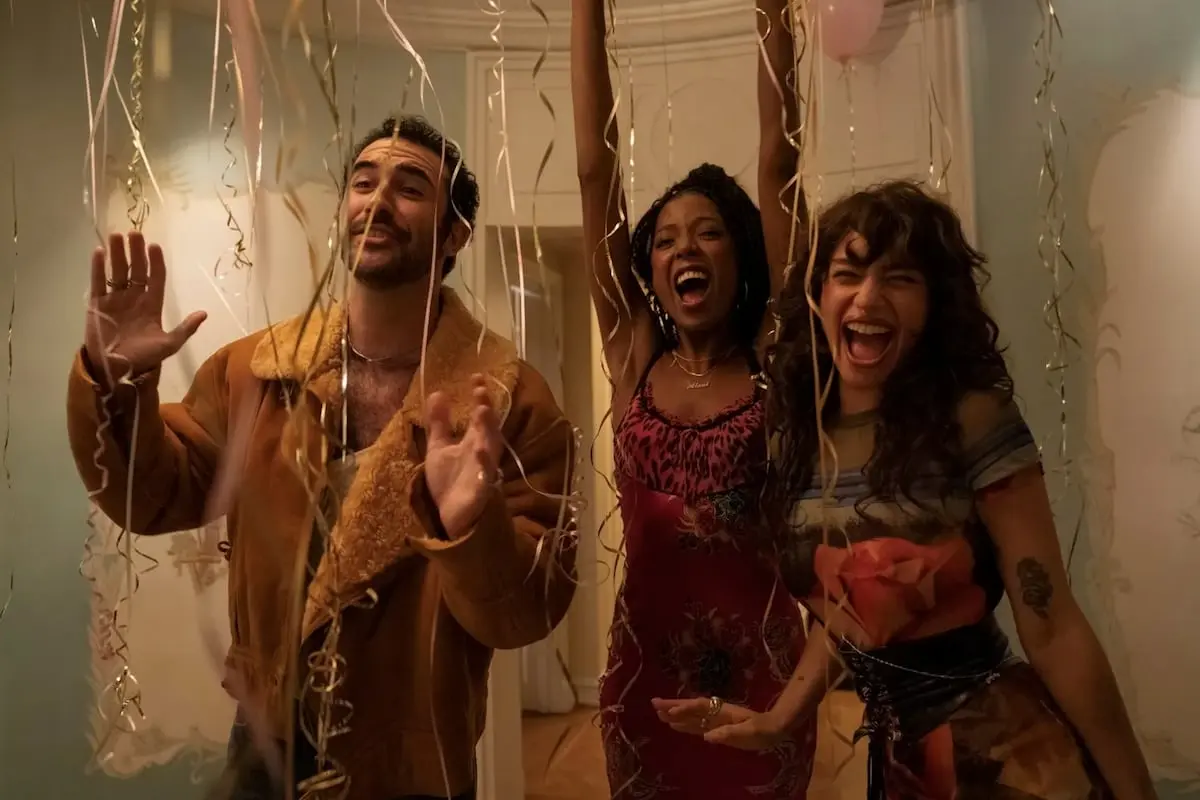
Her schedule was a relentless revolving door of milestone events: a house party that seamlessly bled into a group sleepover, followed by recovery-fueled brunch the next morning; a heavily orchestrated “karaoke thing” preceded by a sit-down dinner; and a meticulously styled, summer-camp-themed blowout at a suburban estate that demanded an all-day commitment.
The tipping point arrived on a stormy Saturday. Kate’s calendar featured a daytime birthday party at one end of the region and an evening celebration at the other, all while weather forecasts warned of torrential downpours. Defeated by logistical exhaustion and mounting social fatigue, Kate made the difficult decision to opt out of the daytime event. Yet, the choice brought no relief—only a heavy wave of guilt.
“I had so much anxiety sending that cancellation text,” she recalls.
Kate’s jam-packed calendar and her complex web of guilt are far from unique. While a simple cake-cutting ceremony and a polite two-hour window once passed as an adequate nod to another trip around the sun, contemporary birthday culture has undergone a seismic shift. Multi-part birthday weekends, destination getaways across state and international borders, and themed multi-day extravaganzas have become the new baseline for young adults.
For individuals embedded within large, intersecting friendship circles, celebrating loved ones has evolved into a formidable investment of both time and capital. Because birthdays carry profound emotional weight, they occupy a uniquely untouchable status in the social contract; skipping them feels like a moral failing.
Yet this hyper-inflated celebration culture raises urgent questions. How did simple annual acknowledgments transform into demanding, high-stakes productions? Have we finally crossed the threshold into absolute peak birthday fatigue? And what do these elaborate rituals reveal about modern friendship, digital performance, and the deep-seated human need for recognition?
Detailed Chronology: The Escalation of the Annual Milestone
To understand how modern birthday culture reached its current boiling point, one must examine the progression of the average weekend schedule for young professionals in metropolitan hubs. The transformation has been gradual, shifting from intimate gatherings to multi-phase productions.
The Anatomy of a Modern Birthday Weekend
According to cultural observers and young adults navigating the social circuit, the traditional single-location birthday party has been largely replaced by the "birthday itinerary."
- Phase One: The Warm-Up. Festivities now routinely begin days—or even weeks—earlier via group chat countdowns. On the actual weekend, celebrations frequently launch with a mandatory dinner where dietary restrictions and split bills are negotiated under high stress.
- Phase Two: The Pre-Game and Bar-Hopping. Following dinner, guests are expected to transition to a "pre-game" session, which then flows into aggressive club- or bar-hopping.
- Phase Three: The Day-After Recovery. The weekend rarely ends on Saturday night. Sunday brunch serves as the final, compulsory chapter of the celebration, ensuring that an entire 48-hour weekend is entirely consumed by a single peer’s birth.
This multi-stage expectation stands in stark contrast to the memories shared by twenty-somethings regarding their parents’ youth. Back then, a birthday meant a house party with music, snacks, and casual arrivals and departures. Today, dropping in for an hour is often viewed as a social slight.
The Shift from Milestone Weddings to Milestone Birthdays
This evolution is happening in tandem with broader demographic shifts. As more young adults—particularly women—delay marriage or remain single well into their late twenties and thirties, traditional life milestones like bridal showers and baby showers are occurring later, if at all.
In their place, birthdays have been elevated to primary status. As event planning professionals note, the financial and emotional energy once reserved for weddings is increasingly being funneled into landmark birthdays, most notably the 30th. Birthdays have become reclamation projects: a chance to throw a lavish, unapologetic party centered entirely on oneself, independent of a romantic partner or family milestone.
Supporting Context & Metrics: The Financial, Social, and Digital Toll
Behind the glitter, themed outfits, and carefully curated photo galleries lies a mounting tally of economic strain and psychological pressure. Modern birthday culture operates at the intersection of social media performance, economic precarity, and changing societal structures.
The Social Media Performance Loop
Ask anyone trapped in the birthday circuit what is driving the escalation, and the answer almost invariably points to digital platforms. Kate identifies a pervasive pressure to perform for online audiences.
“There have been multiple birthdays I’ve gone to where there are already certain TikToks [the birthday person] wants to make at the party,” Kate notes. “There’s nothing wrong with wanting to get the perfect birthday photo, because I’ve been there. But I do think a lot of this is people wanting to have a birthday that looks really good to other people online.”
This performative aspect transforms private affection into public spectacle. The physical reality of an event must now yield high-definition digital proof of a vibrant, envied social life.
The Economic Realities: Bills, Trips, and the "Birthday Bubble"
Grander celebrations inherently demand larger budgets, turning birthdays into financial landmines for attendees.
- The Birthday Dinner Dilemma: Even seemingly casual gatherings, like group dinners, are fraught with tension. Madison Collins, a 23-year-old fashion assistant in Hoboken, describes herself as pro-birthdays but staunchly anti-birthday dinners. She recalls an instance where financial constraints made attendance impossible, only for a persistent organizer to guilt-trip her into joining. “I ended up going and just getting an appetizer, but still having to pay for wine and all this other stuff,” Collins says. “I was so broke.”
- The Destination Trap: For some friendship circles, local dinners are insufficient. Arissa Cervantes, a 22-year-old production assistant based in Brooklyn, navigates a friend group obsessed with destination trips and elaborate themes—ranging from Jersey Shore and Paris to SpongeBob-themed blowouts. Because multiple friends share birthdays clustered in the autumn, September through November becomes a relentless cycle of funding and travel. “As a friend group, we wouldn’t go on any trips or anything the entire beginning of the year because we would save to go at the end of the year for our birthdays,” Cervantes explains.
- The Bachelorette Creep: Anna*, a 27-year-old Manhattan resident, points out the compounding financial pressures experienced by those whose friends are entering prime wedding season. “The bachelorette bubble is now becoming the birthday bubble,” she observes, noting that while bachelorette trips are generally one-off life events, annual birthdays repeat endlessly. “I want to celebrate and get together… but it’s like, why am I now financially obligated to help fund your fun thing that you want to do?”
Official Statements and Expert Insights
Mental health professionals and event industry insiders offer crucial perspectives on why birthdays carry such heavy psychological baggage and why expectations continue to soar.
The Psychology of "Symbolic Recognition"
Psychotherapist Mark Vahrmeyer views birthdays as critical "symbolic rituals of recognition." However, he warns that modern technology has distorted their purpose.
“With social media, we’re increasingly confusing the scale of the celebration withpropertyPath the strength of the relationship,” says Vahrmeyer.
Vahrmeyer has previously explored the phenomenon of the "birthday blues"—feelings of anxiety or depression surrounding one’s birth date. These emotional dips often occur because birthdays force individuals to confront the chasm between the life they imagined living and the reality they currently inhabit.
This internal dissonance can have serious psychological consequences. Studies across multiple jurisdictions have noted an elevated risk of suicide on birthdays compared to other days of the year, with statistical increases ranging from 6% to 40% among vulnerable populations.
“I think often the question that people unconsciously sit with is, ‘Do I matter enough for other people to make an effort for me?’” Vahrmeyer notes. “Problematically, what we are getting mirrored back from social media is the grander [the effort], the better.”
The Disconnected Society
Beyond digital validation, Vahrmeyer points to structural changes in modern Western society. As families become more geographically dispersed and traditional community structures weaken, the burden of providing a sense of belonging shifts heavily onto friendship networks.
“It’s got to deliver this sense of belonging and hit of ‘I have recognition, I’m part of a tribe,’” Vahrmeyer explains. “It’s a lot of pressure to put on one day, isn’t it?”
The Rise of Milestone Event Planning
The commercialization of this emotional need is evident in the booming event industry. Emily Peralta, owner of Project Party NYC, notes that approximately 95% of her "milestone" clients—those hiring professionals to orchestrate landmark birthdays like the 30th—are single.
Recounting her clients’ mindset, Peralta observes:
“I think people are like, ‘Fuck a bridal shower or a baby shower’—I’m gonna celebrate my 30th, and it’s gonna be the best thing ever because I don’t need to celebrate something that has to do with someone else. I can have this moment for myself.”
Future Outlook: Navigating Peak Fatigue While Preserving Connection
As societal exhaustion mounts against the backdrop of the "Birthday Industrial Complex," a cultural correction appears inevitable. The sheer unsustainability of financing multiple destination trips, managing endless group chat itineraries, and performing for digital audiences is driving many young adults toward quiet resistance. Setting boundaries around time and money is becoming an act of self-preservation.
Yet, underneath the commercialized excess and burnout lies a resilient core of genuine human need. Despite the financial anxiety and scheduling nightmares, birthday culture endures because it serves as a reliable framework for maintaining community in an increasingly atomized world.
Madison Collins captures this duality best. Reflecting on a chance encounter with a friend at a crowded birthday party, she realized neither could remember the last time they had seen each other outside of a similar celebration.
“Sometimes, you end up just showing up for each other on birthdays,” she reflects. “And is that being a villager? I don’t know, but it’s still meaningful in its own way.”
Moving forward, the challenge for modern social circles will be stripping away the performative excess—the TikTok choreographies, the mandatory destination getaways, and the financial guilt-trips—while retaining the essential value of the ritual. If society can recalibrate birthdays from high-pressure corporate-style events back to simple expressions of mutual care, the annual milestone may finally shed its heavy burdens and return to what it was always meant to be: a sincere celebration of existence among those who matter most.