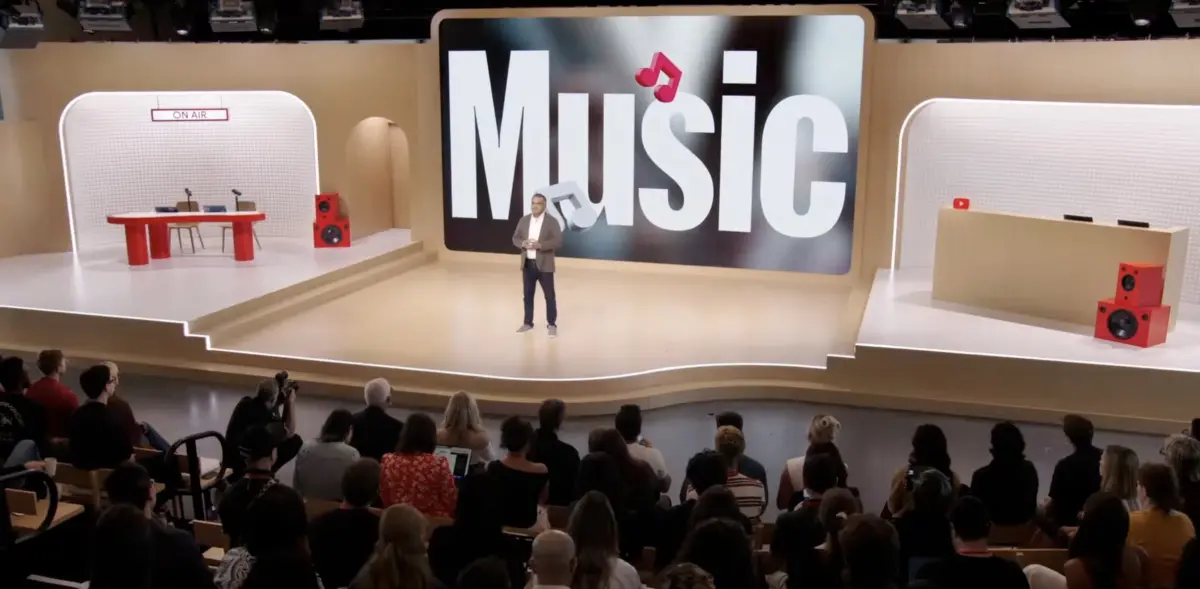
Executive Overview
The global music streaming landscape is undergoing a fundamental paradigm shift, moving away from static search bars and manual playlist curation toward dynamic, conversational interfaces driven by generative artificial intelligence. At its annual "Made on YouTube" event, YouTube unveiled a suite of AI-powered capabilities for YouTube Music designed to fundamentally alter how users discover music, explore artist discographies, and consume podcasts.
The two flagship features—"Ask Music" and "Your Podcast Lineup"—position YouTube to leverage its parent company Google’s advanced Large Language Models (LLMs) to capture user engagement. "Ask Music" introduces a conversational prompt interface that allows users to describe their desired acoustic atmosphere in natural language. This feature operates across YouTube Music’s vast catalog of over 300 million tracks, which includes official studio releases, user-uploaded covers, live performances, and DJ sets. Concurrently, "Your Podcast Lineup" addresses the chronic discovery bottleneck in the podcast industry by delivering a personalized, voice-synthesized weekly audio guide that pitches new shows directly to the listener.
These product rollouts represent a direct challenge to Spotify’s dominant market position and its highly publicized AI features, such as the "AI DJ" and automated podcast briefings. By integrating conversational search and synthetic voice curation directly into its premium tier, YouTube is aiming to increase subscriber retention, boost Average Revenue Per User (ARPU), and capitalize on the massive library of user-generated content (UGC) that its competitors cannot replicate.
Detailed Chronology: YouTube’s Path to Conversational Audio
The introduction of "Ask Music" and "Your Podcast Lineup" is the culmination of a multi-year, highly calculated strategy by Google to consolidate its audio services and integrate machine learning across its consumer platforms.
[Late 2023] ➔ Sunset of Google Podcasts announced; migration of users to YouTube Music begins.
[Late 2024] ➔ Full integration of podcast RSS feeds into YouTube Music completed.
[Sept 2025] ➔ YouTube Music tests AI-powered radio hosts offering trivia and audio commentary.
[May 2026]  ➔ Spotify launches competing AI-powered Q&A and personalized podcast briefings.
[Sept 2026] ➔ YouTube officially unveils "Ask Music" and "Your Podcast Lineup" at "Made on YouTube".
The Consolidation Phase (2023–2024)
The foundation for this AI-driven ecosystem was laid in late 2023 when Google announced the sunsetting of its standalone Google Podcasts app, systematically migrating millions of listeners to the YouTube Music platform. Throughout 2024, YouTube worked to build a unified audio destination, integrating RSS feeds and video podcasts directly into a single interface. This consolidation was critical: it gathered the massive, disparate data pools of music listeners and podcast consumers under a single analytical umbrella.
The Experimental Phase (Late 2025)
In September 2025, YouTube Music began quietly testing AI-generated audio hosts. These experimental digital personas injected radio-style commentary, historical anecdotes, and artist trivia between tracks on personalized stations. The trial proved that listeners were highly receptive to synthetic voice narration when it was contextually relevant and highly personalized, providing the proof-of-concept required for automated audio curation.
The Competitive Response and Launch (2026)
In May 2026, Spotify responded to the shifting market by introducing its own AI-powered podcast briefing features and interactive Q&A systems. Recognizing the threat, YouTube accelerated its development pipeline. The culmination of this effort arrived at the autumn "Made on YouTube" event, where the platform officially announced the global rollout of "Ask Music" and "Your Podcast Lineup" to YouTube Premium subscribers.
Supporting Context & Industry Dynamics
To understand the strategic significance of YouTube’s latest update, one must look at the structural differences between YouTube Music’s catalog and those of its primary rivals, Spotify and Apple Music.

| Feature / Metric | YouTube Music | Spotify | Apple Music |
|---|---|---|---|
| Total Catalog Size | 300M+ tracks (incl. UGC, live, covers) | ~100M+ tracks (largely official releases) | ~100M+ tracks (curated, official releases) |
| Primary AI Discovery Tool | "Ask Music" (Conversational LLM) | "AI DJ" & "AI Playlist" (Prompt-based) | Algorithmic "Discovery Station" |
| Podcast Discovery Model | "Your Podcast Lineup" (AI Voice Previews) | Personalized AI briefings & Q&A | Human-curated features & basic algorithms |
| Integration Strengths | Google Gemini LLM ecosystem & YouTube video sync | Proprietary recommendation engine | Deep iOS ecosystem integration |
Navigating the "Long-Tail" of 300 Million Tracks
While Spotify and Apple Music hover around the 100-million-track milestone, YouTube Music boasts a catalog exceeding 300 million pieces of audio content. This massive discrepancy is due to YouTube’s unique infrastructure, which ingests not only official studio recordings but also millions of user-generated bootlegs, bedroom covers, concert recordings, and niche DJ sets uploaded to the primary video platform.
However, a catalog of this scale presents a major discovery problem. Traditional metadata-based search engines struggle to index and retrieve informal, poorly labeled user uploads. A search for "lo-fi study music with rain sounds" using standard keyword matching might only yield the most popular, SEO-optimized videos.
By employing Google’s advanced semantic understanding, "Ask Music" bypasses rigid metadata. The LLM can interpret highly subjective, atmospheric prompts such as:
- "Create a playlist of acoustic covers of 90s grunge songs that feel like a rainy Sunday afternoon."
- "Give me the tracks that inspired the bassline of Fleetwood Mac’s ‘The Chain’."
- "Find that live version of a Radiohead song where Thom Yorke messes up the lyrics but the crowd sings along."
By translating these conversational prompts into complex database queries, YouTube is unlocking the monetization potential of its massive library of long-tail content, turning what was once a cluttered archive into an easily searchable asset.
Solving the Podcast Paradox
The podcast landscape is plagued by an overabundance of content. According to industry estimates, there are over 4 million active podcasts globally, yet the average listener regularly tunes into fewer than six shows. The barrier to entry for discovering new spoken-word content is remarkably high; unlike a three-minute song, a listener cannot easily "skim" a 60-minute podcast episode to determine if they like the host’s tone, pacing, or subject matter.
[Traditional Podcast Discovery]
 User searches keywords ➔ Sifts through episode titles ➔ Plays 10-15 mins ➔ Often abandons due to poor fit.

[Your Podcast Lineup (AI-Driven)]
 AI analyzes listening history ➔ Generates synthetic voice preview ➔ Explains *why* the show fits the user ➔ Seamlessly transitions into the episode.
"Your Podcast Lineup" addresses this friction point by generating a synthetic voice guide. Instead of forcing users to read text descriptions, the AI acts as a personalized radio host, delivering a concise audio summary of recommended shows and explaining why the algorithm selected them based on the user’s historical listening habits. This reduces the cognitive load of discovery, converting passive browsers into active listeners.
Strategic Positioning & Official Statements
The design philosophy behind these new features reflects a broader push by Google to make technology feel more human and collaborative. Rather than acting as a cold, transactional database, the streaming platform is positioned as a knowledgeable companion.
In their official blog post detailing the launch, YouTube’s product team emphasized this conversational transition:

"Instead of manually searching, the user simply types the request as if they were asking a friend. This conversational tool lets you build custom listening queues, explore an artist’s motivations, or dig deeper into music history with natural, everyday language."
This strategy highlights Google’s competitive advantage over its rivals. While Spotify must rely on third-party API integrations or proprietary models trained on smaller datasets, YouTube has direct access to Google’s Gemini ecosystem. This integration allows "Ask Music" to serve not only as a playlist generator but also as an encyclopedic music authority.
Users can ask complex, multi-turn questions about musicology—such as querying who played a specific session instrument on a 1970s soul record or asking for the historical context of a protest song—and receive accurate, real-time syntheses of information alongside their music playback.
Future Outlook: The Ambient Audio Ecosystem
The rollout of "Ask Music" and "Your Podcast Lineup" is more than a simple feature update; it is a preview of the future of ambient, screenless media consumption. As smart speakers, connected vehicles, and voice-enabled wearables continue to proliferate, the visual user interface (UI) of the streaming app is becoming secondary to the auditory interface.
                  ┌─────────────────────────────┐
                  │   Google Gemini LLM Engine  │
                  └──────────────┬──────────────┘
                                 │ (Natural Language Parsing)
                                 ▼
                  ┌─────────────────────────────┐
                  │     YouTube Music App       │
                  └──────┬───────────────┬──────┘
                         │               │
        (Conversational Audio)           (Voice-Synthesized Curation)
                         ▼               ▼
                  ┌────────────┐   ┌────────────────────────┐
                  │ Ask Music  │   │  Your Podcast Lineup   │
                  └────────────┘   └────────────────────────┘
In a vehicle or smart home environment, navigating a touchscreen to find a specific remix or a new podcast is highly impractical. Conversational AI solves this. In the near future, we can expect these features to evolve from text-input prompts within the app to fully integrated, real-time voice conversations. A user will be able to speak naturally to their device, refining their playlist on the fly ("Make it a bit more upbeat," "Skip the live tracks," or "Tell me more about this guitarist") without ever looking at a screen.
Furthermore, this integration strengthens the value proposition of YouTube Premium. As streaming platforms face rising licensing costs and consumer subscription fatigue, exclusive, utility-driven AI features provide a strong incentive for users to remain within Google’s paid ecosystem. By leveraging its unparalleled data assets, its dominant video platform, and the analytical power of Google Gemini, YouTube Music is positioning itself not just as a repository for audio files, but as an intelligent, conversational hub for global audio culture.