Executive Overview
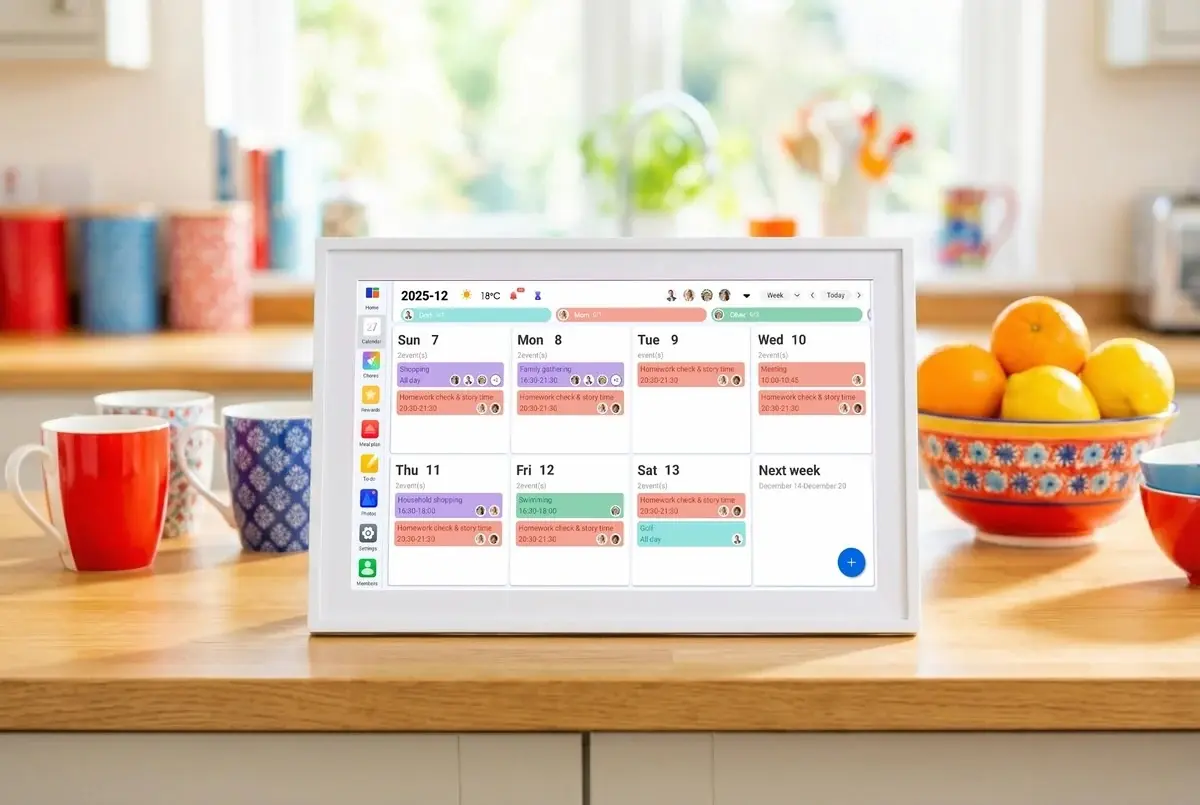
As the back-to-school rush forces households into high-gear coordination, the structural limitations of the traditional kitchen whiteboard and refrigerator paper calendar have become painfully clear. Juggling modern family life—a sprawling mix of remote work calendars, extracurricular sports, medical appointments, school lunch schedules, and domestic chores—requires a centralized system capable of bridging fractured software ecosystems. Entering this high-stakes arena is Linkdaze, a smart digital calendar tablet designed to sit at the physical heart of the home and harmonize household logistics.
First launched late last year, Linkdaze has quickly established itself as a potent challenger in the burgeoning "household management display" category. Built explicitly around multi-user touch interaction rather than individual mobile use, the device features deep synchronization capabilities across major calendar platforms, an integrated chore and rewards engine, and a proprietary AI-powered feature dubbed "Snap-to-Sync."
Crucially, Linkdaze is making its mark not just through hardware engineering, but through a disruptive business model: refusing to lock core functionality behind a recurring paywall. By offering a subscription-free alternative to market incumbents like Skylight—which charges up to $79 annually for premium software access—Linkdaze is testing whether a hardware-first, consumer-friendly monetization model can capture market share in an increasingly subscription-fatigued hardware landscape.
Detailed Chronology: The Evolution of the Family Command Center
The emergence of purpose-built smart household displays represents the third major wave in modern family organization tech. Understanding where Linkdaze fits requires examining the trajectory of home coordination over the past two decades.
+-----------------------------------------------------------------------------------+
| CHRONOLOGICAL EVOLUTION OF HOUSEHOLD COORDINATION SYSTEM                         |
+-----------------------------------------------------------------------------------+
| 2000s–2010s: Analog Command Center                                                |
| - Dry-erase boards, paper wall calendars, physical chore charts.                 |
| - High maintenance, siloed information, zero real-time sync.                      |
+-----------------------------------------------------------------------------------+
                                         │
                                         ▼
| Late 2010s: Fragmented Mobile Apps                                                |
| - Rise of individual Google/iCloud calendars and dedicated family apps (Cozi).    |
| - Solved remote updates, but created software silos across family members.        |
+-----------------------------------------------------------------------------------+
                                         │
                                         ▼
| Early 2020s: The Subscription Smart Display Era                                   |
| - Dedicated hardware (Skylight, DAKboard) surfaces aggregated schedules.          |
| - Shift toward SaaS models: core features locked behind annual subscriptions.     |
+-----------------------------------------------------------------------------------+
                                         │
                                         ▼
| Late 2025–Present: Ambient AI & Subscription-Free Displays                        |
| - Launch of Linkdaze (Dec 2025) in 10.1" and 15.6" form factors.                  |
| - Introduction of "Snap-to-Sync" multimodal AI menu parsing.                      |
| - Zero-subscription core software model challenges established pricing norms.     |
+-----------------------------------------------------------------------------------+
The Transition Phase: December 2025 to Mid-2026
Linkdaze officially debuted its display lineup in December, introducing two distinct screen sizes: a compact 10.1-inch desktop or wall unit and a expansive 15.6-inch flagship display. The launch strategy focused on direct consumer pain points observed during previous back-to-school and holiday seasons—specifically software fragmentation. Rather than building a closed ecosystem, Linkdaze engineered native API adapters for Google Calendar, Apple iCloud, Microsoft Outlook, Yahoo Calendar, and Cozi.
By mid-2026, as families began preparing for another academic year, Linkdaze pushed a major software update that introduced "Snap-to-Sync," an optical recognition and machine learning pipeline capable of converting physical paper schedules and recipes directly into digital calendar entries and structured shopping lists. This feature marked a decisive pivot from passive display hardware to active, AI-assisted ambient computing.
Feature Breakdown and Technical Capabilities
Cross-Platform Synchronization and Visual Architecture
The core architectural challenge of a shared household display is identity management and cross-platform communication. Most modern homes operate on mixed-ecosystem hardware; one parent may rely on Microsoft Outlook for corporate obligations, another on Apple iCloud for personal scheduling, while children’s activities are communicated via third-party web apps or Google Calendars.
       [ Apple iCloud ]        [ Google Calendar ]        [ MS Outlook / Yahoo / Cozi ]
              │                        │                               │
              └────────────────────────┼───────────────────────────────┘
                                       │ (CalDAV / REST API / OAuth 2.0)
                                       ▼
                       +-------------------------------+
                       |   Linkdaze Sync Engine        |
                       |  - Multi-account aggregation  |
                       |  - Color-code assignment       |
                       +-------------------------------+
                                       │
                                       ▼
                       +-------------------------------+
                       | Linkdaze Touch Display (OS)   |
                       | - Shared Household Dashboard  |
                       | - Chore & Reward Tracker      |
                       | - Ambient Photo Frame Mode    |
                       +-------------------------------+
Linkdaze addresses this via a multi-tenant local sync engine. Through standard CalDAV protocols, Google REST APIs, and Secure OAuth 2.0 authentication, the device pulls schedules from disparate accounts into a unified visual timeline.
- Color-Coded Identity Assignment: Each family member is assigned a customizable color profile. Events pulled from individual external calendars are dynamically re-tinted upon ingestion, allowing any household member to ascertain the day’s schedule at a quick glance across the room.
- Interactive Chore & Reward Matrices: Beyond time-based scheduling, the interface includes interactive modules for task distribution. Children and adults can check off assigned chores directly on the touchscreen, updating a gamified point-tracking system that logs progress toward customized household rewards.
- Ambient Display Functionality: When inactive, the high-resolution IPS display transitions into a digital photo frame, retrieving designated photo albums from local or cloud storage without overriding incoming real-time notifications or schedule updates.
The "Snap-to-Sync" AI Engine: Unstructured Data Parsing
The most technically distinctive feature within the Linkdaze platform is its proprietary "Snap-to-Sync" system. Designed to overcome the friction of manually typing data into touchscreen displays, Snap-to-Sync leverages the tablet’s built-in camera or mobile companion app to capture physical documents.

 [ Physical Input ]            [ Processing Pipeline ]             [ Structured Output ]
  - School Lunch Menu    ──┐                                    ┌──> Calendar Events
  - Paper Recipe Card    ──┼─> [ Computer Vision / OCR ] ──> LLM ─┼──> Digital Meal Plan
- Printed Athletics ──┘ (Layout & Text Extraction) └──> Interactive Grocery List- Optical Character Recognition (OCR): When a user takes a photo of a school cafeteria menu, a printed sports schedule, or a handwritten recipe card, the system extracts the raw visual data and isolates layout structures.
- Large Language Model (LLM) Context Parsing: The unstructured text is processed through an edge-optimized parsing model trained to recognize dates, recurring patterns, ingredient quantities, and task assignments.
- Automated Database Ingestion:
- A weekly school menu is converted directly into daily recurring calendar reminders.
- A recipe card is parsed into a structured digital meal plan, automatically cross-referencing required ingredients against the household’s master digital shopping list to flag missing items.
Supporting Context, Pricing, and Market Metrics
Comparative Analysis: Hardware vs. Subscription Models
The smart display and ambient home device market is increasingly dominated by Recurring Revenue (SaaS) business models. Industry leaders often subsidize hardware manufacturing costs by forcing consumers into perpetual software subscriptions to unlock essential features such as advanced calendar syncing, meal planning, or enhanced cloud storage. Linkdaze’s go-to-market strategy runs counter to this trend.
| Feature / Metric | Linkdaze (10.1") | Linkdaze (15.6") | Skylight Calendar (10") | Echo Show 15 |
|---|---|---|---|---|
| Upfront Hardware Cost | $119.99 | Premium Tier (~$199–$249) | $149.99 | $279.99 |
| Mandatory Subscription | None ($0/mo) | None ($0/mo) | $79.00/year (Plus Plan) | None (Ad-supported) |
| 3-Year Total Cost of Ownership | $119.99 | ~$229.00 | $386.99 | $279.99 |
| Calendar Compatibility | Google, iCloud, Outlook, Yahoo, Cozi | Google, iCloud, Outlook, Yahoo, Cozi | Google, iCloud, Outlook, Cozi | Google, Apple, Microsoft |
| AI Schedule/Menu Parsing | Included ("Snap-to-Sync") | Included ("Snap-to-Sync") | Basic/Manual | Basic Alexa Skills |
| Chore & Reward System | Native (Included) | Native (Included) | Subscription Tier | Basic To-Do Lists |
Consumer Economics and Subscription Fatigue
At an upfront price point of $119.99 for the 10.1-inch variant, Linkdaze undercuts Skylight’s entry-level $149.99 hardware pricing. However, the true economic divergence manifests over time. Over a three-year lifecycle, a consumer utilizing a Skylight display with its full feature set incurs nearly $387 in total expenditure due to the $79/year subscription fee. In contrast, the total cost of ownership for Linkdaze remains capped at the initial purchase price.
This pricing strategy targets a growing segment of modern consumers suffering from "subscription fatigue"—the psychological and financial burden of managing dozens of recurring micro-charges across apps, media services, and smart home hardware.
Target Demographics and Multi-User Household Utility
While marketed heavily toward busy families facing back-to-school logistics, analytical usage data highlights broader utility across several key demographics:
- Multigenerational and Busy Households: Reduces administrative friction for parents organizing youth sports leagues, music lessons, and school events alongside their own work schedules.
- Shared Student and Roommate Living: Acts as an impartial communal hub in shared college apartments or multi-tenant housing, streamlining utility billing reminders, shared chore rotations, and co-designed grocery lists.
- Hybrid and Remote Professionals: Serves as a dedicated secondary display for hybrid workers juggling intersecting professional project deadlines, media interviews, and family life without cluttering primary computer monitors.
Official Alignment and Strategic Positioning
Industry analysts view Linkdaze’s decision to eschew recurring subscription fees as a high-stakes competitive bet. In the hardware domain, recurring software fees typically fund ongoing cloud server upkeep, API connectivity maintenance, and continuous software updates.
Addressing the company’s operational model, industry observers note that maintaining long-term cloud infrastructure without subscription revenues requires a carefully engineered margin structure and efficient server architecture. A company representative noted during launch briefings that Linkdaze minimizes server overhead by conducting significant processing locally on-device—including its local OCR operations—thereby drastically reducing client-to-cloud server calls and maintaining low recurring operating expenses.
Hardware business experts suggest this strategy will force competitors to re-evaluate their monetization strategies. "When a low-friction competitor enters the space with feature parity and zero recurring fees, the incumbent’s $79 annual charge transforms from a lucrative margin generator into a primary churn driver," notes tech market research analyst Marcus Vance. "Linkdaze is effectively weaponizing business model simplicity against established players."
Future Outlook: The Evolution of Ambient Household Computing
The arrival of displays like Linkdaze points to a broader shift in smart home technology: the transition from voice-activated assistants to visual ambient computing hubs. While smart speakers dominated the early smart home narrative, visual command centers offer immediate information density without the friction of voice parsing errors or intrusive audio responses.
Key Trends Shaping the Sector
[ Traditional Voice Assistants ]              [ Next-Gen Ambient Hubs ]
  - Audio-only feedback                       - High-density visual dashboards
  - High friction for complex schedules       - Zero-click contextual visibility
- Single-user context biases - Multi-tenant physical presence- Deepening Machine Vision and AI Integration: As edge processing power increases, features like "Snap-to-Sync" will evolve from periodic photo scans to real-time document ingestion. Future iterations are expected to instantly read physical mail, doctor appointment cards, and handwritten notes placed within view of the sensor without user intervention.
- Interoperability Standards: As smart home ecosystems align around open protocols like Matter, smart calendars are poised to transition into broad home automation controllers—linking daily calendar triggers directly to home security, lighting, and HVAC systems (e.g., automatically turning down climate controls when the calendar indicates all family members are at soccer practice).
- Sustainable Monetization Models: The success of Linkdaze’s zero-subscription approach will serve as a crucial bellwether for the hardware industry. If Linkdaze maintains profitability through hardware sales and premium size upgrades alone, it could trigger a broader industry retreat from subscription paywalls on essential home appliances.
For households navigating modern life, Linkdaze represents a pragmatic solution to daily scheduling chaos. By combining flexible software integration, AI parsing, and consumer-friendly pricing, the device positions itself not merely as a tech accessory, but as an essential modern household utility.