Executive Overview
The landscape of modern journalism is experiencing a tectonic shift, driven by real-time digital platforms and the tireless work of frontline reporters who bypass traditional broadcast delays to bring history directly to the screens of millions. Nowhere has this transformation been more visible than in France, where social media video journalist Rémy Buisine has become an iconic, albeit unconventional, figure of contemporary news coverage. Operating as a mobile one-man broadcast station for the French digital media outlet Brut, Buisine has transformed the intimate, unedited livestream format into an essential lens through which a global audience views civil unrest.
During the height of the tumultuous French pension reform protests in the spring of 2023, Buisine’s relentless on-the-ground broadcasts drew millions of viewers, propelling Brut’s TikTok account past the 4-million-follower milestone. While traditional television networks often captured the macro-level political maneuvering inside the National Assembly or relied on distanced helicopter shots of city streets, Buisine stood shoulder-to-shoulder with demonstrators, inhaling tear gas, dodging police projectiles, and giving voice to a disenfranchised younger generation.
This in-depth investigative report examines the mechanics of modern digital reporting through the lens of Buisine’s grueling daily routine. It traces how spontaneous civil unrest—sparked by the controversial invocation of Article 49.3 of the French Constitution by President Emmanuel Macron’s government—found its most potent chronicler in a self-taught, highly online video journalist. By analyzing the evolution of livestreaming platforms, the psychological and physical tolls of high-risk reporting, and the shifting power dynamics between traditional media establishments and digital-native outlets, we uncover how the democratization of newsgathering is fundamentally reshaping public discourse.
Detailed Chronology: A Day on the Frontlines with Rémy Buisine
The Build-Up: Blending Into the Crowd
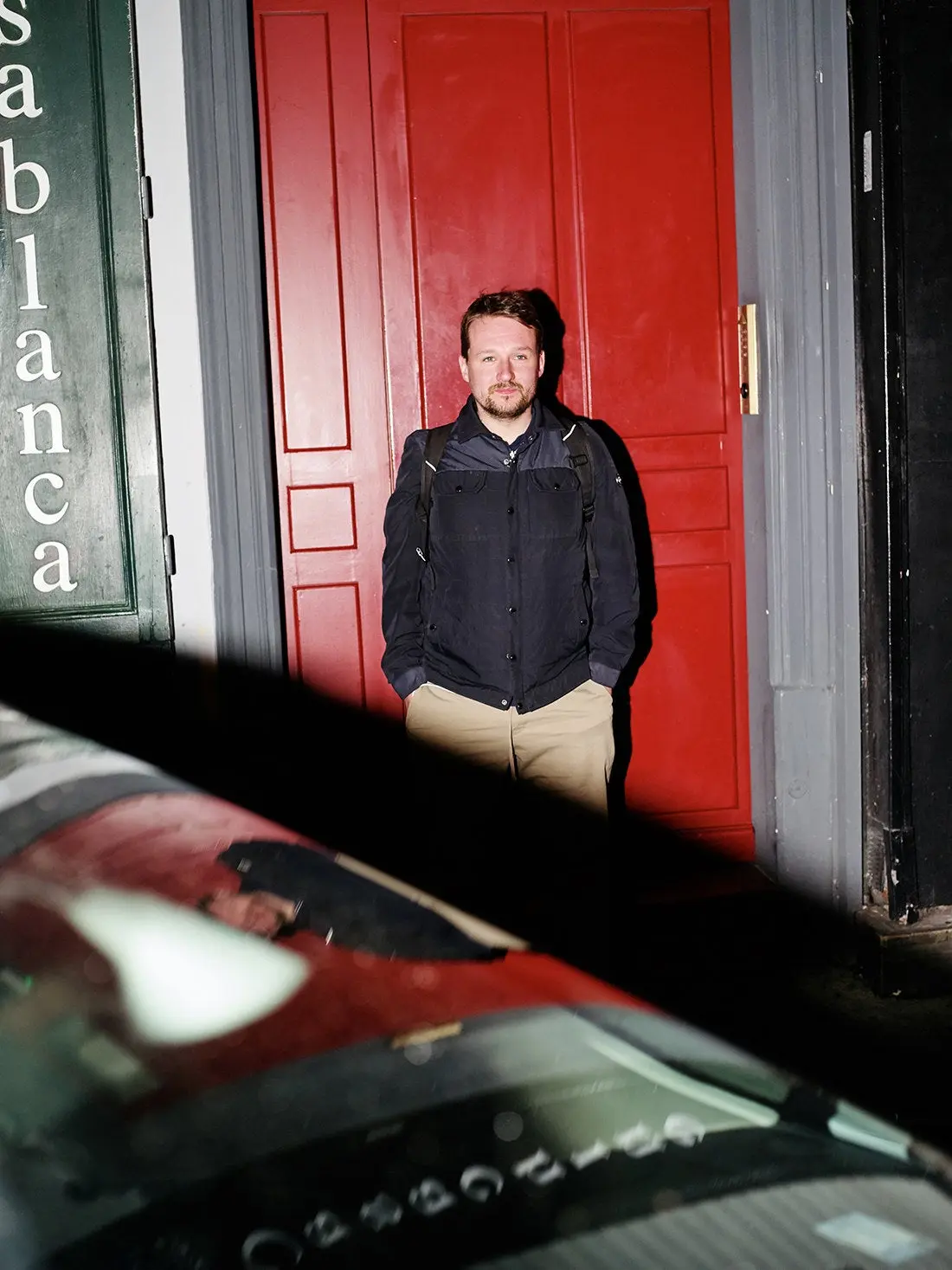
The April 6 protest had already been moving for half an hour by the time our paths crossed near Montparnasse in Paris. The 32-year-old video journalist had shared his live location coordinates, yet he completely defied the stereotype of the high-visibility press corps. Dressed casually in a light navy puffer jacket and blue jeans, Buisine blended seamlessly into the surging mass of humanity—a crowd estimated anywhere from 57,000 by police to a staggering 400,000 according to union organizers.
Before I could spot him, Buisine recognized me, calling out my name with an easy smile before immediately refocusing on the task at hand. He fired off instructions to a colleague, directing them to capture the rear flanks of the march, highlighting his natural inclination toward operational management in chaotic environments.
Over the last decade, Buisine has evolved into an indispensable digital window for millions worldwide. Yet, as we walked toward the front lines of the day’s demonstration, his workflow remained frantic and intensely personal. Juggling two phones—one dedicated strictly to professional communications, the other for personal use—he constantly snapped photographs of clever protest signs to feed the Brut Instagram account. In the span of just thirty minutes, half a dozen fans and peers intercepted him to offer greetings or check broadcast schedules. "Soon, soon," Buisine answered a volunteer street medic, barely breaking his stride.
Gearing Up for Chaos
Outside the Montparnasse railway station, near Brut’s Paris headquarters, Buisine paused to equip himself for the inevitable violence that defines contemporary French demonstrations. From his backpack, he extracted hermetically sealed tactical goggles and a professional-grade gas mask, slipping the goggles into his right jacket pocket and looping the respirator around his neck. A canister of specialized tear gas decontaminant spray was secured in another pocket. This ritual underscores the perilous reality of modern field reporting, where journalists must routinely adopt protective equipment once reserved for riot police.
At precisely 3:29 p.m., a concussive blast echoed down the boulevard. The source remained unknown, but the crowd’s reaction was instantaneous and electric. Protesters jeered and cheered, chanting "ACAB" with distinct French inflections that softened the harsh acronym into a rhythmic cadence.
Advancing toward the frontline near the Café de la Rotonde, we encountered groups of young demonstrators dressed entirely in black, faces covered, lingering near a Vavin metro station exit. Just feet ahead, lines of gendarmerie—a militarized branch of the French law enforcement apparatus—blocked the boulevard with heavy riot shields raised.
The Escalation and the Breakaway
At 3:37 p.m., the gendarmerie fired an unmistakable warning shot into the air. The atmosphere instantly supercharged. While nervous protesters retreated, Buisine surged forward, phone already in hand, capturing high-resolution video ahead of his official livestream broadcast. Two more warning shots rang out in rapid succession. The black-clad youth materialized at the vanguard, one aggressively banging a metal barricade against the asphalt.
Following our pre-arranged safety protocol, I peeled away from the journalist at the first sign of escalating danger. Buisine’s methodology relies heavily on running toward police interventions rather than away from them—a dangerous proximity that lacks the institutional shielding usually afforded by heavy press armor. As I turned back through the parting crowd, Buisine had already dropped his bag to pull out his protective helmet. Within a minute, the first tear gas canister arched into the dense crowd, and Buisine’s livestream went live.
Into the Kettle: The Long Night at Place d’Italie
Without me, Buisine’s afternoon devolved into a grueling endurance test. He filmed protesters breaching a residential building after an object was hurled from a window, and captured the terrifying moment the awning of the historic Café de la Rotonde caught fire. For roughly thirty minutes, he found himself trapped inside a vandalized bank branch, surrounded by a police cordon.
Later that evening at the Place d’Italie, Buisine documented the bitter end of the demonstration, remaining for hours with defiant protesters who had been kettled by police near a metro entrance. In a surreal display of digital celebrity culture, the trapped demonstrators began chanting in his honor: "Ah Rémy, allez, allez, allez!"
When police eventually cleared the area, the remaining crowd surged down Avenue d’Italie, dragging garbage bins into the street and setting wood alight to construct makeshift barricades. Three members of the French National Assembly (députés), conspicuously omitting their official tricolor sashes, stopped to give impromptu five-minute interviews to Buisine.
Finally, Buisine walked back to the burning barricade to deliver a closing summary of the day’s events. He reminded his digital audience—for what felt like the hundredth time that day—to follow the channel, turn on notification bells, and welcomed new followers by name. At 10:54 p.m., after seven and a half continuous hours on air and logging more than 28,000 steps, he finally ended the broadcast. On TikTok alone, 1.8 million unique viewers had tuned in.
Supporting Context & Metrics: The Mechanics of Digital-Native News
To fully understand Buisine’s impact, one must examine the broader socio-political crisis that birthed these "wild" (sauvage) protests. In January 2023, President Emmanuel Macron’s administration introduced unpopular pension reforms, chief among them raising the legal retirement age from 62 to 64. Initially, opposition was channeled through traditional union-led marches dominated by older, middle-class demographics.
However, the political landscape shifted dramatically on March 16. Realizing they lacked the votes in the National Assembly to pass the legislation democratically, the government invoked Article 49.3 of the Constitution to force the bill through without a parliamentary vote. This executive maneuver bypassed lawmakers and infuriated the French public, particularly youth under the age of 30 who viewed the bypass as an authoritarian subversion of democracy. Within hours, thousands of unannounced protesters converged on the Place de la Concorde.
For the subsequent two weeks, nightly spontaneous demonstrations erupted across major French cities. It was this combustible mix of democratic grievance and youthful anger that fueled Brut’s unprecedented audience growth:
- Audience Expansion: During the height of the spring 2023 protests, Brut’s TikTok account added over one million followers in a single month, soaring to 4.2 million followers.
- Stream Metrics: Individual livestreams routinely lasted up to eight hours, with peak concurrent viewership reaching 70,000 on TikTok alone, alongside extensive broadcasting on Facebook and the native Brut application.
- International Reach: Buisine’s broadcasts attracted a massive global audience despite being entirely in French, with foreign viewers constantly flooding the chat requesting English translations—a request he good-naturedly deflected with his signature phrase, "Live in Paris."
Buisine’s appeal lies in radical transparency and patient listening. Unlike traditional news anchors who conduct rigid, soundbite-driven interviews, Buisine routinely grants ordinary citizens—such as 18-year-old activist Ritchy Thibault—uninterrupted blocks of 10 to 20 minutes to articulate their grievances. This participatory journalism creates a sense of shared community among an audience that is "Extremely Online."
Official Statements & Institutional Friction
The rise of social-media-first journalism has not occurred without institutional friction. When Brut was founded in 2016 as a digital-only publisher distributed exclusively through social platforms, the traditional French political and media establishments struggled to categorize it.
"Some politicians were chilly about coming on Brut," Buisine reflects, "because they were scared of communicating on social media."
For decades, French political access was carefully managed through formal press conferences, structured print interviews, and heavily produced television debates. Brut shattered this barrier. By proving that digital-native platforms could command massive, politically engaged audiences, Buisine forced the political elite to adapt. This cultural shift culminated in 2020, when Buisine successfully conducted a grueling, two-and-a-half-hour livestreamed interview with President Emmanuel Macron—a clear signal that digital journalism had achieved parity with legacy media institutions.
However, this democratization comes at a steep personal cost. Buisine’s front-row seat to social unrest has repeatedly placed him in the crosshairs of police violence. Despite national laws designed to protect accredited journalists, Buisine has been routinely teargassed, shoved, and struck with police batons during turbulent assignments. Paradoxically, these moments of physical trauma often trigger massive spikes in digital engagement, drawing hundreds of thousands of concurrent viewers who tune in out of concern for his safety.
Reflecting on past trauma, Buisine contrasts the pension reform demonstrations with the brutal Gilets Jaunes (Yellow Vest) protests that began in 2018. During those historic clashes, he witnessed catastrophic injuries: "hurt people, open skulls, people who’d lost an eye, people next to you whose lives have been upturned because they lost a hand." These harrowing experiences forged an emotional resilience that defines his reporting style today.
Future Outlook: The Evolution of Immersive Reporting
Rémy Buisine’s trajectory—from a small-town youth who struggled academically and managed soccer players’ social media accounts, to a pioneering livestreamer who trains his lens on the fault lines of modern democracy—exemplifies the democratization of the fourth estate.
Yet, the lifestyle required to sustain this level of reportage is unsustainable in the long term. Describing his daily existence, Buisine admits that his life is entirely subsumed by his work. Single, without children, and living alone, his phone remains perpetually active. After finishing his 14-hour protest shift at 1 a.m., wrestling with adrenaline-induced insomnia until 3 a.m., and waking up at 9:30 a.m. to run editorial meetings as Brut’s head of short-form content, he was granted a single day off before packing his bags for Marseilles to cover a tragic building collapse caused by a gas explosion.
The future of journalism is undeniably mobile, decentralized, and live. Audiences increasingly reject sanitized, delayed broadcast packages in favor of unedited, raw realities captured in real time. Yet, as Buisine’s exhaustion illustrates, the burden of bearing witness falls heavily on individuals operating on the digital frontier.
As regulatory bodies grapple with the moderation of live video content and traditional media houses scramble to capture youth demographics, reporters like Buisine have established a permanent blueprint for accountability. So long as democratic grievances spill out onto the boulevards of the world’s major cities, a phone, a gas mask, and an open livestream will remain the most potent tools of modern truth-telling.