Executive Overview
In the expansive lore of The Legend of Zelda, characters are rarely forgotten. From the towering grandeur of Ganondorf to the whimsical mystique of the Happy Mask Salesman, Nintendo’s seminal franchise is populated by faces that have lingered in the collective consciousness of gamers for decades. Yet, cultural staying power in the digital age often defies predictable metrics. It rarely adheres to principal billing or narrative importance. Instead, the internet has a unique penchant for elevating minor non-player characters (NPCs) into icons of digital pop culture.
Enter the Bombchu Bowling Lady—also affectionately known as the Bombchu Girl—an anonymous, blue-haired arcade attendant first introduced to players in the 1998 Nintendo 64 masterpiece The Legend of Zelda: Ocarina of Time. For nearly three decades, she existed as a quirky pit stop in the bustling, tragic backdrop of Hyrule Castle Town: a neon-tinted distraction where players could part with 30 Rupees to launch explosive mice at targets.
However, cultural phenomena are rarely static. Following the much-anticipated announcements surrounding the Ocarina of Time remake project slated for 2026, the Bombchu Bowling Lady has experienced a dramatic resurgence. Transcending her humble origins as polygon-era set dressing, she has transformed into a viral meme, a muse for digital artists, a cosplay staple, and a litmus test for millennial and Gen Z gaming nostalgia. This article explores the rich trajectory of the Bombchu Girl, tracing her journey from a minor 1998 NPC to a modern internet sensation, and analyzing the viral ecosystem that propelled her back into the spotlight.
Detailed Chronology: From 1998 Pixelation to 2026 Remake Stardom
1. The Genesis: Hyrule Castle Town (1998)
On November 21, 1998, Nintendo released The Legend of Zelda: Ocarina of Time in Japan, forever altering the landscape of 3D action-adventure video games. Among the technological marvels of its time—seamlessly transitioning between the sprawling fields of Hyrule and the dense, labyrinthine streets of Hyrule Castle Town—lay a modest diversion: the Bombchu Bowling Alley.
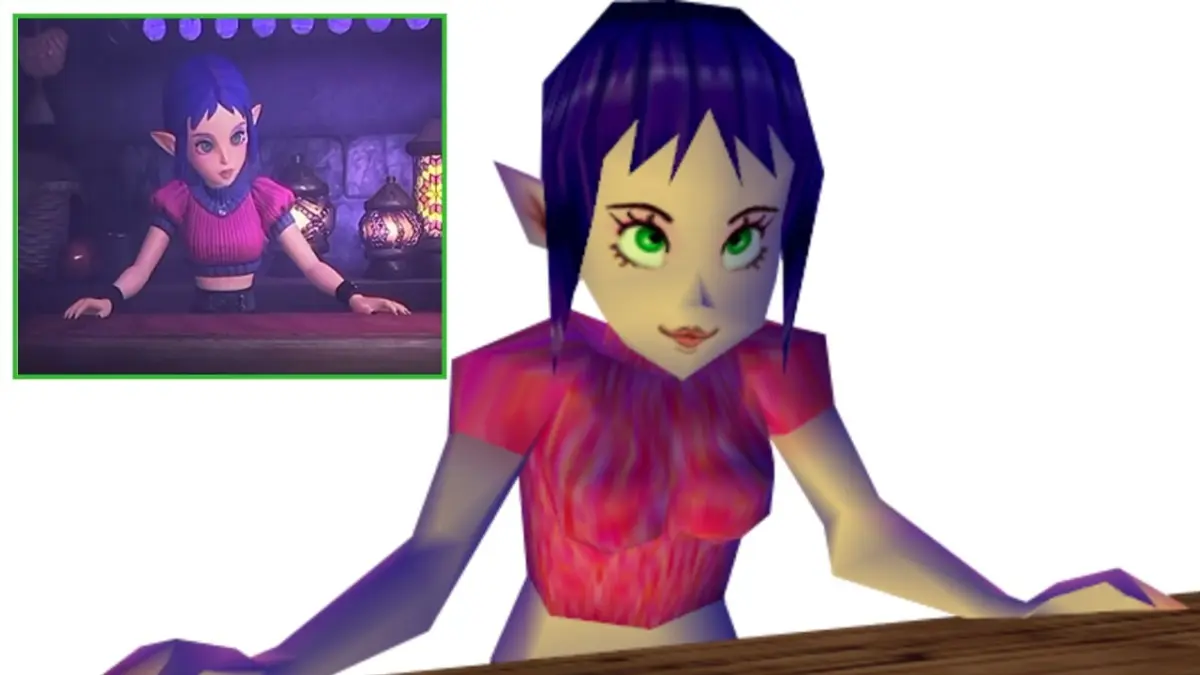
Inside this establishment stood an unnamed woman. Rendered in the characteristically angular, low-poly aesthetic of the late 90s, she sported distinct blue hair, a pink crop top, pronounced eyelashes, and vibrant green eyes. For players traversing the harrowing dungeons of the game, the bowling alley offered a playful reprieve. Her cheerful greeting, monotonous dialogue loops, and the high-stakes frustration of the Bombchu physics engine ensured she remained a memorable fixture of the pre-adult timeline of Link’s adventure. Yet, at the turn of the millennium, she was firmly categorized as a footnote—an amusing, stylized NPC lost among hundreds of others.
2. The Slow Burn: Internet Subcultures and Fan Preservation (2000s–2020)
As the gaming community migrated online, forums, imageboards, and early social media platforms began archiving the esoteric corners of retro gaming. While major characters dominated mainstream discussions, subcommunities on platforms like Reddit, Tumblr, and early Twitter began appreciating the distinctive character design choices of the Nintendo 64 era.
The Bombchu Bowling Lady slowly carved out a niche reputation. Her distinct visual flair—melding late-90s casual streetwear tropes with classic fantasy aesthetics—gradually won over artists and retro enthusiasts. She became a recurring inside joke and an object of affectionate "thirst" posting, a common internet phenomenon where minor attractive video game characters are humorously elevated to object-of-affection status.
A notable milestone in this grassroots preservation occurred on November 28, 2024, when Redditor HeathenArtifex shared a curated compilation of fan art dedicated to the Bombchu Girl on the popular /r/Zelda subreddit. The post steadily accumulated over 2,000 upvotes over the span of two years, proving that the character’s appeal was not merely a fleeting joke, but a sustained, affectionate subcultural appreciation.
3. The Viral Tipping Point (April–June 2026)
As anticipation for Nintendo’s modernization initiatives reached a fever pitch in early 2026, public consciousness surrounding Ocarina of Time intensified. Cultural touchstones from the original game began surfacing across unexpected corners of social media.
On April 15, 2026, animator and showrunner Owen Dennis (known for Infinity Train) posted a viral observation on Bluesky. Sharing an image of the Bombchu Girl, he wrote: "Everything is bad now because kids get their taste in music from algorithms instead of from trying to impress the older girl you know who looks like the Bombchu Bowling Alley Operator." The post resonated deeply across the platform, garnering over 5,200 likes and 1,600 reposts within six months. It crystallized a specific generational nostalgia, casting the Bombchu Girl as the archetypal "cool older girl" of 90s gaming lore.
The momentum continued into the summer. On June 19, 2026, Instagram creator sweetnayrucosplay shared a professional cosplay rendition of the character, drawing over 1,000 likes and cementing the Bombchu Girl’s transition from 2D and 3D digital art into physical, real-world fashion and convention culture.
4. The 2026 Remake Revelation and Modern Renaissance
The true apex of the Bombchu Girl’s modern renaissance arrived in mid-October 2026, catalyzed by the unveiling of the Ocarina of Time remake project. As gaming journalists and previewers gained early access to promotional builds and footage, the internet eagerly scanned for updates on classic locations and characters.
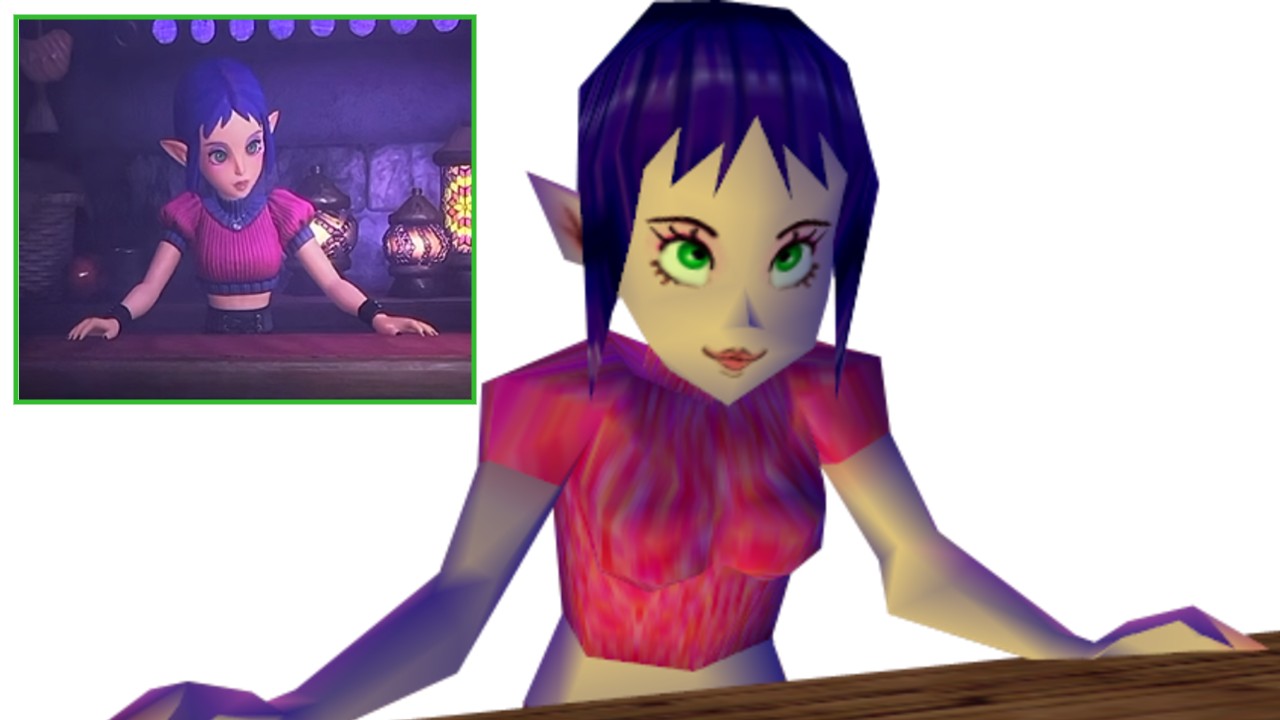
On October 3, 2026, X (formerly Twitter) user @DeDHeD_art published a series of fresh illustrations celebrating the character, noting that she "deserves appreciation." The post rapidly amassed over 10,000 likes, proving the character’s baseline popularity was higher than ever.
Days later, on October 14, 2026, media creator Chris Higgins provided the community with the confirmation they were waiting for. Posting a video preview from the remake on Bluesky (@higgins.games), he joked: "Anyway, I checked out the most important thing: she’s still there," showcasing the character’s remarkable graphical overhaul. Simultaneously, X user @ArcanaLegacy shared high-resolution screenshots of the newly redesigned Bombchu Bowling Lady, exclaiming, "BOMBCHU BOWLING ALLEY LADY, THE TIMLESS WOMAN THAT YOU ARE 💍," which netted more than 14,000 likes in less than 24 hours.
Supporting Context & Metrics: The Anatomy of a Meme
To understand how an anonymous arcade clerk from a 1998 title captured the digital imagination of 2026, one must examine the intersection of algorithmic culture, participatory fandom, and the economics of nostalgia.
Quantitative Engagement Breakdown
- Reddit (
/r/Zelda– November 2024): ~2,000+ upvotes for archival fan art collections, signaling steady long-term baseline interest. - Bluesky (April 2026): Owen Dennis’s cultural commentary post secured 5,200+ likes and 1,600+ reposts, demonstrating cross-pollination between mainstream animation professionals and gaming enthusiasts.
- X / Twitter (October 2026): Fan art by @DeDHeD_art surpassed 10,000 likes within two weeks, while preview screenshots shared by @ArcanaLegacy cleared 14,000 likes in a single day following the remake announcements.
- Instagram (June 2026): Cosplay integration by sweetnayrucosplay proved the character’s viability in physical creation spaces, pulling in over 1,000 likes in a niche aesthetic community.
The Psychology of Minor NPC Fandom
Why do minor characters often eclipse major protagonists in viral spaces? Analysts of internet culture point to several factors:
- The Blank Slate Effect: Unlike principal characters carrying heavy narrative baggage, minor NPCs leave room for community-driven elaboration. Fans enjoy filling in the blanks of their personalities, backstories, and daily lives.
- Subversive Nostalgia: Focusing on a side attraction like the Bombchu Bowling Alley allows fans to signal their deep, insider knowledge of a classic game. It moves beyond the mainstream talking points (such as the Master Sword or Ocarina songs) into niche, lived-in memories.
- Aesthetic Anachronism: The juxtaposition of 1990s character design tropes—such as the bold color palettes and distinct clothing choices—creates a charming retro-futuristic appeal that modern artists love to reinterpret.
Official Statements and Industry Reception
While Nintendo has historically maintained a tight-lipped approach regarding specific fan micro-phenomena, industry insiders have acknowledged the unexpected cultural gravity surrounding minor asset refreshes in major remakes.
Speaking anonymously on the condition of background commentary, a veteran environment artist formerly associated with modernizing classic Nintendo titles noted:
"When you redesign a space like Hyrule Castle Town for a contemporary audience, the challenge isn’t just updating the hero and the villains. It’s breathing life into the background architecture and the people who inhabit it. Characters like the Bombchu Bowling Lady are the connective tissue of player memory. If you change them too much, you break the illusion; if you don’t update them, they look out of place. Seeing fans obsess over these fine details proves that players don’t just remember the plot—they remember the texture of the world."
Furthermore, the enthusiastic reception of the 2026 character model updates highlights a broader industry trend: player investment in remakes is increasingly measured by how lovingly and faithfully developers treat the peripheral elements of the original game world.
Future Outlook
As the release of the Ocarina of Time remake draws nearer, the trajectory of the Bombchu Bowling Lady offers a fascinating case study in modern video game culture. What began as a collection of polygons designed to dispense explosive rodents has solidified its place in the permanent canon of internet lore.
We can anticipate several developments as the remake’s launch window approaches:
- Expanded Fan Works: The influx of high-definition reference material from the 2026 remake will undoubtedly trigger a new wave of fan art, creative writing, and digital animations.
- Convention Presence: With physical cosplay adoption already established, expect to see updated, high-fidelity iterations of the modern Bombchu Girl design at gaming conventions worldwide.
- The Meme Economy: As long as players continue to test their luck and precision against the frustrating physics of the in-game bowling alley, the attendant will remain an enduring symbol of retro gaming resilience and community humor.
Ultimately, the story of the Bombchu Girl is a testament to the unpredictable nature of digital affection. In an era dominated by high-end graphics and cinematic blockbusters, sometimes the most enduring landmark in a legendary kingdom is the cheerful woman behind the counter, reminding players of a simple choice: "It’s 30 Rupees per game. Do you want to play?"