Executive Overview
The modern-day renaissance of Sacramento alternative metal icons Deftones is a cultural phenomenon that has fundamentally shifted the contemporary musical landscape. Beyond merely reigniting interest in the outer fringes of alternative music, the band has spearheaded a massive subcultural pivot. This movement has been largely driven by a post-COVID-19 online surge that introduced their extensive back catalogue to an obsessively devoted Generation Z audience.
When Deftones took to the stage to headline Outbreak at London’s Victoria Park during a special 15th-anniversary edition of the celebrated hardcore and global counterculture festival—embedded within the broader All Points East framework—the event transcended a standard live concert. It served as a massive cultural intersection. Here, digitally native Gen-Z youths and weathered scene veterans converged on a dusty field to celebrate the heavy, atmospheric music that bridges generations.
The visual and social outcome of such an event shattered long-standing stereotypes regarding legacy style, raising a broader, highly pertinent question for the contemporary culture industry: What does an alternative metal fan actually look like in 2026?
For decades, the heavy metal and hardcore archetypes were heavily gatekept and visually homogenous. While the classic aesthetic of cargo shorts, tube socks, and stacks of faded festival wristbands long defined the physical boundaries of the scene, Outbreak’s All Points East return served as a loud, undeniable reminder of just how multi-dimensional and multi-generational alternative style has become.
Today, the uniform of heavy music is no longer a monolithic code; it is a dynamic, fluid language. By examining the cross-pollination of digital trend cycles, the economic shifts in festival culture, and the generational handover happening in mosh pits across the globe, this report explores how the alternative community has transformed from an exclusionary clubhouse into an expansive, boundary-pushing global movement.
Detailed Chronology: From Broomhall Centre to All Points East
To understand the weight of Outbreak’s milestone 15th-anniversary edition in 2026, one must trace the festival’s trajectory from its humble, grassroots origins to its current status as a titan of global counterculture.
The Formative Years (2011–2012)
Outbreak Festival was born in 2011 at the Broomhall Centre in Sheffield, conceived as a localized passion project designed to give a voice to the burgeoning UK hardcore punk and underground heavy music scenes. Operating firmly within the DIY ethos, the festival focused on community, raw energy, and inclusivity within tight physical spaces. Recognizing the need for a larger footprint to accommodate its rapidly growing roster of international and domestic talent, the festival relocated to Leeds in 2012. During this era, the festival’s style was strictly traditional: thrifted band hoodies, beat-up Vans, and distressed denim. The attendees were almost exclusively drawn from physical word-of-mouth networks, local record stores, and underground forums.
The Pandemic Pivot and Digital Acceleration (2020–2022)
As the live music industry ground to a halt during the COVID-19 pandemic, heavy music experienced an unprecedented paradox. While physical spaces shuttered, digital communities exploded. Platforms like TikTok and dedicated Discord servers became incubators for alternative subcultures. Younger demographics—specifically Gen Z—began unearthing legacy acts like Deftones, whose lush, shoegaze-infused metal provided a fitting soundtrack for isolation and existential dread.
When Outbreak made its landmark move to Manchester in 2022, the demographic shift was already palpable. The crowds were noticeably younger, more diverse, and heavily influenced by digital aesthetics that blended 1990s grunge with early-2000s cyber-goth elements. The lines between hardcore purists and internet-born alternative subcultures began to blur.
The Global Stage: All Points East 2026
Fast forward to 2026, and Outbreak achieved its most ambitious incarnation yet, integrating into the prestigious All Points East festival framework in London for a dedicated, single-day takeover. Marking its 15th anniversary, the festival curated a lineup that defied traditional genre boundaries, featuring Deftones alongside Amyl and the Sniffers, Salem, Show Me the Body, Mannequin Pussy, EsDeeKid, JPEGMAFIA, post-hardcore fan-favourites Basement, and horror-punk turned alternative-rock legends AFI.
This eclecticism on stage was mirrored directly in the crowd. The historical friction between "old-school gatekeepers" and "new-age TikTok fans" dissolved into a shared celebration of heavy music’s modern renaissance.
Supporting Context & Metrics: The Anatomy of Modern Alternative Fashion
Despite the dizzying speed of online trend cycles accelerated by post-pandemic digital algorithms, certain sartorial anchors remain steadfast. The most prominent thread connecting the subcultures of yesteryear to today is the black platform boot—effectively the alternative scene’s answer to the Little Black Dress. Whether worn scuffed from a frantic mosh pit or pristine straight out of the box, the platform boot is a generational equalizer.
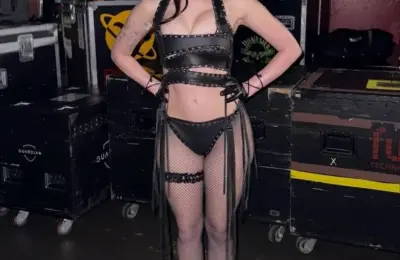
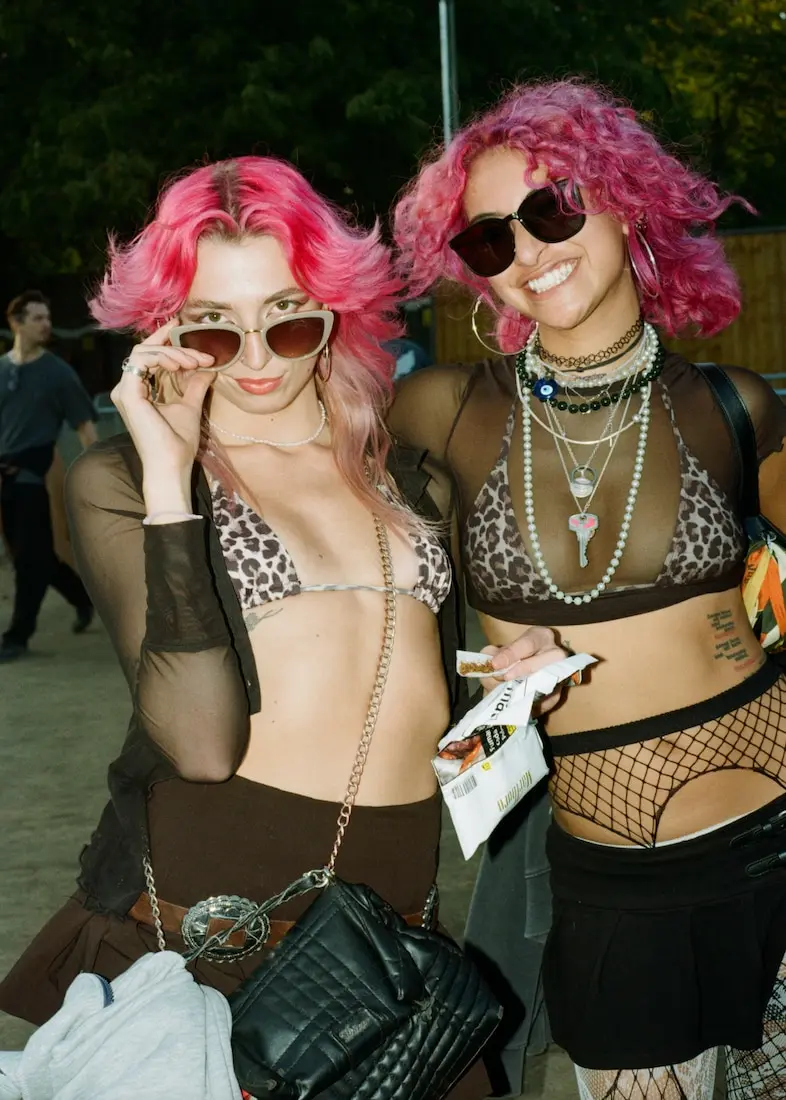
However, beyond this staple, the sky is virtually the limit for fan fashion. Festival-goers at Outbreak utilized a canvas of vintage band tees, distressed denim, and combat boots, accessorizing them with:
- Faded and dyed mullets paired with bleached eyebrows.
- Self-deprecating slogans screen-printed onto DIY patches.
- Pastel warpaint and graphic cyberpunk eyeliner.
- Human-sized butterfly wings that danced above the heads of crowd-surfers.
- An unprecedented density of tattoos, ranging from traditional American flash to cyber-sigilism and neo-tribal ink.
The Demise of Visual Predictability
Historically, walking into a heavy metal festival allowed an observer to accurately guess every band on the bill purely by examining the crowd’s attire. A sea of patch-laden denim meant thrash metal; oversized jerseys and shorts indicated hardcore punk; tight black leather pointed toward black metal.
At Outbreak 2026, that predictive certainty was entirely shattered. Because today’s alternative fan builds their musical identity through algorithmic discovery—where a user can seamlessly transition from listening to Deftones’ White Pony to JPEGMAFIA’s industrial hip-hop, and onward to Amyl and the Sniffers’ punk anthems—their wardrobes reflect this omnivorous appetite. You are just as likely to see a fan wearing a hyperpop-inspired mesh top alongside vintage death metal cargo pants as you are to spot traditional hardcore merch.
Official Statements & Industry Perspectives
The tectonic shift in how alternative music is consumed, marketed, and visually represented has not gone unnoticed by artists, promoters, and cultural analysts.
Speaking on the changing demographics of their audience, a representative for Deftones management noted the unique vitality brought by younger listeners:
"What we are witnessing isn’t just nostalgia; it’s a total re-contextualization of our catalog. The energy that Gen Z brings to these shows is feral, creative, and completely unburdened by the genre rules of the past. When we look out into the crowd and see kids mixing 90s shoegaze aesthetics with modern digital counterculture, it proves that this music was built to transcend eras."
Festival organizers behind Outbreak echoed these sentiments, emphasizing that the integration into All Points East was designed to legitimize underground heavy music on a global, multi-genre stage without sacrificing its core integrity:
"For 15 years, Outbreak has been a sanctuary for heavy music. Moving to a massive platform like All Points East in 2026 wasn’t about watering down our identity—it was about proving that heavy music is no longer a subculture hiding in the shadows. It is a dominant cultural force. The fans driving this are younger, smarter, and visually bolder than ever before. Gatekeeping is dead; the tent is wide open."
Fashion and subculture historians point to the post-COVID digital landscape as the catalyst for this liberation. Dr. Elena Vance, a sociologist specializing in digital youth subcultures, explains:
"The pandemic forced subcultures online, stripping away the physical intimidation factor of local scene gatekeeping. Kids could experiment with heavy music and its associated aesthetics in safe digital spaces like TikTok and Instagram before ever stepping foot in a mosh pit. When they finally emerged into physical venues like Outbreak, they brought that digital fearlessness with them. They don’t care about the rigid dress codes of 2004 metalheads; they are writing their own visual dictionary."
Future Outlook: The New Frontier of Heavy Music and Style
As we look beyond 2026, the implications of Outbreak’s All Points East takeover and the ongoing Deftones renaissance point toward a permanent restructuring of the alternative music ecosystem.
1. The Death of Strict Genre Silos
The days of strict tribalism—where metalheads refused to acknowledge punk, and punks scoffed at electronic or hip-hop influences—are officially behind us. The modern alternative consumer is an omnivore. Festivals that embrace this diversity, much like Outbreak has successfully done by booking acts ranging from EsDeeKid to AFI, will dictate the future of live music curation. Promoters who cling to monolithic, single-genre lineups risk alienating a generation of fans whose playlists are as eclectic as their wardrobes.
2. Fashion as an Interactive Digital-Physical Medium
The intersection of online aesthetics and physical festival fashion will continue to tighten. As augmented reality (AR), digital fashion design, and algorithmic trend forecasting accelerate, festival grounds will increasingly serve as real-world runways for looks incubated in digital spaces. The DIY ethos will not disappear; rather, it will merge with digital customisation, resulting in clothing that is both hyper-personalized and socially networked.
3. Generational Continuity in the Mosh Pit
Crucially, the convergence of scene veterans and digitally native youth at events like All Points East ensures the healthy longevity of heavy music. Rather than an aging scene fading into obscurity, alternative metal and hardcore are experiencing a vibrant youth-led transfusion. Older fans provide the historical bedrock and institutional knowledge of the community, while Gen Z injects financial vitality, aesthetic innovation, and boundless physical energy.
In conclusion, the modern-day renaissance of Deftones and the triumphant evolution of Outbreak Festival have permanently altered the paradigm. The alternative metal fan of 2026 is no longer defined by an exclusive checklist of approved merchandise or rigid behavioral codes. They are defined by an open-minded passion for heavy art, an embrace of hybrid aesthetics, and a refusal to be boxed in. As the dust settles on Victoria Park, one thing is abundantly clear: the heavy music underground has stepped into the light, and it has never looked more vibrant.