Executive Overview
For the modern gamer, reclining on a couch with a wireless controller is an absolute baseline expectation of the hobby. Whether powering up a PlayStation 5, an Xbox Series X, or a Nintendo Switch, players take for granted the seamless, lag-free connection between their hands and the screen. Yet, this absolute freedom of movement is the hard-won result of decades of trial, error, heavy batteries, and complex RF engineering.
While the general consumer consensus often incorrectly credits the sixth or seventh console generation with the invention of cord-free play, the lineage of the wireless gamepad actually stretches back deep into the 1980s. From clunky radio-frequency monoliths for the Atari 2600 to the revolutionary leap of Nintendo’s GameCube WaveBird and the rocky stumbles of Sony’s early PlayStation 3 hardware, the journey to modern wireless perfection has been long and fascinating. This report explores the chronological evolution of the untethered controller, examining the technologies, corporate blunders, and engineering triumphs that ultimately unleashed players from the living room floor.
Detailed Chronology: From Atari to the Modern Era
1. The 1980s: The First Steps and Radio Frequencies
The concept of cutting the cord is far older than many enthusiasts realize. Long before Sony, Microsoft, or Nintendo standardized wireless hardware, third-party manufacturers sought to rid living rooms of sprawling cable nests.
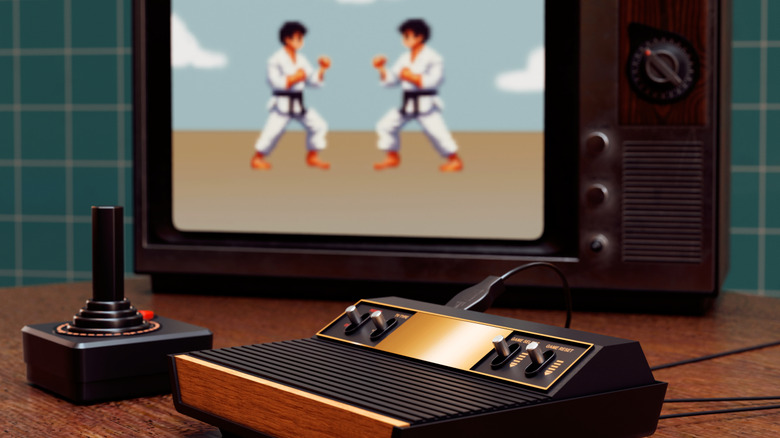
Enter the Cynex Game Mate 2, released circa 1982. Widely recognized as the first-ever console-compatible wireless gamepad, this peripheral was designed for the Atari 2600. Unlike later infrared (IR) alternatives that plagued the late 1980s, the Game Mate 2 utilized radio frequencies (RF). This distinction was vital: while IR controllers—such as the Acclaim Remote Controller for the Nintendo Entertainment System (NES) in 1989—required an uninterrupted line of sight between the handset and a console-mounted sensor, the Game Mate 2 allowed players to move freely without worrying about blocked signals.
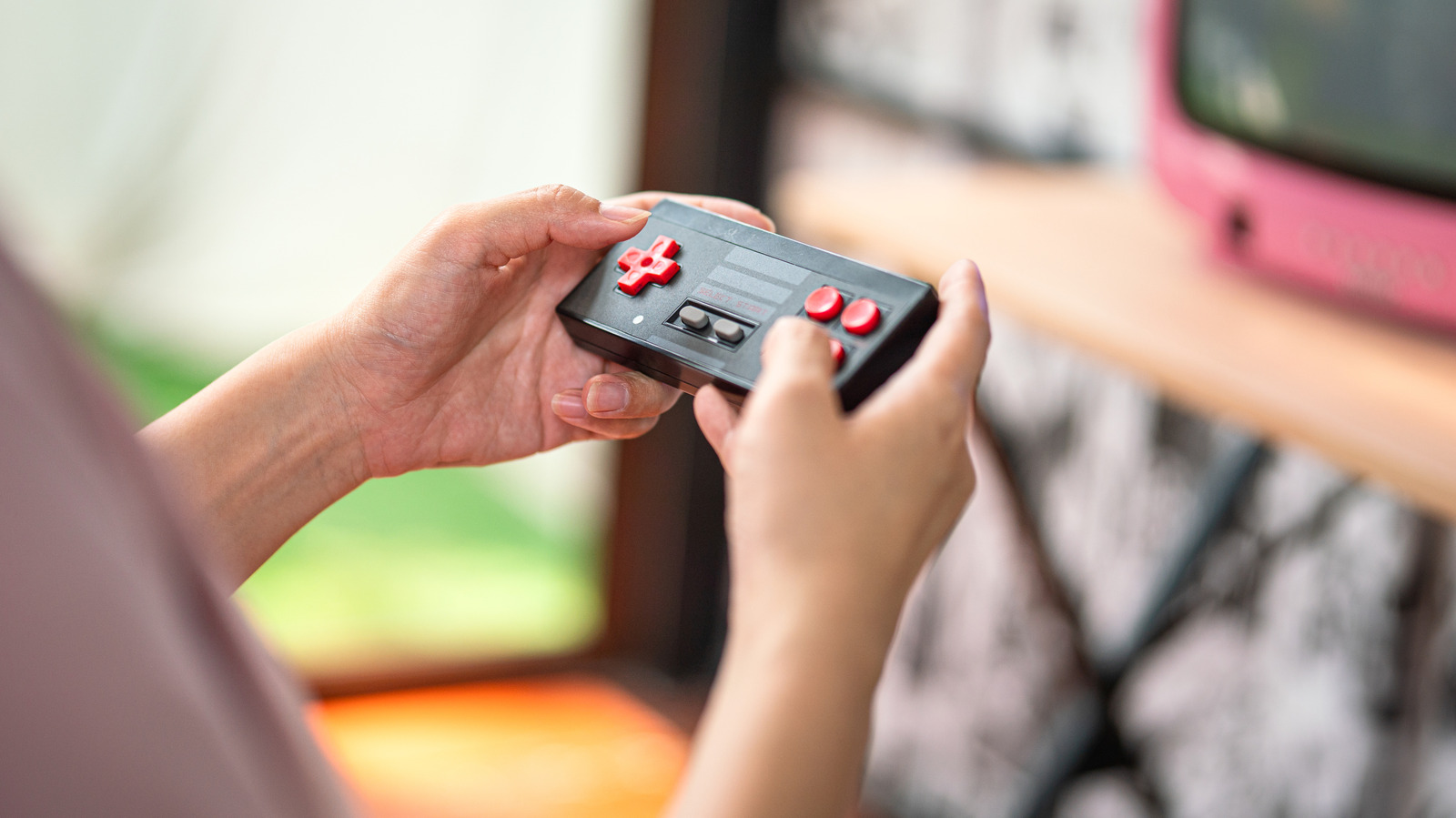
However, the technology of the early ’80s came with severe compromises. The Game Mate 2 was heavy, bulky, and mechanically inelegant, functioning essentially as a standard Atari joystick mounted atop a substantial base housing the electronics and a hungry 9-volt battery. The power drain was severe, and the weight fatigued wrists during extended gaming sessions. Recognizing its potential, Atari eventually took over distribution a year after its launch, rebranding it under the remarkably uncatchy the CX42 Remote Control Wireless Joystick. Despite its flaws, it proved that untethered gaming was physically possible.
2. The 2000s: The Nintendo GameCube WaveBird Breakthrough
While various iterative wireless pads attempted to capture market share through the 1990s—mostly plagued by lag, poor battery life, and interference—it was not until the turn of the millennium that a truly mainstream, reliable wireless controller hit the market.
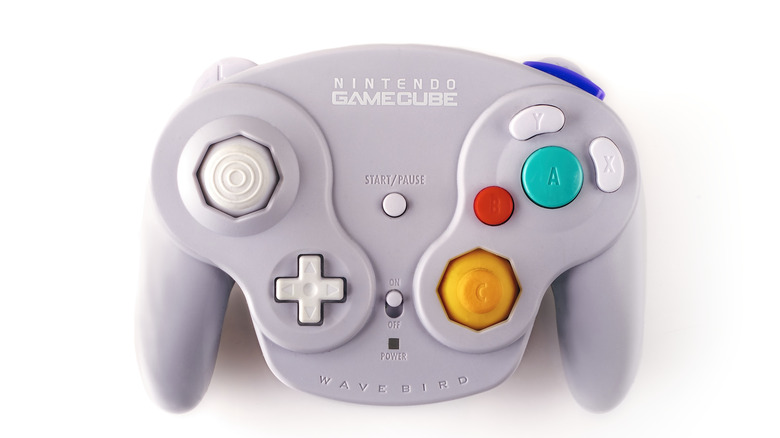
The Nintendo GameCube, best remembered by many for its quirky aesthetic and revolutionary "mini-discs," gifted the industry one of its greatest hardware treasures: the WaveBird wireless controller, released in 2002. Unlike its predecessors, the WaveBird arrived virtually free of debilitating technical compromises.
Utilizing 2.4GHz radio frequency technology for the first time in a gaming controller, the WaveBird boasted a reliable range of at least 20 feet. It required a chunky receiver plugged directly into a controller port on the GameCube, with users matching channels via manual sliders on both the receiver and the pad. To maximize battery life—allowing up to 100 hours of gameplay on just a pair of AA batteries—Nintendo made the calculated decision to omit rumble motor support.
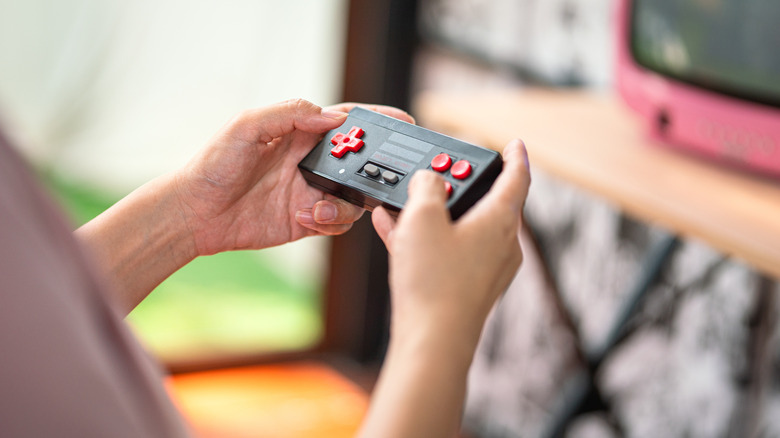
The cultural impact of the WaveBird cannot be overstated. For the first time, players were no longer forced to sit within six feet of their consoles, awkwardly managing tangled cords. Local multiplayer sessions were transformed, as friends could scatter across a room rather than crowding onto a single couch. The WaveBird laid the undeniable groundwork for the modern standard established by every major console manufacturer that followed.
3. The Mid-2000s: Sony’s PlayStation 3 and the "Sixaxis" Misstep
Given Sony’s massive market dominance with the PlayStation 1 and PlayStation 2, casual observers might assume the company pioneered standard wireless controllers out of the gate. In reality, Sony’s first native wireless gamepad did not debut until the launch of the PlayStation 3 in 2006—and it remains one of the most controversial hardware pieces in the company’s history.
The Sixaxis controller is infamous. Serving as the default launch pad for the PS3 (aside from the widely mocked, banana-shaped "Boomerang" prototype), the Sixaxis attempted to innovate by discarding the beloved rumble feature in favor of half-baked, early motion-control capabilities.
At the time, Sony leadership attempted to spin the omission of haptic feedback as a deliberate design choice rather than a cost-saving measure or legal oversight. The lack of tactile feedback, combined with inconsistent, frustrating motion controls in early titles like Lair, alienated fans. Sony quickly reversed course, reintroducing haptic feedback with the launch of the DualShock 3 in 2008, cementing the blueprint for future PlayStation controllers.
Supporting Context & Metrics
The progression of wireless controllers is fundamentally a story of overcoming physics: balancing latency, power consumption, weight, and feature sets like haptic feedback and motion sensing.
| Era / Console | Controller Name | Core Technology | Range | Notable Limitation |
|---|---|---|---|---|
| 1982 (Atari 2600) | Cynex Game Mate 2 | Radio Frequency (RF) | Up to 20 feet | Heavy base, rapid 9V battery drain |
| 1989 (NES) | Acclaim Remote Controller | Infrared (IR) | Short range | Required direct line-of-sight to sensor |
| 2002 (GameCube) | WaveBird | 2.4GHz RF | 20+ feet | No rumble support (sacrificed for battery life) |
| 2006 (PlayStation 3) | Sixaxis | Bluetooth | Standard room range | Lacked rumble feedback; primitive motion controls |
Over the past two decades, power efficiency has advanced exponentially. While early 1980s RF units drained heavy 9V blocks in hours, modern gamepads utilize advanced lithium-ion battery packs, charging via USB-C while supporting complex arrays of features: dual-actuator haptics, adaptive triggers, internal gyroscopes, built-in microphones, and touchpads—all while maintaining sub-millisecond response times.
Official Statements and Industry Perspective
The transition from wired dependency to wireless ubiquity was accompanied by significant corporate justifications and public relations maneuvers. When Sony faced severe consumer backlash over the omission of rumble in the PS3’s Sixaxis controller, high-ranking executives doubled down on defending the design.
Notably, Phil Harrison, then-President of Sony Computer Entertainment Worldwide Studios, publicly claimed that the exclusion of haptic feedback was not due to ongoing patent disputes or manufacturing shortcuts, but rather because rumble was a "last-generation feature."
Looking back with historical perspective, industry analysts view this statement as a classic example of corporate damage control. The severe public rejection of the Sixaxis—and the rapid pivot back to the DualShock 3 just two years later—proved that players considered tactile feedback an indispensable component of immersion, setting a hard boundary for what features could be sacrificed in the name of wireless innovation.
Future Outlook
As the gaming industry pushes further into high-refresh-rate displays, cloud streaming, and virtual reality, the humble wireless controller continues to evolve. The primary battlegrounds for modern peripheral engineers are no longer basic connectivity or line-of-sight limitations, but rather ultra-low latency protocols, modular customization, and sustainable power management.
Technologies like proprietary 2.4GHz dongles and advanced Bluetooth iterations have largely eliminated input lag, making wireless controllers the undisputed choice for both casual and competitive esports gaming. Meanwhile, innovations pioneered in recent years—such as adaptive resistance triggers and high-definition haptic actuators—demonstrate that future gamepads will continue to add sensory depth without sacrificing the absolute freedom of movement that hardware pioneers fought to achieve over forty years ago.
The cord is firmly a thing of the past, and the evolution of the untethered controller stands as one of engineering’s quiet triumphs in the history of interactive entertainment.