Executive Overview
Federal investigators in the United States have widened an expansive international probe into the ShinyHunters cybercrime syndicate, uncovering a deeply entrenched network of corruption that reaches deep into the cyber extortion remediation industry. According to sources close to the investigation, federal agents have identified executives at two distinct ransomware negotiation firms who maintained illicit, unusually close working relationships with the extortion group. In one instance, a U.S.-based executive is alleged to have actively helped operate a pressure-tactic extortion website on behalf of the hackers.
The investigation gained intense urgency following a brazen September cyberattack against the FBI’s recruitment portal, fbijobs.gov, which exposed sensitive personnel data, including medical records and Social Security numbers. The fallout from this breach has triggered a sweeping international crackdown. Authorities have arrested key figures across the Netherlands, Jordan, Canada, and the United States, unravelling a web of double-dealing, extortion schemes, and an alleged murder-for-hire plot.
This unfolding scandal highlights a dark reality within the multi-billion-dollar cybersecurity remediation market: severe structural conflicts of interest. As law enforcement tightens the screws on elite hackers and complicit intermediaries, the incident exposes how certain negotiation firms profit directly from inflated ransom payouts, occasionally blurring the line between defenders and the criminal syndicates they are hired to fight.
Detailed Chronology of the Crackdown
The sequence of events leading to the dismantling of key ShinyHunters infrastructure and the arrest of prominent cybersecurity executives spans several continents and years of escalating cyber depredations.
From Lapsus$ to "Rey": The Rise of a Global Syndicate
Active since 2019, ShinyHunters originally operated under French leadership before authorities systematically jailed its core members. Control of the brand eventually transitioned to a teenage hacker based in Amman, Jordan, known online as "Rey." According to FBI estimates, ShinyHunters has extorted upwards of $70 million from corporate and government victims globally throughout the year.
The Breach of the FBI and Arrests Abroad
In late September, ShinyHunters targeted the FBI recruitment portal, fbijobs.gov, taunting federal authorities by threatening to leak confidential personnel files. This high-profile provocation catalyzed an immediate, aggressive response. On October 3, Reuters reported that "Rey" had been detained by Jordanian authorities and was actively cooperating with the FBI.

Rey’s downfall was preceded by the arrest of a senior technical facilitator. On the evening of September 15, 2026, Dutch police utilized flash-bang grenades to apprehend reformed hacker and ShinyHunters suspect Pepijn van der Stap in the Netherlands. Officers seized Van der Stap while he was actively logged into his Signal instant messaging account. This tactical interception allowed investigators to review real-time communications with high-profile ransomware negotiators in North America.
Unravelling a Murder-for-Hire Plot and Corporate Arrests
According to investigators, Van der Stap’s decrypted Signal chats exposed more than just data theft; they allegedly contained evidence of a murder-for-hire plot directed abroad. While those orders were never executed, the chat logs provided the evidentiary roadmap needed to target high-level intermediaries.
On October 9, the FBI arrested Edward Dubrovsky, a 54-year-old Canadian cybersecurity executive and author of a recent book advocating for engagement with cyber extortionists. Charged with threatening to disclose hacked data and interfering with interstate commerce through extortion, Dubrovsky faces aggressive prosecution, with records remaining under seal. Van der Stap’s messages reportedly revealed that Dubrovsky had advance knowledge of the FBI data breach and maintained frequent, secret communications with the extortionists, often learning of victims before the victim organizations themselves.
Supporting Context & Metrics: Infrastructure and Conflicts
The investigation has shed light on specialized criminal infrastructure and the murky financial incentives driving modern ransom negotiations.
Project "Shinywire"
Federal investigators believe that at least one executive at a prominent U.S.-based consulting firm played an active role in operating shinywire[.]com, a now-defunct extortion portal. Active between May 3 and October 16, the site listed nearly 100 organizations breached by ShinyHunters.
The portal utilized aggressive pressure tactics:

- The Seven-Day Countdown: Victims were given a strict deadline to negotiate or face immediate public leaking of stolen intellectual property and employee records.
- Targeted Examples: High-profile firms, such as medical technology company Intuitive Surgical—breached in March via targeted phishing—were prominently featured alongside sample files.
- The Tor Shaming Blog: Organizations refusing to engage found their complete data archives dumped onto the dark web via Tor-accessible leakage blogs.
The "Ghostbyte" Connection
Archival investigations and digital forensics have further complicated the corporate landscape. Colleagues of Daniel Tobok, former CEO of the prominent cybersecurity firm Cypfer, revealed he was historically known to ransomware actors by the moniker "Ghostbyte."
In a 2018 Dharma ransomware incident, the threat actors explicitly directed a reluctant victim to contact an IT professional via the email address [email protected]. Digital intelligence firm Constella Intelligence later linked email addresses frequently used by Tobok to online accounts utilizing the "ghostbyte" username. Furthermore, cryptocurrency wallets associated with the Dharma representative processed millions in Bitcoin transactions, highlighting a long-standing overlap between corporate remediation intermediaries and early ransomware affiliates.
The Economics of Ransom Payments
The conflict of interest within the negotiation industry stems directly from fee structures. Many incident response providers charge a flat retainer, but negotiation specialists frequently take a percentage of the final ransom payout.
This creates a perverse incentive: the larger the payout, the higher the negotiator’s fee. Industry leaders have voiced concerns over this lack of transparency. Mark Camillo, CEO of cyber insurance consortium CyberAcuView, noted that no one in the ecosystem should profit purely on the volume of a ransom transaction.
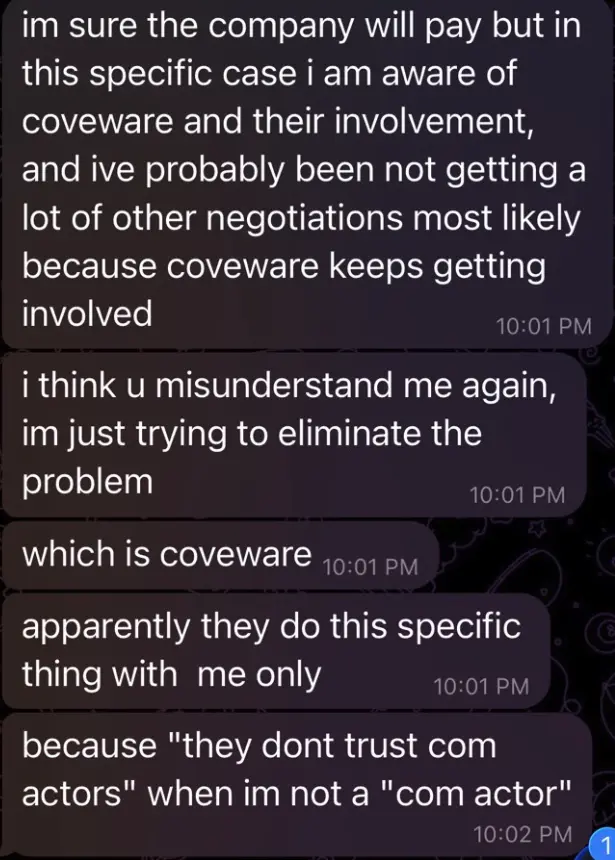
Simultaneously, top-tier forensics firms like Coveware and Unit 221B have consistently warned clients against paying ShinyHunters, pointing out that cybercriminals routinely retain and resell stolen data regardless of payment. These warnings severely disrupted ShinyHunters’ profit margins. Leaked Telegram chats from April and May 2026 reveal the syndicate’s frustration, with group leaders explicitly complaining that Coveware was "giving misinformation" and costing them millions, prompting threats by the hackers to "eliminate the problem."
Official Statements and Regulatory Crackdown
Law enforcement agencies and corporate entities have responded swiftly to the cascading arrests, emphasizing a zero-tolerance approach toward complicit intermediaries.

The Department of Justice (DOJ) has intensified its prosecution of corrupt negotiators. Beyond the charges leveled against Edward Dubrovsky, federal prosecutors arrested MonsterCloud CEO Zohar Pinhasi on wire fraud and conspiracy charges. Pinhasi allegedly billed clients $19 million for ransomware remediation while secretly paying hackers only $8 million behind his clients’ backs. Similarly, in July, negotiator Angelo Martino was sentenced to 70 months in prison for leaking client negotiation strategies to the BlackCat/ALPHV ransomware gang to maximize payouts.
Meanwhile, Cypfer issued formal statements distancing itself from the ongoing legal battles surrounding its former executives:
"We had no prior knowledge of Mr. Dubrovsky’s arrest," a Cypfer spokesperson stated. "CYPFER has not received any outreach from law enforcement and, to our knowledge, is not the target of any law enforcement investigation."
The firm noted it operates entirely independently of CyberSteward and was recently acquired by the Apros Group, a holding company led by former FBI special agent Jason Hogg.
The FBI maintains its strict advisory position, officially instructing organizations via Internet Crime Complaint Center (IC3) advisories not to capitulate to ShinyHunters’ demands. The bureau emphasizes that paying ransoms to non-sanctioned groups still fails to guarantee data deletion and fuels an ecosystem of corporate double-dealing.
Future Outlook
The indictment of prominent negotiation executives and the dismantling of ShinyHunters’ operational infrastructure mark a watershed moment in the fight against cyber extortion. The investigation exposes a systemic vulnerability: the corporate remediation supply chain has, in isolated instances, been co-opted from within.

Moving forward, the cybersecurity industry faces a rigorous reckoning. Key areas of reform and transformation will likely include:
- Regulatory Scrutiny of Fee Structures: Insurance carriers and government regulators are expected to push for strict transparency mandates, potentially banning percentage-based ransom commissions to eliminate misaligned financial incentives.
- Vetted Incident Response: Enterprises will demand deeper background checks and cryptographic accountability from third-party negotiators to ensure zero back-channel communications with threat actors.
- Heightened Federal Prosecution: The DOJ’s willingness to target executives at cyber defense firms signals that facilitators of extortion will face the same legal gravity as the hackers themselves.
As federal prosecutors prepare for trials and sift through terabytes of decrypted Signal messages, the myth of the neutral cyber negotiator is officially dead. The boundary between corporate defender and cyber extortionist has been drawn in sharp relief, and the fallout will permanently reshape how organizations handle ransomware threats in the digital age.