Executive Overview
In the contemporary urban and suburban landscape, the boundaries of personal privacy are continually redrawn by the silent, unblinking lenses of modern surveillance technology. For years, the normalization of security devices—from the ubiquitous video doorbells mounted on suburban porches to the high-powered pocket computers carried by billions—has fostered a quiet resignation. To many, the cultural and political debate over privacy is a settled matter, with the omnipresent surveillance state emerging as the undisputed victor.
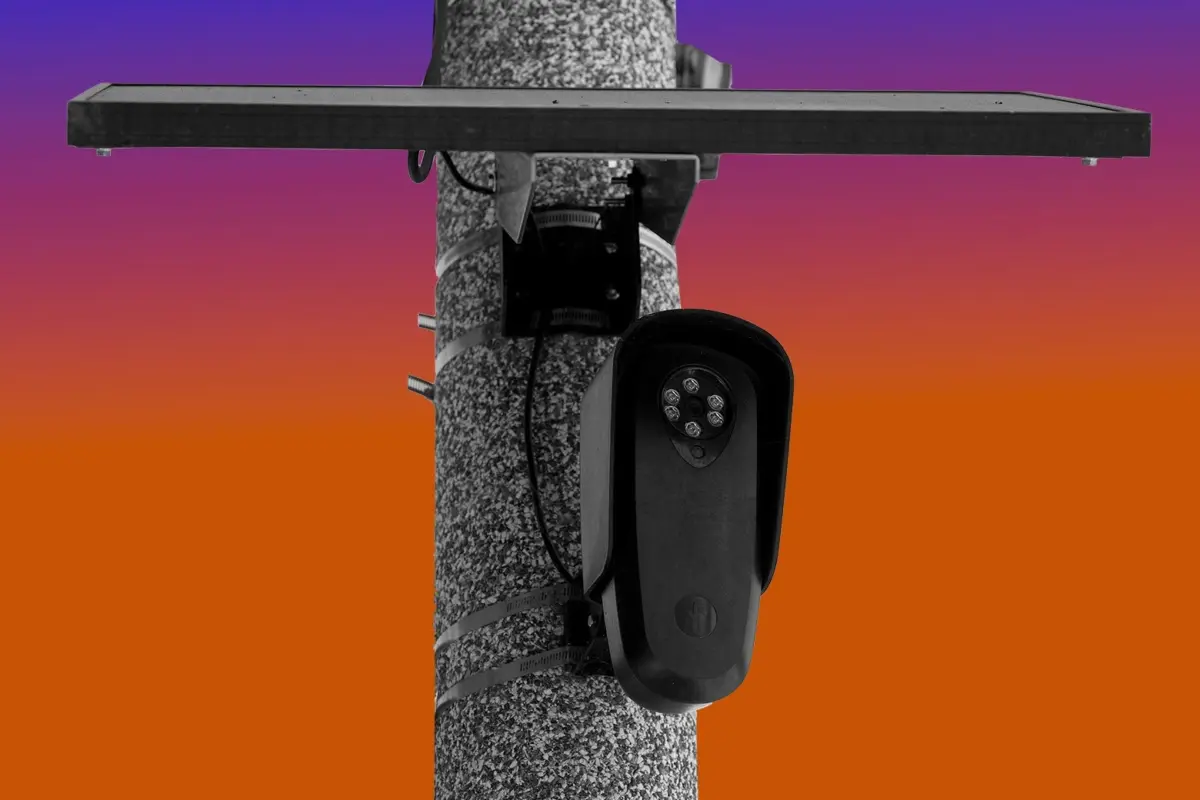
However, a sudden and ferocious counter-current is disrupting this narrative. Across the United States, communities are waking up to a different kind of digital footprint: automated license plate reader (ALPR) cameras manufactured by companies like Flock Safety. Marketed to municipalities, homeowners’ associations, and law enforcement agencies as benevolent guardians of public safety—tools designed to locate missing children, recover stolen vehicles, and deter crime—these systems have quietly woven an expansive, interconnected web of surveillance.
Beneath the sleek marketing promises of safety and community protection lies a deeper, more unsettling reality. What else are these omnipresent cameras capturing? Who has access to the petabytes of locational data streaming from these devices? And what happens when a public, growing increasingly weary of constant monitoring, decides to push back?
This report examines the explosive backlash against automated surveillance networks, exploring how Flock cameras have transformed from obscure municipal infrastructure into lightning rods for civic fury. Featuring insights from investigative reports by 404 Media journalist Joseph Cox and produced through the lens of modern tech critique, we delve into the mechanics of this surveillance apparatus, the grassroots rebellions erupting at local town halls, and the broader implications for civil liberties in an increasingly monitored world.
Detailed Chronology: From Quiet Rollout to Street-Level Rebellion
To understand how automated license plate readers became the focal point of a modern civil uprising, one must trace the rapid, often clandestine integration of these technologies into everyday American life.
Phase One: The Quiet Infiltration
The ascent of companies like Flock Safety did not occur overnight, but rather through a strategic, decentralized rollout. Unlike massive federal surveillance programs that immediately trigger congressional hearings and civil liberties lawsuits, ALPR systems entered communities through the back door.
Initially, private subdivisions and homeowners associations (HOAs) installed cameras at neighborhood entry and exit points to deter property crime. The pitch was simple, pragmatic, and deeply appealing to homeowners: a small subscription fee buys peace of mind. Cameras capture the license plates of every vehicle entering the neighborhood, cross-referencing them against databases of known criminals, stolen vehicles, or amber alerts.
Encouraged by early successes and aggressively marketed by private vendors, local police departments soon adopted the technology. Municipalities entered into public-private partnerships or directly purchased systems, weaving private neighborhood feeds into broader law enforcement databases. Before most residents realized the scope of the deployment, millions of daily vehicle movements—capturing commutes, medical appointments, political protests, and mundane daily errands—were being quietly logged, archived, and shared across state lines.
Phase Two: The Cracks in the Facade
As the camera networks expanded, investigative journalists and privacy advocates began pulling back the curtain on how the data was actually being utilized. Reports revealed that these cameras were not merely scanning for stolen vehicles; they were vacuuming up vast amounts of metadata. Every car passing a Flock camera was photographed—often capturing vehicle makes, models, bumper stickers, roof racks, and even the occupants within.
Furthermore, the data collected by these private-public networks was increasingly accessible to a wide array of law enforcement agencies, sometimes without a warrant or judicial oversight. Interstate data-sharing agreements meant that a local police department in a small town could share its logs with federal agencies or out-of-state jurisdictions. The realization that a localized security measure had quietly plugged citizens into a national, warrantless tracking grid catalyzed early skepticism.
Phase Three: Town Hall Uprisings and Direct Action
By the mid-2020s, the simmering discontent erupted into the open. Local town halls, once quiet forums for zoning disputes and budget approvals, transformed into battlegrounds. Citizens armed with research, civil rights arguments, and raw frustration began confronting local officials who had approved the contracts without robust public debate.
The pushback, however, did not remain confined to polite discourse in municipal chambers. In a striking escalation of civil disobedience, Flock cameras began experiencing physical sabotage. In various locations, cameras were denounced passionately at podiums, spray-painted, torn down, or physically smashed on the street. These acts of direct action signaled a profound psychological shift: the surveillance state was no longer viewed as an untouchable, inevitable reality, but as a physical presence vulnerable to community rage.
Supporting Context & Metrics: The Anatomy of Modern Mass Surveillance
To grasp the magnitude of the backlash, one must examine the technological infrastructure underpinning the controversy. The modern surveillance state relies heavily on scale, automation, and data aggregation.
The Technology: How Flock Systems Operate
Flock Safety and similar firms deploy fixed, solar- or battery-powered cameras equipped with machine vision algorithms. Unlike traditional security cameras that record continuous video feeds—which require significant storage and human monitoring—ALPR cameras capture high-resolution still images triggered by motion or vehicle detection.
- Capture: The camera snaps a photo of a passing vehicle, isolating the license plate, make, model, color, and unique features (such as dents or decals).
- Analysis: Optical Character Recognition (OCR) software instantly translates the image of the license plate into alphanumeric text.
- Query: The text is checked against "hotlists" in milliseconds. If a match is found (e.g., a stolen car or a warrant tied to the plate), an alert is dispatched to law enforcement.
- Storage: Regardless of whether a vehicle is flagged, the metadata—timestamp, GPS coordinates, and vehicle description—is uploaded to a cloud-based database, where it is typically retained for 30 days or longer, depending on local policy.
The Scale of Data Collection
The collective output of these cameras is staggering. A single suburban intersection equipped with multiple angles can log tens of thousands of vehicles daily. Multiply that by thousands of communities across the United States, and the result is a near-continuous historical record of population movement.
Security experts and privacy advocates point out several systemic risks inherent in this architecture:
- Creeping Scope: Systems installed ostensibly for crime deterrence are frequently utilized for routine traffic enforcement, tracking toll violations, or monitoring civil disobedience and peaceful protests.
- Security Vulnerabilities: Centralized cloud databases containing billions of historical location logs represent lucrative targets for malicious actors, foreign adversaries, or unauthorized internal snooping by rogue law enforcement personnel.
- The Chilling Effect: When citizens know their movements are constantly logged and searchable, behaviors change. Political gatherings, visits to sensitive healthcare providers, and routine associations are second-guessed, eroding the unwritten freedoms of an open society.
Official Statements and Stakeholder Perspectives
The debate over automated surveillance highlights a stark ideological divide between public safety advocates, municipal leaders, and civil liberties watchdogs.
The Vendor and Law Enforcement Perspective
Proponents of ALPR technology argue that the criticism overlooks the primary function of the tools: solving and preventing violent crime.
Representatives for Flock Safety have consistently emphasized that their technology is designed to eliminate crime, not civil liberties. Company messaging and public statements from client police departments highlight numerous case studies where ALPR data swiftly located abducted children, recovered stolen firearms, and apprehended violent fugitives within hours of an incident.
In municipal defense of these contracts, police chiefs often stress that the cameras do not engage in facial recognition and that data access is strictly audited. From this perspective, opposing ALPR installation is viewed as an ideological luxury that compromises community safety in the name of an abstract, outdated definition of privacy.
The Civil Liberties and Grassroots Perspective
Conversely, critics, privacy advocates, and investigative journalists offer a fundamentally different diagnosis of the problem. Speaking on podcast platforms and in investigative reports, journalists like Joseph Cox of 404 Media have underscored that the normalization of private-public surveillance creates an unaccountable infrastructure.
Civil rights attorneys argue that continuous location tracking violates the spirit—if not always the current letter—of constitutional protections against unreasonable searches and seizures. By outsourcing surveillance to private corporations bound by corporate secrecy rather than public transparency laws, local governments effectively bypass democratic safeguards.
The grassroots anger witnessed at town halls and on the streets is interpreted by sociologists not as random lawlessness, but as a rational response to democratic disenfranchisement. When residents feel that their local representatives have signed away their right to anonymity without informed consent, public forums and physical resistance become the only remaining tools of reclamation.
Future Outlook: Navigating the Crossroads of Security and Privacy
As communities grapple with the realities of the digital panopticon, the conflict over automated surveillance is entering a critical juncture. The trajectory of this technology—and the societal pushback against it—will likely be shaped by several key developments in the coming years.
1. Legislative and Regulatory Battles
The future of ALPR deployment will increasingly be fought in state legislatures and city councils. Already, several states are considering or enacting stringent regulations regarding data retention limits, mandatory public transparency reports, and outright bans on warrantless mass tracking. Conversely, other jurisdictions are moving to codify and expand police access to private camera networks. The resulting legal patchwork will likely necessitate eventual federal judicial intervention or congressional oversight.
2. The Evolution of Corporate Accountability and Transparency
In response to mounting public relations pressures and vandalism, surveillance vendors will be forced to adapt. Future iterations of these technologies may feature enhanced cryptographic privacy protections, such as zero-knowledge architectures that prevent even the database operators from tracking individual movements unless a specific judicial trigger is met. However, rebuilding public trust will require far greater transparency regarding data-sharing agreements and third-party access.
3. The Psychological and Cultural Shift
Perhaps the most enduring legacy of the current backlash is the fundamental change in public consciousness. The era of passive acceptance—the belief that the surveillance state has already won and that resistance is futile—is being actively challenged. Whether expressed through sharp questioning at municipal budget hearings or the physical destruction of street-level hardware, citizens are demonstrating that the physical and digital space they inhabit still belongs to the public, not the algorithm.
As the tug-of-war between safety and privacy intensifies, society faces a defining question: What kind of community do we wish to build? One where every movement is watched, recorded, and cataloged in the name of security, or one that preserves the fragile, essential dignity of anonymity? The answer is being written today—on our streets, in our town halls, and in the code of the cameras overhead.