Executive Overview
The video game industry has weathered yet another seismic shock with Electronic Arts’ (EA) decision to officially shut down BioWare, the legendary studio behind some of the most celebrated and culturally influential role-playing games (RPGs) in history. Alongside this corporate closure, EA has officially cancelled Mass Effect 5, terminating a project that had been quietly gestating for years. This twin blow marks the definitive end of an era for a developer that once defined the gold standard for narrative-driven sci-fi and fantasy gaming.
While BioWare’s final years were marred by shifting industry trends, turbulent corporate management, and a polarizing critical reception to titles like Dragon Age: The Veilguard, the studio’s closure represents a devastating loss of institutional knowledge and creative pedigree. Adding a tragic footnote to the cancellation, award-winning science fiction author Derek Künsken recently revealed that he spent five years contributing to the narrative architecture of the next Mass Effect as both a contract and senior staff writer.
Künsken’s revelation—and the broader context of BioWare’s final years under EA’s corporate umbrella—sheds light on the systemic challenges facing AAA narrative design. This report provides an exhaustive examination of BioWare’s closure, the termination of Mass Effect 5, the hidden creative forces that were shaping the franchise’s future, and what this catastrophic loss means for the broader landscape of interactive storytelling.
Detailed Chronology: From Golden Age to Corporate Sunset
To understand the weight of BioWare’s closure, one must trace the studio’s trajectory from an independent powerhouse to an integrated, and ultimately disposable, corporate asset under EA.
- 1995–2007: The Golden Era of Independent Innovation
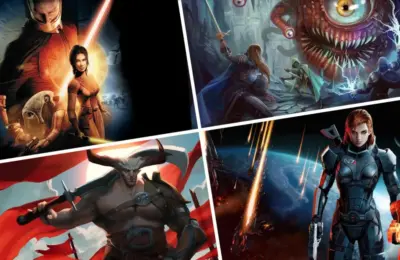
Founded in 1995 by medical doctors Ray Muzyka and Greg Zeschuk, BioWare quickly established itself as a titan of computer role-playing games. Titles like Baldur’s Gate (1998), Neverwinter Nights (2002), and Star Wars: Knights of the Old Republic (2003) revolutionized player choice, moral alignment systems, and deep character writing. This momentum culminated in the creation of two legendary original intellectual properties: Mass Effect (2007) and Dragon Age: Origins (2009). - 2007–2012: The EA Acquisition and Peak Prestige
In 2007, Electronic Arts acquired BioWare’s parent company, Pandemic Studios/Elevation Partners, for $650 million. While the acquisition provided massive financial backing and global reach—allowing for the critical and commercial triumphs of Mass Effect 2 (2010) and Mass Effect 3 (2012)—it also planted the seeds of cultural friction between the studio’s creative ambitions and EA’s corporate mandates. - 2013–2019: The Pivot Toward Live Service and Development Turmoil
The mid-2010s marked a painful transition period for BioWare. The development of Mass Effect: Andromeda (2017) and Anthem (2019) suffered from notoriously fractured pipelines, "crunch" culture, and shifting technological frameworks (such as forcing internal studios onto DICE’s Frostbite engine). Anthem’s commercial failure and Andromeda’s lukewarm reception forced EA to re-evaluate BioWare’s place in its portfolio, shifting focus back to core single-player experiences with Dragon Age: The Veilguard. - 2024–2025: The Veilguard Release and the Final Curtain
Dragon Age: The Veilguard launched to a polarized critical and player reception. While praised for its action-combat mechanics and progressive inclusivity, it faced heavy criticism for clunky scripting, tonal dissonance with past games, and a departure from classic dark fantasy roots. Shortly after, as EA restructured its long-term strategy to focus heavily on established sports and shooter franchises alongside efficiency measures, the axe fell on BioWare entirely, canceling Mass Effect 5 in the process.
Supporting Context & Metrics: The Anatomy of a Modern AAA Failure
The closure of BioWare cannot be viewed in a vacuum; it is part of a broader industry-wide contraction affecting AAA single-player development. Under EA’s recent strategic realignments, projects are subjected to microscopic financial scrutiny. With development budgets for marquee RPGs routinely surpassing $200 million and development cycles stretching past five to seven years, the margin for error has evaporated.
The Human Cost of Corporate Restructuring
The closure results in the displacement of hundreds of developers, engineers, and artists. Industry observers have long noted the high turnover rate at BioWare during its final decade. Key creative veterans—including former lead writer David Gaider and numerous senior directors—had departed years prior, citing a growing disconnect between the studio’s narrative-first heritage and EA’s corporate metrics.
Gaider himself previously noted a quiet resentment within corporate structures toward traditional writers, who were often viewed as bottlenecks in agile, service-oriented development pipelines. When a studio’s institutional memory is systematically eroded over a decade, the resulting creative output inevitably suffers from tonal shifts, alienating longtime fans while failing to capture new audiences reliably.

Official Statements and Insider Revelations
The most poignant commentary on what could have been came to light via social media following the studio’s shuttering. Derek Künsken, a celebrated science fiction author renowned for works like The Way of the Needle (which won the Asimov Reader’s Award in 2012) and Tool Use by the Humans of Danzhai County (which won the Aurora Award in 2021), broke his silence on X (formerly Twitter) regarding his secretive tenure at the studio.
"I have a weird announcement. On and off for the last five years, as a contract writer, and as a senior writer on staff, I have been hoping to be allowed to say where I worked. Today I finally got the green light: I’ve been working on the next Mass Effect," Künsken wrote.
"Unfortunately, the light turned green because BioWare is being shuttered. Over the coming weeks, I’ll get more clarity on what I can say about what I did and saw and learned. I hope it’s more than nothing—what we were cooking was really cool. I can say that everyone I met at BioWare was a decent human being, an expert in their field, and was ambitiously imaginative about what a future experience of Bioware could be. Working closely with Parrish Ley and Mary DeMarle will be highlights of my writing career."
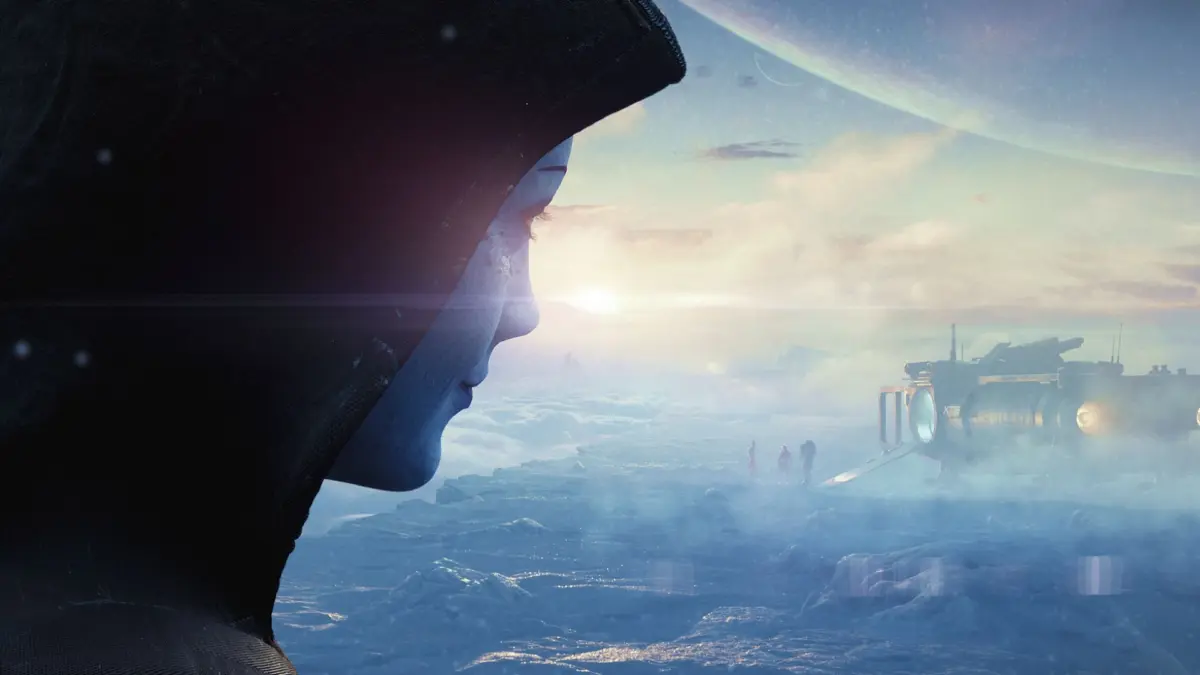
Künsken’s involvement underscores a strategic push by BioWare to inject hard sci-fi literary pedigree back into the Mass Effect universe. Collaborating with industry heavyweights like Mary DeMarle (known for her narrative work on Deus Ex: Human Revolution and Marvel’s Guardians of the Galaxy) and veteran director Parrish Ley indicated that the creative leadership of Mass Effect 5 was genuinely attempting to course-correct and recapture the cerebral, atmospheric depth of the original trilogy.
Future Outlook: What Does EA’s Next Chapter Mean for RPGs?
With BioWare officially dismantled, EA’s roadmap moving forward has crystallized around safe, highly profitable bets—primarily dominant sports franchises like EA Sports FC and established shooter properties like Battlefield. The appetite for high-risk, multi-year narrative RPGs within EA has effectively vanished.
For the gaming industry at large, the death of BioWare serves as a cautionary tale about the perils of corporate acquisition and the fragility of creative ecosystems. Legendary studios are not defined by trademarks or corporate logos, but by the accumulated talent, trust, and collaborative synergy of their teams. When those teams are dispersed and corporate parents prioritize immediate shareholder returns over long-term artistic cultivation, entire genres are starved of innovation.
Ultimately, players will never know if Mass Effect 5 could have successfully redeemed the franchise’s narrative trajectory or if Derek Künsken’s hard sci-fi sensibilities would have restored the series to its former glory. What remains is a profound sense of loss—not just for a beloved galaxy of blue aliens, synthetic lifeforms, and interstellar politics, but for the very art of large-scale interactive storytelling that BioWare once pioneered.