Executive Overview
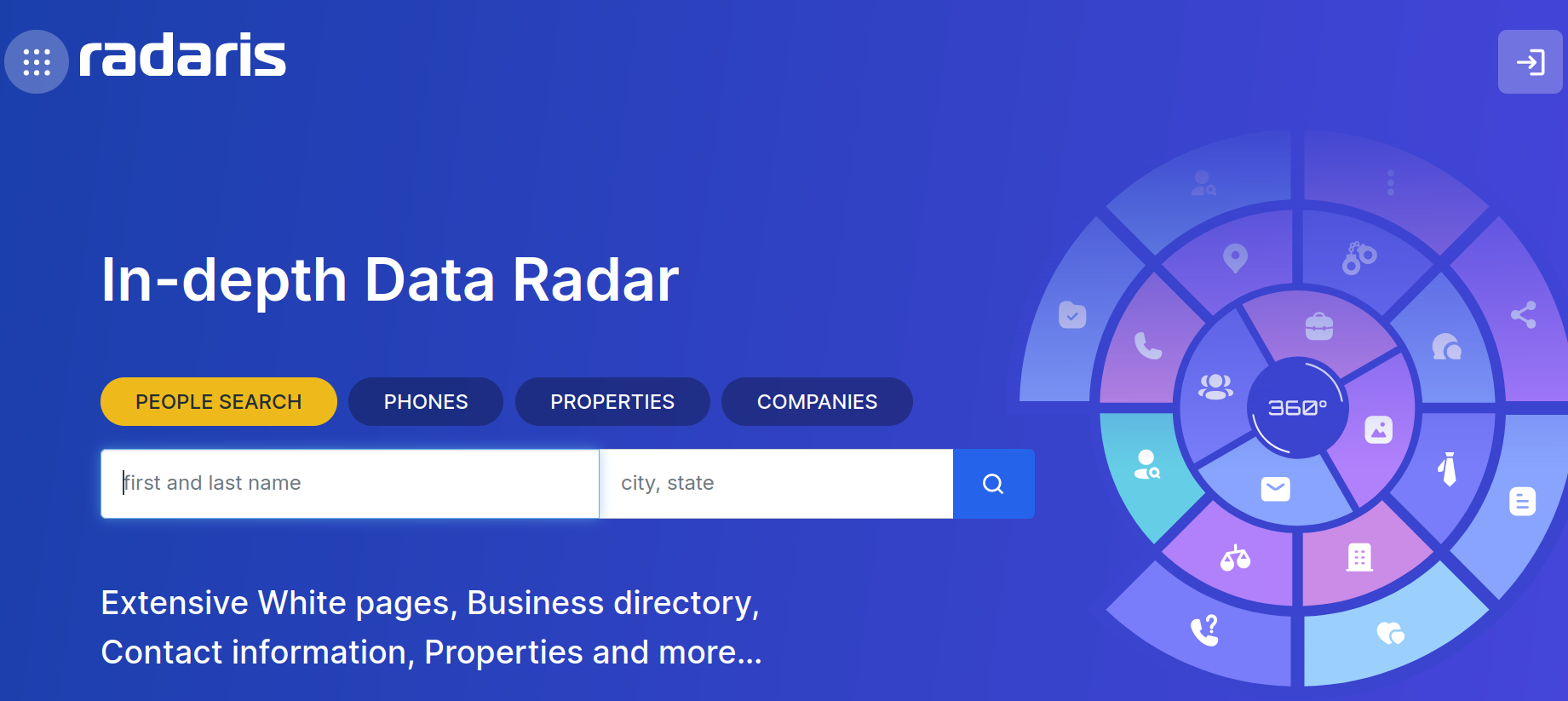
For over a decade, consumer data broker Radaris.com operated as an unyielding digital fortress. Facing thousands of removal requests from everyday citizens, law enforcement personnel, and government officials, the people-search giant chose stonewalling, legal attrition, and an elaborate shell game of offshore corporate entities. That playbook finally collapsed in a New Jersey courtroom.
In a historic default judgment, a federal judge ordered the transfer of radaris.com—alongside more than a dozen associated people-search domains—directly to the plaintiffs. Rather than functioning as a repository of personal dossiers, the once-lucrative homepage now redirects to a public notice issued by Atlas Data Privacy Corp, signaling a tectonic shift in the accountability of the data brokerage industry.
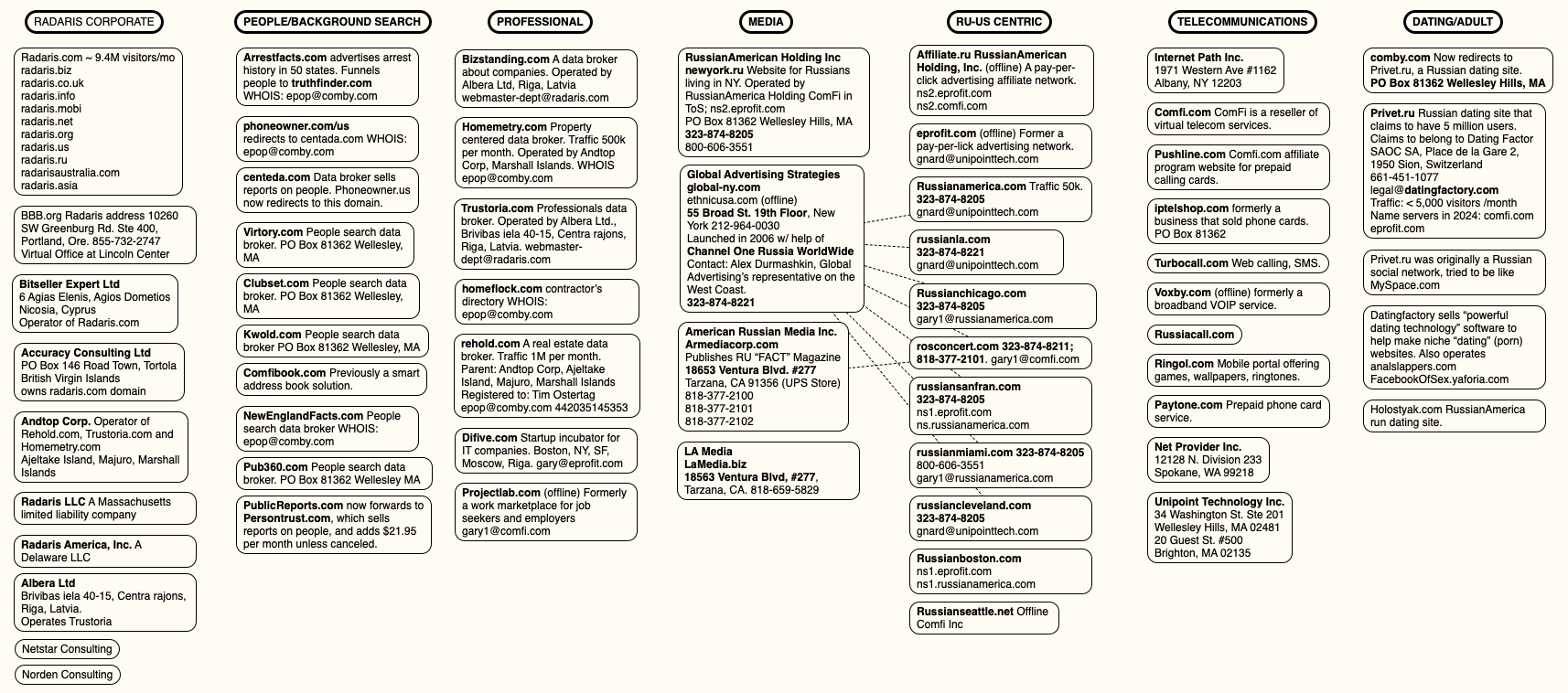
Rooted in aggressive enforcement of New Jersey’s strict "Daniel’s Law," this legal reckoning exposes the inner workings of a shadow empire. Court-extracted documents, internal emails, and meticulous investigative journalism have pulled back the curtain on a Massachusetts-based operation run by Russian-born brothers, revealing a sprawling network of dozens of interconnected people-search sites, fake corporate executives, and multi-million-dollar monetization schemes.
Yet, even as the Radaris domains change hands, the broader war over data privacy intensifies. While state-level statutes offer a glimpse of hope for harassed public officials, the data broker industry is striking back with high-stakes First Amendment constitutional challenges, setting the stage for what may ultimately become a definitive showdown at the U.S. Supreme Court.
Detailed Chronology: From Legal Ambush to Domain Seizure
The Catalyst: Daniel’s Law and Atlas Data Privacy Corp
The legal offensive against Radaris began in February 2024, when Atlas Data Privacy Corp filed a lawsuit in New Jersey. Atlas targeted the broker for violating Daniel’s Law—a landmark state statute conceived after the tragic murder of the son of a federal judge.
The statute grants absolute protection to state law enforcement officials, judicial personnel, and government workers, empowering them to mandate the complete removal of their personal information from commercial data brokers. Crucially, it arms plaintiffs with teeth: mandatory fines of $1,000 per violation for companies that ignore compliance and removal requests.
Faced with mounting liability, Radaris deployed its standard defensive mechanism: obfuscation. The company’s legal representatives dragged their feet, contested service of process, and argued that Atlas had failed to serve the actual owners of the domain names.
Recognizing the evolving shell game, Atlas re-filed its complaint in June 2025, drastically expanding its scope to encompass a massive family of sister websites allegedly tied to the Radaris network.
The Island-Hopping Phase and Corporate Shell Games
According to Matt Adkisson, CEO of Atlas, Radaris mastered the art of corporate camouflage. As legal pressure mounted, the network engaged in what insiders dubbed its "island-hopping phase."
"Privacy policies changed constantly, and new entities kept appearing from places like the Marshall Islands, the British Virgin Islands, and Seychelles," Adkisson noted during the investigation. "Behind the scenes, it felt like a shell game. Defense lawyers told the court that certain entities merely operated the domains… but by the time a judgment neared, those entities would be discarded and new entities would appear."
In one instance, when Radaris updated its terms of service to claim management by a newly minted Marshall Islands entity, Atlas hired local investigators, only to discover that the shell company did not even legally exist yet.
This strategy of strategic attrition had served Radaris well for nearly a decade. Plaintiffs’ attorneys, exhausted by procedural hurdles and foreign jurisdictional hurdles, traditionally folded. However, the New Jersey legal team committed the necessary resources to pierce the corporate veil. On August 26, citing persistent failures by the defendants to mount a credible defense despite multiple extensions, the presiding judge ruled in favor of the plaintiffs, culminating in the unprecedented transfer of fourteen domain names to Atlas.
Supporting Context & Metrics: Unmasking the Radaris Network
The scope of the Radaris enterprise only became fully apparent when Atlas secured access to more than 10,000 internal emails, financial records, and operational documents during discovery. These records independently verified earlier investigative reporting by KrebsOnSecurity, exposing the true architects behind the empire: Igor and Dmitry (also known as "Dan") Lubarsky, Russian-born brothers operating out of Massachusetts.
The Anatomy of a Monolith
The internal cache proved that a dizzying array of seemingly independent legal entities—including Radaris America, Inc., Bitseller Expert Limited, Digital Orbit Corp, Core Solutions Group Inc, Lucky Solutions Inc, Virtura Corp, Veripages Inc., Nuform Solutions Inc., Growth Data Advisors Inc., and Property Experts, Inc—were merely paper fronts.
All of these entities were administered by a core team of three to four individuals utilizing shared banking channels, identical payment card processors, and a centralized virtual office. Operationally, their administrative, technical, and financial infrastructure funneled through a primary mail domain (difive.com) and its corporate successors.
Financial Footprint and Interlocking Ecosystems
The documents revealed staggering revenue streams generated by selling public records back to the public:

- Radaris.com pulled in approximately $42,000 per month.
- Veripages.com generated roughly $45,000 monthly, significantly bolstered by lucrative data-sharing partnerships with major marketing conglomerates like the Lifetime Value Company (operator of brands such as PeopleLooker, PeopleSmart, NumberGuru, and Bumper).
- The Radaris network extracted an additional $25,000 monthly through partnerships with Onerep, a privacy-washing service that promised to remove consumer data from the very same people-search engines its operators covertly fed or maintained.
Official Statements and Legal Maneuvers
As the dust settles on the court-ordered domain transfers, the legal battlefield remains fiercely contested.
Val Gurvits, an attorney with the Boston Law Group who previously represented Radaris and admitted in court filings that his clients invented a fictitious CEO named "Gary Norden" to court investors, stepped back from the front lines. The case was subsequently handed over to attorney Victor Worms.
Mr. Worms has vehemently contested the validity of the judgment, arguing that the New Jersey court erred fundamentally in its execution.
"We have made a motion to vacate that default judgment on the grounds that it is void since a non-entity has no legal capacity to sue or be sued," Worms stated, referring to the initial targeting of
radaris.comas a standalone entity. "We also intend to pursue all appropriate appeals because we believe the transfer of Radaris.com amounts to a forfeiture in violation of various constitutional principles."
Conversely, plaintiffs’ counsel remains unfazed. Raj Parikh, a partner at PEM Law in New Jersey who spearheads the Daniel’s Law litigation for Atlas, emphasized the broader societal stakes involved.
"In the past, they won by attrition," Parikh remarked. "Plaintiffs’ attorneys tired of the procedural games and just gave up. That strategy worked for a decade… But we were acutely aware of the threat this website posed to law enforcement officers and other public officials in New Jersey, and decided early on to commit whatever time and resources were necessary to remove that threat."
Future Outlook: Daniel’s Law at a Crossroads
While the fall of radaris.com represents a watershed victory for privacy advocates, the broader war over data broker regulation is approaching a constitutional precipice.
The Constitutional Front
Daniel’s Law is currently facing a coordinated existential threat. Roughly 150 consumer data broker firms have banded together to challenge the New Jersey statute, successfully moving at least 70 of Atlas’s pending lawsuits into federal courts. The core argument from the industry is that the law is overly broad and infringes upon First Amendment protections regarding the distribution of public records.
While the U.S. Court of Appeals for the Third Circuit has yet to deliver its verdict on the New Jersey statute, federal courts are fractured. Notably, in August 2025, a federal district court ruled West Virginia’s iteration of Daniel’s Law facially unconstitutional under the First Amendment. Legal scholars widely anticipate that these cases will ultimately wind their way to the U.S. Supreme Court.
The Legislative Blind Spot
Privacy experts warn that state-level fixes, while impactful, are merely stopgap measures against a systemic national crisis. Justin Sherman, a privacy researcher and author of The Middlemen, points out that federal lawmakers face immense, well-funded lobbying pressures from big tech, social media giants, cryptocurrency platforms, and emerging AI proponents.
"These days at the federal level, add in the intense amount of lobbying against these laws… and now AI proponents in the mix who claim that limiting their data scraping is somehow going to collapse the whole U.S. economy under Chinese rule," Sherman explained.
Sherman stresses that people-search engines will continue to proliferate unless Congress enacts comprehensive 21st-century privacy legislation. Currently, almost all state privacy laws explicitly carve out exemptions for records deemed "public" or "government" documents—including voting registries, property deeds, marriage licenses, motor vehicle filings, criminal records, and professional licensures.
Without federal baseline protections restricting how corporations harvest, aggregate, and monetize these foundational records, data brokers will simply adapt their business models.
Reflecting on the endless cycle of corporate data breaches—such as the massive IDScan.net exposure that dumped 153 million American driver’s licenses onto the dark web—Sherman offered a sobering final assessment:
"The average person can look at Daniel’s Law and have a perfectly normal reaction, which is that everyone should be covered, not just police and judges. But we don’t need more wake-up calls. We’ve had eight million wake-up calls already… The lack of comprehensive federal privacy law is not for a lack of knowledge, and anyone claiming otherwise is either not reading the news or kidding themselves."