Date: October 22, 2026
Author: Global Infrastructure & AI Desk
Estimated Reading Time: 6 minutes
Executive Overview
The global artificial intelligence revolution is colliding with a hard, physical reality: the modern power grid. As tech giants and specialized infrastructure providers race to build the colossal data centers required to train next-generation large language models (LLMs), they are increasingly running up against an unexpected bottleneck—electricity.
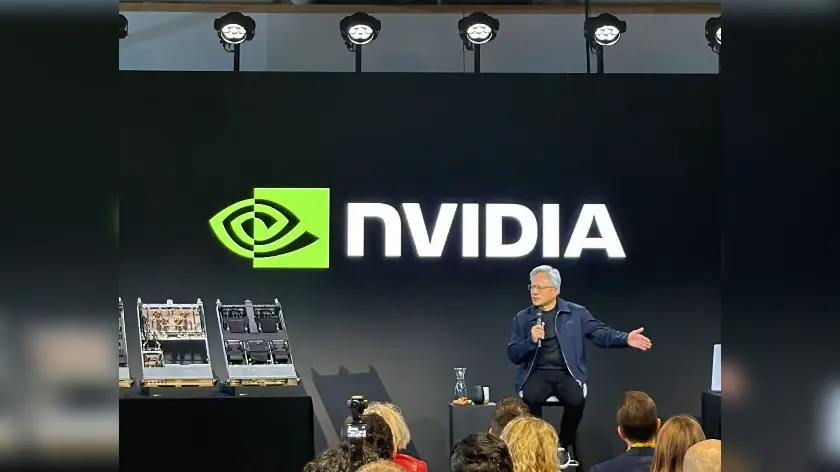
Speaking at the GTC conference in Berlin, Nvidia CEO Jensen Huang forcefully addressed mounting anxieties over the financial health of "neocloud" providers—independent, hyper-specialized cloud companies that offer agile GPU-based infrastructure. Dismissing fears of structural weaknesses within the neocloud business model, Huang argued that the acute capital pressures faced by these operators are symptoms of overwhelming, insatiable demand rather than systemic failure.
However, Huang’s vote of confidence comes at a turbulent time for the sector. Just days prior to his remarks, Microsoft abruptly walked away from its role as the anchor tenant for Nscale’s flagship 50MW data center project in Loughton, Essex. The withdrawal was triggered by a stark revelation from local power authorities: due to severe capacity constraints within the UK power grid, grid connections for the site may not materialize until the early-to-mid 2030s.
This high-profile split exposes a widening chasm between the hyper-compressed timelines of the AI industry—where customers now expect massive compute clusters to be operational within six months—and the glacial pace of public utility upgrades. For neoclouds, which operate on high capital expenditures, concentrated customer bases, and rigid facility timelines, a delayed grid connection is not merely a logistical inconvenience; it can be an existential threat.
Detailed Chronology: The Anatomy of a UK Grid Crisis
The unraveling of the Loughton project underscores the vulnerability of ambitious national AI strategies to local infrastructure constraints.
- January 2025: Nscale proudly announces a landmark £2 billion investment into UK digital infrastructure, centered around a state-of-the-art 50MW data center campus in Loughton, Essex. Scheduled to go live in the fourth quarter of 2026, the facility is billed as a crown jewel in Britain’s domestic AI expansion, designed to house cutting-edge Nvidia hardware.
- April 2025: Cracks in the UK’s AI infrastructure pipeline begin to show when OpenAI temporarily pauses its proposed UK "Stargate" project—a joint initiative involving Nvidia and Nscale—citing prohibitive energy costs and grid uncertainty across the country.
- October 2026: Weeks before Nscale’s anticipated initial public offering (IPO) in the United States, utility assessments reveal a catastrophic delay. National grid updates indicate that stable power delivery to the Loughton site cannot be guaranteed until the early-to-mid 2030s.
- Mid-October 2026: Facing a near-decade-long wait for electricity, tech giant Microsoft officially pulls out of its agreement to anchor the Loughton development, leaving Nscale scrambling to secure alternative power solutions and maintain investor confidence ahead of its market debut.
- October 22, 2026: At GTC Berlin, Nvidia CEO Jensen Huang steps up to steady market nerves, asserting that the intense capital burn of neoclouds reflects hyper-demand rather than fundamental instability.
Despite the setback in Essex, Nscale has maintained an optimistic front. Representatives told Reuters that its broader relationship with Microsoft remains robust and that the Loughton delay will not impact its existing contracts elsewhere. The company insists it remains fully committed to the Essex project and is actively investigating alternative, off-grid power generation avenues to bridge the timeline gap.
Supporting Context & Metrics: The Neocloud Dilemma
To understand the friction between neoclouds and traditional utilities, one must examine the unique economic model of the neocloud sector. Traditional hyperscalers (such as Amazon Web Services, Microsoft Azure, and Google Cloud) boast diversified revenue streams, massive balance sheets, and decades of experience navigating utility negotiations.
Neoclouds, by contrast, are hyper-focused disruptors. They acquire massive quantities of scarce Nvidia GPUs, bundle them into high-density clusters, and rent them out at lightning speed to AI labs and enterprises. However, this business model requires staggering amounts of upfront capital. They must purchase expensive hardware, secure prime real estate, and commit to multi-megawatt power allocations well in advance.
The Power Bottleneck
The demand for electricity in the AI era is unprecedented. A single modern AI data center can consume as much power as a small city. Unfortunately, legacy power grids across Europe and North America were never designed for this explosive, localized surge in demand.
- 18 Months Plus: According to a recent Capacity executive roundtable in London, an overwhelming 70% of infrastructure leaders expect standard grid connection timelines to exceed 18 months, with many complex projects facing multi-year delays.
- The Generator Trap: In response to grid sluggishness, many builders have looked toward on-site diesel or gas generation as a stopgap. However, supply chain pressures have driven lead times for industrial-grade backup generators out to two years, rendering quick-fix alternatives nearly impossible to procure on short notice.
- Six-Month Turnarounds: While hardware manufacturers like Nvidia have dramatically accelerated deployment cycles—transitioning from multi-year builds to compressed, six-month operational windows—the physical infrastructure supporting them is moving backward.
Nvidia’s Safety Net
Recognizing the systemic risk that grid delays pose to its ecosystem, Nvidia has gone beyond mere verbal support. The chipmaker has increasingly stepped in as a financial backer and insurer for its neocloud partners. Notably, Nvidia has begun implementing utilization-floor guarantees with operators like Sharon AI. Under these agreements, if customer demand dips or facility rollouts are delayed, Nvidia contractually agrees to rent back unused GPU capacity, effectively absorbing a portion of the financial shock.
Furthermore, Nvidia is leaning into standardized modular architecture to mitigate deployment friction. Huang highlighted the upcoming rollout of the DSX pod—a containerized AI factory unit built directly within the supply chain. By pre-packaging cooling, power distribution, and compute nodes into standardized units, Nvidia hopes to simplify on-site integration and shave valuable weeks off the construction timeline.

Official Statements and Industry Perspectives
Addressing the press in Berlin, Jensen Huang offered a pragmatic yet bullish assessment of the pressures facing the industry.
When asked about the financial strain on neocloud providers caught in infrastructure limbo, Huang was direct:
"You can’t solve the absence of demand. The need for capital and working capital follows from strong demand rather than any structural weakness in the model."
Huang emphasized that Nvidia’s role as a ubiquitous, standardized hardware platform across global cloud providers grants the company a unique operational buffer. If a specific data center project hits a bureaucratic or infrastructural snag—such as the Essex power delay—Nvidia possesses the flexibility to redirect compute shipments to alternative customers, ensuring that silicon does not sit idle in warehouses.
Commenting on the sheer complexity of modern AI deployment, Huang noted that building the world’s largest computing systems is inherently arduous:
"The work is hard, and there is no substitute for it. These systems are the largest in the world and difficult to integrate, alongside construction and supply chain pressures. Timelines have compressed sharply: three years was once an acceptable build time, while customers now expect sites running within six months."
Looking at the macro energy landscape, Huang framed the current crisis not as a dead-end, but as a historic economic catalyst. He characterized AI’s insatiable thirst for electricity as "the best opportunity in a century for market-driven investment in sustainable energy," pointing to innovations in nuclear energy, fusion, and intelligent grid management as the ultimate solutions to the modern power crunch.
Future Outlook: Navigating the 2030s Horizon
As the industry looks past the mid-2020s, the intersection of artificial intelligence and energy infrastructure will determine which companies thrive and which falter.
The cautionary tale of Nscale’s Loughton project serves as a clear warning to digital infrastructure investors: hardware is fast, but energy is slow. For neoclouds heading toward public markets or seeking heavy institutional funding, mitigating "grid risk" has become job number one. Investors will increasingly scrutinize whether a prospective data center has a locked-in, guaranteed power allocation or whether it is reliant on optimistic utility timelines that stretch into the next decade.
At the same time, the crisis is accelerating a paradigm shift in how data centers source power. The reliance on municipal power grids is giving way to aggressive vertical integration. Forward-thinking infrastructure developers are no longer waiting in line for public upgrades; instead, they are forging direct partnerships with small modular nuclear reactor (SMR) developers, geothermal startups, and localized renewable microgrids.
For Nvidia, the strategy remains clear: pump out standardized, factory-ready AI pods, support vital neocloud partners through financial guarantees, and trust that global market forces will eventually find a way to electrify the AI revolution. Whether those energy solutions can be built fast enough to satisfy Wall Street’s expectations, however, remains the defining question for the remainder of the decade.