Executive Overview
In the hyper-connected landscape of modern social media, flashpoints of international friction can erupt from the unlikeliest of intersections. In mid-October 2026, an unexpected cultural collision materialized on the platform formerly known as Twitter (now X), transforming into a full-scale digital conflict now widely documented as the Japan vs. France Twitter War.
What began as a localized expression of civil dissent in Western Europe rapidly metastasized into a transnational cyber-conflict characterized by intense nationalism, cultural gatekeeping, the weaponization of comparative national statistics, and toxic memetic warfare.
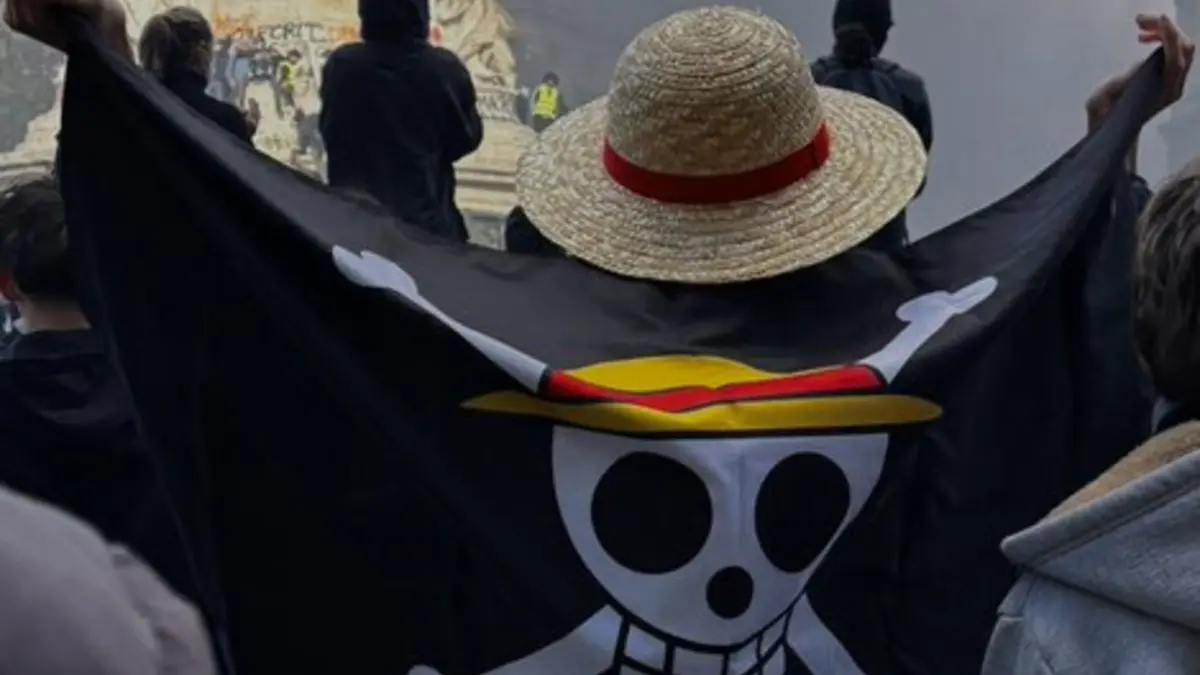
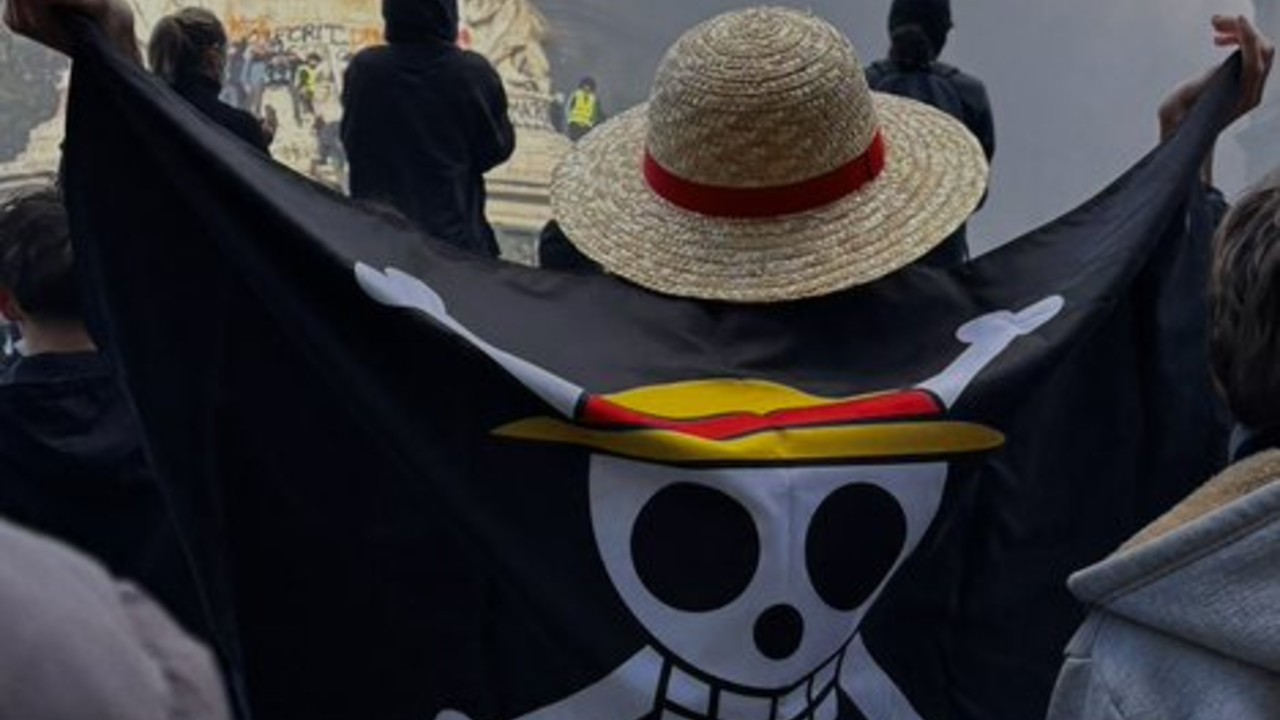
The inciting incident occurred on October 17, 2026, when participants in France’s controversial "Act 3" protests—aimed at government overhauls regarding public education, stringent budget cuts, and a spiraling cost-of-living crisis—were photographed utilizing the iconic skull-and-crossbones flag of the Straw Hat Pirates from Eiichiro Oda’s globally beloved anime and manga phenomenon, One Piece. While the use of pop-culture symbols in political demonstrations is hardly a novel phenomenon, the imagery struck a raw nerve halfway across the globe.
Japanese netizens on X swiftly mobilized, expressing profound indignation at what they perceived as the desecration of a treasured cultural artifact. Critics accused French demonstrators of trivializing a symbol of adventure and camaraderie to justify domestic unrest, civil disruption, and what some characterized as extremist violence.
What followed was a multi-day digital conflagration. The discourse swiftly devolved past the initial grievances over copyright and cultural respect into an uninhibited exchange of cross-cultural hostility. Users from both nations traded xenophobic barbs, weaponized geopolitical statistics regarding crime rates and suicide figures, and deployed xenophobic dog-whistles.
By late October, the digital skirmish had transcended the confines of X, spilling over into TikTok, Instagram, and mainstream news outlets such as Mashable. This incident serves as a stark case study in the volatile nature of global fandoms, the hazards of cross-cultural misinterpretation, and how localized political grievances can be hijacked by digital tribes in an interconnected world.
Detailed Chronology: From Parisian Streets to Global Digital Warfare
The Inciting Incident: October 17–18, 2026
The origins of the digital war trace back to the streets of France during the height of the Act 3 protests. These demonstrations had already polarized the French public; while organizers framed them as a necessary defense of the working class against regressive economic policies, government officials and mainstream media outlets characterized them as volatile, lawless, and increasingly infiltrated by extremist factions.
On October 17, 2026, X user @le4ory uploaded a photograph capturing a demonstrator wearing a straw hat and proudly hoisting the Jolly Roger flag of the Straw Hat Pirates from One Piece. The post quickly caught algorithmic fire, accumulating over 30,000 likes within ten days.
The momentum accelerated the following day when user @ZzzzzSol quote-tweeted the image, framing the fictional pirate crew’s emblem as a bona fide symbol of modern European revolution. While Western users often view the adoption of fictional resistance symbols—such as the Hunger Games three-finger salute or V for Vendetta masks—as creative expressions of solidarity, the appropriation of an anime banner elicited a radically different response in its country of origin.
The Backlash from Japanese Netizens: October 19, 2026
As the imagery circulated globally, it crossed into Japanese social media feeds, triggering an immediate and intense backlash. On October 19, X user @AnimeSpotlightt published a compilation summarizing the outrage brewing within the Japanese digital community. The post, which garnered over 12,000 likes in nine days, highlighted several recurring sentiments among Japanese fans:
- "Don’t turn the One Piece flag into a symbol of terrorism!"
- "Don’t use anime to justify your criminal acts!"
- "They are not real anime fans; they don’t even watch anime. They are people using anime for social media fame!"
The core argument driving the Japanese backlash was rooted in proprietary cultural protectiveness. To many in Japan, One Piece is a pillar of national creative achievement. Seeing its primary symbol associated with burning barricades, shattered storefronts, and clashes with European riot police was viewed not as an homage, but as an insulting co-optation that threatened to tarnish the reputation of both the franchise and the nation at large.
Escalation into Memetic Hostilities: October 22–26, 2026
What began as a debate over copyright and the ethics of protest imagery rapidly deteriorated into generalized xenophobia and a toxic comparative metrics war. As language barriers were bridged by translation software, users from both nations began trading insults that leveraged socioeconomic and cultural stereotypes.
- October 22: Japanese X user
@harukaawakepublished a xenophobic meme arguing that native French citizens were blameless, attributing the unrest and the "ruination" of France to immigrant populations "pretending to be French." The post struck a chord with nationalist factions, drawing over 26,000 likes in less than a week. - October 23: The tone darkened further when user
@ShitpostRockposted a provocative comparative crime statistic, asserting that France had recorded more sexual assault cases over a five-year period than Japan had registered in sixty years. The post amassed over 140,000 likes. - October 24: French users retaliated by targeting Japanese cultural vulnerabilities. User
@usernontrouver9posted a dark-humor meme utilizing the "Rowley Waves" template, referencing Japan’s historically high suicide rates with the caption: "When you cross paths with a Japanese guy on a hike but you realize his feet ain’t touching the ground." The post went viral, securing over 9.1 million views. - Also on October 24: Attempting to ground the flame war in hard data, X user
@peacecommander2published an exhaustive statistical breakdown contrasting crime metrics, sexual assault rates, and demographic safety indices between France and Japan. The post concluded with a politically charged endorsement of Japanese societal order over European multiculturalism, pulling in over 10,000 likes.
Mainstream Spillover and Platform Migration: October 26, 2026
Recognizing the unprecedented scale and vitriol of the cross-cultural clash, mainstream digital culture publications—including Mashable—began reporting on the phenomenon as a defining internet moment of late 2026.
Simultaneously, the conflict broke containment from X. On October 26, TikTok creator @sansanari4real published a satirical breakdown of the Japan-France Twitter War. The TikTok video resonated broadly with casual internet users who were bewildered by the bizarre intersection of pirate anime, French fiscal policy, and nationalist statistical debates, racking up an astounding 11.4 million views in just 48 hours.
Supporting Context & Metrics: Decoding the Digital Divide
To understand why a piece of anime iconography sparked an international digital war, one must examine the socio-political ecosystems of both nations in 2026.
The French Socio-Political Climate
France in late 2026 was a pressure cooker of civil unrest. The "Act 3" protests represented public fatigue over persistent inflation, cuts to public education funding, and sweeping government austerity measures. In this climate, citizens routinely reached for anti-establishment symbols. Historically, French protest culture has embraced eclectic pop-culture references to capture media attention and project a modern, populist image. However, the intersection of these protests with civil disobedience—and occasional property damage—made the borrowing of an outside cultural symbol a lightning rod for criticism.
The Japanese Digital Perspective
Conversely, Japan’s digital sphere operates under distinct cultural norms regarding intellectual property, public decorum, and national image. Anime and manga are viewed not merely as entertainment exports, but as soft-power ambassadors of Japanese creativity and social harmony.
When Japanese netizens witnessed foreign protestors—whom local media painted as rioters—flying the Jolly Roger, the reaction was filtered through a lens of protective guardianship. Furthermore, the subsequent escalation into a statistics-based culture war tapped into existing global narratives regarding public safety, societal discipline, and immigration policies, turning the comment sections into proxy battlegrounds for broader ideological debates between East and West.
| Metric / Focus Area | Japanese Netizen Perspective | French Netizen Perspective |
|---|---|---|
| Use of One Piece Flag | Viewed as cultural misappropriation and defamation of a beloved national art form. | Viewed as a legitimate, universally understood symbol of rebellion and anti-authoritarian struggle. |
| Nature of Protests | Categorized as violent domestic terrorism and lawless rioting. | Framed as essential democratic resistance against oppressive economic policies. |
| Retaliatory Tactics | Deployment of crime statistics, demographic arguments, and nationalist critiques. | Utilization of dark humor targeting societal pressures, suicide rates, and cultural isolation. |
Official Statements and Institutional Reactions
As of the close of October 2026, neither the French government, Japanese official bodies, nor One Piece rights-holder Shueisha/Toei Animation have issued formal statements addressing the viral conflict.
Industry analysts suggest that corporate entities prefer to maintain a safe distance from organic political discourse, even when their intellectual property is at the center of a global storm. However, intellectual property lawyers have noted that while the display of copyrighted symbols in public protests often falls under grey areas of fair use or freedom of expression, their digital weaponization highlights the growing challenge media conglomerates face in managing global fandoms that intersect with real-world geopolitics.
Future Outlook: The Legacy of Transnational Digital Feuds
The Japan vs. France Twitter War of October 2026 will likely be remembered not for its resolution—as internet flame wars rarely resolve cleanly—but as a harbinger of how modern globalization and algorithmic platforms facilitate cross-cultural friction.
As anime and other forms of Asian media achieve unprecedented ubiquity in Western markets, the cultural gap between creators and international consumers continues to narrow and collide in unpredictable ways. The incident demonstrates that shared consumption of pop culture does not guarantee shared values or mutual understanding.
Moving forward, digital sociologists anticipate that transnational meme wars driven by translation tools and algorithmic amplification will become increasingly common. Whether future fandoms will learn from the vitriol of the Straw Hat Flag Incident—or whether they will repeat its volatile cycle—remains one of the defining social anxieties of the modern digital age.