of Social Media
Executive Overview
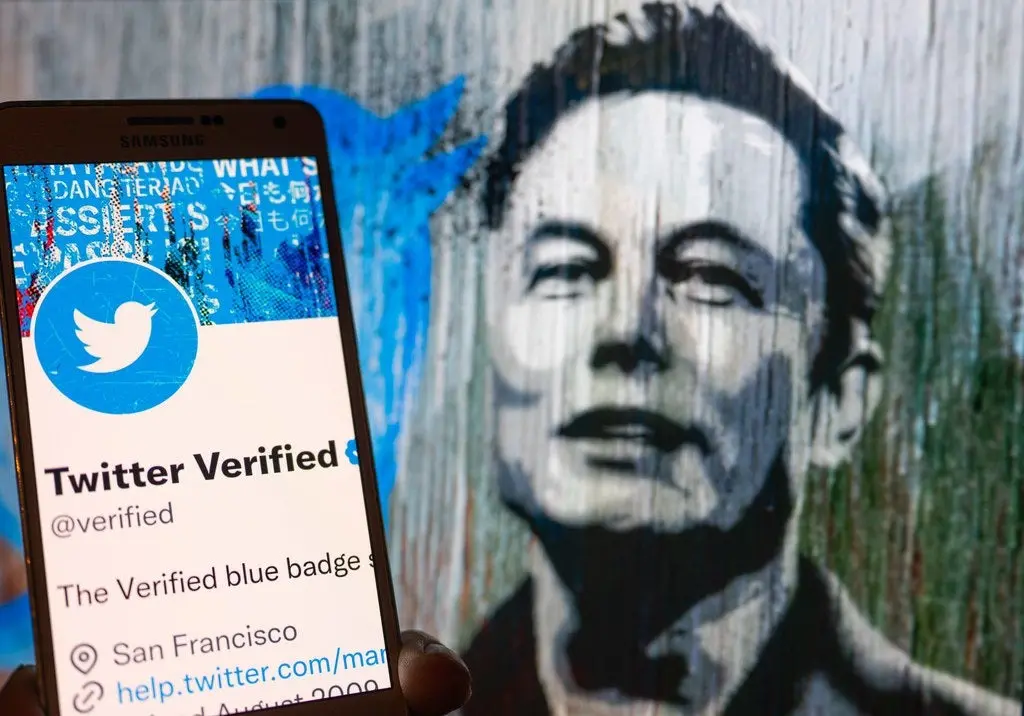
The social media landscape is undergoing its most volatile structural transformation in over a decade. At the epicenter of this seismic shift is Twitter—rapidly transitioning under new leadership into a radically commercialized ecosystem. The platform’s impending removal of legacy verified checkmarks, coupled with an aggressive rollout of the subscription-based Twitter Blue service, marks the definitive end of an era. For years, the blue checkmark served as a digital badge of authenticity, reserved for journalists, public figures, institutions, and verified experts whose identities had been meticulously vetted to combat impersonation and misinformation.
Soon, that legacy infrastructure will be entirely dismantled. Beginning April 1, legacy verified accounts will lose their status unless their owners submit to a monthly subscription fee. Ironically, alongside this push to monetize validation, Twitter is actively developing features that allow paying subscribers to hide their verified badges—an implicit acknowledgment that the checkmark has transformed from a symbol of trust into a potential emblem of social embarrassment or brand liability.
Simultaneously, algorithmic changes are fundamentally altering how content is distributed across the platform. By restricting high-level algorithmic amplification to paid accounts, Twitter is effectively erecting a paywall around organic reach. The platform’s primary discovery engine, the "For You" page, is projected to become a hyper-commercialized battleground dominated by paying accounts, self-promoters, and corporate entities pivoting away from traditional advertising budgets. Meanwhile, unpaid users face relegation to the chronological "Following" feed—a throwback to Twitter’s original architecture, but one stripped of mainstream visibility.
This investigative report examines the mechanics of Twitter’s new verification paradigm, the profound implications for digital discourse, the economic restructuring of social media marketing, and the long-term viability of an authentic public square built on a subscription model.
Detailed Chronology: The Road to the Paywall
To understand the gravity of the April 1 deadline, one must trace the rapid, often chaotic evolution of Twitter’s verification policies since the platform’s acquisition in late 2022. The timeline of these changes reveals a calculated, albeit erratic, march toward total platform monetization.
Phase 1: The Ideological Overhaul
Immediately following the transition of corporate ownership, leadership signaled an intense dissatisfaction with the legacy verification system, which executives frequently characterized as a "lords and peasants" structure. The initial remedy was the rushed, disastrous launch of Twitter Blue at $8 a month, which temporarily allowed any user to purchase a verified checkmark without identity authentication. This initial rollout resulted in widespread impersonation campaigns, stock market dips for major corporations whose fake accounts tweeted damaging statements, and a mass exodus of prominent advertisers.
Phase 2: The Retreat and Refinement
Recognizing the immediate vulnerabilities of untruthful verification, Twitter temporarily suspended the paid verification program to build rudimentary safeguards. Identity verification protocols—such as requiring a confirmed phone number and, later, government-issued identification—were gradually introduced to re-establish a baseline of trust. However, the foundational philosophy remained unchanged: verification would no longer be earned through public prominence or institutional merit; it would be procured through a recurring financial transaction.
Phase 3: The Legacy Sunset Announcement
The announcement that set the current crisis into motion arrived in late March. Twitter officially declared that all legacy verified accounts—comprising hundreds of thousands of journalists, politicians, athletes, activists, and cultural figures—would lose their checkmarks on April 1 unless they enrolled in Twitter Blue or the organization-focused Verified Organizations tier. The company framed this as a measure to democratize the platform, asserting that legacy verification was corrupt and arbitrary. Critics, however, viewed it as a blatant revenue-generation tactic designed to plug massive financial deficits caused by plummeting ad revenues.
Phase 4: The Paradox of the Hidden Checkmark
In a bizarre twist reported just days before the April 1 purge, leaked application code revealed that Twitter was actively working on a feature allowing paying subscribers to hide their blue checkmarks. This development highlighted a profound marketing paradox: while the company insists that the checkmark is a valuable utility that users should eagerly purchase, it simultaneously acknowledges that the badge carries a distinct social stigma. For many users, displaying a paid checkmark signals that they have financially supported a controversial corporate entity, prompting a demand for stealth verification.
Supporting Context & Metrics: The Economic and Algorithmic Realities
The transition from a merit-based verification system to a commercialized subscription model is not merely a cosmetic update; it is an overhaul of the platform’s underlying economic engine and content distribution mechanics.
The Death of Organic Reach for Unpaid Users
For over a decade, Twitter’s algorithmic recommendation systems—culminating in the algorithmic "For You" feed—offered users a chance at viral distribution based on engagement, relevance, and network velocity, regardless of whether they paid the company a fee. Under the new operational framework, this dynamic is shifting dramatically.
By limiting premier algorithmic amplification to paid accounts, Twitter is fundamentally altering the return on investment for content creators and brands. Consider the implications for corporate marketing departments: historically, brands spent millions on tailored Twitter ad campaigns to capture audience attention. Now, savvy marketing teams are realizing they can bypass traditional advertising expenditures entirely. By simply subscribing to Twitter Blue or Verified Organizations, brands can secure organic amplification for their standard tweets, leveraging the platform’s recommendation engine for a fraction of the cost of a formal ad buy.
The "For You" Page as a Commercial Wasteland
Industry analysts and digital culture researchers have expressed deep concern over the composition of the post-April 1 "For You" feed. Without the filtering mechanism of legacy verification—which historically helped surface verified experts during breaking news events, public health crises, and political elections—the discovery feed is primed for takeover by the highest bidder.
Without institutional guardrails, the algorithmic feed risks devolving into what digital critics describe as a "pay-to-play huckster paradise." When visibility is dictated by a monthly subscription fee rather than content quality or factual accuracy, bad actors, crypto-scammers, self-promoters, and polarizing shock-jocks gain an unprecedented megaphone.
The Return to the Chronological Bastion
For the vast majority of users who refuse to pay for Twitter Blue, the platform experience will be sharply bifurcated. Unpaid accounts will find their visibility restricted primarily to the chronological "Following" feed—the traditional timeline composed exclusively of accounts a user explicitly chooses to follow.
While many legacy power users and purists have long championed the pure chronological feed as an antidote to algorithmic manipulation, its forced imposition as a consolation prize for unpaid users represents a significant downgrade in platform utility. In an era where social media discovery relies heavily on intelligent recommendation systems, relegating unpaid accounts to a static, non-amplified silo effectively neutralizes their ability to grow audiences or participate in broader cultural conversations.
Official Statements and Industry Reactions
The sweeping changes have drawn sharp rebukes from civil rights organizations, journalism advocacy groups, and prominent public figures worldwide.
The Stance from Twitter Leadership
Official communications from Twitter’s product and executive teams have maintained a defiant, populist framing. Leadership has consistently argued that the elimination of legacy checkmarks is an egalitarian measure designed to "level the playing field." In various public statements and automated press responses, company representatives have emphasized that individual users and organizations alike should be subject to the same rules, maintaining that paying a nominal monthly fee is a fair trade-off for enhanced platform features, reduced ad loads, and priority ranking in conversations.
Backlash from the Journalistic and Scientific Communities
Conversely, major journalistic institutions and scientific bodies have pushed back aggressively. Organizations such as the News Media Alliance have pointed out that removing verified checkmarks from legitimate newsrooms and accredited journalists creates a vacuum easily exploited by malicious actors spreading disinformation.
During breaking news events—such as natural disasters, active shooter situations, or geopolitical conflicts—the blue checkmark was once a vital trust signal enabling users to distinguish between official reports and fabricated rumors. Public health officials have voiced similar alarms, noting that dismantling verified status during ongoing public health challenges will inevitably lead to an increase in dangerous medical misinformation, as professional researchers and agencies refuse to participate in a pay-to-play validation scheme.
Creator and Influencer Discontent
Content creators, who form the lifeblood of social media engagement, have expressed widespread disillusionment. Many mid-tier creators note that the subscription fee cuts directly into their slim profit margins, while offering little tangible protection against impersonation or harassment. Furthermore, the introduction of the "hide checkmark" feature has been widely mocked by creators as an admission that Twitter Blue has become a social liability, alienating the very audience segments the platform needs to retain.
Future Outlook: Where Goes Twitter, Goes the Social Web?
As the dust settles on the April 1 verification purge, the broader digital ecosystem is closely monitoring Twitter’s trajectory as a litmus test for the future of social media monetization.
The Viability of the Subscription Model
The central question facing Twitter is whether a mass-market social network can successfully pivot from an advertising-driven business model to a subscription-first economy. Historically, platforms like Facebook, Instagram, and TikTok have thrived by keeping core access entirely free while monetizing user attention through hyper-targeted advertising. Twitter’s gamble—forcing users to pay for baseline credibility and visibility—runs counter to decades of consumer conditioning. If adoption rates for Twitter Blue among legacy verified users and the general public remain low, the platform faces a steep decline in active, high-quality content production.
The Fragmentation of Digital Trust
Looking ahead, the loss of a universally recognized verification standard threatens to permanently fracture digital trust. As other platforms experiment with their own paid verification tiers (such as Meta Verified on Instagram and Facebook), the internet is entering an era where credibility is commodified rather than earned. This shift risks eroding public faith in digital communications, making it increasingly difficult for users to navigate an online world saturated with AI-generated content, deepfakes, and paid amplification.
Conclusion
Twitter’s aggressive restructuring represents a high-stakes gamble with its own legacy. By transforming verification from a mark of distinction into a commercial commodity, and by reshaping its discovery algorithms to favor paying accounts, the platform is charting an unprecedented course. Whether this bold, pay-to-play experiment will yield a sustainable financial future or devolve into an isolated echo chamber of self-promoters and unverified noise remains the defining question for the modern digital age. One reality, however, is indisputable: the old Twitter is gone, and the new iteration is rewriting the social contract of the internet in real time.