Executive Overview
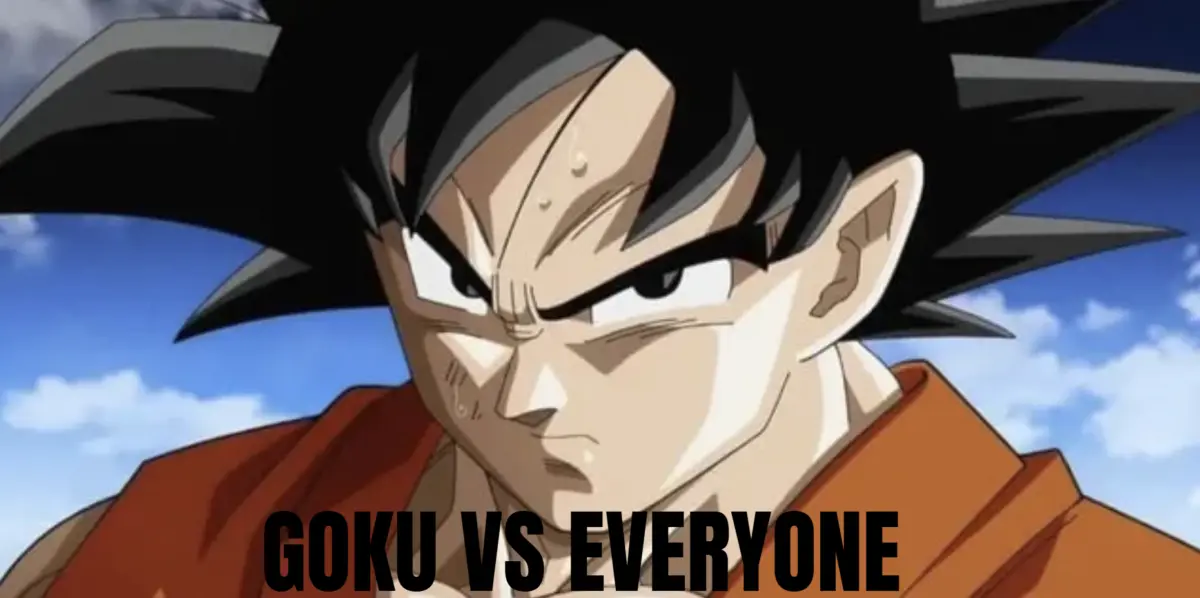
In the sprawling, hyper-connected landscape of 21st-century internet culture, few phenomena are as ubiquitous, resilient, or culturally defining as the "Goku VS" debate. For over two decades, the mere mention of Son Goku—the spiky-haired, martial-arts-obsessed Saiyan protagonist of Akira Toriyama’s seminal Dragon Ball franchise—has served as a lightning rod for hypothetical combat discussions across digital forums, social media platforms, and pop-culture outlets.
What began in the late 1990s and early 2000s as earnest, statistically driven "nerd culture" arguments about cross-franchise superiority has gradually morphed into something entirely different: a self-aware, satirical cornerstone of modern internet humor. Today, "Goku VS" is less about actual power-scaling metrics and more about a shared global joke. It is encapsulated by the ubiquitous catchphrases "Goku Solos" and "But Can He Beat Goku Though?", framing the Saiyan warrior as an inescapable, omnipresent metric against which all fictional might is measured.
This article explores the trajectory of the "Goku VS" phenomenon. It examines its print-media origins, its explosive digital expansion across generations of online forums and video platforms, its evolution into ironic performance art on TikTok and X (formerly Twitter), and its lasting legacy on how fandoms interact with media consumption, power-scaling culture, and collective internet folklore.
Detailed Chronology: From Magazine Pages to Viral Video Feats
To understand how a fictional character from a 1980s manga became the undisputed avatar of internet combat debates, one must trace the historical timeline of geek culture across its transition from analog print to web-based ecosystems.
The Analog Roots: Late 1990s to Early 2000s
Long before high-speed broadband and dedicated video-essay platforms dominated the web, cross-over debates lived in schoolyards, comic book shops, and early message boards like Usenet and primitive anime forums. Fans of disparate franchises—ranging from American superhero comics to Japanese manga—gravitated toward the ultimate question: Who would win in a fight?
The inflection point that thrust this specific matchup style into the mainstream media occurred in October 2002. Wizard Magazine, then a powerhouse publication for comic book and pop culture enthusiasts, published its 133rd issue featuring an ambitious "East vs. West" segment. Written and illustrated with contributions from industry talents, the feature officially pitted Son Goku against DC Comics’ flagship hero, Superman.
In this narrative, the wizard Babidi manipulates Goku into crossing dimensions, leading to a brutal, planet-shaking brawl on the moon. While the Wizard narrative ended with a nuanced display of respect between the two icons—and a temporary knockout for the Man of Steel—it cemented a cultural template. It proved that pitting the Saiyan warrior against western titans was not just fanfiction fodder, but commercially viable speculative journalism.
The Forum and Wiki Era: The 2010s
As internet forums (such as MyAnimeList, GameFAQs, and Reddit) matured throughout the 2010s, the "Goku VS" framework evolved into an obsessive subculture. Dedicated communities began drafting hyper-detailed "Respect Threads," calculating energy yields, punch velocities, and speed feats down to fractions of a light-year.
This era also birthed structured web series dedicated entirely to the premise. Shows like Death Battle institutionalized the debate, pitting Goku against Superman across multiple high-production episodes. Though Superman ultimately claimed victory under the show’s specific analytical parameters in each encounter, the verdicts only served to inflame fan passions rather than settle them. Forums erupted with counter-analyses, spawning thousands of pages of debate regarding transformations, scaling inconsistencies, and canonical feats.
The Memeification and Short-Form Revolution: Late 2010s to Present
By the late 2010s and into the 2020s, the sheer exhaustion of serious power-scaling led to a cultural counter-movement. Younger generations of internet users on platforms like TikTok, X, and Tumblr began to weaponize the absurdity of the discourse.
Thus, the "Goku Solos" meme was born. No matter how abstract, peaceful, or reality-bending an opponent was—whether it was a conceptual entity, a magical girl from a psychological thriller, or an ironic character from a slice-of-life anime—comment sections would inevitably flood with assertions that Goku could defeat them. This triggered the "Your Fave" counter-meme, where communities humorously declared that mundane or vastly overpowered characters could effortlessly crush the Saiyan. The discourse had officially transitioned from earnest debate to postmodern internet parody.
Supporting Context & Metrics: Analyzing the Matchup Ecosystem
To fully comprehend the staying power of the "Goku VS" phenomenon, one must examine the specific, high-profile matchups that have sustained its relevance across decades, as well as the unique mechanics that make Goku the ultimate vehicle for these debates.
The Trinity of Modern Matchups
- Goku vs. Superman: The Alpha and Omega of cross-universe debates. This matchup represents the collision of two distinct mythologies: the refugee of doomed Krypton molded by wholesome American ideals, and the low-class Saiyan warrior who transcended his limits through sheer grit and martial arts discipline. Its presence in print, web animation, and endless forum threads makes it the foundational pillar of modern geek culture.
- Goku vs. Madoka Kaname: Originating from the anime power-scaling communities, this matchup juxtaposes raw physical and destructive might against absolute conceptual reality-warping. Pitting Goku against Ultimate Madoka—a literal godhood concept from Puella Magi Madoka Magica—highlights how the "Goku VS" format expanded to mock the increasingly esoteric and incomprehensible metrics used by modern power-scalers.
- Saitama vs. Goku: Borrowing from the premise of One-Punch Man, this matchup explores the comedic metanarrative of Saitama, a character whose defining trait is that he can defeat any opponent with a single punch. Pitting a parody character designed to break the rules of shonen manga against Goku—the very archetype of shonen progression—creates an irresistible philosophical clash that fuels endless fan art and video essays.
Why Goku? The Psychology of the Saiyan Standard
Goku possesses specific narrative traits that make him the ideal canvas for hypothetical combat. Unlike protagonists bound by rigid power ceilings, Goku’s entire character arc is predicated on endless self-improvement, breaking limits, and seeking out stronger opponents. Because his universe scales up exponentially—moving from destroying cities to threatening galaxies and multiverses—fans can credibly argue his inclusion in almost any tier of fictional power.
Furthermore, Goku’s cheerful, non-malicious personality provides comedic contrast when placed into bloodthirsty, grimdark, or existential battle scenarios.
Official Statements and Cultural Commentary
While "Goku VS" is fundamentally a grassroots internet phenomenon rather than a corporate-managed property, creators and industry figures have frequently weighed in on its cultural footprint.
Animation historians and media theorists have often pointed to the phenomenon as an early precursor to the modern cinematic universe crossover mania. Long before Marvel Studios popularized the concept of characters colliding across disparate franchises on the silver screen, internet communities were building their own unauthorized, multimedia crossover universes fueled purely by speculative combat.
Akira Toriyama, the late creator of Dragon Ball, maintained a notoriously lighthearted and detached perspective on the meticulous power-scaling habits of his fan base. In various interviews over the decades, Toriyama famously admitted that he frequently adjusted power levels and character strengths based on narrative convenience rather than rigid internal mathematics—a revelation that often amused casual readers while driving hardcore power-scalers into paroxysms of analytical frenzy.
Digital culture commentators have also noted that the "Goku Solos" meme functions as a vital pressure valve for online fandoms. By taking the hyper-earnest, sometimes toxic tribalism of anime and comic book gatekeeping and turning it into an absurd, self-parodying catchphrase, internet users reclaimed the joy of casual media discussion.
Future Outlook: The Endless Battle
As we look toward the future of digital culture, the "Goku VS" tradition shows no signs of slowing down. With new iterations of the Dragon Ball franchise continuing to release—such as Dragon Ball Daima—and fresh generations of anime fans entering digital spaces, the pool of potential opponents for Son Goku expands daily.
The phenomenon has successfully weathered the transition from static text forums to imageboards, from long-form video essays to lightning-fast TikTok edits. It has transformed from a nerdy thought experiment into a foundational meme of the internet age.
Ultimately, "Goku VS" is no longer just about whether a Saiyan can defeat a Kryptonians, a caped bald hero, or a conceptual goddess. It is a testament to human imagination and communal play—a digital campfire where millions of fans across the globe gather to ask the oldest question in storytelling: What happens when unstoppable forces meet? And, perhaps more importantly, to laugh together while the internet answers in unison: "But can he beat Goku though?"