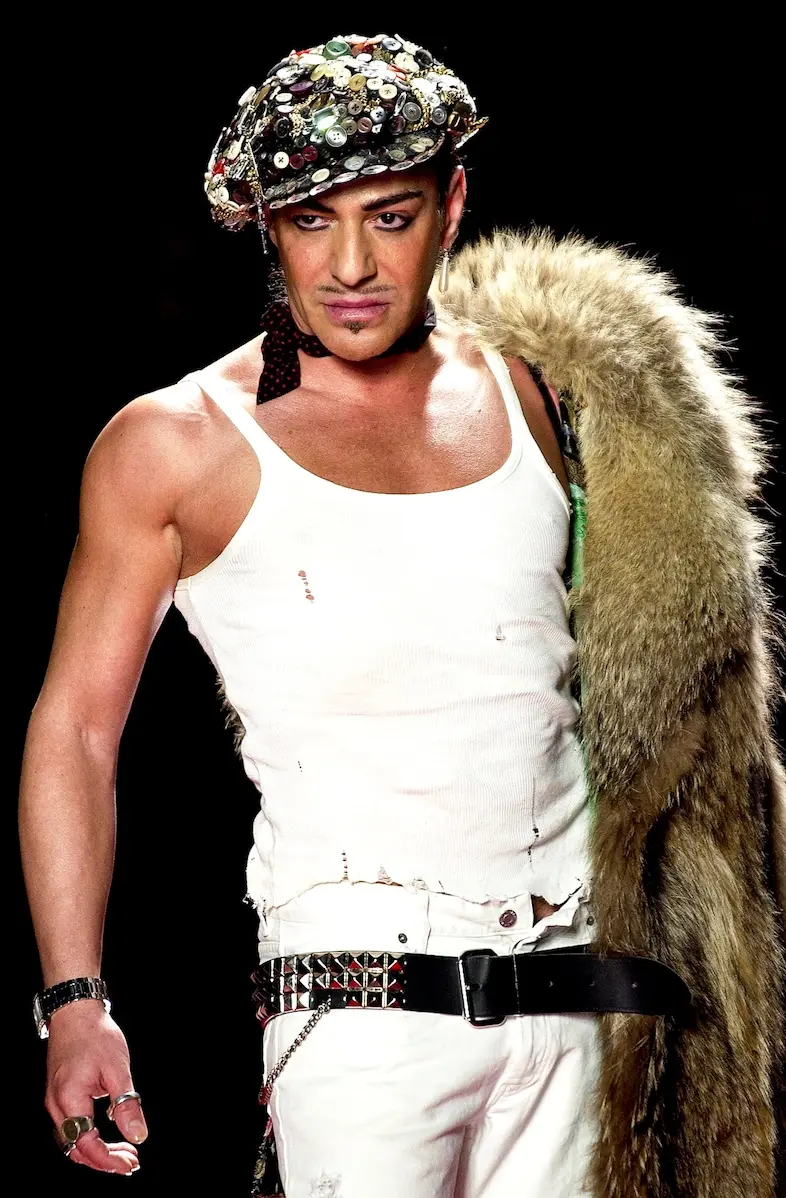
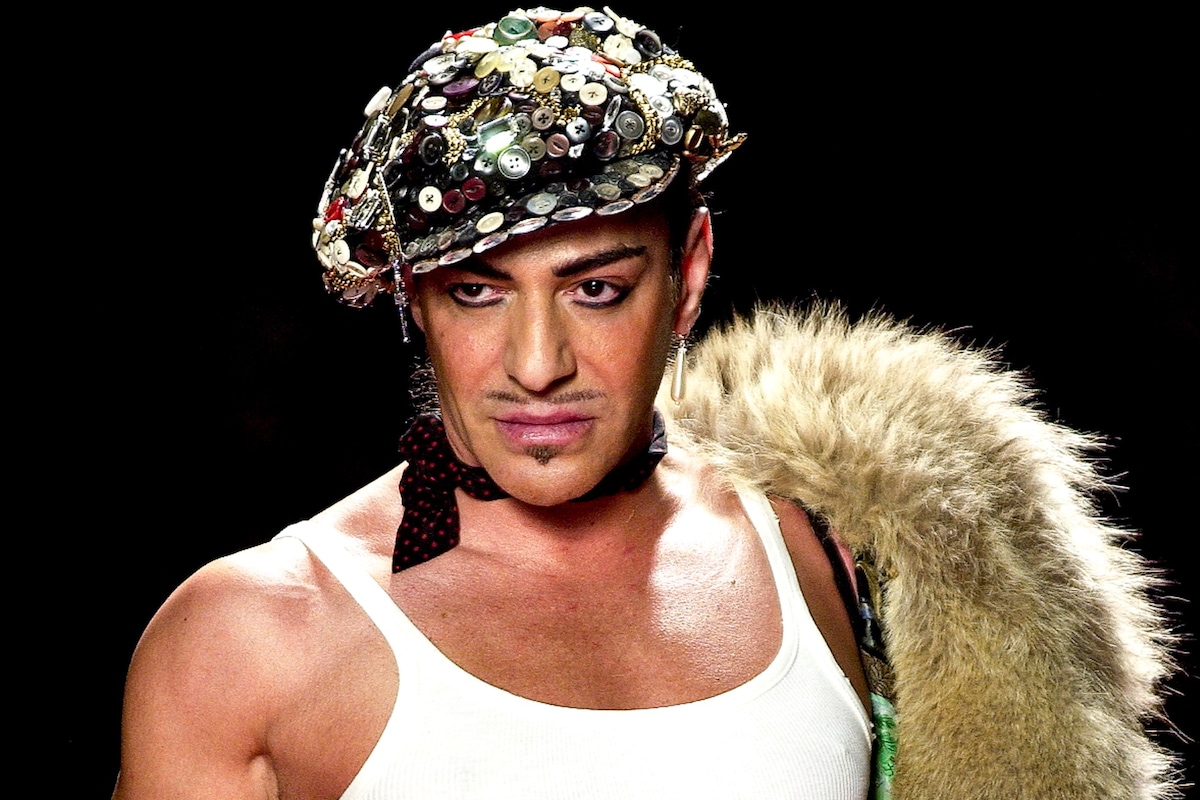
The announcement and subsequent cancellation of the Metropolitan Museum of Art’s Costume Institute exhibition John Galliano: Horizons marks a watershed moment in the intersection of contemporary fashion, cultural accountability, and institutional stewardship. Originally slated as the theme for the 2027 Met Gala and its accompanying blockbuster exhibition, the retrospective was intended to celebrate the profound, paradigm-shifting impact of British designer John Galliano on global fashion history.
Instead, the initiative has collapsed under the weight of sustained public backlash, forcing the museum to abruptly reverse course. The core of the controversy stems from Galliano’s deeply documented history of racist and antisemitic remarks, which culminated in a high-profile hate-crime conviction in Paris in 2011.
The decision to scrap the exhibition—arrived at mutually by Galliano and Vogue editor-in-chief Anna Wintour—leaves Andrew Bolton, the Met’s Costume Institute head curator, with a daunting timeline: conceptualize, finance, and execute an entirely new exhibition within an eight-month window.
This crisis exposes a widening philosophical chasm within the upper echelons of the cultural economy. On one side stands an elite preservationist impulse that seeks to separate the "art from the artist," viewing high-fashion mastery as autonomous and transcendent. On the other stands a modern cultural consensus that refuses to divorce creative genius from ethical conduct, demanding accountability even from historical titans.
As the dust settles on the cancelled exhibition, the fashion world is left to ponder not only how the Met miscalculated the public mood so profoundly, but also what alternative narratives might fill the vacuum left by Galliano’s absence.
Detailed Chronology: From Announcement to Abrupt Cancellation
The trajectory of the aborted John Galliano: Horizons project offers a case study in modern institutional miscalculation.
Late Last Month: The Metropolitan Museum of Art formally leaked and subsequently announced that its major 2027 Costume Institute exhibition would be dedicated to John Galliano. The news was met with immediate polarization. While industry insiders, editorial boards, and die-hard fashion historians hailed the move as a long-overdue celebration of one of the late 20th and early 21st centuries’ most imaginative creative directors, cultural critics, civil rights organizations, and digital watchdogs mobilized almost instantly. They pointed directly to the designer’s toxic public record.
The Intervening Weeks: Rather than subsiding, the controversy compounded. As social media discourse amplified archival footage of Galliano’s 2011 disgrace and critics dissected the appropriateness of lionizing a convicted offender within a publicly funded cultural institution, institutional pressure mounted. Sponsors grew wary, board members reportedly expressed private reservations, and the reputational risk to both the Met and Vogue—the Gala’s primary financial engine—shifted from manageable friction to an untenable liability.
This Week: Recognizing that the exhibition could not open without casting a severe shadow over the museum’s mission, the decision was made to scrap the plans entirely. In a statement posted to Instagram, Galliano announced with "great sadness" that it was best for the retrospective not to take place. Anna Wintour swiftly followed with a public endorsement, praising the designer’s "courage" and asserting mutual support between the museum and the atelier.
Supporting Context & Metrics: The Weight of a 2011 Conviction
To understand why John Galliano: Horizons provoked such an immediate and unyielding firestorm, one must revisit the events of February 2011. At the time, Galliano was the undisputed creative genius at the helm of Christian Dior, as well as his eponymous label. Following an alcohol-fueled altercation at a Paris café in the Marais district, Galliano hurled vitriolic, antisemitic, and racist insults at patrons. Subsequent video footage emerged showing the designer professing his love for Adolf Hitler.
The fallout was swift and absolute:
Immediate Termination: Dior fired Galliano within days, cutting ties with a designer who had generated billions of dollars in revenue and defined the house’s aesthetic for over a decade.
Legal Reckoning: Galliano was tried in a French court on charges of public insults based on origin, religious affiliation, or race. In September 2011, the Paris court found him guilty, handing down suspended fines totaling €6,000.
The Wilderness and Rehabilitation: The designer entered a lengthy period of rehabilitation for substance abuse and personal reflection. His formal return to fashion came via a surprising, low-profile residency at Oscar de la Renta in 2013, orchestrated by close confidante Anna Wintour, before he took over as creative director of Maison Margiela in 2014, where his avant-garde output has continued to win critical acclaim.
Despite his rehabilitation and subsequent decades of clean living and creative brilliance, the legal conviction and the nature of his remarks remained an unhealed scar for many communities—particularly within the global Jewish diaspora and marginalized groups targeted by hate speech. The Met’s failure to anticipate that these wounds would preclude a celebratory, mainstream institutional retrospective highlights a dangerous disconnect within cultural curation: the assumption that insular industry forgiveness translates to broader societal absolution.
Official Statements and Institutional Responses
The fallout has prompted carefully coordinated public messaging from the primary figures involved.
In his personal statement released via social media, John Galliano struck a reflective and conciliatory tone:
"After much reflection and discussion with all those involved, I have decided, with great sadness, that it is best for the exhibition not to take place at this time."
Anna Wintour, whose unwavering support for Galliano has spanned decades through his professional highs and lows, framed the cancellation as an act of noble sacrifice rather than a capitulation to public outrage:
"John’s decision that the exhibition devoted to his work should not take place at this time is very courageous and a measure of the man he is. I believe this is the right decision, and both he and the museum have my full support."
Behind closed doors, however, the logistical reality facing Andrew Bolton, head curator of the Costume Institute, is nothing short of a nightmare. Bolton and his team now have a compressed timeline of barely eight months to pivot, conceptualize, fundraise, and curate an entirely new blockbuster exhibition capable of anchoring the fashion world’s most lucrative and scrutinized annual fundraising event.
Future Outlook: Seven Conceptual Roadmaps for the Met’s Next Move
With the Galliano retrospective shelved, the Costume Institute needs a compelling, culturally resonant, and bulletproof alternative. Below are seven fully articulated thematic pathways that could steer the Met Gala and its accompanying exhibition toward success.
1. Goth! Enter the Darkness
The Concept: From Mary Shelley’s Frankenstein to the runway wizardry of Rick Owens, this exhibition explores fashion’s enduring, century-spanning love affair with the macabre, the romantic, and the nocturnal. It investigates how subcultural darkness has continually bled into haute couture.
The Hosts: Rick Owens, Siouxsie Sioux, Jenna Ortega, Matières Fécales, Gabbriette.
The Mood Board: Black, white, lilac, Victorian mourning dress, veils, Derek Ridgers’ photographs of The Batcave, Siouxsie and the Banshees, Rick Owens and Michèle Lamy, Elvira, Skin of Skunk Anansie, Suspiria, Nosferatu, Frankenstein.
2. Stanley Kubrick: A Fashion Odyssey
The Concept: An immersive exploration of film auteur Stanley Kubrick’s profound, structural impact on fashion design. The exhibition tracks how the chilling precision, futuristic dystopias, and historical pastiche of Kubrick’s cinematography have inspired some of the most memorable collections in modern history.
The Hosts: Jack Nicholson, Nicole Kidman, Raf Simons, Frank Ocean.
The Mood Board: Alexander McQueen’s AW99 The Overlook collection, Moschino’s AW22 Space Odyssey-inspired collection, Raf Simons’ Calvin Klein SS18 show, and the maximalist historical pastiche of Alessandro Michele’s Gucci.
3. Azzedine Alaïa: King of Cling
The Concept: A long-overdue tribute to the late Tunisian master who reshaped the female silhouette through technical wizardry, bias cuts, and uncompromising independence. While past political friction with Anna Wintour historically marginalized Alaïa within official Met narratives, his status as a legendary craftsman makes him an unimpeachable choice for a historical retrospective.
The Hosts: Grace Jones, Naomi Campbell, Yasmeen Ghauri, Pieter Mulier.
The Mood Board: Bodycon engineering, leopard print, alligator textures, precision leotards, sculptural peplums, and Grace Jones’ iconic cinematic appearances.
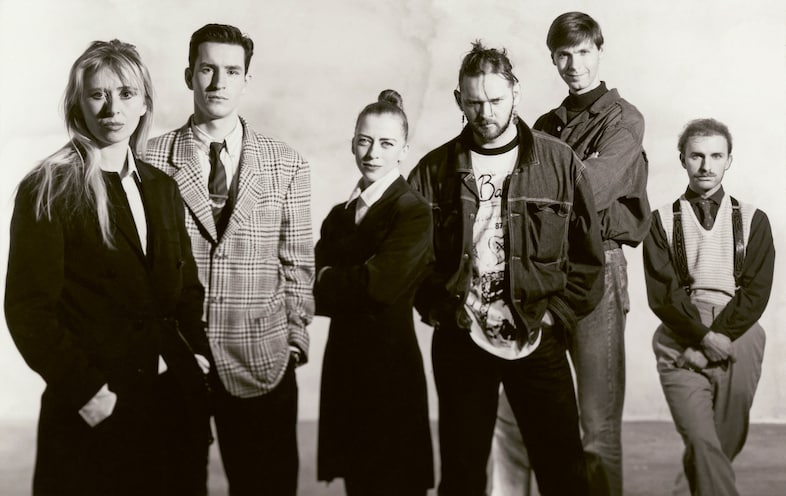
4. Belgian Baddies: How Antwerp Conquered the World
The Concept: A major retrospective honoring the tectonic shift caused by the Belgian avant-garde. This exhibition charts how a small cohort of radical graduates from the Royal Academy of Fine Arts in Antwerp dismantled traditional notions of luxury, proving that intellect, deconstruction, and conceptual rigor could rewrite the global fashion canon.
The Hosts: The Antwerp Six, Martin Margiela, Matthieu Blazy, Raf Simons.
The Dress Code: Minimalist, deconstructed, layered, block-colored, Tabi-footed, and unapologetically Belgian.
5. Virgil Abloh: “The Met”
The Concept: A definitive institutional celebration of the late Virgil Abloh. This exhibition examines how Abloh bridged the chasm between streetwear and haute couture, democratized luxury, and permanently altered the demographic and creative makeup of the global fashion industry through his work at Off-White and Louis Vuitton.
The Hosts: IB Kamara, Skepta, Takashi Murakami, Bella Hadid.
The Mood Board: Industrial workwear, deconstructed tailoring, graffiti-inflected graphics, iconic quotation marks, and elevated streetwear-bridal hybrids.
6. Y3K: Back to the Future
The Concept: Designed as a direct antidote to the fashion industry’s suffocating, nostalgic obsession with Y2K, Y3K asks a radical question: What will clothing look like one thousand years from now? Building upon the technical foundations of Manus x Machina, this exhibition looks forward rather than backward, celebrating hyper-futurism, synthetic skins, and digital-physical garments.
The Hosts: Björk, X Æ A-Xii Musk, Arca, Glenn Martens.
The Mood Board: Mugler, Björk’s Icelandic eclipse rave, Jean Paul Gaultier, the legendary spray-painted finale dresses of Alexander McQueen and Coperni, and avant-garde couture experimentation.
7. Baz Luhrmann: Strictly Fashion
The Concept: Celebrating the maximalist cinematic universe of director and longtime Vogue collaborator Baz Luhrmann. This exhibition explores the intoxicating interplay between theatrical costume and runway fashion, tracing how historical pastiche, high-octane glamour, and unbridled romanticism have influenced generations of designers.
The Hosts: Austin Butler, Miuccia Prada, Priscilla Presley, Lil’ Kim, Jay-Z.
The Mood Board:Moulin Rouge!, cascading sequins, towering feathers, medieval armor, angelic iconography, white leather, Joan of Arc motifs, 1920s flapper decadence, and ballroom dancing culture.
Conclusion
The cancellation of John Galliano: Horizons is more than just a scheduling hiccup for the Metropolitan Museum of Art; it is a cultural inflection point. It proves that the modern fashion industry can no longer operate in an ethical vacuum, insulated by aesthetic appreciation alone. As Andrew Bolton and his team race against the clock to formulate a new vision for 2027, the entire cultural sector watches closely. The path forward requires courage, historical awareness, and a renewed commitment to curating exhibitions that honor not only the beauty of garments, but the values of the society that wears them.