Executive Overview
What happens inside the human brain when a foot begins to tap involuntarily to the rhythm of a passing car’s stereo, or when a massive crowd sways in synchronized harmony at a live concert? For decades, music education treated rhythm as a rigid administrative exercise—a matter of time signatures, fractions, and notation printed neatly on staff paper. However, a quiet revolution is taking place at the intersection of cognitive neuroscience and music pedagogy.
At the center of this movement is Andrea Calilhanna, an Australian music educator, multi-instrumentalist, and doctoral candidate at the University of Adelaide. Through a synthesis of cognitive science, graph theory, and decades of practical teaching experience, Calilhanna has challenged conventional wisdom regarding how humans perceive musical meter. By building upon the theoretical frameworks of Yale University music theorist Professor Richard Cohn and integrating them with Neural Resonance Theory (NRT), Calilhanna has developed Ski-Hill Graph Pedagogy. This innovative approach visualizes temporal pulses as fractions using pyramid-shaped diagrams, bridging the gap between abstract mathematical timing and the physical, biological realities of the human brain.
This report explores the genesis of Calilhanna’s research, the biological mechanics of how the brain processes rhythm, and the profound implications of her work for education, human connectivity, and the fundamental definition of what it means to be musical.
Detailed Chronology: From the Conservatorium to Cognitive Science
Decades of Practical Observation
Andrea Calilhanna’s journey into the neural architecture of rhythm began not in a laboratory, but in the trenches of music instruction. Her early formal training at the Queensland Conservatorium was comprehensive; she studied piano, saxophone, and music theory, earning a diploma in piano performance before completing a rigorous teacher training program.
Over the next four decades, Calilhanna maintained an active presence in the Australian music community. While raising her family, she performed across diverse genres—ranging from classical chamber ensembles to jazz groups and rock bands—while simultaneously building a robust private piano studio. Yet, as a teacher, she encountered a persistent roadblock that affected students of all ages and skill levels: a widespread struggle with timing and musical expression.
Students could often read notes on a page, but translating those notes into expressive, well-timed performances proved elusive. Traditional methods of teaching rhythm—treating it as a sequence of mathematical fractions disconnected from physical motion—seemed fundamentally inadequate. Calilhanna recognized that if she wanted to help her students master expression, she had to find a better way to teach meter.
The Turning Point at the University of Sydney
As her children grew independent, Calilhanna decided to return to formal academia, enrolling in a master’s program in music at the University of Sydney. It was there that she attended a series of lectures on meter delivered by visiting Yale University Professor Richard Cohn.
Cohn’s lectures offered a radical departure from traditional music theory. Rather than viewing meter merely as a static system of time signatures, Cohn presented meter as a dynamic relationship among underlying pulses—a concept that resonated deeply with Calilhanna’s teaching frustrations.
Energized by these insights, Calilhanna began experimenting with Cohn’s theories in her own studio, applying them to school-age students. By helping learners recognize and perform meter as a felt relationship of pulses, she observed immediate improvements in their timing and musicality. Her master’s thesis subsequently formalized this breakthrough, examining how students learn meter through pulse relationships rather than rigid notation systems. Crucially, this academic inquiry left Calilhanna with a definitive realization: to truly understand how students process time and rhythm, she needed to look beyond traditional pedagogy and dive deep into neuroscience.
Doctoral Research and Ski-Hill Graph Pedagogy
Driven by the need to map the cognitive processes underlying rhythm, Calilhanna advanced to doctoral studies at the University of Adelaide. Her ongoing research centers on the development and refinement of Ski-Hill Graph Pedagogy Meter Fundamentals.
By integrating cognitive science with geometric visualizations of rhythm, Calilhanna has transformed abstract temporal concepts into intuitive visual maps. Her academic publications, master’s thesis, and subsequent educational video series have positioned her at the forefront of modern music education reform, offering educators a concrete toolkit to align teaching methods with the natural functioning of the human nervous system.
Supporting Context & Metrics: Decoding Meter and Mapping the Brain
To understand the weight of Calilhanna’s pedagogical innovations, it is necessary to examine the classical definitions of musical rhythm and the neurological mechanisms that govern them.
What Is Musical Meter?
Classically, meter refers to the recurring patterns of strong and weak pulses that give music its structural heartbeat. Most Western musical meters are constructed upon multiples of two or three beats per measure:
- Duple Meter (2:1): Built on a strong-weak pattern, serving as the foundational pulse of a march.
- Triple Meter (3:1): Built on a strong-weak-weak pattern, characterizing the rhythm of a waltz.
While standard pedagogy assumes each beat occupies an identical amount of time—with strong beats differentiated solely by volume—real-world musical expression is far more nuanced. Expert musicians shape meter by manipulating micro-timing: slightly lengthening strong pulses and shortening weak pulses. Furthermore, complex rhythmic devices like syncopation feature rests directly on the beat while notes are sounded off the beat, proving that listeners must feel pulses that are not overtly audible.
Classical Meter Structure:
[Duple Meter (2:1)]  -> Strong Beat (Loud/Long) | Weak Beat (Soft/Short)
[Triple Meter (3:1)] -> Strong Beat (Loud/Long) | Weak Beat 1 (Soft) | Weak Beat 2 (Soft)
Ski-Hill Graphs as Cognitive Scaffolding
Cohn’s lectures introduced Calilhanna to "ski-hill graphs"—pyramid-shaped diagrams that visually map the repeating pulse patterns of a piece of music.
        /          <-- High-level pulse (Measure)
       /
      /  /        <-- Mid-level pulses (Subdivisions)
     /  /
    /////      <-- Micro-pulses (Fast subdivisions)
By utilizing these graphs, students can visualize musical meters as fractions. This visual scaffolding transforms invisible temporal intervals into tangible geometric shapes. Consequently, students develop superior listening skills, recognizing pulse divisions and maintaining temporal awareness even through complex syncopated passages.
Neural Resonance Theory (NRT) and Biological Synchronization
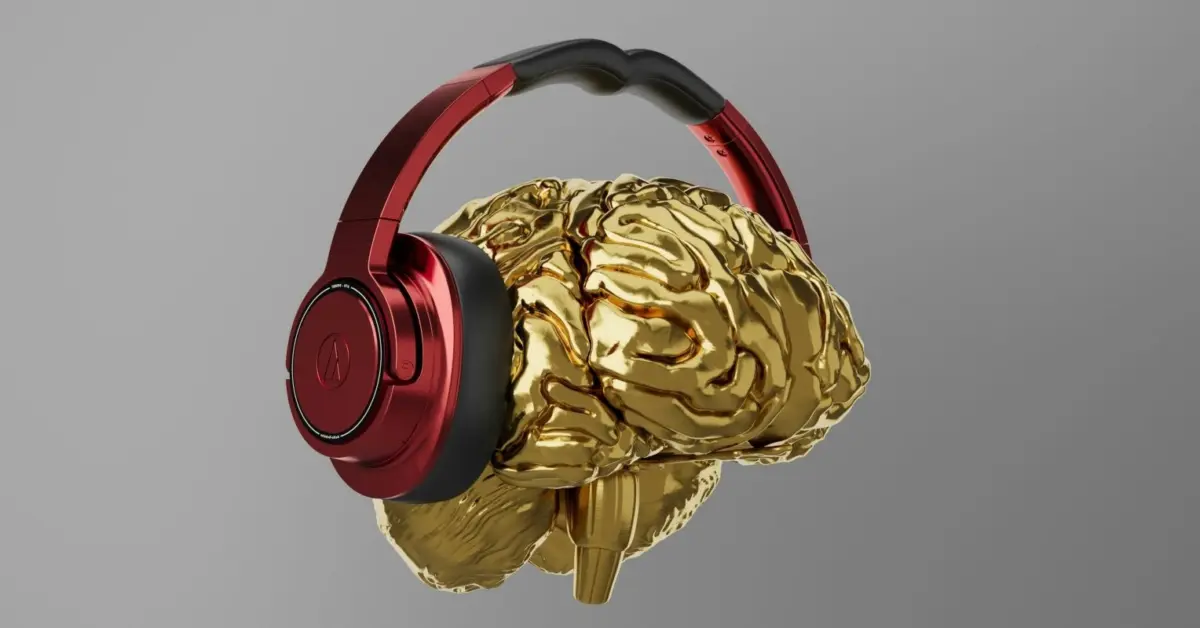
Why do these visual and structural methods work so effectively? The answer lies in neurobiology. Functional brain imaging studies reveal that rhythm and meter are processed simultaneously by two primary neural networks:
- The Auditory System: Responsible for hearing and analyzing sound frequencies.
- The Motor System: Responsible for physical movement and rhythmic generation.
Remarkably, even when a person sits completely still while listening to music, their motor system fires actively, working in tandem with the auditory cortex to decode rhythm.
To explain this seamless integration, Calilhanna champions Neural Resonance Theory (NRT), initially pioneered by cognitive scientists like Edward Large and Jessica Snyder. NRT posits that pulse and meter arise as a result of neural oscillations resonating to rhythmic stimulation.
When a person listens to music—for instance, a track playing at 180 beats per minute—it generates a primary beat frequency of 3 hertz (three cycles per second). According to NRT, populations of neurons naturally synchronize their firing rates to match this exact frequency. Because complex music contains multiple simultaneous rhythmic layers, distinct clusters of brain cells oscillate at different pulse rates at the same time.
Furthermore, communication between the auditory and motor systems is facilitated by higher-frequency neural activity—specifically beta (13–30 Hz) and gamma (>30 Hz) oscillations. Because these neural firing patterns are biologically hardwired into the human nervous system, individuals listening to the same musical stimulus experience synchronized brain activity. This shared neural resonance provides the biological explanation for entrainment—the universal human tendency to tap feet, bob heads, and move in unison when sharing a musical experience.
Official Statements and Perspectives
The implications of Calilhanna’s work bridge the gap between abstract academic theory and everyday human experience. When discussing how to communicate these complex neuroscientific principles to the general public, Calilhanna maintains a remarkably grounded perspective.
Reflecting on how she explains her research to a layperson—such as a fellow commuter listening to music on public transit—Calilhanna notes:
"I point out to them that, even without knowing what it is, they’re engaging with meter when they bob their head or tap their feet. I also tell them, ‘You’re musical because you’re human.’"
This philosophy strips away the intimidation factor historically associated with formal music education. By framing musicality not as an elite, innate talent reserved for virtuosos, but as an inevitable byproduct of human neurobiology, Calilhanna’s work democratizes music theory.
From an academic standpoint, her doctoral research emphasizes that pedagogy must evolve in tandem with cognitive science. As highlighted in contemporary neuroscience literature regarding the biological bases of human musicality, teaching methods that ignore the motor-auditory link create unnecessary cognitive friction for students. By aligning instructional design with Neural Resonance Theory and ski-hill graph visualization, educators can work with the brain’s natural wiring rather than against it.
Future Outlook
As the fields of music cognition and educational psychology continue to converge, the framework established by Andrea Calilhanna points toward a transformative future for how rhythm and meter are taught worldwide.
1. Modernizing Music Curricula
Traditional music conservatory models have been slow to incorporate cognitive neuroscience into core curricula. However, as the empirical evidence supporting Neural Resonance Theory mounts, institutions of learning are facing increased pressure to modernize. Future music classrooms are expected to increasingly integrate visual tools like ski-hill graphs, replacing rote memorization of time signatures with spatial and kinesthetic exercises that engage both auditory and motor pathways from day one.
2. Technological Integration and Visual Pedagogy
With the proliferation of digital learning tools, educational software, and interactive video resources—such as Calilhanna’s dedicated instructional channels—visual graph pedagogy is poised to scale globally. Future applications may utilize augmented reality (AR) or real-time biofeedback to let students literally see their brainwave oscillations synchronizing with musical pulses, turning rhythm acquisition into an immersive, multi-sensory experience.
3. Broadening Therapeutic and Interdisciplinary Applications
Beyond traditional music education, the principles of NRT and rhythmic entrainment hold profound potential for therapeutic fields. Researchers are increasingly exploring how synchronized rhythmic stimulation can aid individuals with motor rehabilitation, neurological disorders, and developmental timing deficits. By understanding how neural oscillations lock onto musical meters, clinicians and educators alike can harness the power of rhythm to heal, connect, and educate.
Ultimately, Andrea Calilhanna’s cross-globe journey—from a piano bench in Australia to the frontiers of doctoral neuroscience research—serves as a powerful reminder: music is not merely something we listen to with our ears. It is a fundamental pulse resonating through the very fabric of our nervous system.