Executive Overview
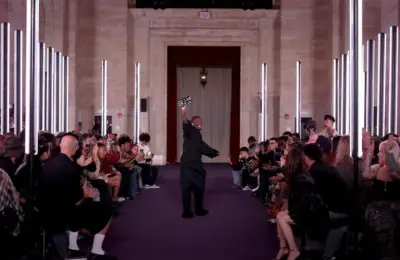
On a brisk September evening in New York City, the vibrant and historically eccentric cultural landmark known as The Slipper Room reached peak capacity. The crowd was a cross-section of modern adult entertainment royalty: pornographic film stars, independent online content creators, traditional strip-club performers, professional dominatrixes, high-end escorts, and progressive sex-work advocates mingled freely. They had converged not merely to attend a routine nightlife event, but to celebrate a monumental cultural milestone: the official launch of the third issue of Doxy—a publication proudly redefining itself as "the magazine for the working girl."
Far removed from the exploitative, voyeuristic, and male-gaze-dominated "top-shelf" publications of the 20th century, Doxy is charting a radical new course in media, culture, and labor rights. Edited by Celina Reboyras and featuring cover star Ari Kytsya, the magazine is authored entirely by sex workers for sex workers—and for an increasingly receptive public. In an era where mainstream pop culture (via prestige television like Euphoria and viral internet discourse) has thrust the realities of adult labor into the spotlight, Doxy serves as a vital literary third space. It rejects the tired, reductive dichotomy that frames sex workers as either helpless victims or hyper-sexualized commodities, asserting instead that the modern adult entertainment industry is nothing short of a formidable labor movement.
Detailed Chronology: The Night at The Slipper Room
The launch party for Doxy Issue 03 was meticulously orchestrated to reflect the ethos of the magazine itself: defiant, intellectually engaged, fiercely autonomous, and deeply rooted in community solidarity.
As guests poured into The Slipper Room, the absence of corporate branding or traditional media gatekeepers was palpable. The evening opened with remarks from prominent online creator and co-cover star Stella Barey, widely recognized by her moniker the "Anal Princess." In a poignant and culturally charged moment, Barey read excerpts from the classic 1990s feminist text Defending Pornography. She noted the poetic irony of the reading, as it coincided precisely with the passing of author Wendy Kaminer’s ideological rival, Gloria Steinem—the seminal second-wave feminist whose staunch anti-pornography stances shaped decades of restrictive political and social policy.
The literary interlude was swiftly followed by a high-energy, sultry performance by the renowned New York-based burlesque troupe The G-Strings. The performance encapsulated the playful yet fiercely independent spirit of the evening. According to Reboyras, the event’s impact rippled across the city’s broader nightlife ecosystem; she playfully remarked that some of Brooklyn’s most prominent strip clubs, such as Pumps, experienced noticeably sparse crowds that night simply because their entire rosters of performers had chosen to attend the Doxy celebration.
Throughout the night, creators discussed the tangible realities of their profession. Rather than functioning as a passive networking event, the launch served as an active organizing hub. Discussions frequently returned to the core mission of Doxy: building sustainable, worker-owned economic infrastructures that bypass the predatory algorithms of mainstream social media and financial institutions.
Supporting Context & Metrics: Reclaiming the Narrative
To understand the cultural weight of Doxy’s rise, one must examine the evolution of adult media over the past half-century. The golden age of men’s magazines relied heavily on physical nudity carrying an intrinsic shock value. In the digital age, however, ubiquitous internet access has rendered simple bodily exposure largely mundane. As Reboyras and her contributors observed during the launch events, the true shock value of the 2020s lies in authenticity.

Doxy’s pages consciously avoid full-frontal nudity or graphic voyeurism. Instead, the publication offers a rich pastiche of personal essays, investigative journalism, fine art paintings, erotica, poetry, lifestyle horoscopes, and industry analyses.
Etymology and Mission
- The Name: The title Doxy draws from 18th-century slang denoting a sex worker or vagrant’s companion. Simultaneously, it serves as a deliberate nod to Doxycycline, a broad-spectrum antibiotic frequently prescribed to treat sexually transmitted infections, grounding the publication’s clever branding in the practical realities of bodily healthcare.
- The Design: Spearheaded by graphic designer Maxine Cahill, the publication’s visual language is unashamedly tailored for the female and queer gaze.
- The Economic Imperative: "It wouldn’t feel right if I featured nudity in Doxy then turned a profit. It’s not a cash grab," Reboyras explains, emphasizing that every editorial decision prioritizes humanization and ally-building over exploitative monetization.
By demystifying an industry frequently sensationalized or marginalized by mainstream news outlets, Doxy bridges the chasm between non-sex workers and creators. "We are the backbone of society and in your immediate circle," Cahill notes, reinforcing the magazine’s core sociological argument: sex workers are interwoven into the fabric of everyday communities, sharing the same economic struggles, housing crises, and healthcare hurdles as workers in any other labor sector.
Official Statements and Industry Insights
The voices driving Doxy forward are acutely aware of the systemic barriers they face—and they are equally strategic about dismantling them.
Celina Reboyras on Representation
Editor Celina Reboyras has repeatedly emphasized the necessity of self-representation within popular culture. While she acknowledges that mainstream visibility—such as depictions in critically acclaimed television programs—has brought conversations about sex work into the cultural mainstream, she underscores a critical caveat:
"It’s so cool to see sex work represented on such a large scale. But it feels important to have stories come from actual sex workers, rather than a man who’s never had to deal with the stigma."
Stella Barey on the "Wild West" Economy
Stella Barey takes this economic critique a step further, categorizing the modern digital sex work landscape as a labor movement operating within an unregulated frontier:
"This is literally a labour movement… We’re so lucky to live in the Wild West of an industry right now—the music and movie industries are completely corporatised. Ours, on the other hand, is still the Wild West—of increasingly wealthy women."
Ari Kytsya and the Battle Against Digital Censorship
The issue’s cover star, Ari Kytsya, represents a new breed of tech-savvy entrepreneur. Often mislabeled by automated search engines and mainstream press as a generic "Internet Personality," Kytsya is a powerhouse adult content creator and co-owner of Hidden, an 18+ creator-first platform designed to upend the traditional monetization models established by giants like OnlyFans. Run alongside Lana Rhoades and Stella Barey, Hidden was born out of profound frustration with legacy platforms that prioritize corporate user experiences while treating the underlying creators as disposable commodities.

Kytsya highlights the constant battle against systemic censorship that plagues digital creators:
"Even when I share informational content about the industry’s pros and cons, it gets censored."
This sentiment is echoed throughout Doxy’s editorial pages. For instance, a standout feature contributed by the digital newsletter Stripper News details the devastating impacts of arbitrary shadowbanning and account deletions on Instagram. Once ubiquitous trendsetters find their digital storefronts decimated overnight by algorithmic purges, cutting off vital communication lines with clients and supporters.
Future Outlook: Building Independent Infrastructures
The systemic hostility toward sex workers extends far beyond social media algorithms. Offline, creators routinely encounter institutional discrimination, ranging from traditional banks denying business accounts and payment processors freezing funds, to landlords refusing leases based on digital footprints.
However, rather than capitulating to these pressures, the architects of Doxy and platforms like Hidden are weaponizing this rugged operational terrain to their structural advantage. By establishing independent, decentralized platforms and media outlets while the digital legal landscape remains fluid, these creators are preempting corporate exploitation. They are building robust economic fortresses before institutional conglomerates can step in, commodify their labor, and leave them disenfranchised.
The launch of Doxy Issue 03 is much more than a successful nightlife event or the release of a glossy publication; it is a clear signal from the front lines of a changing cultural war. As long as independent creators continue to organize, write their own histories, and control their own means of production, the narrative surrounding adult labor will never be dictated by outsiders again. Doxy proves that when sex workers pick up the pen, they do not just write stories—they rewrite the entire system.