Executive Overview
The modern home is no longer just a sanctuary from the outside world; it is becoming a monitored, digitized ecosystem. In recent years, technological creep has shifted from our phones, computers, and cars into the inner workings of our domestic lives. Increasingly, home appliances are being outfitted with high-resolution digital eyes.
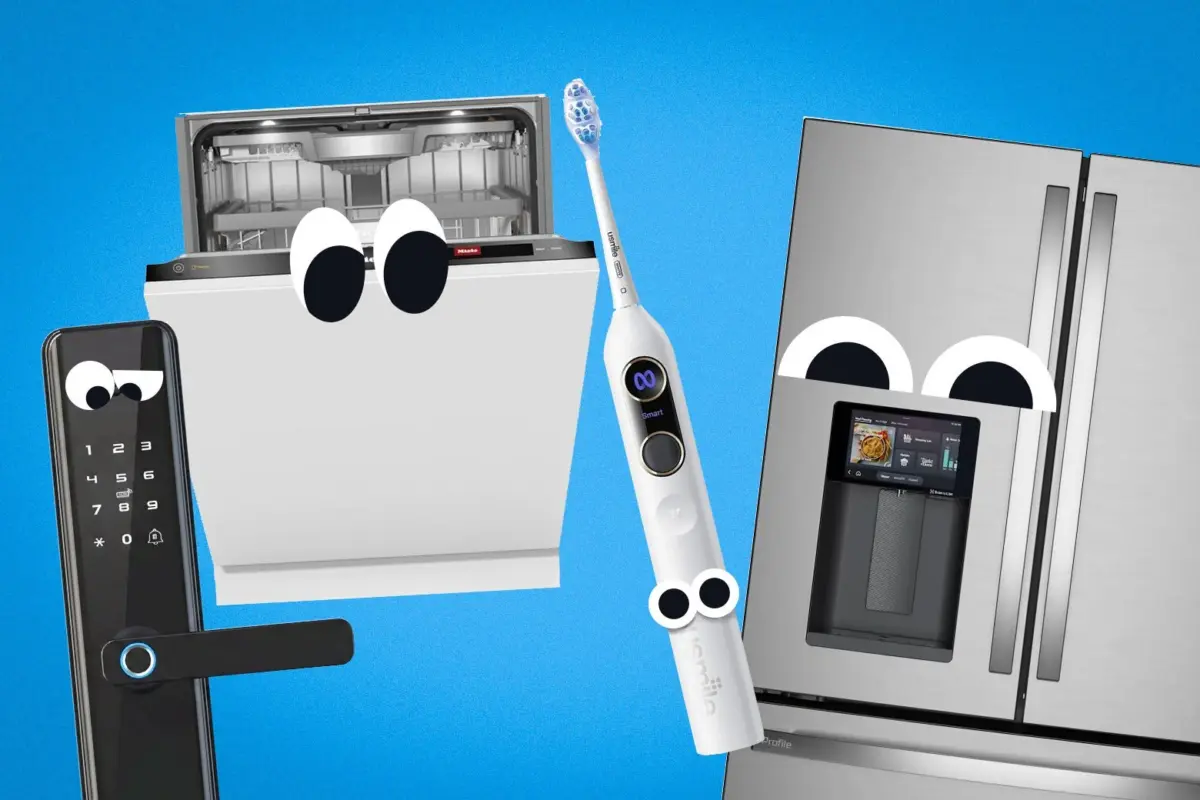
Consider the modern dishwasher: historically a dark, mechanical black box that washed your dishes out of sight and out of mind. Today, elite appliance manufacturers like Miele are embedding interior cameras directly into their machines, allowing users to remotely monitor wash cycles via mobile applications. Meanwhile, personal care giants like Dyson are rolling out high-end electric toothbrushes equipped with 100,000-pixel macro-lens cameras designed to stream live footage of your dental hygiene habits directly to your smartphone screen.
This intersection of hyper-connectivity, hyper-efficiency, and constant surveillance reflects a profound cultural paradox. On one hand, consumers are expressing historic levels of anxiety regarding corporate data harvesting, invasive AI, and ubiquitous monitoring—manifested in everything from smashed street-level surveillance cameras to privacy backlash against smart glasses. On the other hand, the market continues to churn out domestic devices that invite invasive technologies straight into our kitchens and bathrooms, driven by a deep-seated cultural compulsion toward productivity, optimization, and the elimination of error.
This article provides an in-depth examination of the camera-fied home. We explore the timeline of appliance surveillance, the psychological pressures fueling this consumer shift, the direct tension with user privacy demands, and what this accelerating trend means for the future of human autonomy.
Detailed Chronology: How Domestic Surveillance Crept Indoors
The integration of cameras into everyday home appliances did not happen overnight; it is the culmination of a decade-long technological creep that slowly eroded the boundary between public surveillance and private domesticity.
1. The Gateway Devices: Doorbells and Security (Mid-2010s)
The normalization of in-home and perimeter cameras began under the guise of security. Smart doorbells and external security cameras introduced millions of households to the concept of continuous remote monitoring. Framed as tools for package-theft prevention and home defense, these devices accustomed consumers to checking live video feeds of their front steps while at work, traveling, or sitting on the couch.
2. The Kitchen Enters the Frame: Ovens and Refrigerators (Late 2010s–Early 2020s)
Once consumers accepted cameras at the perimeter, manufacturers pushed them past the threshold. Smart ovens introduced internal cameras to monitor roasting levels, promising users the ability to watch their Thanksgiving turkeys brown from their smartphones without opening the oven door and losing heat. Simultaneously, tech giants and appliance makers began developing smart refrigerators equipped with interior cameras designed to photograph food inventories, track expiration dates, and monitor consumer purchasing patterns. The kitchen—traditionally a space of analog comfort—became a testing ground for algorithmic optimization.
3. The Hyper-Micro Era: Dishwashers and Toothbrushes (2026)
The domestic surveillance trend reached a new milestone at the IFA 2026 international home appliance exhibition in Berlin. Here, Miele officially unveiled its next-generation smart dishwasher featuring an integrated door-mounted camera. Designed to tailor wash cycles to "personal preferences" and maximize energy efficiency during off-peak electricity hours, the appliance brought remote video monitoring to the dirtiest chore in the house.
Concurrently, Dyson pushed the envelope of personal surveillance with the launch of a $500 smart electric toothbrush. Equipped with a microscopic macro-lens camera, the device streams real-time footage of interdental cleaning directly to the user’s phone, promising dental perfection at the cost of turning the daily bathroom routine into a clinical inspection zone.
Supporting Context & Metrics: The Psychology of "Busyness" and Optimization
To understand why consumers are willing to welcome cameras into their dishwashers and toothbrushes, one must examine the cultural pressures of the modern era. We live in an age defined by what sociologists and cultural critics term the "cult of busyness."
The Cost of Wasted Time
In a hyper-accelerated economic landscape, time is treated as a finite, capital asset. Every second spent re-washing a poorly cleaned dish, dealing with an unexpected dental cavity, or managing household inefficiency is perceived as a failure of personal productivity.
- The Efficiency Paradox: Appliance manufacturers market these cameras as productivity saviors. If a dishwasher camera ensures optimal water and energy use on the first try, or if a toothbrush camera highlights a missed plaque zone before it turns into a costly root canal, the device is ostensibly saving the user time and money.
- The Acceleration of Culture: From rapid-fire trend cycles to a constant stream of news and content, the external world is moving faster than ever. As individuals feel an increasing lack of control over macroeconomic and cultural forces, they turn their focus inward, attempting to hyper-manage the microscopic details of their immediate environments—their dishes, their teeth, and their schedules.
The Consumer Push-Pull: Privacy vs. Control
However, this embrace of hyper-surveillance exists in direct friction with contemporary consumer sentiment regarding data privacy.
- The Anti-Surveillance Backlash: Public weariness of data harvesting is reaching a boiling point. Across Western cities, citizens have actively vandalized or destroyed automated surveillance tools (such as Flock automated license plate-reading cameras). Wearables like AI-powered smart glasses have earned derogatory monikers like "pervert glasses," and widespread public skepticism surrounds how tech corporations utilize personal data to train artificial intelligence models.
- The Convenience Trap: Despite deep-seated distrust of corporations handling personal data, historical precedent shows that consumers consistently follow a predictable trajectory when it comes to frictionless technology: resistance, eventual submission, and deep reliance. Just as 18th-century observers viewed umbrellas as signs of weakness, and early critics feared elevators and escalators, today’s absurdities—like a $500 camera-equipped toothbrush—may quietly transition into standard expectations of modern living.
Official Statements & Industry Perspectives
Appliance manufacturers and tech developers defend these invasive design choices through the lens of user empowerment, resource conservation, and advanced artificial intelligence integration.
- Miele’s Design Philosophy: In promotional and press documentation surrounding their latest smart appliance lineups, Miele emphasizes the elimination of domestic decision fatigue. According to company representatives, features like the dishwasher camera are designed to optimize resource allocation, reduce water and electricity waste, and ensure that machine performance precisely matches user preferences without manual guesswork.
- The Personal Care Argument: Dyson and competing developers of smart personal tech argue that direct visual feedback is the missing link in preventative health. By providing users with micro-level insights into their daily habits—whether brushing techniques or dietary inventories—these companies position their products not as surveillance tools, but as personalized wellness coaches.
- Privacy Advocates’ Counter-Perspective: Conversely, digital rights organizations and privacy advocates raise serious red flags regarding data security and scope creep. While a dishwasher or toothbrush camera may not immediately double as a state-sponsored police surveillance tool, the aggregation of hyper-intimate domestic telemetry data creates massive honey pots for corporate entities. Once video feeds and usage patterns enter cloud databases, the potential for data breaches, third-party sharing, and algorithmic behavioral profiling multiplies exponentially.
Future Outlook: Where Do We Draw the Line?
As we look toward the future of the smart home, several critical questions remain unanswered. Where does the camera-fied home ultimately lead us, and what are the long-term consequences for human psychology and agency?
1. The Normalization of Total Visibility
As more home appliances incorporate optical sensors, the psychological baseline for privacy will continue to shift. When every room—from the kitchen to the bathroom—contains devices that record, analyze, and optimize our physical behaviors, the concept of a truly private sanctuary vanishes. We risk cultivating a society of self-policing individuals who internalize the gaze of the machine, constantly evaluating their own habits against algorithmic standards of perfection.
2. The Erosion of Tolerance for Human Error
The pursuit of a frictionless life comes at a psychological cost: the steady erosion of our tolerance for imperfection, inefficiency, and uncertainty. When every chore is monitored and optimized, there is no room left for the organic messiness of daily life. The occasional poorly washed plate or missed spot of toothpaste ceases to be a minor domestic quirk and becomes framed as a personal optimization failure.
3. Reclaiming Agency in a Hyper-Connected World
Despite the relentless march of domestic surveillance, signs of pushback are emerging. A growing counter-cultural movement—championing analog hobbies, mechanical friction, and digital detoxes—reflects a deep human desire to disconnect from the panopticon.
Ultimately, the proliferation of camera-equipped appliances forces consumers to make a fundamental choice. We must weigh the seductive promise of convenience, efficiency, and pearly-white perfection against the quiet, invaluable peace of mind that comes from knowing some parts of our lives remain entirely our own—unwatched, unrecorded, and unoptimized.