Executive Overview
Throughout history, humanity has harbored an enduring, quiet dissatisfaction with the mundane reality of daily life. From ancient folklore warning against the hubris of divine shortcuts to modern cinematic tropes of time travel and alternate realities, the desire to augment, escape, or permanently record our lived experiences is an ancient human impulse. In 2026, this ancient yearning has taken a decidedly commercial, silicon-laden form: the $300 Meta AI-enhanced smart glasses.
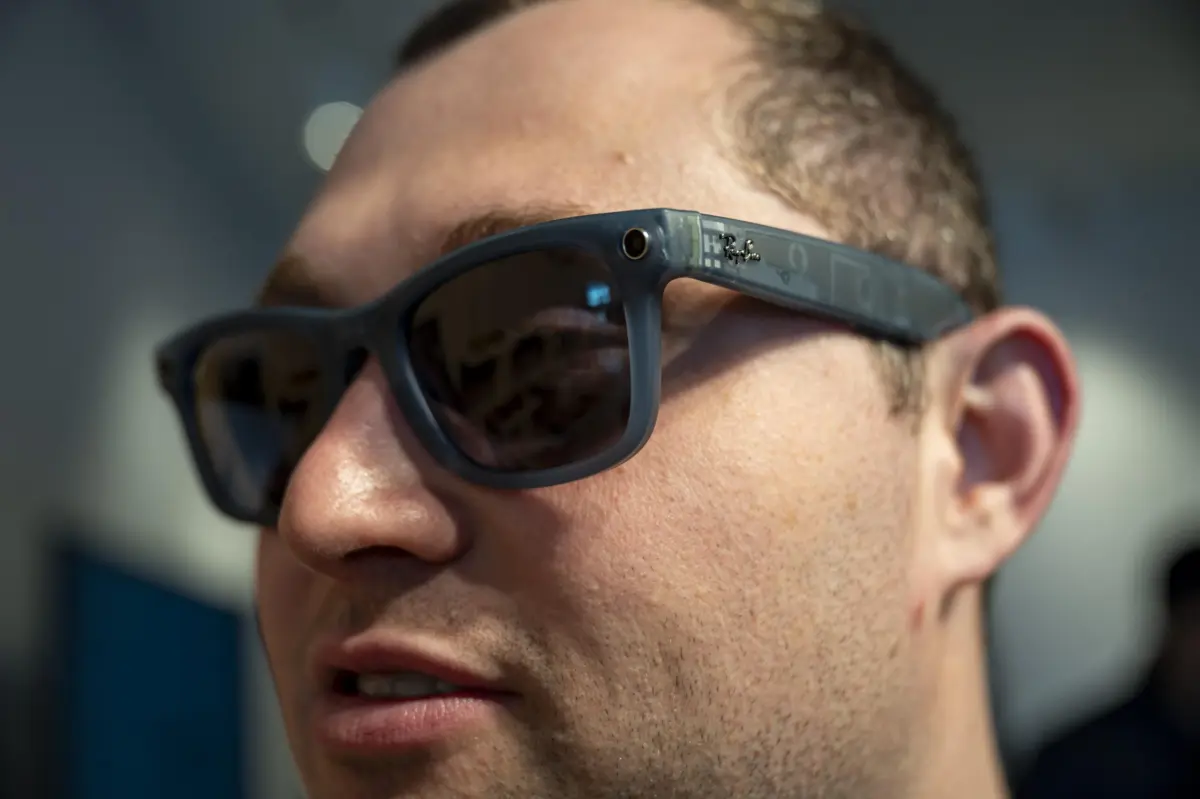
Outfitted with dual high-definition cameras, multi-directional microphone arrays, and discreet open-ear speakers tethered to a powerful, on-device AI ecosystem, these spectacles promise a futuristic life upgrade. With a simple voice command or tap of the frame, wearers can translate foreign languages in real-time, generate automated captions, command localized audio playback, and permanently archive moments of their choosing. Meta’s sprawling promotional campaigns depict these devices as indispensable companions for every facet of modern existence—from ziplining in Mexico and navigating Miami Beach to dining at trendy Japanese restaurants and mingling at high-profile parties.
Yet, this ambitious pitch collides violently with an uncomfortable social reality. The very features designed to optimize the wearer’s life impose an unwelcome tax on everyone else. Far from seamlessly blending into the background, Meta’s smart glasses have ignited a fierce cultural backlash, earning the derogatory moniker "pervert glasses" across social media and urban centers alike. By transforming casual bystanders into unwilling background actors in a perpetual, digital panopticon, the glasses have cultivated a profound social friction.
This investigative report explores the cultural collision between wearable AI and public privacy. Through interviews with everyday observers, disillusioned tech owners, and nightlife aficionados, we examine how an ostensibly helpful gadget designed for hands-free utility became a symbol of modern surveillance fatigue—and whether Meta can salvage its hardware flagship from the precipice of social obsolescence.
Detailed Chronology: From Silicon Valley Pitch to Public Backlash
To understand how a consumer electronics product became a lightning rod for social anxiety, it is necessary to trace the trajectory of Meta’s wearable strategy from its conceptual rollout to its current precarious standing in public spaces.
- Late 2024 to Mid-2025 (The Honeyed Introduction): Meta aggressively expands its smart eyewear partnerships, integrating advanced multimodal AI features into sleek Ray-Ban frames. Early marketing focuses on the novelty of hands-free capture, quick-fire social media posting, and contextual AI assistance. Initial adopters praise the lightweight design and audio quality.
- Late 2025 (The Content Creator Rush): Inspired by influencer culture and the normalization of gym vlogs, early adopters begin wearing the glasses in public venues—restaurants, fitness centers, and casual social gatherings. The friction between content creation and public privacy begins to show initial cracks. Reports emerge of gym-goers and restaurant patrons feeling uneasy around unknown wearers.
- Early 2026 (The "Pervert Glasses" Phenomenon): As adoption broadens, a subset of users—ranging from pranksters to bad actors—leverages the stealthy form factor to record individuals without their consent. Disturbing trends surface online involving non-consensual recordings captured at nightlife venues, festivals, and beaches. Online communities and offline peer groups push back aggressively, coining the pejorative term "pervert glasses." Spontaneous social boycotts occur at weddings, bars, and private parties.
- Mid-2026 (The Regulatory and Firmware Turning Point): Faced with mounting PR crises, petition drives to ban the specs from establishments, and rising privacy concerns, Meta announces a stringent firmware update. The new update automatically disables the recording functionality if the mandatory physical indicator light is physically or digitally tampered with. Industry observers debate whether software patches can rehabilitate hardware suffering from a toxic brand reputation.
Supporting Context & Metrics: The Anatomy of Social Discomfort
The tension surrounding Meta’s AI glasses is not merely a matter of bad manners; it is rooted in deep-seated anxieties regarding the erosion of public anonymity. In an era dominated by ubiquitous smartphone cameras, closed-circuit television (CCTV), and social media platforms demanding endless content, the threshold for public exposure has reached a saturation point. Yet, smart eyewear introduces a fundamentally different psychological threat model.
The Panopticon Effect in Daily Life
Unlike a smartphone—which must be consciously pulled from a pocket, unlocked, and pointed at a subject—smart glasses are worn flush against the face. The camera lens tracks wherever the user directs their gaze. This creates an intense manifestation of the panopticon effect, a sociological concept where individuals alter their behavior because they believe they are—or might be—under constant surveillance.
As Sean, a Washington D.C. resident who noticed a gym trainer wearing the spectacles, observed:
"I don’t want to be in the background of videos all over the internet or on TikTok. Not knowing what the glasses are for, what the trainer is recording, or where he’s recording is what bothered me."
This sentiment is echoed across various demographic segments. Nightlife environments, traditionally spaces of uninhibited release and temporary escape, are particularly vulnerable to this dynamic. Vee, a nightlife aficionado and former owner of a Meta glasses pair, notes that the presence of wearable cameras fundamentally alters the chemistry of a social space:
"When people know there’s a camera on them, they behave differently. They start to monitor their own behavior. They become self-conscious and they start to think, ‘Well, what will the people watching this video think I’m doing? Am I being cringe?’"
The Seedy Underbelly and the Indicator Light Crisis
The crisis of confidence deepened when bad actors began exploiting the covert nature of the hardware. Reports of individuals attempting to bypass or disable the built-in LED recording indicator light—designed to alert bystanders when video capture is active—pushed public sentiment from wary skepticism to outright hostility.
In response, Meta’s software intervention aims to brick or disable recording capabilities if the LED indicator is compromised. Owners like Jason, a 28-year-old who purchased a pair to launch a food-review concept called "Sandwich Digest," view this safeguard as absolute:
- The Compromise: The glowing indicator light is uncomfortable for both the wearer and the observer, frequently ruining the organic flow of social interactions.
- The Line in the Sand: Despite the awkwardness, the light serves as the single remaining social contract protecting the device from total rejection. Tampering with it, users argue, destroys the fragile trust required for public deployment.
Official Statements and Industry Response
The polarization of wearable AI has forced Meta and consumer advocacy groups to carefully calibrate their messaging. Meta’s official documentation and executive statements continue to emphasize the liberating potential of spatial computing, hands-free accessibility, and AI assistance designed to bridge communication barriers.
According to Meta’s product communications regarding the 2026 firmware updates:
"Our goal has always been to empower users to experience and capture the world around them while maintaining robust privacy guardrails. The integration of enhanced hardware-software synchronization ensures that recording transparency remains uncompromised, reinforcing trust between device wearers and their communities."
However, privacy advocates and independent tech analysts point out that corporate assurances struggle to keep pace with grassroots social enforcement. While accessibility features—such as aiding visually or hearing-impaired users—earn legitimate praise, they risk being entirely overshadowed by the cultural fallout of non-consensual surveillance.
Industry analysts note that Meta faces a classic technological adoption hurdle: the "uncanny valley" of social acceptability. Just as early Google Glass adopters ("Glassholes") faced immediate social backlash a decade prior, modern AI eyewear wearers find themselves bearing the social cost of a technology that outpaces contemporary social etiquette.
Future Outlook: Can Wearable AI Rehabilitation Succeed?
As the industry looks toward the remainder of the decade, the fate of Meta’s smart glasses—and the broader category of consumer AI eyewear—hangs in the balance. The path forward depends on three critical pillars: hardware evolution, software accountability, and cultural re-education.
+--------------------------------------------------------------------------+
                    FUTURE TRAJECTORY OF WEARABLE AI
+--------------------------------------------------------------------------+
  [1. Hardware Refinement]      --> Smaller form factors, deeply embedded
                                    sensors that remove the "cyborg" aesthetic.

  [2. Software Accountability]  --> Zero-tolerance policies for indicator
                                    tampering; robust geofencing for private spaces.

  [3. Cultural Normalization]   --> Evolving social etiquette regarding
                                    wearable capture; explicit "safe zones."
+--------------------------------------------------------------------------+- Hardware Refinement: Future iterations must successfully hide technological components entirely within traditional, fashionable eyewear frames without triggering suspicion. However, increased stealth must be balanced against privacy demands; total invisibility without transparent indicator lights will likely trigger outright legislative bans in public venues.
- Strict Ecosystem Policing: Software updates that automatically disable unverified recording methods—coupled with community-driven reporting mechanisms—will be vital in purging the "pervert glasses" stigma. Devices must become functionally useless if modified for illicit surveillance.
- Establishment of Social Norms: Just as society developed unspoken rules around smartphone usage during intimate dinners or professional meetings, a new etiquette for wearable AI must emerge. This includes normalized "opt-out" zones, clear verbal notification protocols, and an acute awareness of when capturing a moment infringes upon the autonomy of others.
For early adopters like Jason, the lesson has been learned the hard way. While his Meta glasses occasionally accompany him on isolated outdoor excursions like ziplining or hiking, they remain safely stowed away during everyday social interactions.
Ultimately, Meta’s AI glasses occupy a fascinating, troubled intersection of human desire and technological overreach. They offer a window into a frictionless, augmented future—provided the wearer is willing to pay the social toll of being viewed with suspicion in every restaurant, gym, and wedding they attend. Until society reaches a consensus on the boundaries of wearable AI, the most powerful feature of these smart glasses will remain their most contentious: the glowing red light that reminds everyone in the room they are living inside someone else’s content.