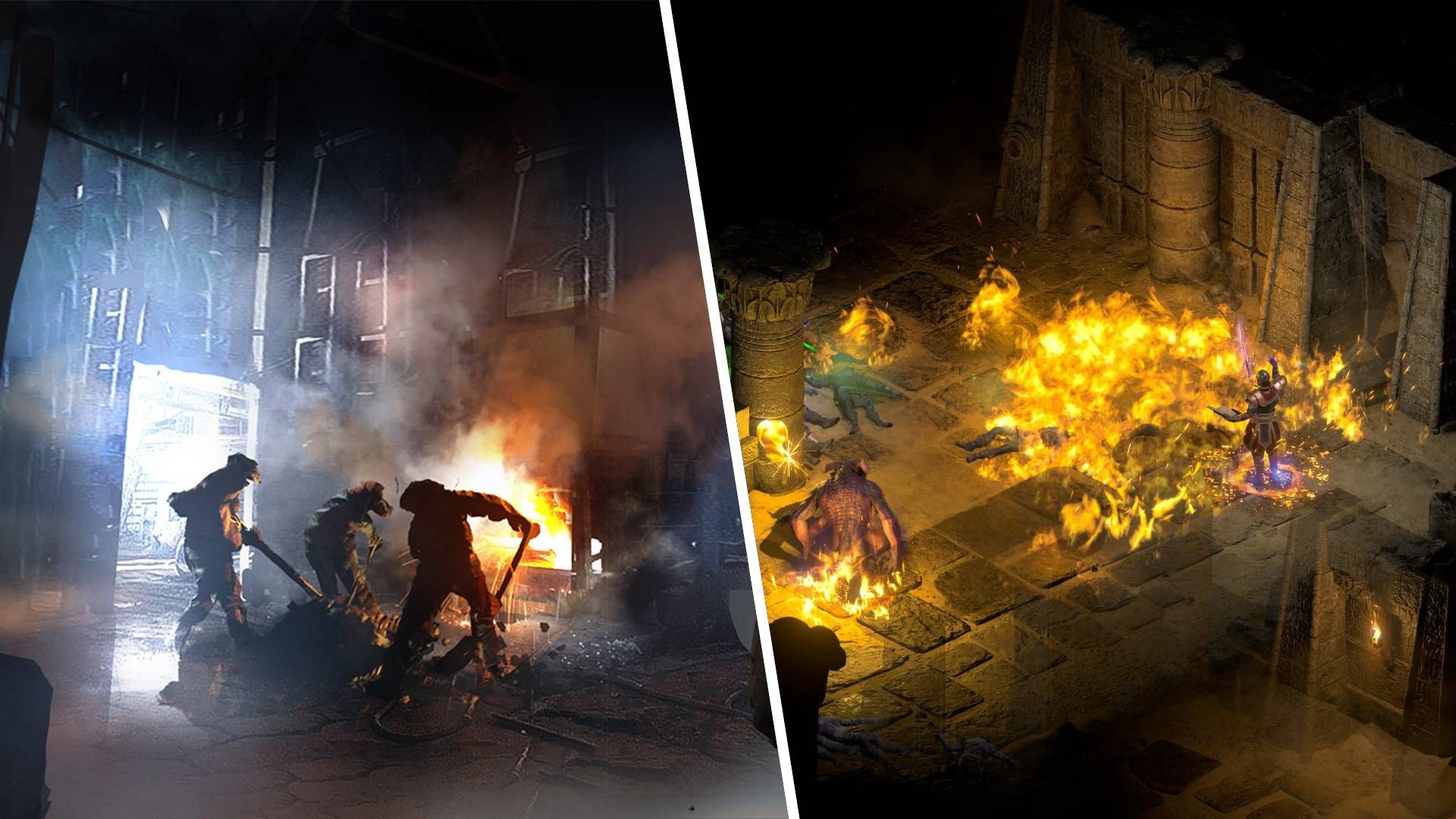
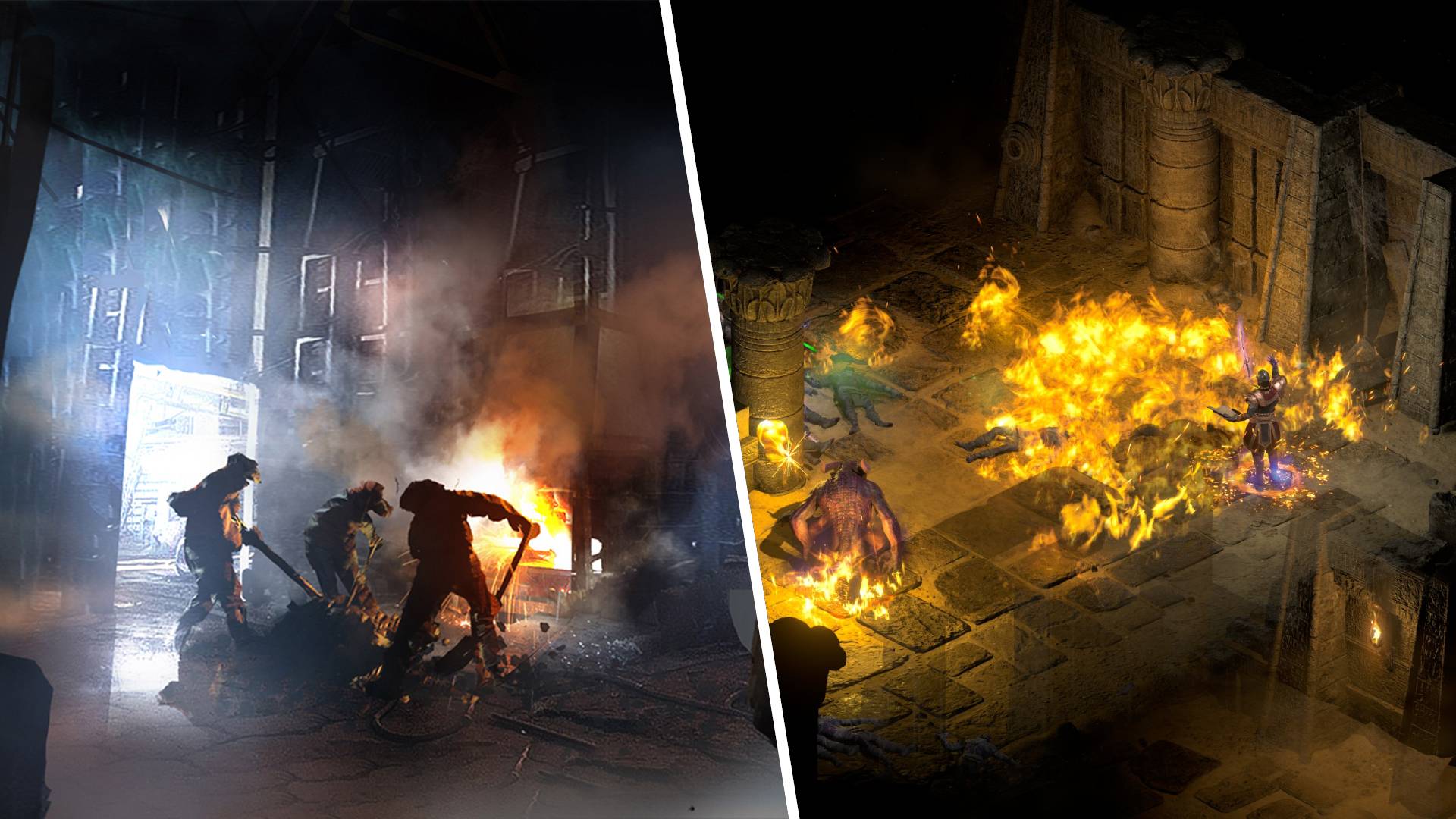
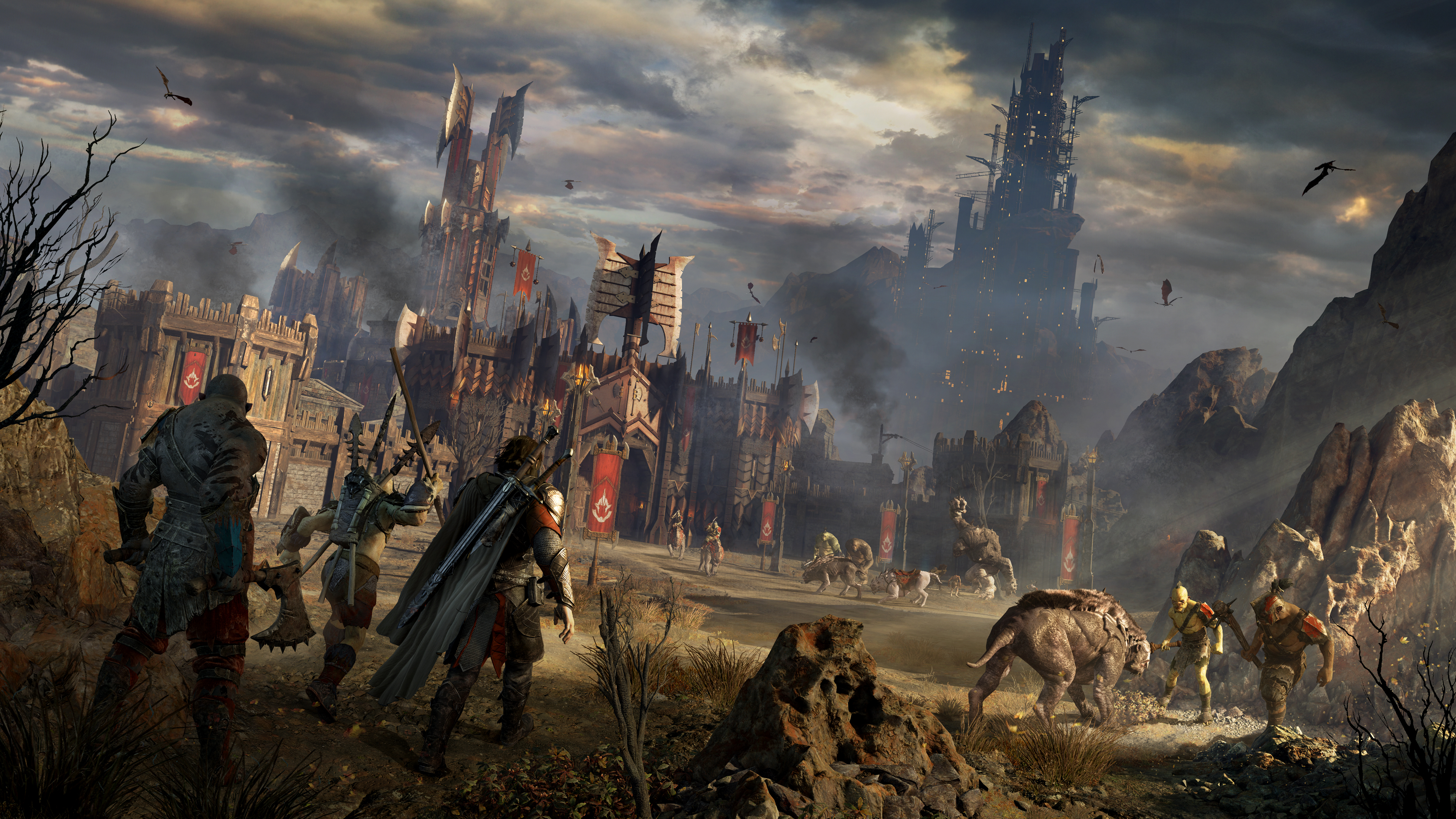
Every time a player unleashes a catastrophic meteor swarm in Diablo, summons a devastating cloud of daggers in Baldur’s Gate 3, or roasts a cluster of unsuspecting goblins with a fireball, they are participating in a profound historical lineage. This trajectory—what cultural historians might term a "causality chain"—stretches back centuries before the concept of min-maxing a "warlock dip" entered the popular lexicon. At its genesis, the mechanical DNA of modern area-of-effect (AoE) magic had nothing to do with fantasy or tabletop gaming; rather, it was inextricably bound to the socio-economic upheavals of the 18th-century Industrial Revolution.
This investigative retrospective traces the fascinating arc of cause and effect from the smoke-choked blast furnaces of the British Midlands to the digital battlefields of contemporary role-playing games. By examining the domino effect linking steam engines, J.R.R. Tolkien’s childhood trauma, tabletop wargaming zines, and early computer mainframes, we uncover how real-world technological devastation was transmuted into the foundational mathematics of digital fantasy combat.
Detailed Chronology: From Smoke Stacks to Spell Slots
The evolution of the area-of-effect spell is not a straight line, but a complex Rube Goldberg machine of cultural cross-pollination. The journey spans nearly three centuries, moving from the rise of factory machinery to the dawn of the silicon age.
1. The Rise of Industry and the Transformation of Landscape (1760–1840)
The foundational roots of modern AoE damage lie deep within the first Industrial Revolution. Between 1760 and 1840, radical technological breakthroughs—most notably James Watt’s improvements to the steam engine and the large-scale substitution of coke for charcoal in blast furnaces—fundamentally rewired human civilization. Skilled craftsmen were steadily replaced by mechanized machine tools, and the centralized factory system emerged as the dominant engine of economic production.
While these developments unlocked unprecedented levels of manufacturing output, they also fundamentally altered the physical geography of Western Europe. Swathes of agrarian land were consumed by urbanization, coal mining, and heavy industry. This sweeping societal shift would plant the psychological seeds for modern fantasy tropes, transforming the natural world into a theater of mechanized destruction.
2. The Black Country and the Birth of Mordor (1896)
In 1896, a four-year-old J.R.R. Tolkien moved from the bustling city of Birmingham to rural Worcestershire. This brief immersion in the English countryside cultivated a lifelong reverence for pastoral life. However, this idyllic landscape was short-lived. As Tolkien later lamented in the foreword to The Lord of the Rings, the rapid march of industrialization "shabbily destroyed" his childhood paradise before he turned ten.
The region where he lived—characterized by soot-darkened skies, perpetual foundries, and roaring blast furnaces—became known colloquially as "The Black Country." The valleys glowed day and night with sheets of industrial sparks shooting fifty feet into the air. This real-world inferno directly inspired Tolkien’s fictional wasteland of Mordor (derived from Sindarin, meaning "the Black Land"), establishing a powerful literary link between unchecked industrial output and apocalyptic, fiery devastation.
3. The Devilry of Saruman and Tolkien’s Wizards (1954)
When The Lord of the Rings was published in 1954, Tolkien’s deep-seated anxieties regarding industrialization permeated the narrative. His wizards embodied distinct philosophical stances on power and technology. Saruman, who falls into corruption, constructs smoke-billowing factories around the tower of Orthanc, clears the Shire to build mills, and uses magical fire to forge early explosives capable of breaching castle walls at the Battle of the Hornburg.
Conversely, Gandalf—"a servant of the Secret Fire, wielder of the flame of Anor"—predominantly utilizes magic with restraint. Aside from localized pyrotechnics for hobbit entertainment or desperate measures like igniting pine cones against wolves, Gandalf favors subtlety over raw destructive output. When he does unleash volatile fire, the narrative treats it with heavy, catastrophic gravity, directly mirroring Tolkien’s view of heavy industry as an unnatural, ruinous force.
4. The Wargaming Translation: Rules for Middle Earth (1970)
Despite Gandalf’s sparing use of fire, his occasional dramatic flourishes cemented the concept of magical combustion in the minds of early wargamers. In 1970, Leonard Patt published Rules for Middle Earth within the New England Wargamers Association zine, The Courier.
Patt faced a critical design challenge: how to translate Tolkien’s literary magic into a tabletop wargame. His solution was to treat wizardly fire like military artillery. Patt’s "fire ball" mechanic introduced the first-ever area-of-effect rule for a spell, complete with a physical burst circle and an early iteration of a saving throw:
"Wizards in possession of magic powers can cast a fire ball once every other turn. The distance is 24" and the hit is determined by using a 6" grid with a 2½" burst circle. Any figures under the burst are killed except HEROES and ANTI-HEROES, who are saved by a throw of a 5 or 6."
5. Dungeons & Dragons and the Danger of Backdraft (1974)
In 1974, TSR published Dungeons & Dragons, masterminded by Gary Gygax and Dave Arneson. The rules expanded directly upon the fantasy supplements of the Chainmail wargame, which themselves drew heavily from Patt’s Rules for Middle Earth.
The iconic fireball spell made the transition into D&D with a 2-inch burst radius (translating to a 20-foot radius in theater-of-the-mind play). Crucially, the rules specified that the blast would "conform to the shape of the space." Casting a fireball into a confined subterranean corridor or small dungeon room meant the magical concussive force would blow back toward the party—a lethal environmental hazard that claimed the lives of countless novice magic-users.
6. The Digital Frontier and the Golden Box Era (1975–1980s)
As computing power evolved, university student Daniel Lawrence adapted D&D into a digital format in 1975 on a PDP-10 mainframe computer. Originally titled DND and later commercialized as Telengard, this pioneering project featured a fireball spell, though technical limitations restricted combat encounters to strict one-on-one skirmishes, omitting area-of-effect mechanics.
By the 1980s, developers engineered creative workarounds to simulate AoE damage. Wizardry introduced spells targeting enemy subsets or entire groups, while Ultima III allowed players to cast multiple localized fireballs. Ultima IV (1985) introduced the screen-clearing tremor spell, and Ultima V (1988) debuted directional cone spells.
The definitive turning point arrived when Strategic Simulations, Inc. (SSI) secured the official D&D license to produce Pool of Radiance (1988). Utilizing Advanced Dungeons & Dragons 1st Edition rules, the game implemented true, spatial area-of-effect fireballs. Just as Tolkien had warned decades prior, careless positioning meant players could easily incinerate their own party members—solidifying tactical spatial awareness as a core tenet of computer role-playing games.
Supporting Context & Metrics
To fully appreciate the scope of this historical evolution, consider the following structural transformations across media:
The Scale of Industrialization: Between 1800 and 1900, the urban population of Great Britain surged from 20% to over 80%, concentrating vast labor forces around coal and iron hubs—the physical reality that inspired the blackened geography of Mordor.
Tabletop Spatial Mechanics: Leonard Patt’s 1970 Rules for Middle Earth transitioned magic from a narrative literary device into quantifiable geometry, utilizing a 6-inch grid and a 2.5-inch burst template that established standard tabletop artillery mathematics.
Digital Adaptation Rates: Early computer RPG mainframes in the mid-1970s operated with memory constraints measured in kilobytes, necessitating simplified one-on-one combat loops before graphical rendering engines could support multi-target environmental calculations by the late 1980s.
Industry Perspectives & Expert Commentary
The translation of real-world trauma into foundational game mechanics highlights a fascinating intersection between historical critique and interactive entertainment design. Game historians and designers have frequently reflected on how mechanical tropes inherit ideological baggage.
"When Tolkien looked at the industrial midlands of his youth, he saw a landscape being systematically unmade by fire and iron," notes cultural historian Dr. Aris Thorne. "It is an exquisite irony of modern media that the very engines of industrial pollution and mass destruction he so vehemently critiqued were aestheticized by wargamers into the mathematical geometry of the tabletop fireball. Every time a modern gamer calculates blast radii, they are effectively managing industrial-scale combustion in a fantasy skin."
Game designers point out that the inclusion of spatial risk—such as the infamous D&D fireball blowback—was essential in preventing magic systems from becoming overpowered. By forcing players to respect the environmental boundaries of a digital or physical space, designers anchored cosmic supernatural power to physical, architectural reality.
Future Outlook
As video game engines advance into real-time ray tracing, volumetric fluid dynamics, and fully destructible environments, the mechanics of area-of-effect spells continue to evolve. Modern titles no longer rely on simple two-dimensional blast circles or grid-based raycasts; instead, they simulate thermodynamic heat dispersal, smoke propagation, and material flammability in real time.
Yet, despite these hyper-realistic technological leaps, the core design philosophy remains anchored to the ruleset established by Leonard Patt and Gary Gygax in the 1970s. Whether casting a spell in an indie roguelike or a next-generation blockbuster, players are engaging with a direct mechanical descendant of 19th-century industrial machinery. As long as digital realms feature tight corridors and clustered enemies, the temptation—and the peril—of dropping a massive fireball will remain an unyielding pillar of interactive entertainment.