Executive Overview
In the fast-moving ecosystem of internet culture, linguistic evolution often happens at breakneck speed, driven equally by humor, subculture, and the constraints of digital platforms. The latest linguistic mutation to capture the attention of millions across Instagram, TikTok, and X (formerly Twitter) is the intentional misspelling "Didy."
Serving as a tongue-in-cheek, casual moniker for the disgraced music mogul Sean "P. Diddy" Combs, the term began appearing in ironic online spaces as early as July 2025. What started as a niche ironic misspelling quickly transformed into a multifaceted digital phenomenon. By late 2026, "Didy" had evolved from a simple punchline into a complex cultural artifact, fusing absurdist humor, classic animation tropes from South Park, and a vital tactic in the ongoing game of cat-and-mouse between creators and algorithmic content moderation.
This report provides an in-depth investigative look at the origins, trajectory, and cultural significance of the "Didy" meme. By examining its timeline, platform-specific adaptations, and the socio-technical factors driving its adoption, we uncover how internet users continue to find innovative ways to discuss taboo, highly publicized legal trials while bypassing the strict content moderation filters of major social media corporations.
Detailed Chronology: From Courtroom Headlines to Digital Satire
The genesis of the "Didy" phenomenon is deeply intertwined with real-world events. As legal proceedings against Sean Combs dominated global headlines throughout mid-2025, digital creators sought new ways to process, satirize, and comment on the unfolding scandals without running afoul of platform safety guidelines.
The Spark: July 2025
Following the conclusion of Sean Combs’ high-profile trial in July 2025, ironic memes referencing the music mogul began circulating on Instagram. While internet users had long used various nicknames and inside jokes to discuss celebrities facing legal scrutiny, the specific phonetic misspelling "Didy" emerged as a distinctive stylistic choice.
One of the earliest documented instances of the term gaining mainstream traction was a post by the Instagram account negan.feels on July 24, 2025. Utilizing the popular "Mr. Incredible Becoming Uncanny" template—a format well-known for juxtaposing escalating degrees of disturbing or surreal scenarios—the post featured the phrase, "You get a phone call, IT’S FROM DIDY." The juxtaposition of a mundane, slightly misspelled name with the existential dread of the meme format resonated with audiences, quietly racking up over 62,100 likes and laying the groundwork for future iterations.
Steady Incubation: Late 2025 to Mid-2026
For the remainder of 2025 and into the first half of 2026, "Didy" operated largely as a subterranean meme, favored by niche shitposting communities. On December 18, 2025, the Instagram page bogorhoodfails2009 shared a surreal image macro featuring the term alongside nonsensical internet slang, further embedding the misspelling into the lexicon of Gen Z and Gen Alpha meme architects.
By late summer 2026, the term began bleeding into broader conversational meme formats. On August 31, 2026, Instagram user juggperc posted a video captioned "When bro says didy words," a post that quickly went viral, pulling in over 91,000 likes in two months. This indicated a shift: "Didy" was no longer just a direct reference to the individual, but had become an adjective and a conceptual framework within online shitposting.
The October 2026 Explosion
The true tipping point for the "Didy" phenomenon occurred in October 2026. Within a matter of weeks, the slang term experienced an explosive surge in virality across TikTok, X, and Instagram Reels, propelled by two distinct creative choices: the integration of out-of-style South Park imagery and the strategic application of algospeak.
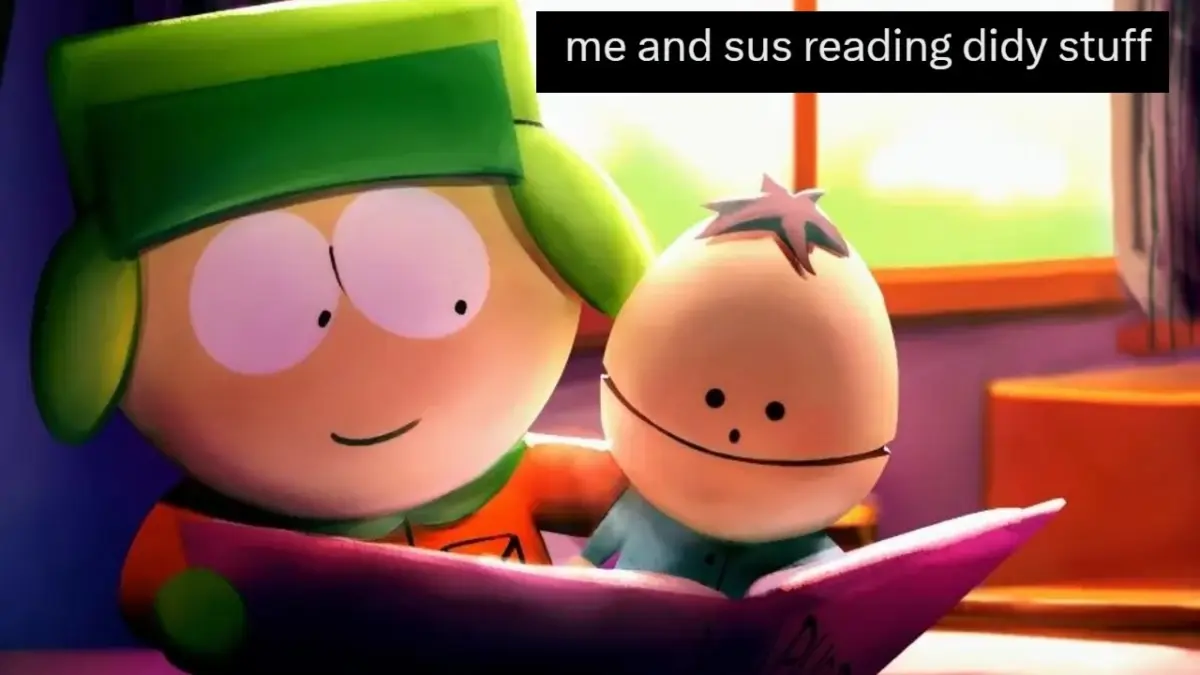
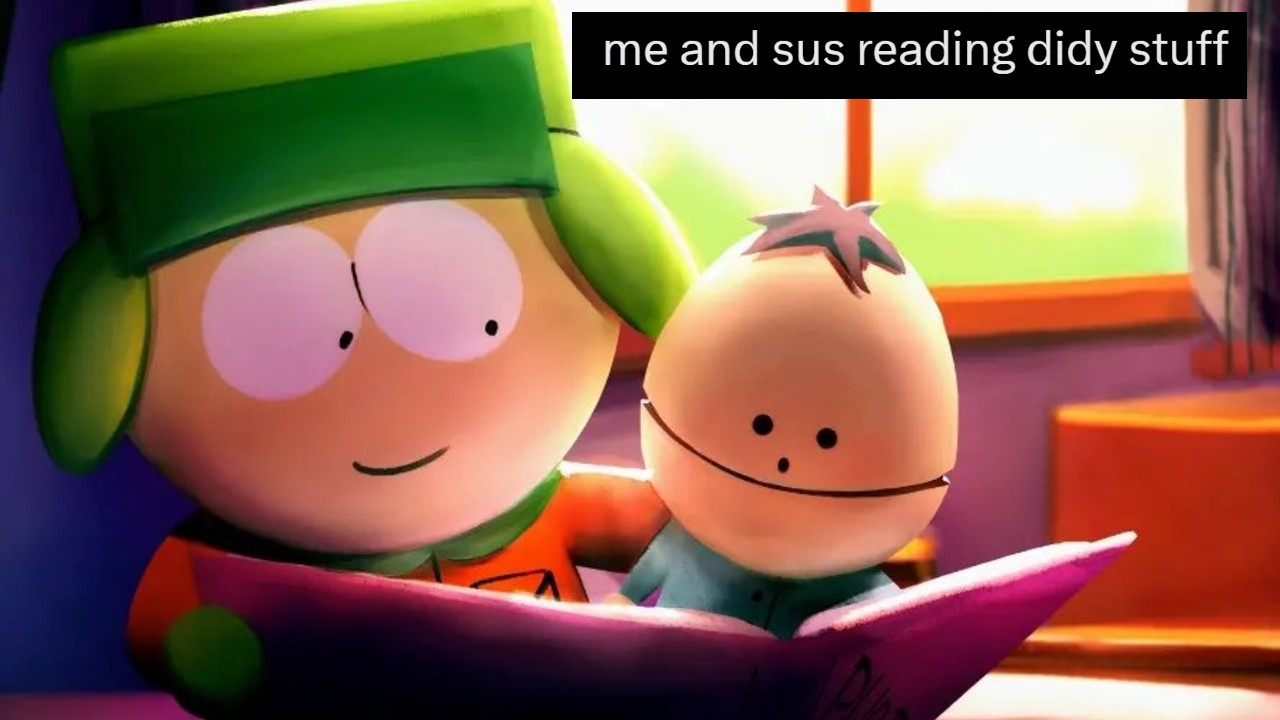
On October 23, 2026, X user @jadecerealepic7 posted a low-resolution screenshot of the animated series South Park, specifically featuring Kyle reading to his adopted brother Ike, paired with the deadpan caption: "me and sus reading didy stuff." The post struck a chord, capturing nearly 9,000 likes in less than four days.
Almost simultaneously, X user @poneshion shared another deep-cut South Park image—this time referencing the iconic "City Wok" storyline—with the caption: "me in didy vs drake war." The post accumulated over 23,000 likes in four days, illustrating how internet users were beginning to mash together multiple contemporary celebrity controversies under the umbrella of absurd animation aesthetics.
The trend was not limited to image macros. On that same day, TikTok creator @rooooofus uploaded a video capturing a horse eating a peppermint, appending a deadpan caption that reframed the animal as a "Didy horse." The sheer absurdity of the comparison propelled the video past 850,000 views in under 96 hours, cementing the term’s transition into mainstream algorithmic favor.
Supporting Context & Metrics
To fully understand why "Didy" resonated so powerfully, it is necessary to examine the socio-technical landscape of modern social media, particularly the mechanics of algospeak and platform moderation.
The Mechanics of Algospeak
Platforms like TikTok and Instagram Reels employ sophisticated automated moderation tools designed to suppress content that discusses sensitive, violent, or legally contentious topics. Discussions surrounding individuals facing serious criminal charges are frequently flagged, shadowbanned, or outright removed to maintain brand safety and comply with trust-and-safety guidelines.
In response, internet subcultures have perfected algospeak—a linguistic practice where users intentionally misspell words, use coded language, or deploy visual proxies to bypass automated filters.
- Changing "Diddy" to "Didy" serves a dual purpose:
- Algorithmic Evasion: It prevents natural-language processing (NLP) bots from easily categorizing the content as a direct violation or a flagged topic, thereby keeping the video or meme visible in algorithmic feeds.
- Subcultural Signalling: The misspelling adds a layer of ironic detachment. It signals to other users that the creator is in on the joke, transforming a dark or serious real-world news story into absurdist digital surrealism.
Engagement Metrics and Growth Trajectory
While search interest metrics for "Didy" initially trickled in slowly following its mid-2025 inception, the October 2026 surge marked a massive spike in cross-platform engagement.
| Date / Milestone | Platform | Key Post / Creator | Engagement Highlights |
|---|---|---|---|
| July 24, 2025 | @negan.feels (Mr. Incredible Uncanny) |
62,100+ likes (achieved over 1 year) | |
| December 18, 2025 | @bogorhoodfails2009 |
14,900+ likes | |
| August 31, 2026 | @juggperc ("didy words") |
91,000+ likes (in 2 months) | |
| October 23, 2026 | X | @jadecerealepic7 (Kyle & Ike South Park) |
9,000+ likes (in 4 days) |
| October 23, 2026 | X | @poneshion (City Wok South Park) |
23,000+ likes (in 4 days) |
| October 23, 2026 | TikTok | @rooooofus (Didy horse) |
850,000+ views (in 4 days) |
The rapid accumulation of hundreds of thousands of views and tens of thousands of likes across multiple platforms demonstrates that the meme crossed the threshold from micro-trend to mainstream internet vernacular within a remarkably tight window.
Official Statements and Platform Reactions
As of late 2026, major social media corporations have not issued explicit, dedicated policy updates regarding the term "Didy." However, trust-and-safety representatives from platforms like TikTok and Meta have frequently addressed the broader phenomenon of algospeak in public safety briefings.
A spokesperson for a major short-form video platform, speaking on background regarding content moderation challenges, noted:
"Meme culture inherently thrives on subversion. When our automated systems adapt to catch specific keywords or harmful narratives, communities naturally respond with colloquialisms, misspellings, and abstract framing. Our enforcement teams continuously train our models to look beyond surface-level lexical modifications to ensure that content violating our community guidelines regarding harassment, legal proceedings, and sensitive events cannot bypass detection simply through altered spelling."
Despite these technological safeguards, the sheer volume and decentralized nature of internet humor mean that terms like "Didy" often slip through the cracks, sustained entirely by the collective participation of users who treat algorithmic evasion as a game of wits.
Future Outlook: The Longevity of Absurdist Slang
As we look toward the future of digital communication, the "Didy" phenomenon offers a fascinating case study in how internet communities process collective trauma, media fatigue, and corporate censorship.
Will "Didy" Have Staying Power?
Historically, meme slang driven primarily by specific legal trials or news events tends to experience a sharp rise followed by an equally steep decline once the underlying news cycle cools. However, "Didy" has demonstrated a unique capacity for abstraction. By detaching itself from direct commentary on Sean Combs and morphing into a general-purpose adjective and surrealist modifier—as seen in phrases like "didy words" or random animal pairings—the term has acquired a degree of independence.
The Evolution of Algospeak
The trajectory of "Didy" also points to a broader, permanent shift in how digital natives communicate online. As long as centralized platforms maintain aggressive, automated content moderation systems, users will continue to invent new linguistic workarounds. The misspelling of names, the deployment of incongruous pop-culture imagery (such as vintage South Park cuts), and the creation of layered, ironic subtexts will remain foundational tools of digital expression.
Ultimately, "Didy" stands as a testament to the resilience, creativity, and dark humor of the modern internet user base—transforming a restrictive digital environment into a canvas for absurdist art.