Executive Overview
In the fast-paced ecosystem of internet subcultures, viral trends often arrive with a deafening roar and disappear just as quickly. Yet, occasionally, a phenomenon emerges that captures the collective imagination of online creators through sheer emotional resonance and artistic flexibility.
Entering the cultural lexicon in the fall of 2026, "The Last Dance" trend represents one of the most distinctive cross-platform movements of the year. Spanning TikTok and various animation communities, the trend seamlessly bridges the gap between digital animation memes and live-action cosplayer choreography. At its heart lies a striking juxtaposition: an obscure, upbeat yet haunting track titled "fpd ff7 botsu 8"—originally uploaded to SoundCloud in 2014 by renowned Vocaloid producer Maretu—reborn over a decade later as a viral masterpiece.
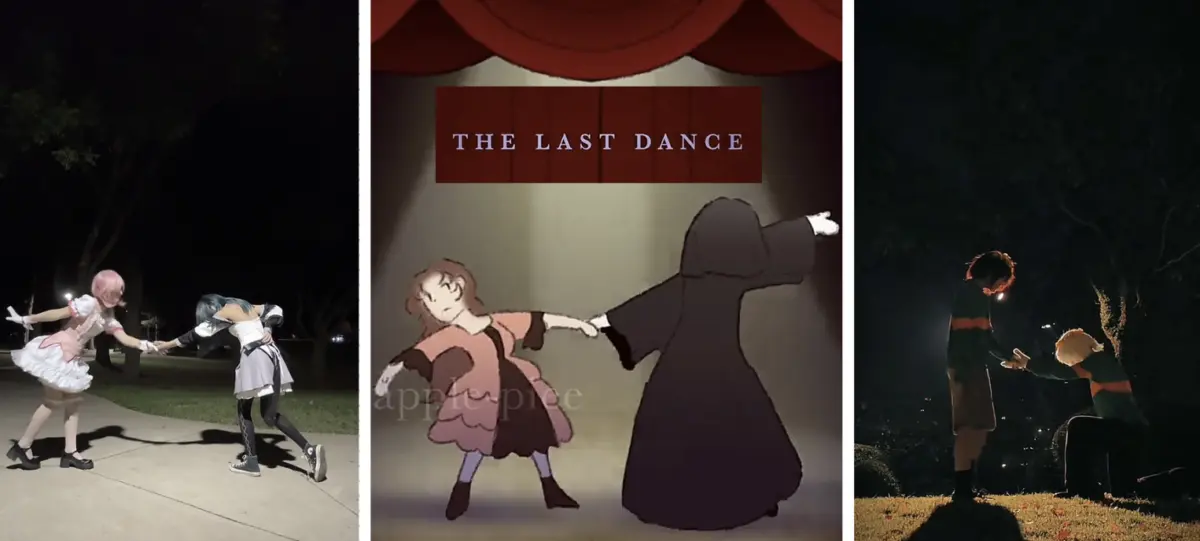
Characterized by synchronized, elegant choreography performed by pairs of characters or real-life creators, "The Last Dance" is rarely just about the steps. Instead, the format has become a versatile narrative vehicle. Animators and short-form video creators utilize the routine to depict metaphorical farewells, tragic demises, romantic partings, and significant life transitions.
This deep-dive investigative report examines the origins, trajectory, cultural impact, and widespread adoption of "The Last Dance" trend, tracing its path from a dormant audio file on SoundCloud to a multi-million-view phenomenon dominating global feeds in late 2026.
Detailed Chronology: From SoundCloud Obscurity to Viral Dominance
To understand how "The Last Dance" captivated millions, one must trace a timeline spanning more than a decade, marked by sudden algorithmic resurfacing, collaborative fan covers, and easily adaptable open-source digital templates.
Phase 1: The Genesis (September 2014 – July 2026)
The foundational audio of the trend did not originate in the TikTok laboratories of 2026. Rather, it dates back to September 19th, 2014, when Vocaloid producer Maretu—celebrated within electronic music and Japanese vocal synthesis circles for distinctive, high-energy compositions—uploaded a lesser-known track titled "fpd ff7 botsu 8" to SoundCloud. For nearly twelve years, the track remained a deep cut appreciated primarily by hardcore followers of the artist.
The turning point arrived on July 20th, 2026. YouTube user InNirvanna reuploaded the full, unedited track to their channel, exposing the vintage composition to a new generation of listeners. Over the course of roughly 15 weeks, the archive video quietly accumulated over 516,800 views, laying the groundwork for an unexpected mainstream breakout.
Phase 2: The Animation Meme Infrastructure (August 2026)
As the audio gained traction among digitally native creators, the trend began branching into two distinct yet interconnected formats: animation memes and live-action performances.
- August 14th, 2026: TikTok user
fugashizzz._published what is widely recognized as the earliest iteration of the trend combining the Maretu track with an animation loop. The video featured characters running along a rotating wheel against a minimalist backdrop, quickly securing over 529,000 views and 73,100 likes in three months. - August 28th, 2026: Expanding upon this foundational layer, TikTok user
@amy_yayxdshared an animated background template specifically designed for the trend. The post went viral, racking up an impressive 6.8 million views and 863,100 likes in just over two months. By removing the technical barriers to entry,@amy_yayxdprovided the community with an accessible, credit-free canvas that accelerated the trend’s exponential growth.
Phase 3: Vocal Evolution and English-Language Covers (October 2026)
While the instrumental and Vocaloid elements fueled early animations, the trend truly exploded when English-language lyrical adaptations entered the ecosystem. Fans quickly dubbed the track "The Last Dance," prompting lyrical interpretations by prominent community creators.
On October 6th, 2026, TikTok user @vinnmp4s uploaded a snippet featuring Maretu’s composition paired with lyrics written by creator @chocoeclairr0. The video resonated instantly, pulling in over 3.3 million views and 480,300 likes in four weeks. Capitalizing on this momentum, @vinnmp4s published the full, extended version of the cover to YouTube on October 29th, 2026, cementing the audio’s dual identity as both a dance track and a poignant lyrical ballad.
Supporting Context & Metrics: Quantitative Breakdown of a Phenomenon
The scale of "The Last Dance" cannot be overstated. By leveraging open-source animation bases and universally appealing choreography, the trend transcended rigid community boundaries, uniting disparate fandoms under a single umbrella.
Key Milestones and Metrics
| Date (2026) | Creator / Account | Platform | Content Type | Key Metrics |
|---|---|---|---|---|
| July 20 | InNirvanna | YouTube | Audio Reupload ("fpd ff7 botsu 8") | 516,800+ views (15 weeks) |
| August 14 | fugashizzz._ |
TikTok | Early wheel-animation concept | 529,000+ views, 73,100 likes |
| August 28 | @amy_yayxd |
TikTok | Open-source background template | 6.8 million views, 863,100 likes |
| September 9 | @red.apple.piee |
TikTok | Phantom of the Opera Fan Animation | 3 million views, 442,700 likes |
| September 21 | @1sampokoskifan |
TikTok | Character dance base/template | 878,100 views, 56,500 likes |
| September 29 | @yotwintsaccountistuff |
TikTok | Solo live-action interpretation | 8.6 million views, 1.4 million likes |
| October 6 | @vinnmp4s |
TikTok | Lyrical cover preview | 3.3 million views, 480,300 likes |
| October 21 | @homuralvrrr |
TikTok | Madoka Magica Cosplay Dance | 529,500 views, 71,400 likes |
The Mechanics of Fandom Adaptation
What drove these massive view counts? The answer lies in fandom psychology. "The Last Dance" provided an ideal structural framework for shipping (promoting romantic relationships between fictional characters).
Whether through hand-drawn frame-by-frame animations—such as @red.apple.piee’s stunning Phantom of the Opera adaptation—or elaborate live-action cosplay videos depicting tragic duos from franchises like Undertale, Deltarune, and Puella Magi Madoka Magica, creators used the choreography to visually punctuate emotional climaxes. The phrase "The Last Dance" ceased to be merely a title; it became a narrative thesis statement for doomed romances, heroic sacrifices, and bittersweet partings.
Perspectives and Analysis: Organic Growth vs. Corporate Orchestration
Unlike many contemporary TikTok challenges engineered by record labels or influencer marketing agencies, "The Last Dance" stands out for its fiercely organic, grass-roots evolution.
The Decentralized Creator Economy
Industry analysts tracking short-form video trends have noted the absence of a single, definitive "inventor" of the dance choreography. While dance challenges typically trace back to a prominent choreographer or studio dancer, "The Last Dance" coalesced through a decentralized network of digital artists.
- The Animators: Provided the looping templates, background assets, and character movement guidelines.
- The Musicians & Vocalists: Adapted an obscure 2014 Vocaloid track into an accessible English-language anthem.
- The Cosplayers & Performers: Translated 2D animation frames back into physical space, closing the loop between digital art and real-world performance.
This collaborative ecosystem fostered a deep sense of ownership among participants. Because creators like @amy_yayxd and @1sampokoskifan explicitly encouraged the free use of their templates without mandatory crediting restrictions, the barrier to entry plummeted. The result was a self-sustaining cycle of iteration where each new video acted as both a standalone piece of entertainment and an advertisement for the underlying template.
Future Outlook: The Enduring Legacy of 2026’s Defining Meme
As internet culture marches toward the close of 2026, "The Last Dance" serves as a case study in how digital folklore evolves in real-time.
- Cross-Platform Resilience: By maintaining a presence across SoundCloud, YouTube, and TikTok, the trend proved that audio-driven phenomena can survive fragmentation if the underlying emotional core is strong enough.
- Template-Driven Creativity: The heavy reliance on open-source animation bases points toward the future of internet memes. As editing software becomes more intuitive (such as CapCut and advanced mobile animation suites), trends that offer modular, fill-in-the-blank assets are positioned to achieve longer shelf lives than passive watch-and-repeat videos.
- The Revitalization of Catalog Music: Maretu’s unexpected return to viral prominence demonstrates the immense latent value hidden within older digital music archives. Independent producers and platforms alike are taking notice: algorithms no longer care strictly about release dates; they care about emotional utility.
Ultimately, "The Last Dance" will be remembered not just for its view counts or its catchy choreography, but for how it brought communities together. By turning a forgotten 2014 electronic track into a universal language for saying goodbye, internet creators transformed a simple dance trend into a poignant shared cultural experience.