Executive Overview
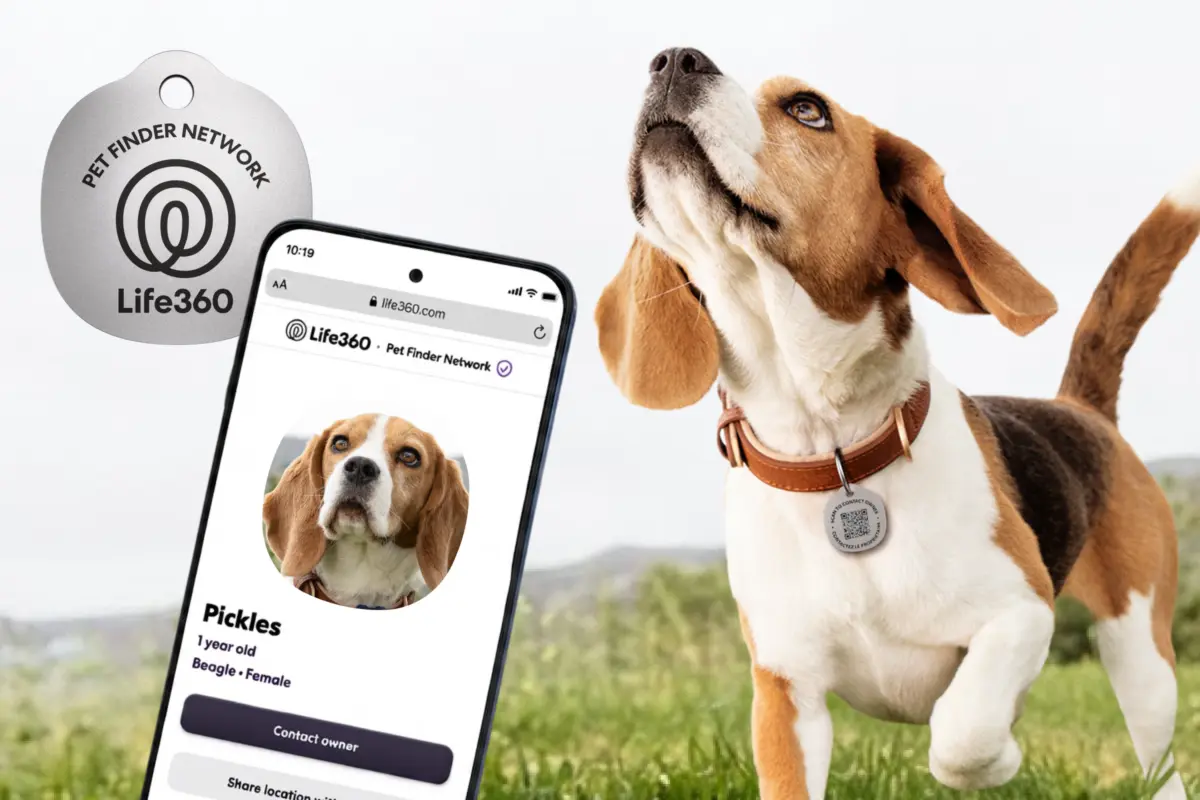
In an ambitious bid to capture a larger share of the rapidly growing pet technology sector, Life360, the family location-sharing and safety platform, has announced a significant expansion of its ecosystem. On Tuesday, the company unveiled a new line of budget-friendly, scannable pet tags priced at $7.99, alongside an array of software features designed to streamline pet care coordination for households. This strategic move represents a calculated shift for the company, transitioning from a high-barrier, hardware-heavy GPS model to an accessible, hybrid tracking infrastructure that accommodates diverse consumer preferences and budgets.
By introducing a passive, QR-code-based tracking tag for under $8, Life360 is lowering the barrier to entry for millions of pet owners who are hesitant to adopt bulky, expensive, and battery-intensive active GPS collars. The launch is supported by a robust suite of digital pet-care features integrated directly into the Life360 application, including shared "Care Logs," "Zoomies Alerts," and comprehensive "Weekly Roundups."
Concurrently, Life360 is restructuring its subscription ecosystem to make its premium GPS pet-tracking hardware more accessible, lowering the subscription gate from its high-tier Gold and Platinum plans to its entry-level $99-per-year Silver bundle. This dual-pronged strategy—combining ultra-affordable passive hardware with a more accessible subscription tier for active GPS devices—positions Life360 to compete directly with specialized pet-wearable giants and legacy tracking networks alike.
Detailed Chronology: From Family Coordinates to Pet Ecosystems
The evolution of Life360 from a localized family-tracking mobile application to an all-encompassing physical-digital safety network has been marked by strategic acquisitions and deliberate market expansions.
[2021] Life360 acquires Tile for $205M -> [Oct 2025] Launches first GPS Pet Tracker -> [Aug 2026] Launches $7.99 QR Tags & Restructures Silver TierPhase 1: The Foundation of the Mesh Network (2021)
The cornerstone of Life360’s hardware ambitions was laid in November 2021, when the company acquired Tile, a pioneer in Bluetooth-based item tracking, for $205 million. This acquisition was a direct defensive and offensive play against Apple’s newly launched AirTag and Samsung’s SmartTag ecosystem. By absorbing Tile, Life360 inherited a massive, global, crowdsourced mesh network of active finding devices, transforming its business model from a software-only family locator into a comprehensive hardware-and-software tracking utility.
Phase 2: The Initial Leap into Pet Tech (October 2025)
After years of integrating Tile’s finding capabilities into its core platform, Life360 officially entered the pet technology market in October 2025 with the launch of its first dedicated GPS pet tracker. This device utilized cellular GPS technology alongside the Tile finding network to offer real-time location tracking, geofencing capabilities, and escape alerts. While technically successful, the product targeted a premium demographic due to the physical size of the hardware and the high subscription tiers required to operate it.

Phase 3: The Demilitarization of Pricing and the QR Pivot (August 2026)
Despite strong organic adoption—with Life360 users adding more than 8 million pets to their app profiles—internal research revealed friction points. A significant segment of the user base resisted strapping heavy, battery-dependent tracking collars onto small dogs or cats. Furthermore, many families did not require active, military-grade GPS tracking, seeking instead a digital upgrade to the classic pet ID tag.
This realization culminated in the August 2026 launch of the $7.99 scannable pet tags and the democratization of GPS tracking features, which were migrated down to the $99-per-year Silver subscription bundle.
Supporting Context & Metrics: Analyzing the Strategy
To understand why Life360 is aggressively targeting this sector, one must examine the intersection of pet ownership metrics and subscription economics.
The Power of 8 Million Registered Pets
Before the launch of the $7.99 scannable tags, Life360’s user base had already self-reported and registered over 8 million pets within the app. This represents an incredibly high-intent, pre-qualified database of customers. For a SaaS (Software as a Service) company, converting an existing free or low-tier user into a hardware purchaser is significantly cheaper than acquiring a new customer from scratch.
| Metric | Detail |
|---|---|
| New Hardware Price | $7.99 (Scannable QR Pet Tag) |
| Previous GPS Subscription Gate | Gold / Platinum Tiers Only |
| New GPS Subscription Gate | Included in Silver Bundle ($99/year) |
| Pre-existing Organic Pet Profiles | 8 Million+ |
| Target Launch Markets | US, Canada, Australia, New Zealand, UK |
The UX Dilemma: Active GPS vs. Passive QR
The pet tracking industry has long been divided into two camps:
- Active Trackers (GPS/Cellular): Provide real-time updates and geofencing but suffer from high battery consumption, bulky form factors, and mandatory monthly service fees.
- Passive Trackers (QR/NFC/ID Tags): Require no batteries and are lightweight, but rely entirely on a third party finding the pet and actively scanning the tag.
Life360’s new $7.99 tag bridges this gap through a clever software mechanism. When a lost pet is found and a good Samaritan scans the QR code on the collar:

- The finder is presented with the owner’s up-to-date contact details (managed dynamically via the Life360 app).
- Simultaneously, the finder’s smartphone transmits its current GPS coordinates back to the owner’s Life360 app as an instant notification.
- Crucially, the finder does not need to have the Life360 app installed for this location ping to occur. This eliminates friction and ensures that even if the pet runs away again after the scan, the family has a precise, time-stamped "last known location."
[Lost Pet Found]
       │
       ▼
[Finder Scans QR Code] ──(No App Required)──► [Finder Sees Owner's Contact Info]
       │
       └──────────────────(Automatic GPS Ping)──────────────────► [Owner Receives Instant Alert in Life360 App]
Monetization and Churn Mitigation
By lowering the GPS tracker support to the $99-per-year Silver tier, Life360 is executing a classic land-and-expand subscription strategy. The $7.99 tag serves as a low-friction entry point that gets pet owners accustomed to using the Life360 interface for pet management. Once embedded in the ecosystem, these users are far more likely to upgrade to the Silver tier to access active GPS tracking or other premium family safety features, driving up Average Revenue Per User (ARPU) while reducing churn.
Technical Breakdown: Software Ecosystem Expansion
Beyond physical tracking, Life360 is introducing a suite of digital-first pet management tools designed to turn the app into a daily utility for the entire household.
Shared Care Logs
Managing a pet in a busy household often leads to miscommunication—pets being fed twice, walks being missed, or medications being administered late. The new "Care Logs" feature allows family members to log daily routines in real time.
Because Life360 is built around a "Circle" (a closed network of family members), any action taken by one member (e.g., clearing the litter box or walking the dog) is instantly visible to the entire group. This transforms the app from a crisis-response tool (finding a lost pet) into a daily operational dashboard for the home.
Zoomies Alerts and Health Metrics
For users with active GPS trackers, Life360 is rolling out "Zoomies Alerts." This feature utilizes the accelerometer and GPS data inside the hardware to detect sudden, high-energy bursts of activity.
While framed as a fun and engaging feature for pet owners, this kinetic tracking lays the groundwork for future health-tech integrations. Consistent tracking of activity spikes, combined with the new "Weekly Roundup" (which summarizes total distance walked and identifies which family member spent the most time caring for the pet), allows owners to monitor their pets’ physical health and detect early signs of lethargy or joint pain.

Official Position and Market Context
While Life360 has not publicly disclosed the exact profit margins of the $7.99 tag, industry analysts view the pricing as a loss-leader strategy. The primary goal is not to generate high margins on plastic and metal tags, but to capture valuable user data and secure market share in the pet tech space, which is projected to exceed $20 billion globally by 2030.
By positioning itself as an all-in-one family utility, Life360 avoids the positioning trap that limits competitors like Whistle, Fi, or Tractive. Those brands are viewed strictly as pet products. Life360, conversely, frames the pet as simply another member of the family "Circle."
This unified approach allows the company to market its services to parents who are already using the app to track their teenagers’ driving habits or coordinate school pickups. Adding a pet to the existing interface requires zero cognitive load for the consumer, making it a highly defensive product design against single-use tracking competitors.
Future Outlook: The Intersection of IoT, AI, and Pet Longevity
Looking ahead, Life360’s expansion into low-cost pet tech signals a broader trend in the Internet of Things (IoT) space: the democratization of tracking through hybrid networks. As hardware components become cheaper and crowdsourced networks grow more dense, the reliance on expensive, power-hungry cellular GPS chips will likely decrease for everyday tracking needs.
Furthermore, the data harvested from millions of pets logging daily routines, sleep cycles, and "Zoomies" could pave the way for predictive health analytics. It is highly probable that Life360 will eventually integrate machine learning algorithms capable of alerting owners to potential veterinary issues—such as identifying a gradual decline in daily steps or an increase in night-time restlessness—before visible symptoms occur.
By establishing an ultra-low-cost entry point with its new $7.99 tags, securing widespread distribution via Amazon and direct-to-consumer channels across five major English-speaking nations, and lowering its subscription barriers, Life360 is not just selling pet accessories. It is building a comprehensive, multi-generational, multi-species safety net that secures its place at the center of the modern smart home.