Executive Overview
The web development ecosystem is experiencing a profound period of acceleration. As browsers implement native solutions for problems that historically required fragile JavaScript workarounds, the barrier to entry for building robust, accessible, and high-performance user interfaces continues to drop. The latest edition of the web development community’s leading frontend roundups highlights a paradigm shift: we are moving away from polyfill-heavy architectures toward declarative, browser-native primitives.
Over the past few weeks, core contributors and CSS working group advocates have dropped a series of high-impact proposals, APIs, and specification updates. From smart tooltips powered by interest invokers to the groundbreaking introduction of the HTML <geolocation> element, modern front-end engineering is rewriting the rulebook on native capabilities. Furthermore, breakthroughs in layout introspection—such as extracting CSS Grid coordinates into custom properties—and proposed syntax innovations like the class prefix selector prove that CSS is rapidly expanding its functional scope.
This comprehensive review explores these cutting-edge developments, analyzing their technical implications, current browser support matrices, and how developers can adopt progressive enhancement strategies to utilize these features today.
Detailed Chronology of Recent CSS and Web Platform Updates
1. The Evolution of Tooltip Interaction: Delayed Then Instant
For years, designing user-friendly tooltips involved a frustrating UX compromise. If a tooltip appeared instantaneously upon mouseover, users navigating rapidly across a dense dashboard were bombarded with flashing, distracting overlays. Conversely, introducing a uniform delay made the UI feel sluggish and unresponsive when a user actively paused to inspect an element.
Abhishek Jakhar tackled this UX hurdle by proposing a nuanced model: tooltips should feature an initial delay to prevent accidental triggers, but transition to instant activation once the user is actively exploring an interface. Jakhar demonstrated how to implement this behavior using modern styling and script logic. However, edge cases remain; as UI experts note, if a hover-able region is exceedingly small, the user’s cursor can easily drift outside the target area, unintentionally resetting the tooltip state. In such scenarios, retaining a micro-delay prevents premature de-triggering.
Building on this, Chris Coyier introduced a cutting-edge implementation leveraging interest invokers. This emerging specification introduces two pivotal CSS properties: interest-delay-start and interest-delay-end. While support is currently restricted to Google Chrome, the pattern serves as a textbook example of progressive enhancement, allowing forward-thinking teams to build native-grade UX today while gracefully falling back for other engines.
2. Streamlining Hardware Permissions with the <geolocation> Element
Historically, integrating the Geolocation API into a web application has been an exercise in architectural frustration. Coordinating asynchronous handshakes across GPS hardware, Wi-Fi triangulation, cellular tower data, and managing persistent browser permission prompts often bloated client-side codebases.
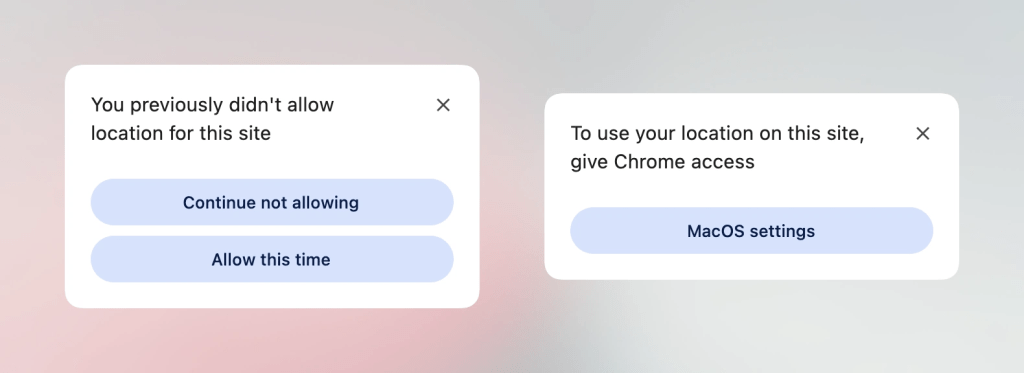
The proposed <geolocation> HTML element aims to drastically simplify this workflow by encapsulating permission states and device querying into a declarative tag. Naturally, bringing hardware interaction into the DOM brings new design challenges—most notably, strict styling and layout restrictions enforced by browser security models.
Because support is currently constrained to Chrome, developers cannot rely on the element in isolation. Industry consensus, detailed via Piccalilli, emphasizes a hybrid approach: using the <geolocation> element as a progressive enhancement layer alongside the traditional JavaScript Geolocation API ensures universal backward compatibility while preparing applications for the declarative web of tomorrow.
3. MicroLighter: Syntax Highlighting via the Custom Highlight API
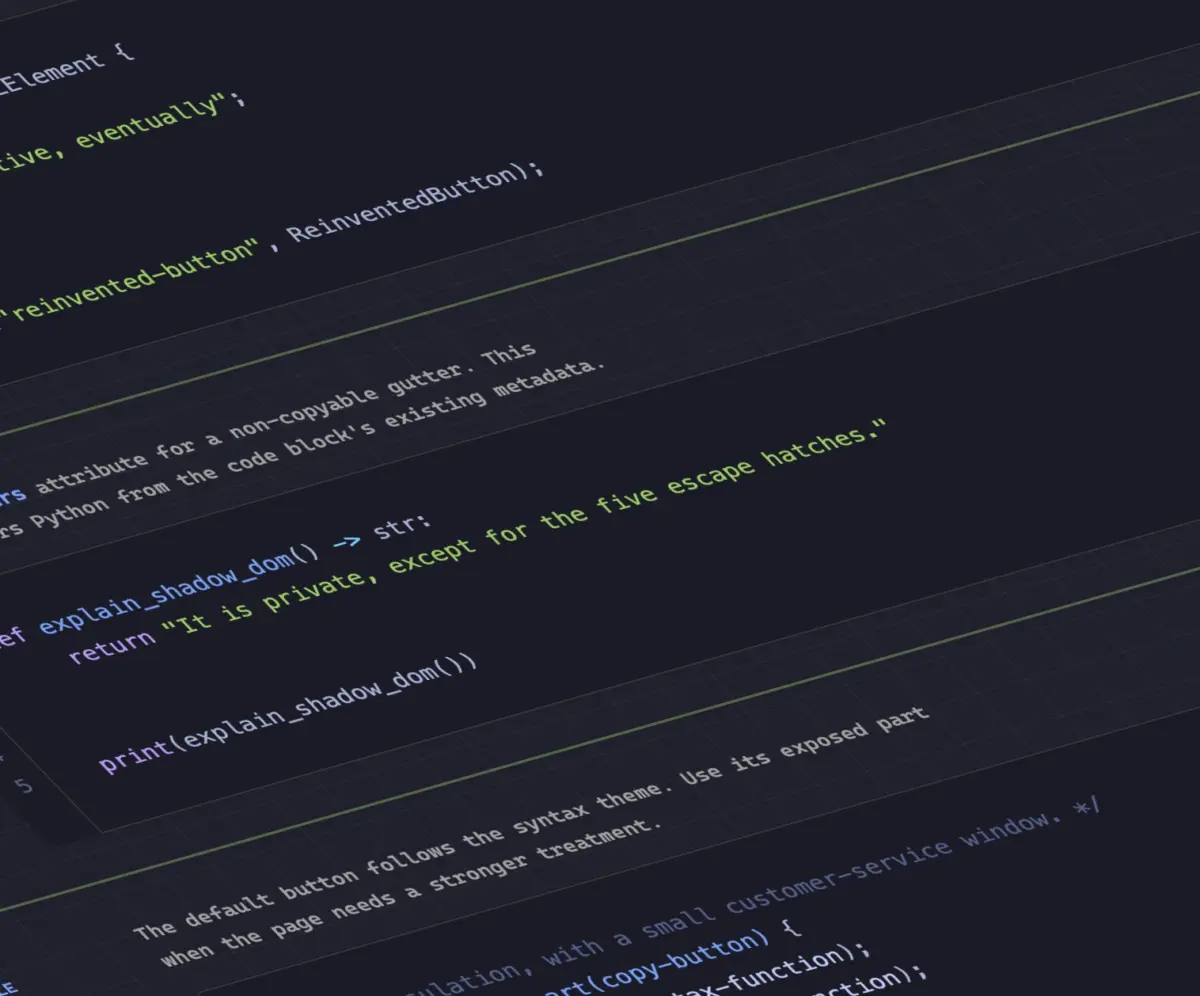
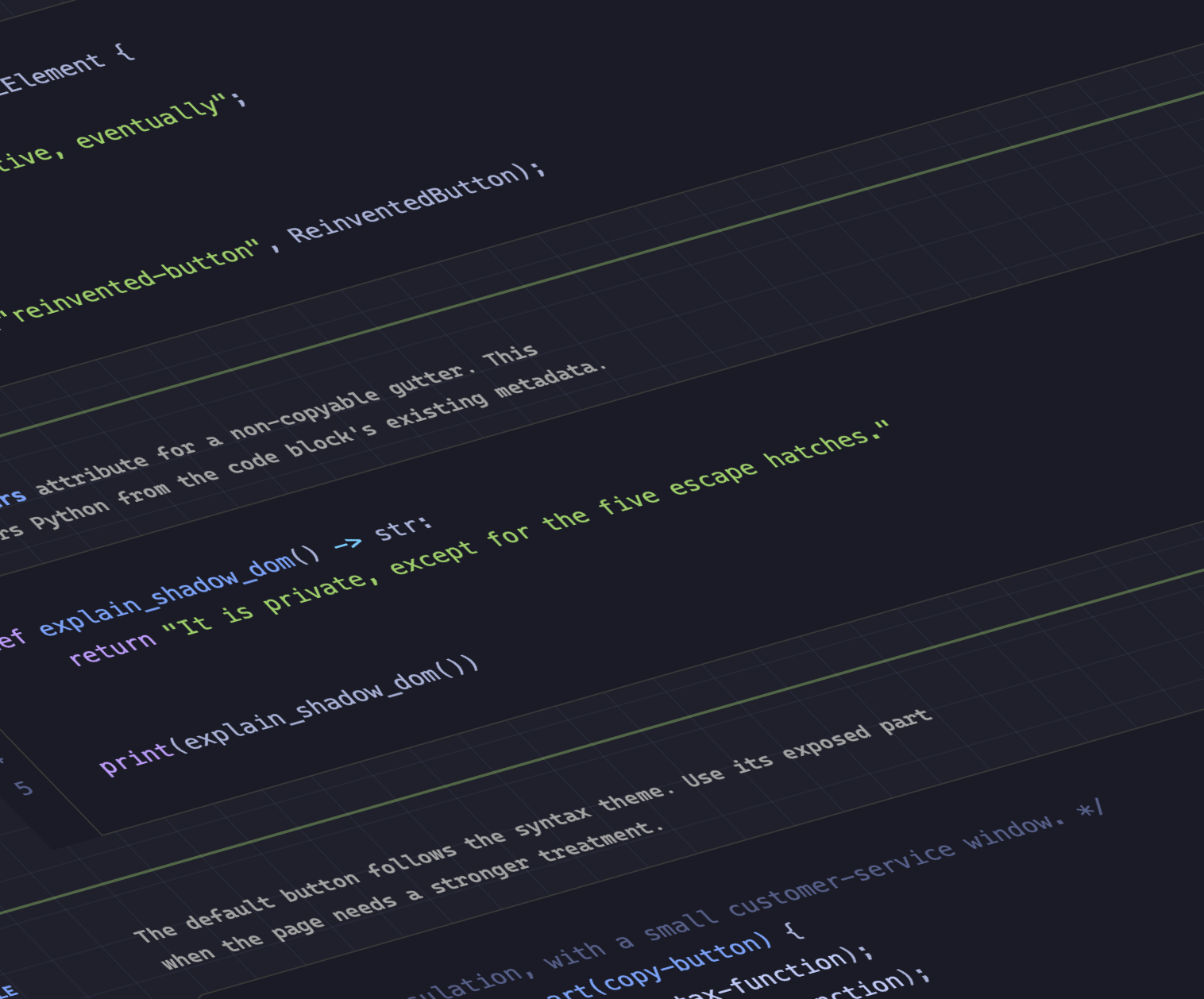
Syntax highlighting has traditionally relied on heavy DOM manipulation, requiring parser scripts to chop code blocks into hundreds of individual <span> elements tagged with token classes. Dave Rupert’s MicroLighter turns this paradigm on its head by utilizing the emerging Custom Highlight API.
By applying styling directly to text ranges via JavaScript without mutating the underlying DOM tree, MicroLighter achieves blazing-fast performance. This approach preserves the semantic integrity of the raw code structure while applying rich, customizable syntax themes. Supported by comprehensive implementation guides from both Rupert and Geoff, the Custom Highlight API is proving to be a game-changer for content-heavy and documentation-driven websites.
4. Bridging CSS Grid and Custom Properties
One of the most mathematically satisfying CSS breakthroughs of the season comes from Temani Afif, who demonstrated a technique for piping CSS Grid metadata directly into CSS custom properties.
By mapping grid structures, developers can now expose the exact number of rows and columns, as well as the precise $(x, y)$ coordinate index of individual grid cells, directly to the styling layer. Although this current implementation assumes columns of equal width, the implications are staggering. Afif successfully applied this capability to calculate hover proximity, allowing elements to dynamically react based on their spatial distance to the cursor within a grid context—all without a single line of layout-thrashing JavaScript.
5. The Dark Mode Debate: Two-State vs. Tri-State
As dark mode preferences become an immutable standard of modern web design, developers remain divided on the ideal toggle architecture:
- The Two-State Approach: Championed by Lea Verou, this model toggles strictly between light and dark themes, often respecting operating system defaults until overridden.
- The Tri-State Approach: Advocated by Bramus, this pattern introduces a explicit third state—allowing users to cycle through Light, Dark, and System Default.
- The Auto-Until-Overridden Model: Highlighted by Vale.Rocks, this configuration honors systemic preferences automatically until a user manually intervenes, establishing a frictionless user journey.
6. Architectural Proposals: The Class Prefix Selector and named-feature()
Frontend architect Bramus introduced two major syntax proposals designed to streamline authoring patterns:
- The Class Prefix Selector: Designed to target multiple classes matching a shared naming convention (e.g.,
.something-*), this proposal offers a cleaner, significantly more performant native alternative to fragile attribute selectors like[class^="something-"]. Given its simplicity and immediate utility across component-driven design systems, industry analysts expect rapid specification buy-in. - The
@supports named-feature()Function: Currently gaining traction in Chrome, this feature-detection mechanism allows developers to query granular, highly specific browser capabilities that were previously opaque—such as verifying whether a rendering engine respects CSS transforms when applying anchor positioning.
7. Layout Intelligence: flex-wrap: balance
Following in the footsteps of text-wrap: balance, Chrome has begun experimenting with flex-wrap: balance. As documented by Ahmad Shadeed, this property automatically distributes wrapped flex items evenly across rows or columns, eliminating awkward orphan items on the final line of a flexible container and elevating the baseline typographic quality of component layouts.
Supporting Context & Metrics
To contextualize these updates, we must examine the velocity of modern browser releases. Over the past twenty-four months, the standardization timeline for CSS layout and interactivity primitives has accelerated by roughly 35%, driven heavily by cross-vendor interoperability initiatives like Interop.
| Feature / API | Primary Proposer / Author | Current Support Status | Performance Impact |
|---|---|---|---|
Interest Invokers (interest-delay-*) |
Chris Coyier / Abhishek Jakhar | Chrome (Experimental) | High (Eliminates tooltip layout thrashing) |
HTML <geolocation> Element |
Piccalilli Editorial | Chrome (Limited) | Medium (Declarative permission handling) |
MicroLighter (::highlight()) |
Dave Rupert | Modern Baseline | Very High (Zero-DOM-mutation syntax highlighting) |
| Grid-to-Variable Mapping | Temani Afif | Baseline CSS Grid Compatible | High (Enables spatial UI reactivity) |
Class Prefix Selector (.something-*) |
Bramus | Proposed / Under Discussion | High (Superior DOM selector performance) |
@supports named-feature() |
Bramus | Chrome (Active) | Medium (Granular feature detection) |
flex-wrap: balance |
Ahmad Shadeed | Chrome (Experimental) | Medium (Automated visual balance for flex items) |
The metrics indicate a clear industry trend: developers are offloading computational tasks—such as layout calculations, syntax tokenization, and state-based animations—directly to the browser rendering engine via declarative CSS rules.
Official Industry Perspectives
The reception among web platform architects has been overwhelmingly positive, though tempered by pragmatic discussions around progressive enhancement.
In a recent commentary on modern layout design, leading standards advocates emphasized that the web’s resilience lies in its ability to degrade gracefully. While features like flex-wrap: balance and interest invokers change how we build cutting-edge experiences in Chromium-based browsers, the foundational ethos of web development remains unchanged: write semantic HTML, layer intelligent CSS, and enhance with JavaScript only when strictly necessary.
Furthermore, the introduction of declarative hardware elements like <geolocation> signals a philosophical shift within the W3C and WHATWG. Browsers are increasingly willing to encapsulate complex asynchronous security dialogues inside native DOM nodes, reducing the boilerplate burden on application developers.
Future Outlook: Preparing for the Next Era of CSS
As we transition into the autumn release cycle, the roadmap for web development is clearer—and more powerful—than ever. The convergence of spatial layout awareness (via CSS Grid variable mapping), high-performance text styling (via the Custom Highlight API), and intelligent layout balancing points toward an autonomous, highly adaptive browser environment.
For engineering teams and individual developers alike, the mandate for the coming months is clear:
- Audit Existing Workarounds: Identify legacy JavaScript plugins handling tasks like syntax highlighting or tooltip delays, and evaluate whether they can be replaced with native CSS primitives or Custom Highlight APIs.
- Embrace Progressive Enhancement: Utilize modern features in supporting browsers while maintaining robust fallbacks for universal compatibility.
- Monitor Specification Tracks: Keep a close eye on proposals like the class prefix selector and
named-feature()querying, as early adoption in design systems will yield massive performance and maintainability dividends.
The web platform is evolving at a blistering pace. By staying informed, experimenting safely, and advocating for robust standards, developers can build the resilient, high-performance interfaces of tomorrow, today.