Executive Overview
In the fast-paced ecosystem of internet culture, viral trends often emerge from the mundane frustrations of daily life. October 2026 brought with it a uniquely clever format that transformed the universal annoyance of porch piracy into a canvas for absurdist, hyper-specific humor. Known widely by its phrasal template "Hope Whoever Stole My Amazon Package," this Halloween-themed meme series has captivated users across social media platforms—most notably on X (formerly Twitter).
At first glance, the posts appear to be genuine grievances: screenshots of Amazon delivery confirmations detailing missing orders, paired with captions expressing exasperation over stolen seasonal goods. However, the punchline invariably arrives as the user reveals their intended Halloween costume. Rather than traditional outfits, the contents of the cart build up absurd, ultra-niche, or completely inanimate personas, ranging from professional soccer players and pop music album covers to video game geometry and viral internet memes.
This comprehensive report examines the genesis, evolution, and cultural resonance of the "Hope Whoever Stole My Amazon Package" trend. Through a detailed chronology of key viral moments, an analysis of the psychological appeal behind ironic grievance-posting, and an exploration of the community-driven variations that pushed the format to its creative limits, we dissect how a simple delivery screenshot became one of the defining viral phenomena of the 2026 Halloween season.
Detailed Chronology
The trajectory of the "Hope Whoever Stole My Amazon Package" meme offers a textbook case of organic digital virality. Within a matter of days, a single satirical post snowballed into an expansive trend embraced by thousands of users, brands, and niche subcultures.
Genesis: The Erling Haaland Catalyst (October 11, 2026)
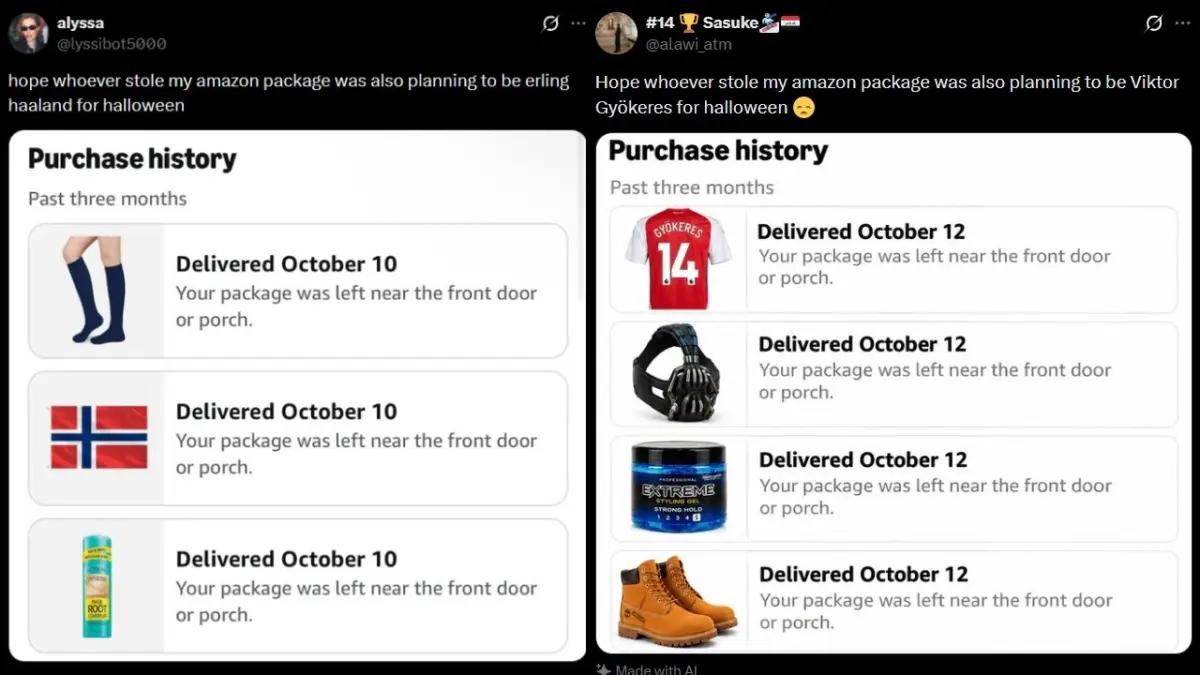
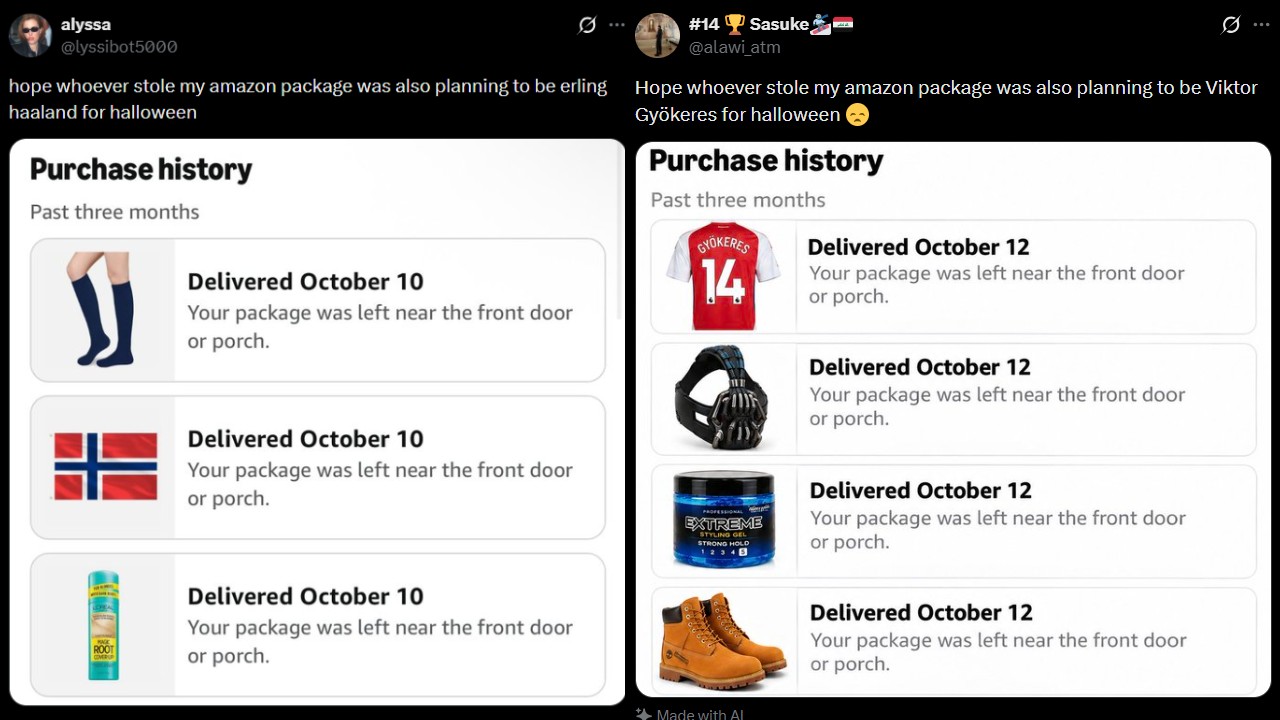
The phenomenon traces its roots back to October 11, 2026, when X user @lyssibot5000 uploaded a screenshot of their purported Amazon purchase history. The digital receipt displayed a series of routine delivery confirmations from October 10, noting that packages had been left near the front door or porch.
Accompanying the screenshot was a dry, deadpan caption: "hope whoever stole my amazon package was also planning to be erling haaland for halloween."
The juxtaposition immediately resonated with internet audiences. The specificity of aiming to dress as Manchester City striker Erling Haaland—complete with the random assortment of generic clothing pieces implied by an Amazon cart—struck a chord with sports fans and casual scrollers alike. The post quickly went viral, pulling in over 176,000 likes and millions of impressions within its first five days online. It laid down the structural blueprint for the snowclone that would soon dominate feeds: "Hope whoever stole my Amazon package [X]," where [X] is an increasingly ridiculous costume reveal.
Rapid Amplification and Expansion (October 14–15, 2026)
Following the initial success of @lyssibot5000’s post, the meme entered an aggressive growth phase. Creators and meme accounts began racing to find the most absurd, esoteric, or structurally impossible costume concepts to plug into the template.
- The Pop Culture Parody: On October 14, user @chaeryliv adapted the format to target music fandoms. They posted a delivery history screenshot paired with the caption: "i hope whoever stole my amazon package was also planning on being the yspsfagsil album cover," referencing a stylized Olivia Rodrigo album aesthetic. The post racked up over 50,000 likes in 48 hours.
- The Meta-Meme crossover: Later that same day, user @0NEMORETlME combined the Amazon package template with a deep-cut internet meme, claiming they intended to dress as "why"—a reference to a viral image of a woman wearing a plague doctor mask. The post pulled in upwards of 150,000 views.
- Inanimate Objects and Gaming Geometries: The trend hit peak absurdity on October 15 when user @SpaghettiSpace_ targeted the gaming community. They posted a delivery receipt with the caption: "hope whoever stole my amazon package was also planning to be Ascent B Site Triple for halloween," referring to a specific stack of three wooden crates on a map within the tactical shooter Valorant. The post demonstrated that the "costume" did not even need to be a living person or character; it could simply be a piece of digital architecture.
Diversification and Niche Variations (October 16, 2026 and Beyond)
As the trend saturated mainstream timelines, subcultures adapted the template to their own hyper-specific interests. Over the following days, feeds were flooded with variations celebrating obscure historical pop culture moments, sports figures, and corporate memes:
- Music historians chimed in with references like Lorde’s iconic 2017 MTV Video Music Awards appearance (posted by @gabosarchive).
- Baseball enthusiasts joked about dressing as New York Yankees slugger Giancarlo Stanton (@ricericebaby22).
- Tech and finance circles got in on the joke, with users pretending to order components to dress as venture capitalist Alexandr Wang (@winternet).
Supporting Context & Metrics
While precise search metrics for platform-specific memes can occasionally evade traditional search engine tracking tools, the organic reach of the "Hope Whoever Stole My Amazon Package" trend is quantifiable through engagement statistics across individual viral posts.
Engagement Breakdown
- High-Impact Reach: Individual posts within the trend routinely crossed the threshold of 50,000 to 170,000 likes within 24 to 48 hours of publication.
- Impression Volumes: Major iterations, such as the initial Erling Haaland post and the plague doctor "Why" variant, accumulated millions of cumulative views, proving the algorithmic viability of text-plus-screenshot content formats.
- Low Barrier to Entry: One of the primary drivers of the meme’s sustained momentum was its accessibility. Unlike video trends requiring complex choreography or high-end editing software, anyone with access to an Amazon account page (or basic image editing tools) could construct a convincing delivery history graphic and draft a deadpan caption.
The Psychology of Ironic Grievance Humor
The success of the "Hope Whoever Stole My Amazon Package" format relies on a well-established comedic mechanism: the bait-and-switch built upon a universally understood pain point. Porch piracy—the theft of delivered packages from residential doorsteps—is a widespread modern frustration. By starting with a premise that invites genuine sympathy or indignation, the creator sets an expectation of a complaint.
The immediate pivot to an entirely unserious, hyper-specific, or physically impossible costume subverts that expectation entirely. It turns a moment of vulnerability into deadpan performance art. The humor is further elevated by the logistics of the joke: the idea that an opportunistic porch pirate cracked open a stolen box only to find a mismatched collection of items meant to transform them into an obscure pop culture icon or a video game environmental asset creates a brilliant mental image.
Official Statements & Community Response
Because the meme operates as an organic, grassroots social media phenomenon rather than a corporate-sponsored campaign, there have been no official press releases or public statements from corporate entities such as Amazon regarding the trend. However, the corporate and consumer response has manifested through organic participation.
The Consumer-Brand Dynamic
As the meme gained mainstream traction, online communities began speculating on how real-world delivery drivers and porch pirates might react to the hypothetical scenario of stealing mundane clothing items intended for absurdist DIY costumes. Users leaned heavily into the mundane reality of Amazon’s tracking UI—specifically the repetitive phrasing of "Your package was left near the front door or porch"—turning the automated boilerplate text of modern e-commerce into a deadpan literary device.
Social media commentators and culture writers quickly classified the trend as one of the standout text-based formats of the 2026 spooky season, praising its longevity compared to more fleeting, single-image macros. The ability to continually invent new, increasingly esoteric subjects ensured that the joke did not exhaust itself within a single weekend.
Future Outlook
As the autumn season progresses and Halloween approaches, the "Hope Whoever Stole My Amazon Package" meme provides a window into how contemporary internet culture metabolizes everyday anxieties into communal humor.
Potential for Seasonal Revival
While holiday-specific memes often experience a sharp decline once their target calendar date passes, templates rooted in UI-spoofing and deadpan misdirection possess high adaptability. Industry observers note that variations of the "stolen package" format could easily be repurposed for upcoming gifting holidays, such as the December winter holiday shopping rush, or adapted to other e-commerce platforms.
The Evolution of Text-And-Image Hybrid Memes
The format highlights an ongoing shift in digital humor toward faux-documentary realism. By leveraging authentic-looking application interfaces—delivery notifications, receipts, and tracking logs—creators ground absurd premises in mundane reality. This style of comedy relies on the audience’s familiarity with modern digital infrastructure, ensuring that as long as people continue to order goods online, the structural foundation for this brand of satire will remain intact.
Ultimately, the "Hope Whoever Stole My Amazon Package" trend stands out as a masterclass in minimalist internet comedy: easily replicable, infinitely expandable, and relentlessly absurd.