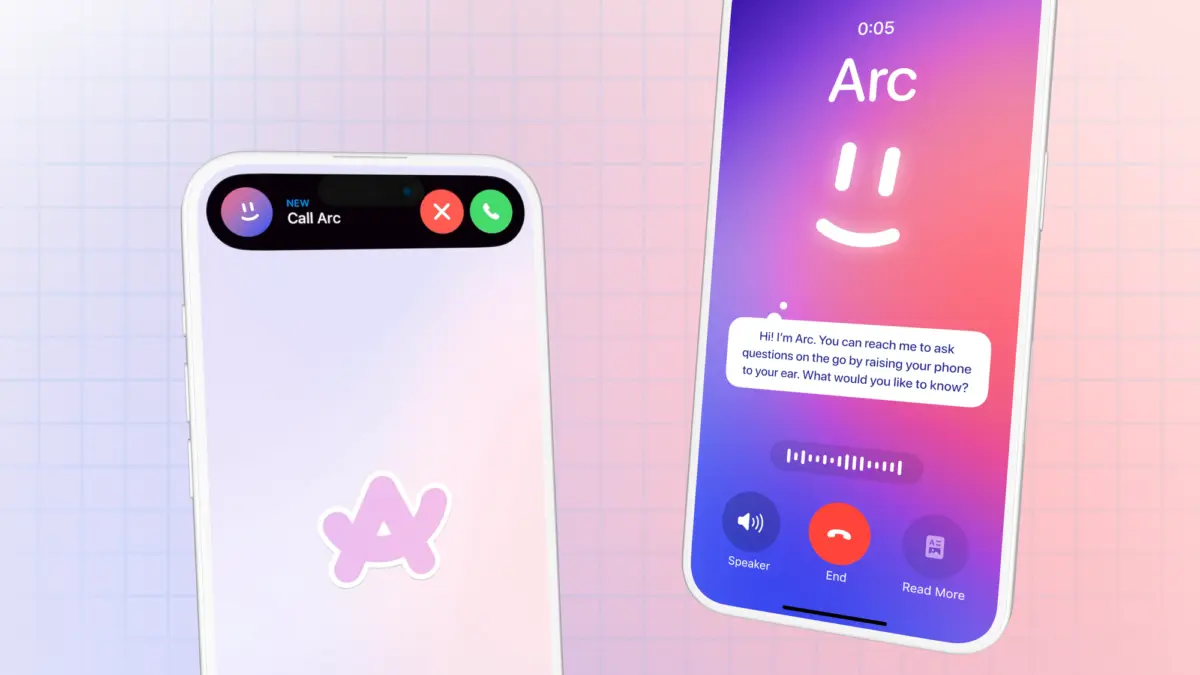
Executive Overview
In a decisive move that marks the end of one of the most celebrated web design experiments of the modern internet era, The Browser Company has officially announced the complete deprecation of its flagship product, the Arc browser. By December 22, 2026, the company will fully sunset Arc across all supported platforms—including Mac, Windows, iOS, and Android—and channel 100% of its engineering, design, and security resources into Dia, its next-generation, AI-first browser.
The decision brings a final, structured resolution to a strategic transition that began in mid-2025, when active feature development on Arc was quietly halted. Despite building a passionate, cult-like following among designers, software engineers, and digital power users, Arc suffered from what management called a persistent "novelty tax"—an intricate interface and elevated learning curve that impeded mass-market adoption against dominant legacy browsers like Google Chrome and Microsoft Edge.
The inflection point came in late 2025 following the $610 million acquisition of The Browser Company by enterprise software giant Atlassian. Faced with the compounding technical debt of maintaining two distinct desktop and mobile browser architectures—and the escalating cyber threat landscape surrounding AI-integrated browsers—executives made the calculated decision to retire Arc.
While the news has drawn widespread disappointment from power users, The Browser Company insists that Dia represents the spiritual and technological successor to Arc, offering superior speed, heightened security protocols, and native artificial intelligence designed from the ground up rather than retrofitted onto legacy frameworks.
Phased Wind-down: A Detailed Chronology of Arc’s Deprecation
To minimize friction for its user base and prevent security vulnerabilities during the migration phase, The Browser Company has engineered a three-tiered wind-down schedule. The deprecation strategy systematically degrades non-essential cloud services before executing a hard shutdown of desktop platforms and purging user data.
+-------------------------------------------------------------------------------+
|                        ARC BROWSER DEPRECATION TIMELINE                       |
+-------------------------------------------------------------------------------+
| [Phase 1: Immediate]  • New account creation disabled globally.              |
|                       • Platform enter maintenance-only security state.       |
+-------------------------------------------------------------------------------+
| [Phase 2: Nov 23]     • Mobile apps (iOS/Android) lose AI features.           |
|                       • "Browse for Me" functionality permanently revoked.    |
|                       • Cloud synchronization & account logins disabled.      |
|                       • Arc Search degrades to a basic local-only browser.    |
+-------------------------------------------------------------------------------+
| [Phase 3: Dec 22]     • Total desktop shutdown on Mac and Windows.            |
|                       • User accounts deactivated; data purged within 30 days.|
|                       • Arc Search removed from Google Play & iOS App Store.  |
+-------------------------------------------------------------------------------+
Phase 1: Account Lockout and Infrastructure Freeze
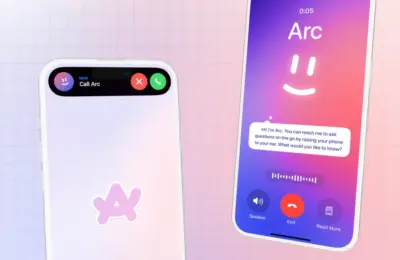
Effective immediately following the official announcement, creation of new Arc user accounts has been permanently disabled. Prospective users seeking to download Arc are now automatically redirected to Dia’s onboarding portals. Current users remain unaffected in this initial stage, retaining full access to cloud synchronization, extensions, and spatial tabs while backend systems transition into maintenance mode.
Phase 2: Feature Degradation and Cloud Severance (November 23, 2026)
On November 23, 2026, the mobile manifestations of Arc—specifically Arc Search on iOS and Android—will experience significant feature degradation. Most notably:
- The mobile client’s signature AI capabilities, including the "Browse for Me" automated synthesis tool, will be permanently decommissioned.
- User account authorization portals will close, preventing users from logging in, logging out, or establishing sync sessions across multiple devices.
- While the mobile app will remain operational on local hardware as a basic web viewer, it will cease to transmit or pull real-time data from The Browser Company’s cloud infrastructure.
Phase 3: Final Desktop Shutdown and Data Purging (December 22, 2026)
The complete operational demise of Arc will occur on December 22, 2026. On this date:
- Desktop applications running on macOS and Microsoft Windows will cease functioning entirely, blocking application access and rendering local sessions non-operational.
- User accounts will be formally deactivated across company databases, triggering a mandatory security protocol that guarantees the complete erasure of all personal data, sync states, and user history from cloud storage within 30 days.
- Arc Search will be scrubbed from the Google Play Store and Apple App Store, concluding the software’s distribution lifecycle.
Supporting Context & Strategic Metrics
The "Novelty Tax" and the Struggle for Mainstream Adoption
When Arc debuted, it captured the imagination of the technology sector with its unconventional sidebar architecture, spaces, pinned tabs, and rich visual customization. However, internal metrics and post-acquisition reviews highlighted a persistent ceiling on organic user growth.
   [ Traditional Web Browsers ]           [ Arc Browser Architecture ]
+-------------------------------+     +-------+-------------------------------+
| Tabs / Address Bar (Top)      |     | S     | Main Content View Area        |
+-------------------------------+     | I     |                               |
| Main Content View Area        |     | D     |                               |
|                               |     | E     |                               |
|                               |     | B     |                               |
|                               |     | A     |                               |
|                               |     | R     |                               |
+-------------------------------+     +-------+-------------------------------+
     Low Friction / Standard Usage           High Friction / Steep Learning Curve
The unconventional UX design—while heralded by creative professionals—introduced friction for everyday consumers accustomed to top-situated tab bars and conventional bookmark systems. This friction, described internally as the "novelty tax," severely restricted consumer conversion rates. For every power user who adopted Arc as their primary driver, several mainstream consumers retreated to the familiar layouts of Google Chrome or Safari.
| Metric / Dimension | Arc Browser (Legacy Era) | Dia Browser (Next-Gen Era) |
|---|---|---|
| Primary Design Paradigm | Workspace organization & visual flair | AI-native context & automated task handling |
| Target Audience | Designers, developers, power users | Enterprise, knowledge workers, mainstream consumers |
| Core Architecture | Arc Development Kit (ADK) over Chromium | Rebuilt ADK Engine with native zero-trust isolation |
| Monetization Engine | Venture-backed growth / Free tool | Enterprise SaaS integration via Atlassian ecosystem |
| Interface Layout | Vertical tabs, Spaces, split views | Adaptive layout, flexible sidebar, AI contextual panel |
The $610M Atlassian Acquisition Factor
The economics surrounding Arc changed fundamentally following Atlassian’s $610 million acquisition of The Browser Company in late 2025. Atlassian, whose software suite dominates enterprise workflows via Jira, Confluence, and Trello, viewed the browser not merely as an application window, but as the operational canvas for knowledge workers.
Under Atlassian’s corporate umbrella, maintaining a niche desktop browser with high support overhead became financially and strategically unviable. Resources were reallocated toward building a browser capable of serving as an intelligent workspace engine across large enterprises—a goal far more aligned with Dia’s underlying architecture than Arc’s consumer-focused experimentation.
Official Statements and The Open-Source Conundrum
Addressing the sunset strategy, The Browser Company framed the operational shift around the escalating security demands of modern, web-scale platforms operating in an AI-saturated environment.
"Keeping a browser secure takes constant, dedicated work that is only increasing in the age of AI. Dia was built from the ground up to meet today’s security standards, so that’s where our engineering and security teams will focus moving forward."
— Official Statement, The Browser Company
The ADK Architecture and Community Pushback
The announcement provoked intense pushback across developer communities and social platforms. Thousands of Arc loyalists advocated for open-sourcing the browser, suggesting that an open-source community model could maintain the codebase indefinitely without requiring capital expenditure from The Browser Company or Atlassian.
However, CEO Josh Miller directly addressed the structural impossibilities of open-sourcing Arc, explaining that Arc’s frontend interface is deeply intertwined with the company’s core proprietary technology stack: the Arc Development Kit (ADK).
+-------------------------------------------------------------------+
|               PROPRIETARY ADK SOFTWARE ARCHITECTURE               |
+-------------------------------------------------------------------+
|                                                                   |
|   +-----------------------+           +-----------------------+   |
|   |  Arc Browser (Legacy) |           |  Dia Browser (Next)   |   |
|   +-----------+-----------+           +-----------+-----------+   |
|               |                                   |               |
|               +-----------------+-----------------+               |
|                                 |                                 |
|                                 v                                 |
|   +-----------------------------------------------------------+   |
|   |         Arc Development Kit Engine (Proprietary IP)      |   |
|   +-----------------------------------------------------------+   |
|                                 |                                 |
|                                 v                                 |
|   +-----------------------------------------------------------+   |
|   |                    Chromium Core Engine                   |   |
|   +-----------------------------------------------------------+   |
+-------------------------------------------------------------------+
Because ADK forms the core execution layer for both Arc and the newly released Dia browser, open-sourcing Arc would effectively require open-sourcing the underlying foundation of Dia, surrendering the company’s core intellectual property.
"While we’d love to open-source Arc someday, we can’t do that meaningfully without also open-sourcing ADK. And ADK is still core to our company’s value."
— Josh Miller, CEO of The Browser Company
Migration Path: Transitioning Arc Users to Dia
To minimize friction for current users, The Browser Company has engineered a seamless migration pipeline into Dia, translating Arc’s signature feature set into refined Dia equivalents while ensuring zero loss of personal browser state.
       [ Arc Feature Framework ]             [ Dia Equivalent Feature ]
     +---------------------------+         +---------------------------+
     | Spaces                    |  ====>  | Profiles                  |
     | Vertical Tab Bar          |  ====>  | Optional Sidebar Layout   |
     | Folders                   |  ====>  | Pinned Tab Groups         |
     | Passwords, Bookmarks, Ext |  ====>  | Native Automated Import   |
     +---------------------------+         +---------------------------+
Feature Mapping Analysis
- Spaces $rightarrow$ Profiles: Arc’s signature concept of separating work, personal, and project contexts via lateral swipes has been evolved into Dia’s "Profiles" engine, offering isolated cookie jars, distinct browsing histories, and dedicated extension environments.
- Vertical Tabs $rightarrow$ Optional Sidebar Layout: Users accustomed to Arc’s vertical navigation can toggling a persistent vertical sidebar layout within Dia, preserving muscle memory.
- Folders $rightarrow$ Pinned Tab Groups: Nested tab organizational structures have been refactored into "Pinned Tab Groups," matching native enterprise workflow patterns while maintaining clean spatial separation.
- Data Portability: During the transition phase, Dia provides one-click account synchronization, automatically pulling saved credentials, bookmarks, active extension configs, and browsing histories directly from local Arc installations.
Importantly, The Browser Company confirmed that all legacy Arc layout structures imported into Dia will remain entirely free to use, with newly integrated AI assist features operating on an opt-in basis.
Future Outlook: The AI-First Browser Battlefield
The retirement of Arc and the total consolidation behind Dia reflects a broader paradigm shift across the web browser market. The web client is no longer viewed simply as a passive renderer of HTML, CSS, and JavaScript, but as an active, agentic interface capable of executing complex tasks on behalf of the user.
                  THE EVOLVING BROWSER PARADIGM

     2010s: Passive Render Engines (Chrome / Safari / Firefox)
      │
      ├──> Render static/dynamic DOM
      └──> Basic sandboxing & extension support

     2020s: Spatial & Productivity Browsers (Arc / Orion)
      │
      ├──> Vertical tab management & UI customization
      └──> Workspace separation & reduced visual clutter

     2026+: Autonomous Agentic Browsers (Dia / Copilot / Perplexity)
      │
      ├──> Native LLM context processing & background execution
      ├──> Zero-trust AI memory management & enterprise compliance
      └──> Deep workflow integration across web applications
By concentrating its engineering resources entirely on Dia, The Browser Company enters a high-stakes competitive landscape. Tech giants and startups alike are aggressively deploying AI-native web interfaces:
- Microsoft continues to deepen Copilot’s integration into Edge, blending local device intelligence with enterprise cloud context.
- Google is steadily weaving Gemini into Chrome’s underlying engine, leveraging its massive search distribution power.
- Perplexity and specialized AI startups are attempting to bypass traditional browser paradigms entirely through conversational and answer-engine interfaces.
For The Browser Company, backed by Atlassian’s enterprise infrastructure, Dia represents a calculated gamble: trading a beloved, design-forward consumer product for an enterprise-ready, security-hardened AI workspace. While the death of Arc marks the tragic end of a design icon for its dedicated community, it establishes the foundation for the company’s long-term survival in the age of agentic AI.