Executive Overview
Decades after its original broadcast on CBS in the fall of 1961, Rod Serling’s groundbreaking sci-fi and speculative anthology series The Twilight Zone remains a cornerstone of American television. While the series is globally celebrated for its pioneering genre tropes—featuring interstellar visitors, haunted dolls, and uncanny cosmic ironies—its true enduring power relies on a starker, far more uncomfortable subject: the baseline volatility of human nature.
Among the show’s massive catalog of episodes, Season 3’s "The Shelter" stands as a masterclass in psychological suspense and social critique. Written by series creator Rod Serling and directed by Lamont Johnson, the episode strips away the supernatural entirely. There are no Martians, no magic mirrors, and no time loops. Instead, it presents a hyper-realistic, localized crucible: a suburban neighborhood celebrating a birthday party that is abruptly interrupted by an emergency broadcast warning of an imminent nuclear attack.
As the veneer of polite society instantly collapses, the episode exposes how quickly fear, entitlement, and tribalism can transform lifelong friends into violent adversaries. Marking its 65th anniversary, "The Shelter" serves as a timeless diagnostic tool for understanding social panic, resource scarcity, and the fragility of human empathy under existential pressure.
Detailed Chronology: The Anatomy of a Suburban Breakdown
Act I: The Illusion of Community
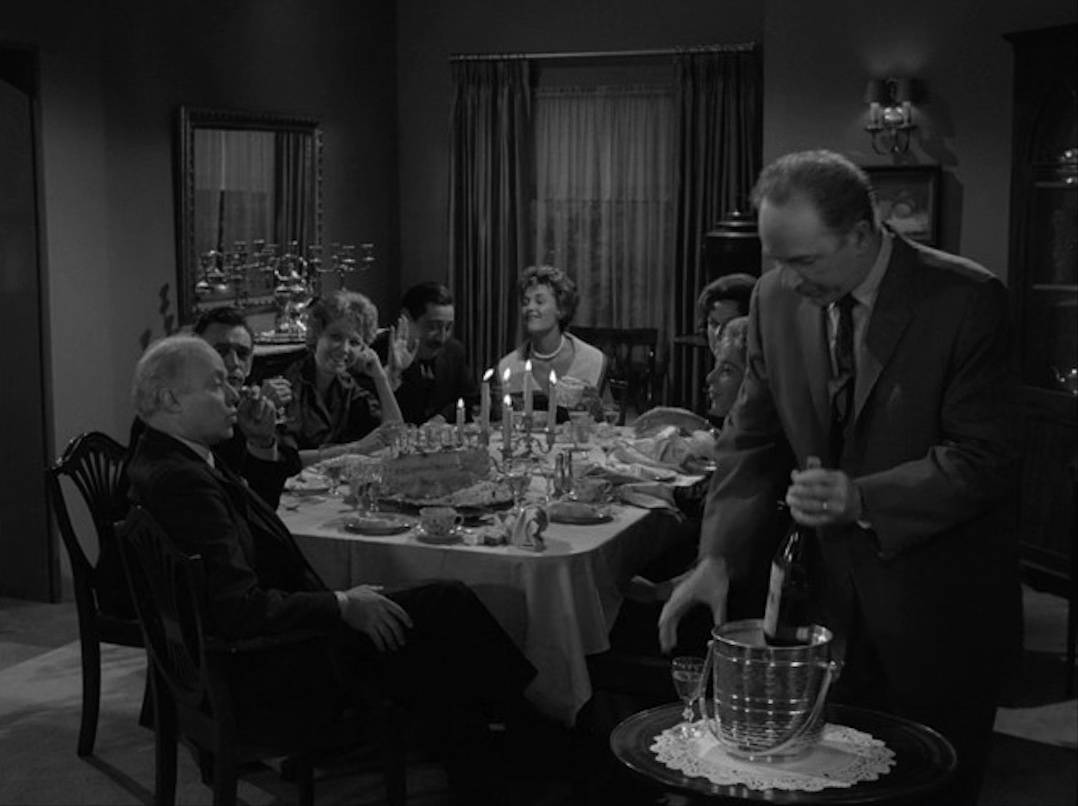
The narrative begins on an ordinary, pleasant evening in a quintessential American suburb. Neighbors have gathered to celebrate the birthday of Dr. Bill Stockton (portrayed with grounded dignity by Larry Gates), a beloved local physician who has served the community for years. The atmosphere is warm, jovial, and saturated with the comforting mid-century banality of suburban life: backyard chatter, cake, and friendly teasing.
Among the subjects of playful mockery is Dr. Stockton’s private fallout shelter. While his neighbors previously scoffed at his foresight—treating his construction project as an eccentric, paranoid hobby—Stockton maintained a steadfast commitment to preparing for the worst. He built the underground refuge strictly for his immediate family, scaling the space and resources to fit only three people.
Act II: The Siren Call of Panic
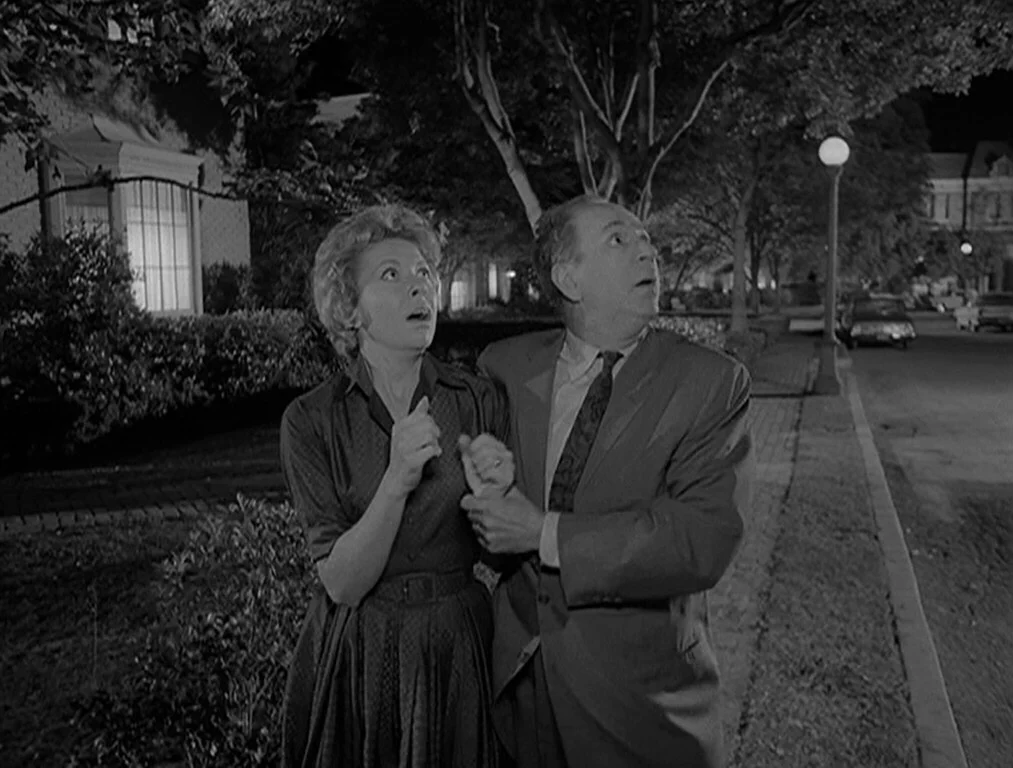
The festive mood evaporates instantly when an emergency alert blares over the radio. Unidentified aerial objects have been detected approaching the United States, and an immediate nuclear strike is feared. The radio announcer commands all citizens to seek immediate shelter.
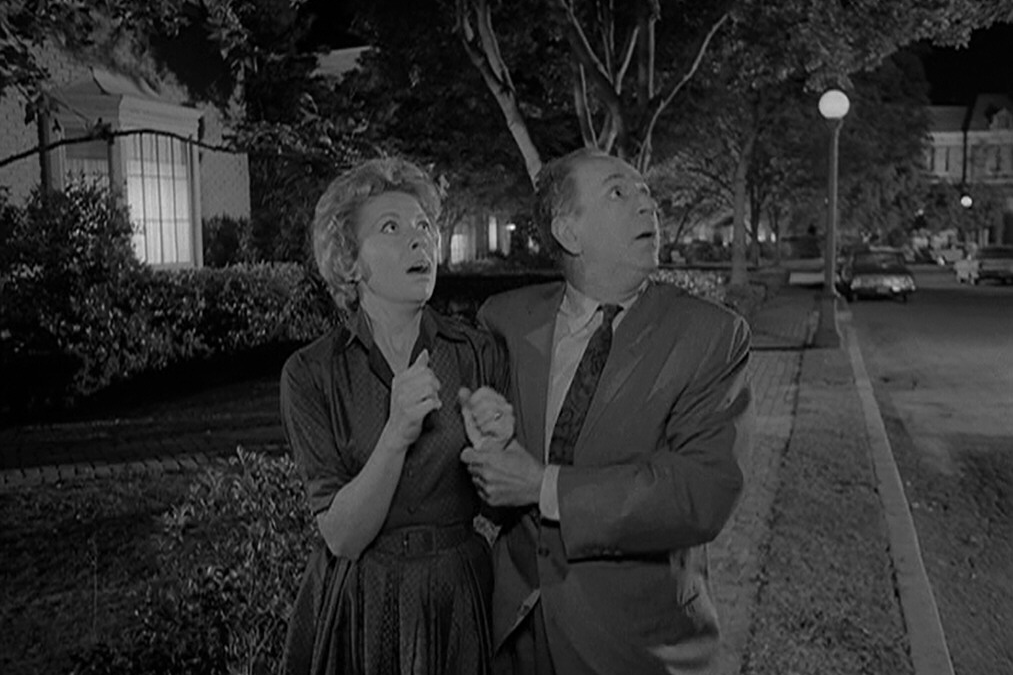
Panic ripples through the group. While the other families have spent the evening mocking Stockton’s precaution, they now realize they are entirely exposed. Rushing to Dr. Stockton’s property, they beg, plead, and demand entry. Stockton responds with profound sorrow, explaining the physical reality of the situation: the bunker is meticulously engineered for three, and cramming a dozen more people inside will rapidly deplete oxygen and water, dooming everyone.
When Stockton firmly locks the heavy steel door, the narrative shifts from an external threat to an internal siege.
Act III: The Descent into Tribalism
Locked outside with the ticking clock of potential annihilation overhead, the once-civilized neighbors undergo a rapid moral degradation. Rational discourse gives way to raw hysteria and malice.
The psychological collapse manifests through sudden xenophobia and scapegoating. Neighbors who shared birthday cake hours earlier turn on one another, weaponizing ethnic backgrounds and personal histories. One neighbor argues that a foreign-born resident is somehow less deserving of survival than his American-born peers. The collective rage morphs into physical violence when the mob decides to procure a nearby neighborhood flagpole, treating it as a makeshift battering ram to smash down Dr. Stockton’s door and take the shelter by force.
Act IV: The Anti-Climax and Final Judgment
In a characteristic Serling twist—though one entirely devoid of supernatural elements—the violent assault on the door is abruptly halted by another emergency broadcast. The radio announces that the threat was a false alarm; the objects on the radar were friendly civilian or military aircraft, and the crisis has passed.
The sudden safety does not bring relief; it brings profound, crushing shame. The neighbors stand frozen outside the dented, battered bunker door, realizing the horrific depths of their own savagery. Dr. Stockton opens the door and looks out at the people he has healed for years. No words are spoken that can mend the fracture. The neighborhood is permanently scarred, not by a nuclear blast, but by the ugly truth of how little provocation was required to turn them into monsters.

Supporting Context & Metrics: The Cultural and Historical Landscape of 1961
To fully appreciate the cultural resonance of "The Shelter," one must examine the specific historical pressures of the early 1960s.
The Cold War Realities
When "The Shelter" aired on October 29, 1961, the Cold War was not a distant history textbook chapter; it was a daily, suffocating reality. Key historical touchpoints of the era included:
- The Berlin Crisis of 1961: Tensions between the United States and the Soviet Union reached a boiling point over the status of Berlin, culminating in the construction of the Berlin Wall just months prior to the episode’s release.
- Civil Defense Drills: American school children regularly practiced "duck and cover" drills, crouching beneath wooden desks under the official government premise that it would protect them from a thermonuclear shockwave.
- The Private Fallout Shelter Boom: Across the United States, citizens were actively constructing underground concrete bunkers in their backyards, leading to intense ethical debates in newspapers and religious circles about whether homeowners had a moral obligation to shoot neighbors who tried to enter uninvited during a strike.
Production and Creative Leadership
- Rod Serling’s Vision: As creator, head writer, and on-screen host, Serling utilized The Twilight Zone as a Trojan horse. Network censors frequently blocked explicit commentaries on contemporary civil rights, political corruption, or domestic social issues. By framing these critiques within speculative fiction, horror, or alternate realities, Serling bypassed network oversight to deliver biting moral indictments.
- Directorial Approach: Director Lamont Johnson emphasized claustrophobic framing. As the episode progresses, the camera angles tighten around the exterior of the bunker, visually trapping the viewer alongside the panicked mob.
Official Statements and Critical Reception
Over the decades, media historians, television critics, and cultural sociologists have continually revisited "The Shelter" as a definitive text on human psychology under duress.
In retrospective analyses by television preservationists, the episode is frequently cited as one of the finest non-supernatural entries in the entire five-season run of the series.
"The brilliance of Rod Serling’s writing in ‘The Shelter’ lies in his refusal to give the audience an easy out," noted a retrospective review by television historians. "There are no ray guns, no alien monsters, and no twist ending engineered by fate. The monster in the episode is entirely human. Serling understood that the most terrifying aspect of the atomic age wasn’t the bomb itself, but what the fear of the bomb would cause us to do to each other."
Media scholars studying 20th-century American culture point out that the episode accurately predicted modern sociological findings regarding disaster sociology. Decades of disaster research conducted by organizations like the Disaster Research Center have consistently shown that panic during crises is statistically rare; however, when social breakdown does occur, it is almost always driven by pre-existing social fractures, structural inequalities, and failures of institutional trust—themes mirrored precisely in the suburban neighborhood’s rapid descent into xenophobia.
Future Outlook: The Timeless Relevance of Serling’s Warning
More than six decades after its television debut—and through subsequent eras defined by the post-9/11 security state, pandemic-era supply chain panics, and digital-age polarization—"The Shelter" remains painfully relevant.
While the specific threat of Cold War nuclear annihilation has evolved into modern anxieties regarding economic instability, resource scarcity, and systemic polarization, the core thesis of Serling’s work remains unchanged: human nature is the only constant.
Why It Continues to Resonate Today:
- The Fragility of Social Contracts: The episode demonstrates how quickly polite neighborly interactions dissolve the moment personal survival is threatened. Modern societies continue to grapple with this exact vulnerability during localized natural disasters, supply shortages, and societal stress tests.
- The Weaponization of Otherness: The rapid shift of the suburban mob toward ethnic scapegoating mirrors modern patterns of polarization, where crises are frequently exploited to drive wedges between communities and amplify xenophobic narratives.
- The Prevention Paradox: Dr. Stockton’s preparation highlights the timeless tension between individual responsibility and communal obligation. In an increasingly interconnected yet fractured world, the debate over self-reliance versus collective safety remains as fiercely contested as ever.
As long as human beings continue to navigate fear, scarcity, and tribal identity, The Twilight Zone—and specifically the quiet, terrifying realism of "The Shelter"—will serve as an essential mirror, reminding viewers that the greatest hazards we face are not waiting out in the cosmos, but residing quietly within ourselves.
Classic episodes of The Twilight Zone, including "The Shelter," are currently available for streaming across various digital platforms and free ad-supported television (FAST) services such as Pluto TV.