Executive Overview
Fashion is a relentless pendulum, perpetually swinging between the desire for radical reinvention and the comforting embrace of nostalgia. In the grand narrative of contemporary apparel, few style pivots have proven as polarizing, yet culturally magnetic, as the resurgence of the low-rise jean. Cast aside in the early 2010s in favor of high-waisted silhouettes that prioritized structural containment and mid-century retro aesthetics, the low-rise pant has defied its critics. Far from remaining a fleeting internet micro-trend born on TikTok, it has solidified its place as a cornerstone of modern streetwear and high-fashion wardrobes alike.
Nowhere is this cultural recalibration more evident than in the strategic maneuvers of heritage denim brands seeking to capture the imaginations of Gen Z and younger Millennials. Enter GUESS—a brand whose DNA is inextricably linked to the hedonistic, bold aesthetic of the late 1990s and early 2000s. Capitalizing on the insatiable appetite for noughties aesthetics, the iconic global lifestyle brand has officially introduced The B Jean, a contemporary reimagining of one of its most defining early-millennium denim silhouettes.
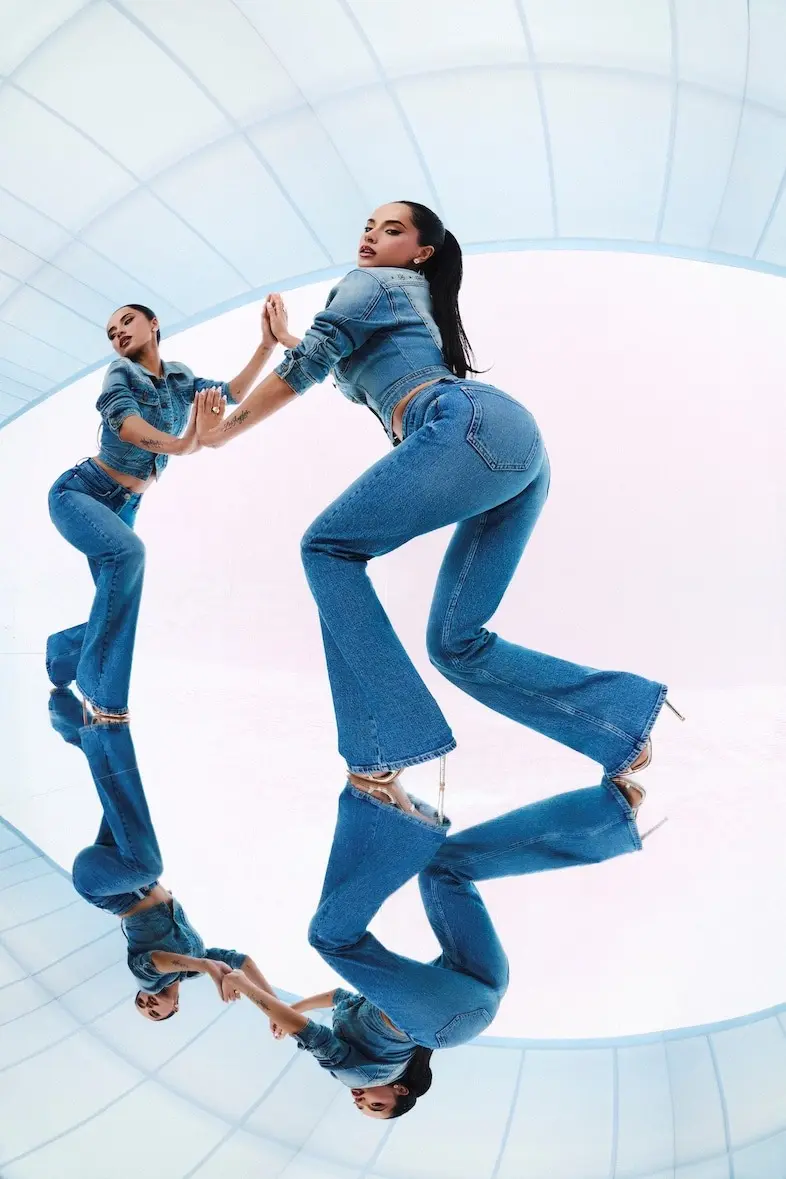
Launching globally on October 13, The B Jean seeks to bridge the chasm between archival reverence and modern sartorial demands. Featuring a low-slung waistline and a slim bootcut fit, the collection arrives in a curated selection of vintage-washed finishes. To anchor the launch in modern pop culture, GUESS has tapped global superstar Becky G. The Inglewood-born singer and actress, whose West Coast roots and Chicana identity deeply inform her personal aesthetic, serves as the face of the campaign. By fusing its legendary Y2K heritage with a fresh, contemporary context, GUESS is not merely participating in a trend cycle; it is asserting its historical dominance in the denim sector.
Detailed Chronology: The Evolution, Fall, and Rise of Low-Rise Denim
To fully understand the cultural weight of GUESS’s latest drop, one must examine the tumultuous history of the low-rise silhouette. The trajectory of low-slung denim offers a fascinating case study in how social attitudes, body politics, and media consumption dictate what we choose to wear.
The Genesis of the Hip-Huggum (Late 20th Century)
While extreme low-rise pants became culturally synonymous with the year 2000, their roots trace back much further. Counterculture movements of the 1960s and 1970s—championed by icons like Jane Birkin and rock musicians of the era—embraced hip-hugger trousers as a rejection of mid-century sartorial rigidity. However, these early iterations remained niche bohemian experiments.
It wasn’t until the late 1990s, catalyzed by the minimalist shock-value of Alexander McQueen’s infamous "Bumster" trousers in his 1995 Highland Rape collection, that the extreme low-rise entered the high-fashion consciousness. McQueen deliberately engineered trousers cut so low that they exposed the base of the spine, challenging conventional ideas of modesty and body proportion.
By the turn of the millennium, this avant-garde provocation had been democratized and commercialized by mass-market and premium denim brands alike. Artists like Britney Spears, Christina Aguilera, Destiny’s Child, and Paris Hilton transformed low-rise jeans from a runway spectacle into an inescapable global uniform. Denim was no longer just functional clothing; it was low-cut, bedazzled, and engineered to celebrate a specific, hyper-lean aesthetic.
The Great Backlash and the Reign of High-Waisted Purity (2010s)
As fashion cycles inevitably dictate, the pendulum swings in direct opposition to prevailing excess. By the early 2010s, cultural fatigue set in. Consumers grew weary of the physical discomfort, the constant adjustments required by extreme low-rises, and—most importantly—the exclusionary nature of a silhouette that catered almost exclusively to a narrow, hyper-specific body type.
The rise of Tumblr, followed swiftly by Instagram, ushered in an era dominated by high-waisted denim. Brands pivoted en masse toward styles that hit at or above the navel. High-waisted mom jeans, skinny jeans with deep rises, and structured vintage silhouettes (such as Levi’s 501s) became the new gold standard. During this decade, admitting an affection for low-rise jeans was practically a stylistic faux pas, widely derided by fashion critics as a relic of a tacky, post-millennial excess.
The Y2K Reclamation and Modern Resurgence (2020–Present)
History, however, has a way of redeeming the misunderstood. As Generation Z—unburdened by the fashion trauma of the 2000s—began dominating cultural discourse through TikTok and Depop, a massive archival reclamation project took shape. The aesthetic markers of their childhoods (or pre-birth eras) were suddenly viewed through a lens of unironic appreciation and irony-free nostalgia.
Low-rise denim returned not as a carbon copy of its 2000s predecessor, but as an updated vehicle for self-expression. Off-duty models, boundary-pushing artists, and street-style stars began pairing low-slung cuts with oversized tailoring, cropped hoodies, and minimal footwear. Recognizing this shift, heritage labels realized they were sitting on a goldmine of archival designs. For GUESS, a brand that defined the look of an entire generation through iconic campaigns featuring global superstars, the timing could not be more precise.
Supporting Context & Metrics: The Business of Nostalgia
The revival of low-rise denim is far more than a passing social media phenomenon; it is a calculated economic driver backed by hard data within the global apparel market.
The Financial Engine of Y2K Nostalgia
According to retail analytics and market research firms, searches and sales for Y2K-inspired apparel have experienced exponential growth year-over-year. Denim, in particular, remains the most resilient category in the apparel sector, acting as a canvas for consumer sentiment.
- The Gen Z Factor: Demographically, Gen Z consumers now wield significant purchasing power, projected to account for a massive share of global luxury and retail spending. This cohort views the early 2000s with the same romanticized lens that previous generations applied to the 1970s or 1990s.
- Archive Mining: Brands with deep historical footprints—such as GUESS, Diesel, and Levi’s—are uniquely positioned to capitalize on this trend. Rather than designing from a blank slate, these companies are digging into their vaults, reissuing authenticated silhouettes, and updating them with modern fabrications and sustainable washes.
- The Comfort-Versatility Balance: Unlike the rigid, non-stretch denim of the early 2000s, modern low-rise iterations benefit from advanced textile engineering. Blends containing elastane, Tencel, and organic cotton provide the slouchy, effortless drape of archival styles without sacrificing comfort.
Inside "The B Jean" Collection
GUESS’s introduction of The B Jean is a textbook example of leveraging heritage for contemporary relevance. Designed to pay homage to the brand’s most celebrated early-2000s aesthetics, the collection bridges the gap between historical authenticity and modern wearability.
The line is engineered around two distinct styles, catering to differing preferences within the low-rise revival:
- The Classic Low-Rise Bootcut: A purist’s dream, featuring a genuinely low-slung waistline that elongates the torso, coupled with a subtle, lengthening bootcut hem that falls perfectly over sneakers, boots, or heels.
- The Signature Triangle Panel Edition: A nod to GUESS’s rich visual iconography, this version incorporates the brand’s signature triangle logo panel along the side seam, adding an architectural, athletic-inspired graphic element to the leg.
Both styles are offered across a curated spectrum of vintage-inspired washes—ranging from sun-bleached light indigos to deep, weathered dark rinses—giving each pair an authentic, broken-in patina straight off the rack.
Official Statements: The Vision Behind the Campaign
A product launch of this magnitude requires a narrative that resonates deeply with contemporary cultural touchstones. To achieve this, GUESS partnered with Becky G, whose multifaceted career and cultural resonance make her the ideal ambassador for a collection bridging past and present.
Becky G: Bridging West Coast Roots and Global Stardom
Born in Inglewood, California, Becky G (Rebbeca Marie Gomez) embodies the vibrant, multicultural fabric of the West Coast. Her identity as a proud Chicana woman infuses the campaign with a grounded, deeply personal authenticity that transcends standard celebrity endorsement.
"GUESS has always had a unique ability to create denim that defines a moment while remaining timeless," shares Nicolai Marciano, Chief New Business Development Officer at GUESS. "The B Jean is a celebration of our denim heritage with one of our most iconic silhouettes."
Marciano’s perspective highlights the delicate balancing act required of legacy brands today. To survive, they must honor the archives that built their empires while remaining nimble enough to speak the language of a hyper-connected, fast-moving digital audience. By aligning with Becky G, GUESS ensures that the campaign is not just a nostalgic exercise in looking backward, but a forward-looking cultural statement celebrating identity, music, fashion, and modern femininity.
Future Outlook: Where Goes Denim From Here?
As the fashion industry looks toward the mid-2020s, the question on every retailer’s mind is whether the low-rise renaissance has staying power or if it will flame out like its predecessor.
The Permanent Co-Existence of Rises
Industry analysts suggest that the future of denim will not be defined by a single reigning silhouette, but rather by the peaceful co-existence of multiple rises. While high-waisted and mid-rise trousers will retain their dominance in professional and structured wardrobes, the low-rise jean has successfully carved out a permanent space in the casual, streetwear, and evening-wear sectors.
The evolution of styling has also matured. Whereas the early 2000s dictated a rigid formula—low-rise jeans paired exclusively with micro-crop tops—today’s consumer approaches the silhouette with stylistic versatility. Low-rise bootcuts are now routinely styled with oversized, structured blazers, tucked-in sweaters, and layered outerwear, creating a sophisticated tension between relaxed lower-half proportions and tailored upper-half architecture.
GUESS’s Strategic Trajectory
With the global launch of The B Jean on October 13, GUESS has positioned itself at the vanguard of this stylistic evolution. By marrying its archival credibility with modern production techniques and culturally resonant storytelling, the brand has proven that heritage is not a static museum exhibit, but a living, breathing blueprint for the future.
As consumers continue to seek out clothing imbued with history, authenticity, and emotional resonance, campaigns like the one anchored by Becky G and spearheaded by Nicolai Marciano point the way forward. The low-rise jean is no longer an emblem of sartorial controversy; it is a celebrated classic reborn for a new generation, proving once and for all that great denim never truly dies—it merely waits for its moment to return.